
In an emergency, visibility and communication are your lifelines. When you’re lost, injured, or facing a disaster, having the right emergency signaling devices can make the difference between being rescued and being overlooked. These tools are vital for drawing attention to your location and alerting rescuers fast.
Every survival kit should include items that make it easier to be seen and heard, whether you’re trapped in a building after an earthquake or stranded in the wilderness. For a complete checklist of life-saving essentials, see our cornerstone guide on essential items for your emergency preparedness kit.
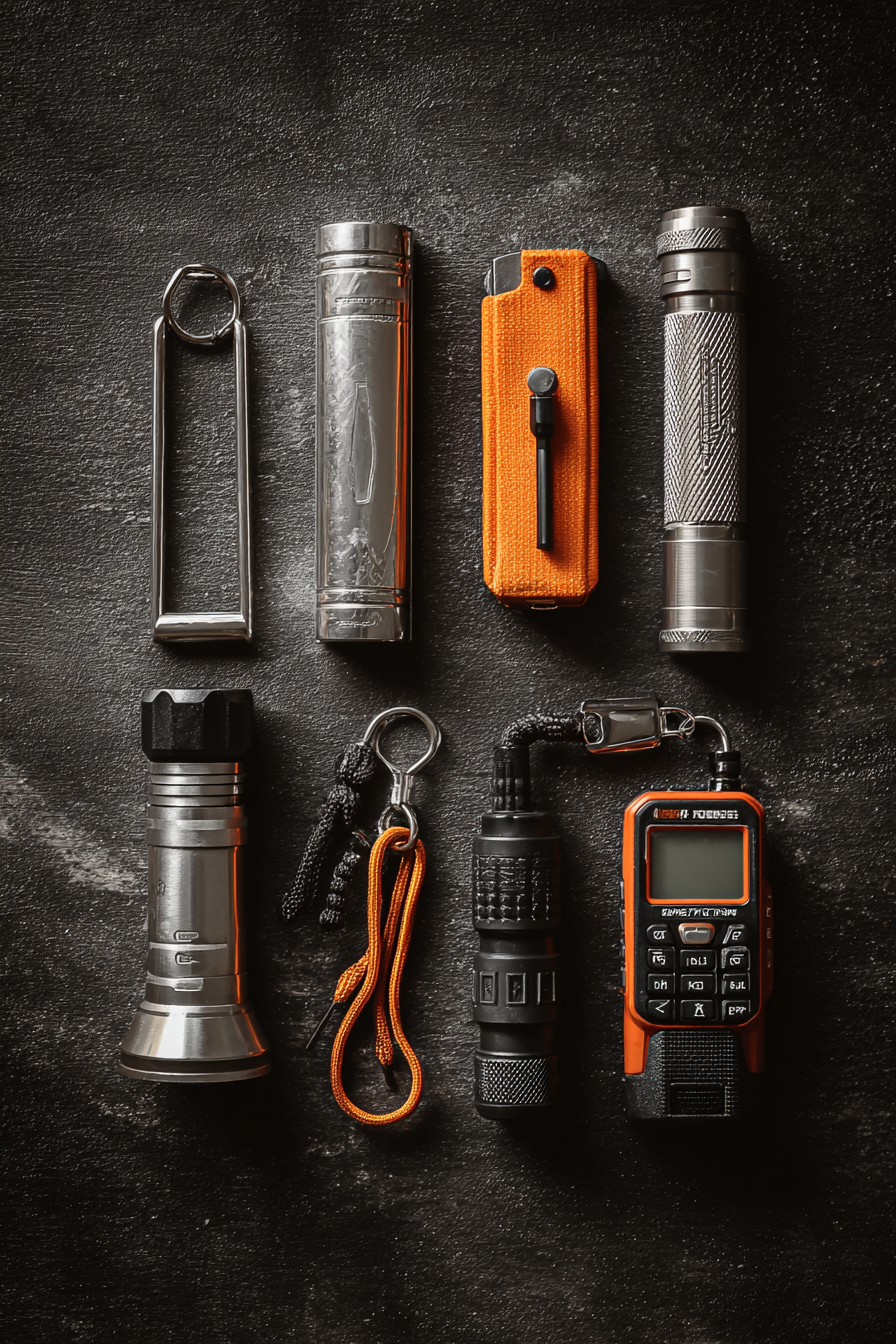
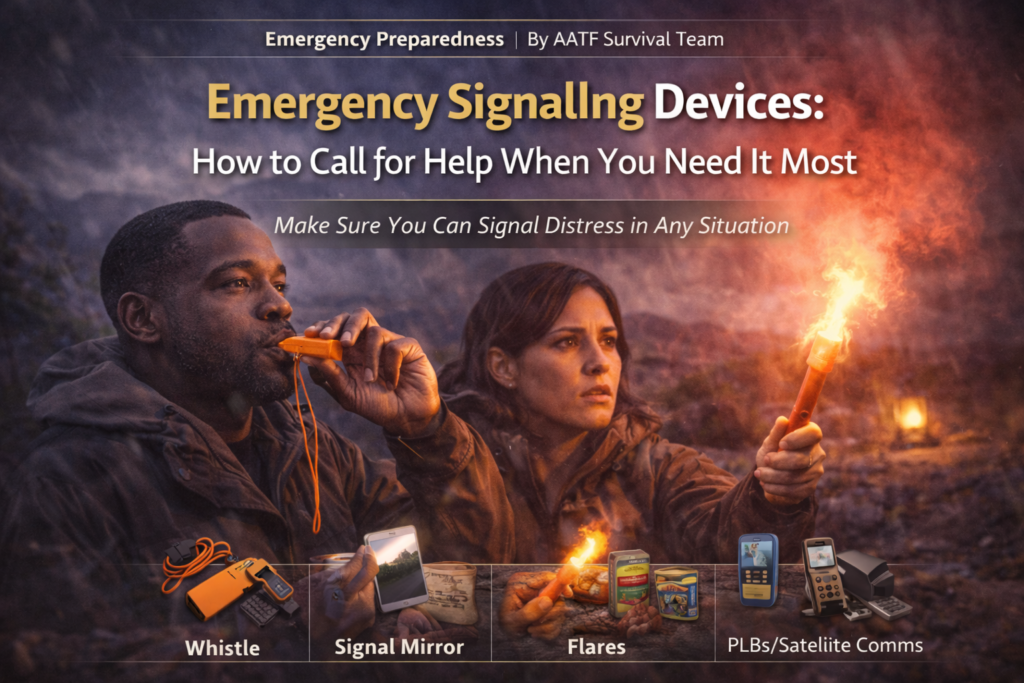
Whistles: Small but Powerful Signaling Tools
A whistle may seem simple, but it’s one of the most effective low-tech signaling devices you can carry. The human voice fades quickly in the open air, while a whistle’s piercing tone carries hundreds of feet—even miles—depending on conditions.
Why you need one:
- Loud, consistent signal that carries over wind and water
- Requires no batteries or technology
- Small and lightweight, fits in any pocket or bug-out bag
A great option is the Fox 40 Micro Whistle—designed for high decibel output and built from durable, waterproof materials. It’s ideal for hikers, campers, or families preparing for disaster situations.
When assembling your evacuation supplies, remember that a whistle should always be part of your grab-and-go kit. For more details on how to pack effectively, check out Bug Out Bag Essentials: Top Items You Can’t Forget.
Signal Mirrors: Harnessing the Power of the Sun
Signal mirrors are one of the most reliable visual signaling tools ever created. They use reflected sunlight to create a flash that can be seen up to 20 miles away, especially from the air.
Why they matter:
- Work without batteries or fuel
- Lightweight and compact
- Effective for long-distance signaling
A top pick is the UST StarFlash Signal Mirror, featuring a sighting hole for precision aiming. Practice using your mirror before an emergency—it’s a skill that can dramatically increase your chances of rescue.
Flares: Bright Signals for Critical Situations
When visibility drops or you need an unmistakable signal, flares are your best option. They can be seen from long distances, day or night, and instantly alert rescuers to your presence.
Types of flares to include:
- Handheld flares: Ideal for ground signaling and road emergencies.
- Aerial flares: Fire high into the sky to reach rescuers further away.
- Smoke flares: Perfect for daytime visibility.
Consider the Orion Safety Products SOS Distress Signal Kit, which provides multiple flare types for land and sea emergencies. Always follow safety precautions—flares burn at extremely high temperatures and should be stored properly to avoid accidental ignition.
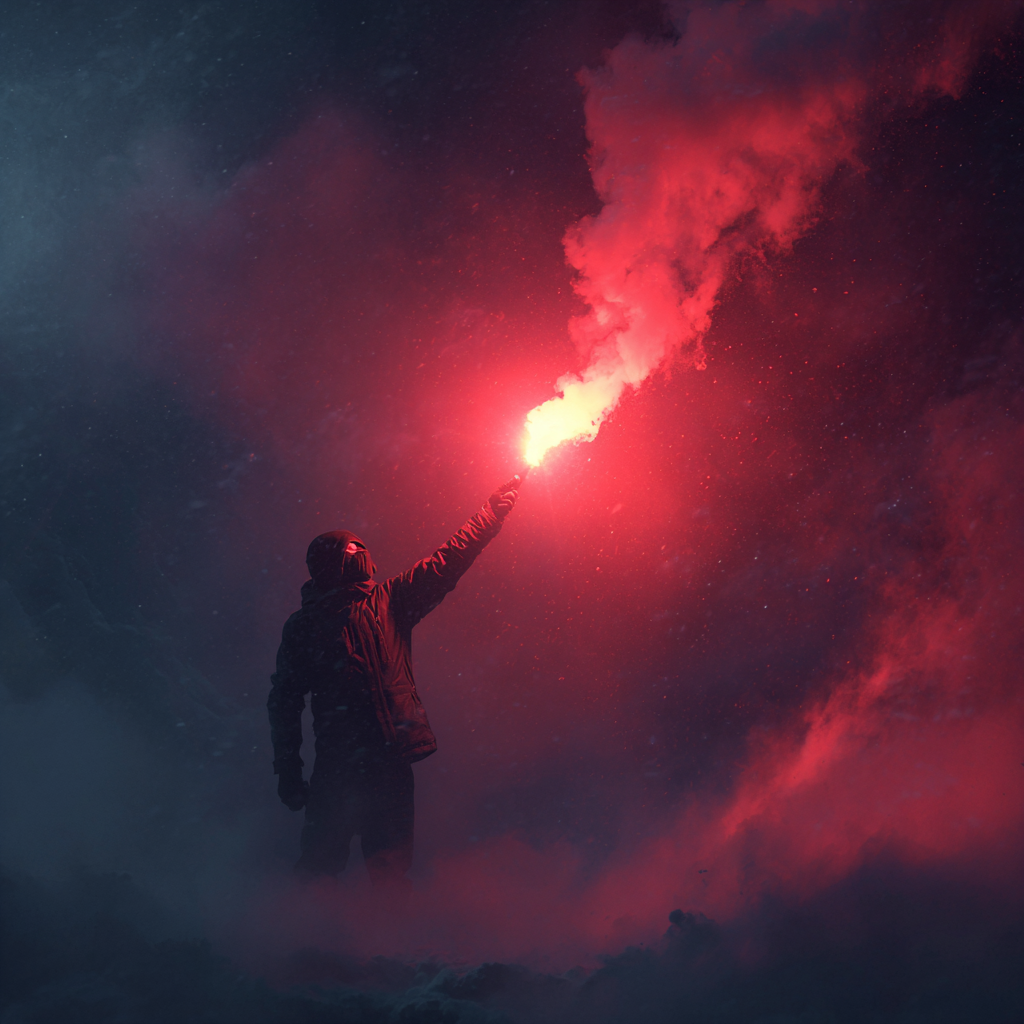
Emergency Beacons: Satellite Rescue at Your Fingertips
Modern technology has transformed survival signaling. Personal Locator Beacons (PLBs) and Satellite Messengers transmit your location via satellite networks, connecting you directly to global rescue services.
Best options to consider:
- ACR ResQLink View PLB – Compact and accurate, this beacon sends distress signals to international rescue satellites.
- Garmin inReach Mini 2 – Combines SOS signaling with two-way messaging, allowing you to communicate with emergency responders.
These tools are essential for remote hiking, sailing, or backcountry trips. To learn how these devices fit into your overall safety plan, explore our post on Top Emergency Communication Devices for Disaster Scenarios.
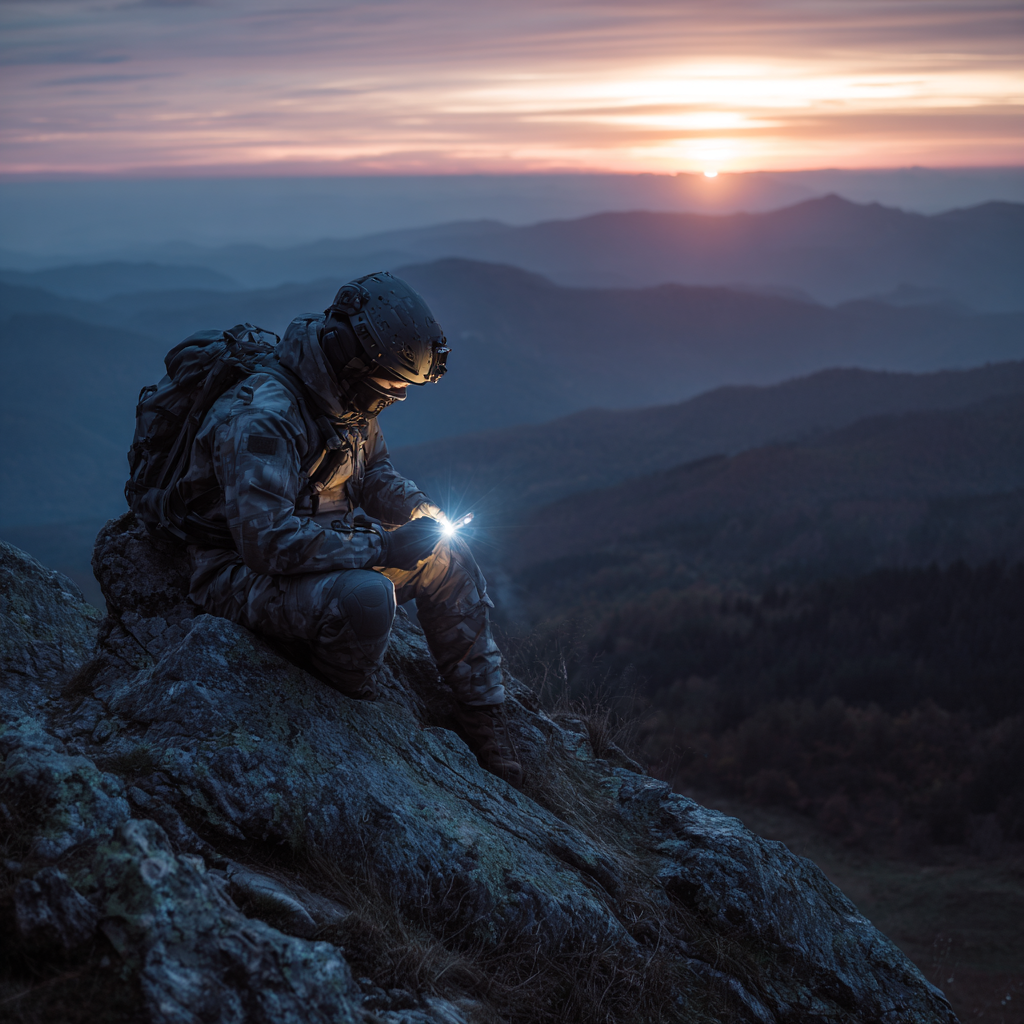
LED Flashlights: Light That Doubles as a Lifeline
In darkness or dense fog, light is your voice. Flashlights not only illuminate your surroundings but also serve as effective signaling tools—especially those with built-in SOS or strobe functions.
Why you need one:
- Offers both visibility and signaling capability
- Can disorient threats or signal aircraft
- Essential for power outages and night rescues
One excellent choice is the Streamlight 88040 ProTac 2L-X Flashlight—bright, rugged, and programmable with an SOS strobe mode.
To learn how flashlights and solar lanterns can strengthen your survival kit, read our article on Emergency Lighting: From Flashlights to Solar Lanterns – Your Complete Guide.
Smartphone Apps: Digital Signaling in Modern Emergencies
Even in the age of satellites, smartphones can still play a role in emergency signaling. Apps like Life360, Zello, and Bridgefy can send location data or act as walkie-talkies—even during partial outages.
However, their usefulness depends on power and connectivity. That’s why combining digital tools with manual signaling devices ensures redundancy. If you rely on a phone, always keep a solar or hand-crank charger in your pack to keep it functional during long-term emergencies.
Choosing the Right Emergency Signaling Devices
Selecting the right tools depends on your location, travel habits, and level of preparedness.
Here’s what to consider:
- Range and Visibility: Choose devices effective for both day and night use.
- Portability: Lightweight gear is easier to carry in your 72-hour emergency kit.
- Durability: Opt for weatherproof, shatter-resistant designs.
- Ease of Use: In a high-stress moment, simplicity saves lives.
A combination approach is best—pack a whistle, mirror, flashlight, and one satellite beacon. Each device covers a different signaling range and method, ensuring no matter the scenario, you have a way to call for help.
Conclusion
Having a well-rounded set of emergency signaling devices gives you confidence and control when facing uncertainty. From basic whistles and mirrors to advanced satellite beacons, these tools can dramatically increase your chances of being found quickly and safely.
To complete your preparedness plan, make sure your communication gear, lighting, and survival kits work together seamlessly. For a full breakdown of what to include, visit our cornerstone guide on Top 10 Must-Have Items in Your Disaster Supply Kit.
Preparedness isn’t about fear—it’s about empowerment. Equip yourself today so that when disaster strikes, you’re ready to be seen, heard, and rescued.