
When disaster strikes, the last thing you want is to search frantically for critical paperwork. Fires, floods, power outages, or evacuations can happen without warning — and without organized emergency documents, you risk losing access to vital identification, insurance, and financial records when you need them most.
Being prepared means not only having food, water, and supplies but also ensuring your documentation is safe, current, and easily retrievable. In this comprehensive guide, you’ll learn how to build an emergency documents folder, how to secure it physically and digitally, and which tools can make the process seamless and stress-free.
Why Organizing Your Emergency Documents Matters
In an emergency, having immediate access to your identification, medical history, and financial information can save valuable time and minimize stress. These documents can help you:
- Prove your identity to authorities or aid organizations
- File insurance claims after disasters
- Access healthcare or prescriptions quickly
- Recover property records or financial access
Just as you would assemble your Emergency Preparedness Kit, organizing your emergency documents should be a top priority in your family’s readiness plan.
What to Include in Your Emergency Documents Folder
Your emergency document kit should cover every aspect of your personal, financial, and medical life. Think of it as a portable archive that ensures continuity and stability no matter what happens.
1. Personal Identification
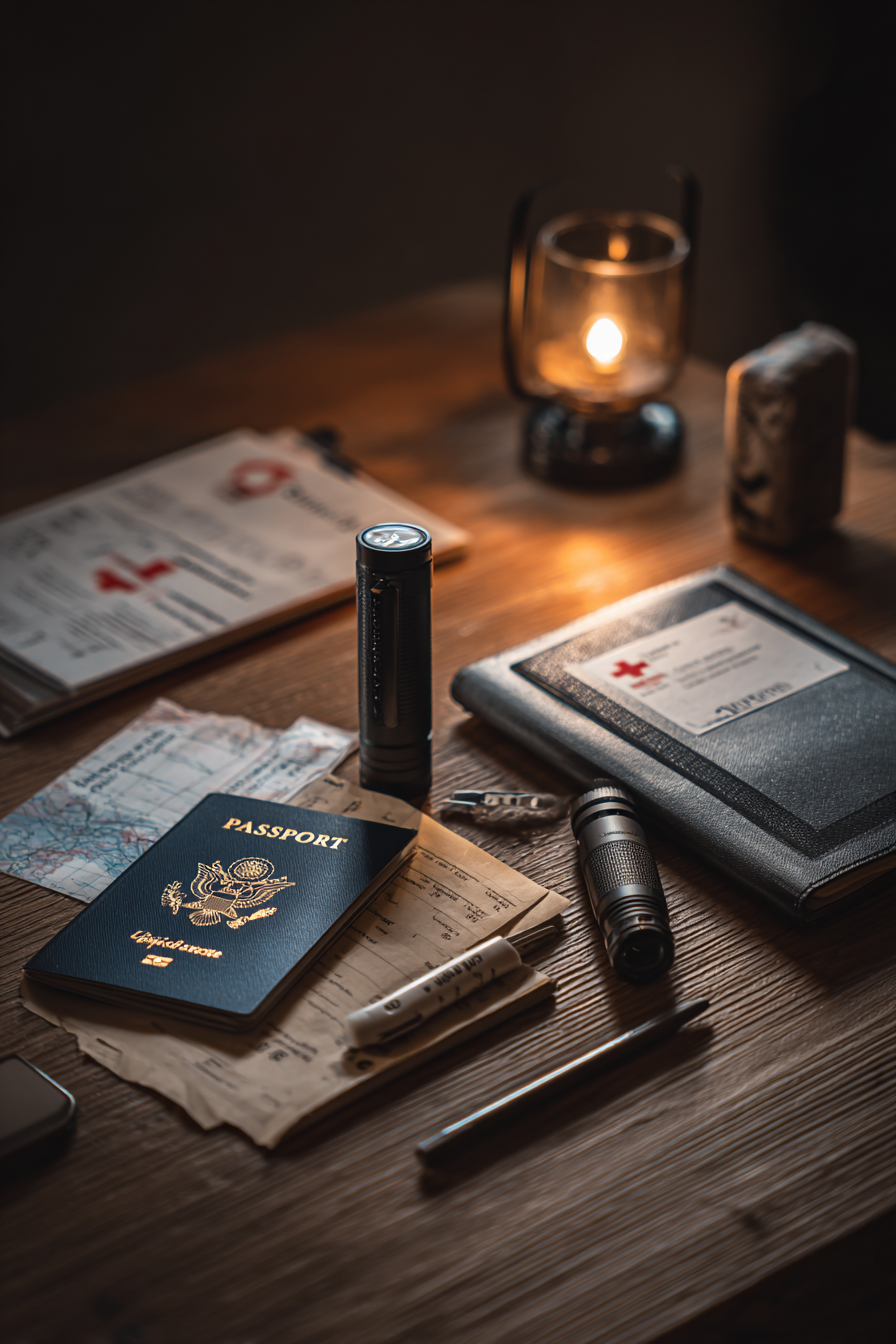
These are the most essential papers to prove your identity and citizenship:
- Driver’s license or state ID
- Passport
- Social Security card
- Birth certificates
- Marriage certificate (if applicable)
If your identification ever becomes damaged or lost during a disaster, having certified copies stored securely can simplify replacements.
2. Financial and Legal Records
In the aftermath of an emergency, you may need access to funds, loans, or property documentation. Keep copies of:
- Bank account information
- Credit card details (last four digits only)
- Insurance policies (home, health, auto, life)
- Tax returns for the last two years
- Loan or mortgage documents
- Retirement account details
To better prepare your household finances, explore the Top 10 Must-Have Items in Your Disaster Supply Kit — it offers additional context on integrating financial readiness into your overall survival strategy.
3. Medical and Health Information
Medical emergencies are common during crises. Include:
- Copies of health insurance cards
- Medical history summary
- List of current prescriptions and dosages
- Emergency contact list (family, doctor, insurance provider)
- Vaccination records
Keep this section updated regularly. Medical details often change, and outdated information can cause confusion in emergencies. To complement this, consider building a Comprehensive First Aid Kit that keeps all your medical tools and information together.
4. Property and Home Documents
If you own or rent a home, these records protect your investment and speed recovery after a disaster:
- Property deeds or lease agreements
- Mortgage documents
- Home inventory list (with photos if possible)
- Recent utility bills (as proof of residence)
Pair this with insights from Emergency Shelter Options: From Tents to DIY Solutions to strengthen your home recovery plan.
How to Store Your Emergency Documents Safely
Having the right storage setup can mean the difference between keeping your information secure and losing everything to fire or water damage.
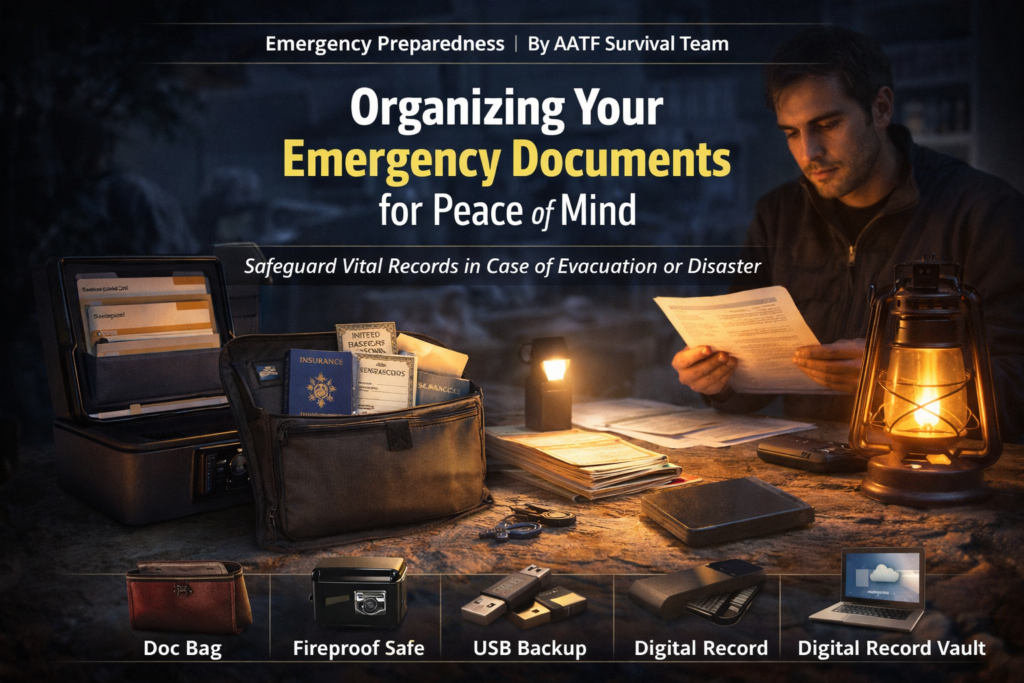
1. Use a Waterproof and Fireproof Container
Choose durable, weather-resistant storage that can withstand disasters. A great option is the Vaultz Locking Storage Box — it’s sturdy, lockable, and ideal for safeguarding papers against water or heat exposure.
Other alternatives include fireproof document bags or small portable safes. Keep this container in an easily accessible area that all family members know.
2. Create Digital Backups
Technology allows you to carry entire file cabinets in your pocket. Scan and save all documents in multiple formats:
- External hard drive
- Cloud storage (Google Drive, Dropbox, or OneDrive)
- Encrypted USB drive
The SanDisk Cruzer 64GB USB Flash Drive offers ample space and portability, ensuring you can retrieve your files even if you’re far from home.
For extended off-grid security, consider printing key documents on waterproof paper and storing them in a separate Bug Out Bag for fast evacuation.
3. Organize with Categories and Labels
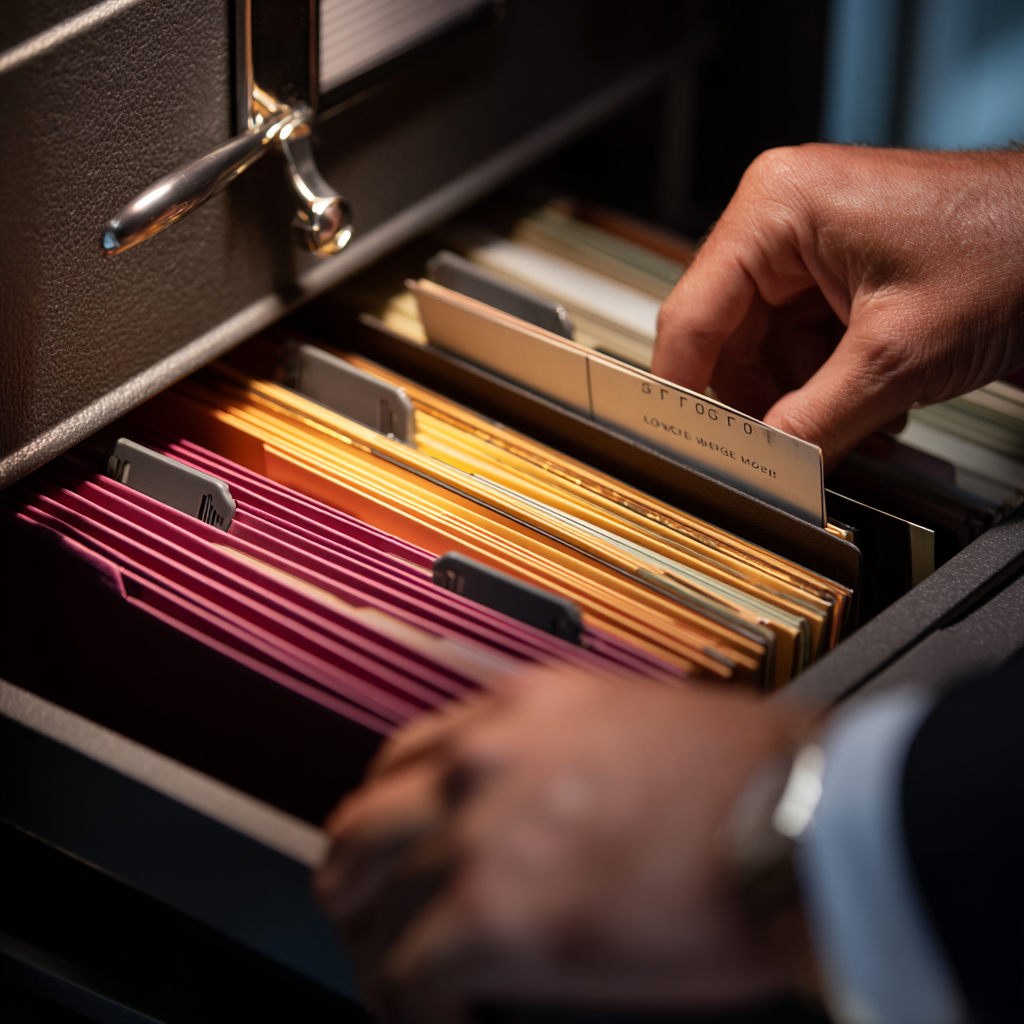
Divide your folder or binder into clearly labeled sections using tab dividers for identification, health, finances, and property. Use sheet protectors to prevent tearing or moisture damage. You can even color-code by family member or priority.
To stay fully organized, many preppers also integrate document storage within their 72-Hour Survival Kit — making it easy to grab everything you need in one motion.
Maintaining and Updating Your Emergency Documents Folder
Once assembled, your emergency documents folder isn’t a “set it and forget it” item. Life changes constantly, and so should your preparedness materials.
Annual Review Checklist:
- ✅ Replace expired IDs and insurance policies
- ✅ Add recent tax returns and pay stubs
- ✅ Update emergency contact lists
- ✅ Check digital passwords and storage security
- ✅ Verify that all copies are legible and complete
Use an annual reminder on your calendar to review your entire emergency kit, including your Emergency Lighting Setup and other gear that may degrade over time.
Recommended Tools for Emergency Document Storage
Choosing the right products can make this process smoother and more secure. Here are several tried-and-true tools preppers rely on:
- Vaultz Locking Storage Box – Keeps paper records safe from damage or theft.
- SanDisk Cruzer 64GB USB Flash Drive – Perfect for secure, portable digital backups.
- Everlane ReNew Transit Brief – A durable, modern bag that fits your emergency binder and laptop perfectly.
Store these items together in your Disaster Supply Kit so you can quickly evacuate with both essentials and documentation.

Integrating Document Storage with Broader Emergency Planning
Your document system should align with your other preparedness strategies — including food, water, and shelter.
- Combine it with insights from Long-Term Food Storage for Beginners: The Complete Guide to ensure records like meal plans, food expiration dates, and inventory lists are included.
- Store recipes and inventory logs alongside your Best Survival Food Kits for Preppers: Top Picks for 2026 for a truly comprehensive prepper binder.
Having your physical and digital systems aligned ensures faster recovery and easier management after a disaster.
Backup Redundancy: Storing Copies Off-Site
For added security, keep a copy of your document folder at a trusted relative’s house or in a secure bank safety deposit box. Emergencies like house fires or floods could destroy your only copy if stored in one location.
When sharing data digitally, use encrypted folders or password-protected archives. Never email sensitive information without encryption. In larger emergencies, redundancy ensures you can rebuild your life even if one copy is lost.
Practical Tips for Long-Term Document Preservation
Laminate key identification papers or keep them in moisture-sealed sleeves.
- Avoid paperclips and staples — they rust or damage pages over time.
- Use acid-free sleeves and binders to prevent fading.
- Label every section with updated review dates.
When combined with reliable physical protection, these simple practices extend the lifespan of your essential records for decades.
Final Thoughts
Organizing your emergency documents might seem like a small task compared to building a full survival kit — but it’s one of the most powerful forms of preparedness you can invest in. In a crisis, time is everything. Having instant access to identification, medical data, and proof of insurance can help you secure aid, access funds, and rebuild stability faster.
Don’t wait until chaos strikes. Start gathering your papers, choose secure storage solutions, and perform a yearly review. It’s a low-effort, high-impact step toward true peace of mind and family resilience.