
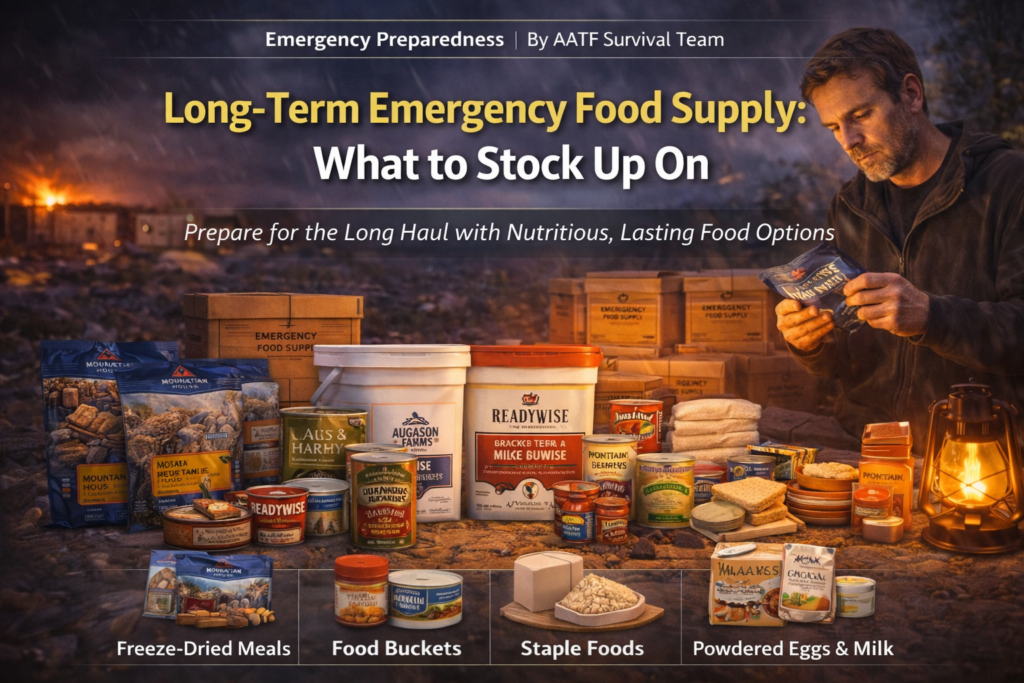
When disaster strikes, your most immediate concern—beyond safety—is how to feed your family. Power outages, natural disasters, or even sudden job loss can make grocery stores inaccessible or leave shelves empty. That’s why building a long-term emergency food supply is one of the smartest steps you can take toward true preparedness.
A reliable stockpile ensures that no matter what happens, you’ll have nourishment, stability, and peace of mind. It’s not just for preppers—it’s for every household that values security and foresight. To understand how this fits into your complete preparedness strategy, start with our cornerstone guide on essential items for your emergency preparedness kit.
Why You Need an Emergency Food Supply
Building an emergency food supply isn’t about fear—it’s about readiness. Recent years have shown how fragile supply chains can be. From weather disruptions and inflation to global shortages, food security is no longer guaranteed. Having your own reserve gives you independence and resilience.
1. Protection from Unexpected Emergencies
Natural disasters like hurricanes, floods, or wildfires can block access to stores for days or weeks. When that happens, your stored food becomes your family’s lifeline.
2. Defense Against Supply Chain Disruptions
As seen during the pandemic, even short-term logistical delays can cause empty shelves. Stocking your own supply ensures you’re not vulnerable to market shortages.
3. Financial Cushion
Having a pantry stocked with essentials means you can buy in bulk when prices are low, reducing long-term costs and protecting against inflation.
For foundational techniques and safety principles, check out our guide on long-term food storage for beginners.
What to Include in Your Long-Term Emergency Food Supply
The goal is to store food that’s nutritious, non-perishable, easy to prepare, and space-efficient. Here’s how to build a balanced supply that can sustain you through any emergency.
1. Canned Goods: The Cornerstone of Every Pantry
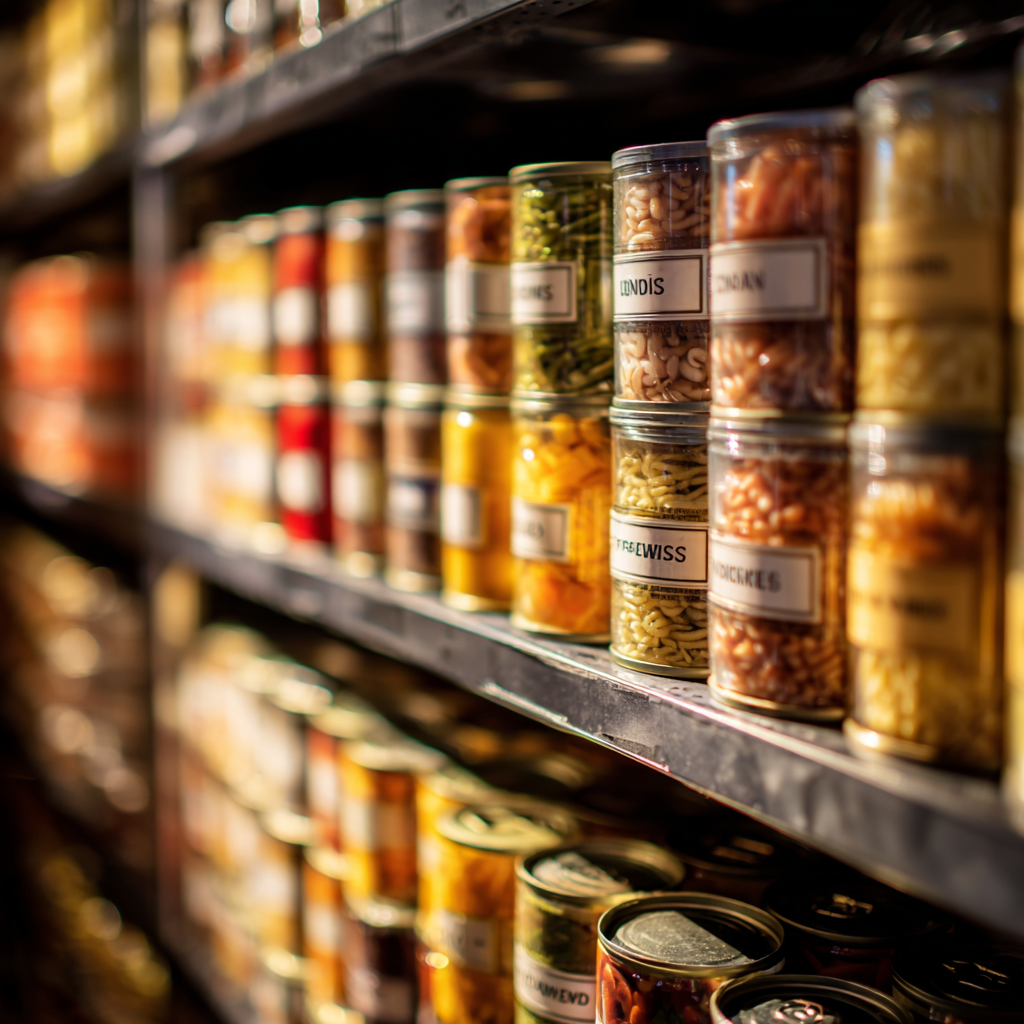
Canned foods are among the easiest, most reliable items to store. They’re already cooked, sealed airtight, and often contain essential vitamins and minerals.
Include a mix of proteins, vegetables, and complete meals to maintain variety.
- Campbell’s Chunky Soup – A hearty, protein-rich option that provides warmth and flavor with minimal prep.
- StarKist Chunk Light Tuna – High in omega-3s and protein, it’s perfect for quick, healthy meals.
- Swanson Premium White Chicken Breast – A versatile canned meat ideal for soups, sandwiches, or stir-fries.
Canned goods have a shelf life of 2–5 years when stored properly, but rotate them regularly to ensure freshness. For a full breakdown of pantry-ready foods, read our article on the best non-perishable food items for your emergency kit.
2. Freeze-Dried and Dehydrated Foods: Lightweight and Long-Lasting
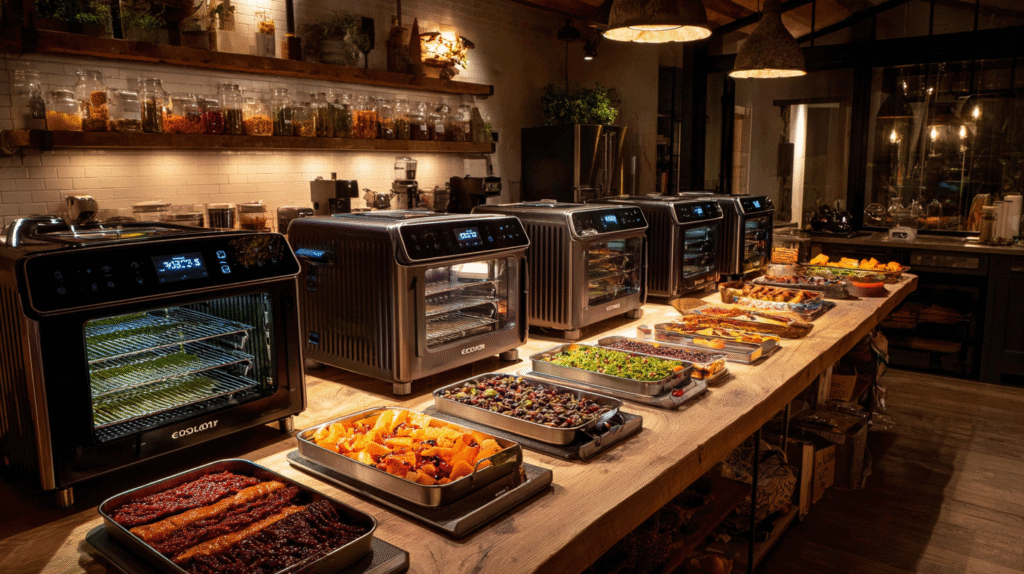
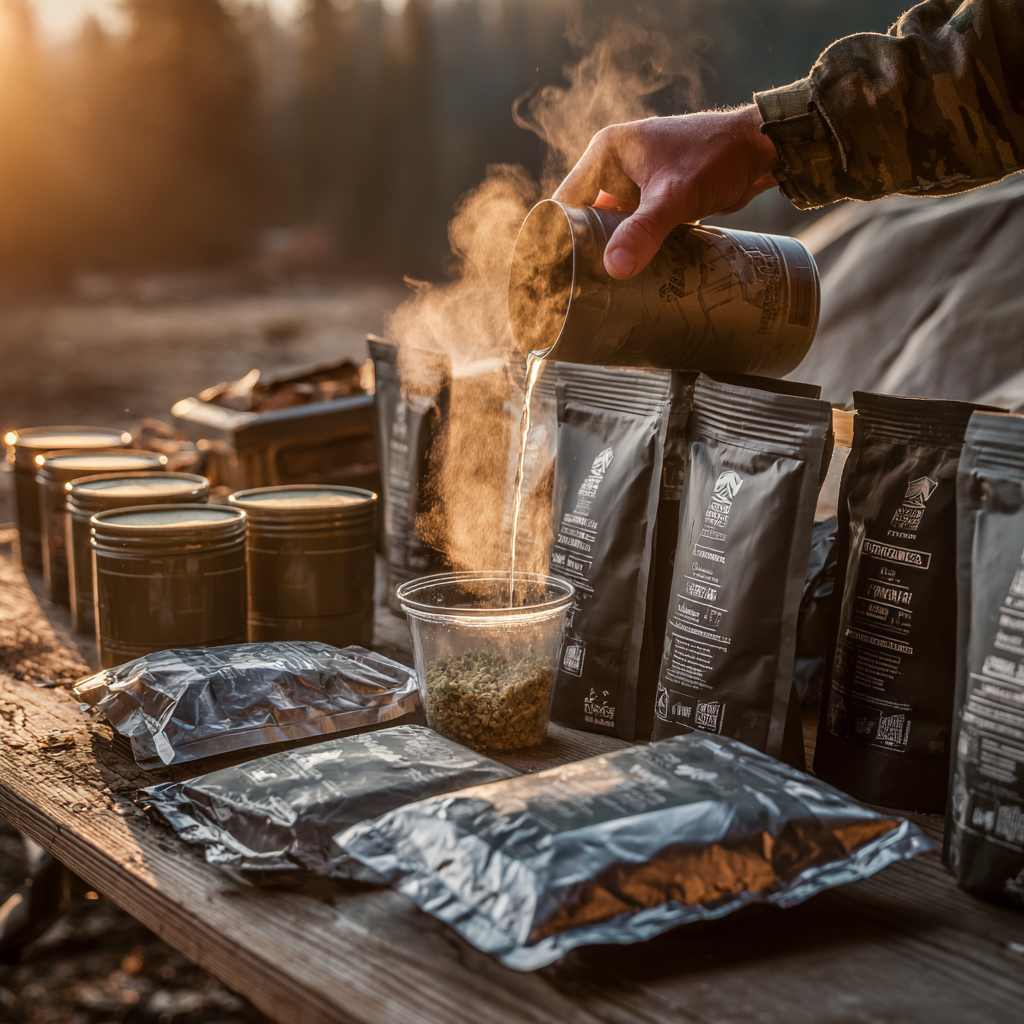
Freeze-dried meals are a prepper’s best friend. They can last 20–30 years, retain nutrients, and require nothing more than hot water to prepare.
- Mountain House Classic Bucket – A premium set of freeze-dried meals that are delicious, lightweight, and shelf-stable for decades.
- Augason Farms Freeze-Dried Fruits – A healthy, versatile option for snacking or meal enhancement, with a long storage life.
These foods are ideal for both home storage and portable bug-out kits. They also tie in with our long-term food storage pillar post, best survival food kits for preppers, which explores full-package emergency rations.
3. Grains, Legumes, and Starches: Building the Foundation
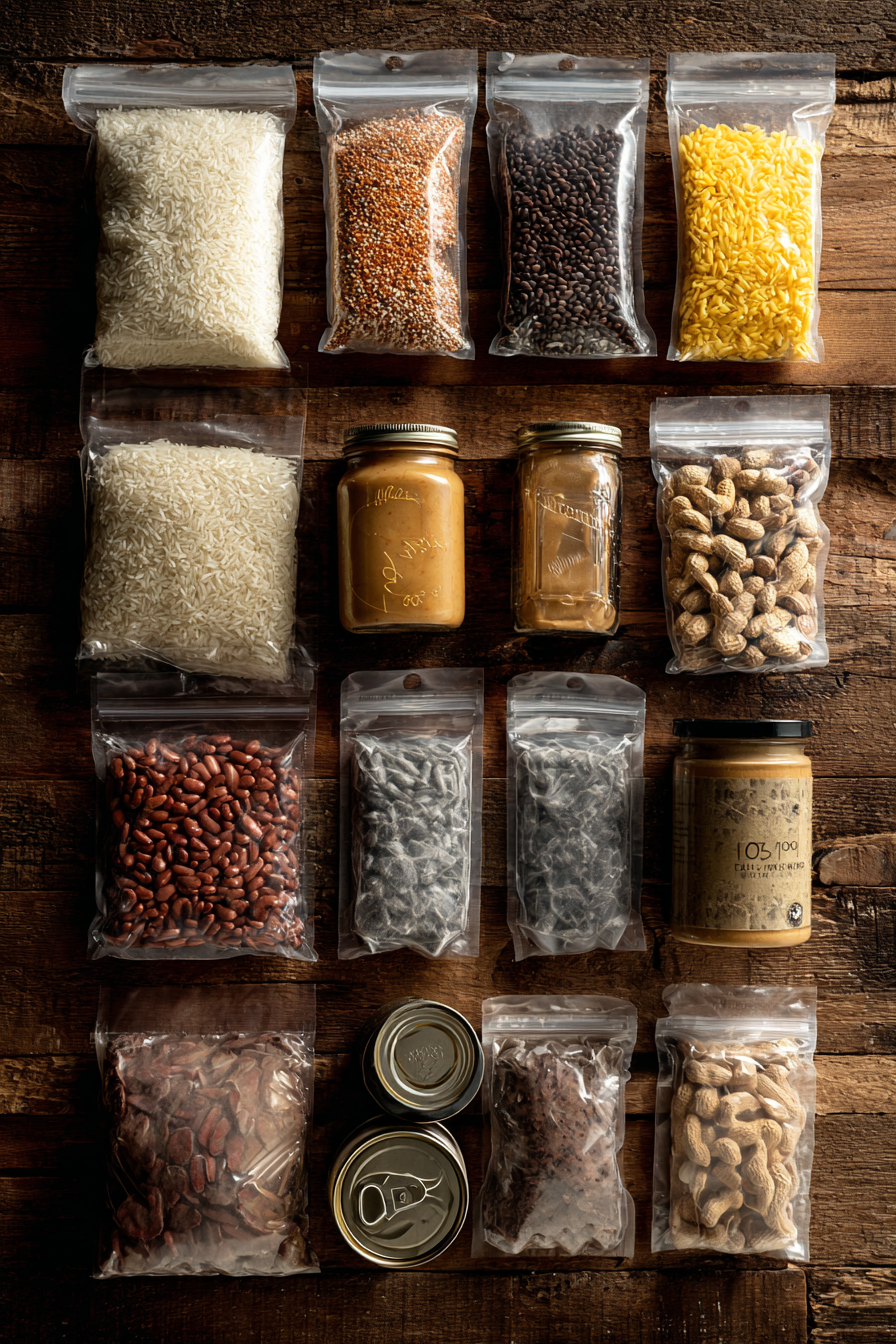
Carbohydrates and grains form the caloric base of any survival plan. They’re easy to store, cost-effective, and versatile enough to form complete meals.
Focus on staples that can last years when sealed properly:
- Lundberg Organic Brown Rice – Organic, nutrient-dense, and long-lasting when stored in airtight containers.
- Bob’s Red Mill Rolled Oats – Perfect for breakfast or baking, packed with fiber and essential minerals.
- Beans and Lentils: Rich in protein and fiber, beans are a must-have. Store them in airtight Mylar bags with oxygen absorbers for a shelf life of 25+ years.
For a list of foods proven to endure decades, visit our comprehensive guide on foods that last 25 years.
4. Protein Sources and Emergency Snacks
Protein sustains your body and boosts morale during crises. It also keeps energy levels high when you’re physically active—important during evacuations or cleanups.
Top Choices
- Jif Natural Peanut Butter – Provides protein, healthy fats, and calories in a single, long-lasting jar.
- Clif Builder’s Protein Bars – Convenient and compact, perfect for bug-out bags or vehicle kits.
For a portable balance of energy and nutrients, mix nuts, seeds, and dried fruits in sealed pouches. You can also reference our bug out bag essentials post for related tools and meal strategies.
5. Emergency Snacks and Comfort Foods
Even in survival scenarios, comfort matters. Foods that remind you of normalcy can reduce stress and improve morale—especially for children.
Stock small items that are lightweight and quick to prepare:
- Instant oatmeal packets
- Coffee or tea
- Granola bars
- Hot chocolate mixes
- Dried fruit snacks
These small comforts make long-term living conditions feel less harsh. Combine them with your core food supply to maintain mental well-being through challenging days.
How to Store Your Emergency Food Supply
The way you store your food determines how long it lasts. Temperature, light, and humidity can all impact shelf life, so follow these guidelines for maximum preservation.
1. Keep It Cool and Dry
Store food in a temperature-controlled environment between 50°F and 70°F. Basements, closets, or dedicated pantry spaces work best.
2. Protect from Light and Moisture
Exposure to sunlight and humidity shortens shelf life. Use opaque or sealed containers to protect against degradation.
3. Use Airtight Storage Containers
Invest in containers that lock out air, moisture, and pests.
- IRIS USA Airtight Food Storage Container – Keeps large quantities of grains or pet food fresh and sealed.
- PackFreshUSA Mylar Bag Set with Oxygen Absorbers – A prepper essential for long-term bulk food packaging.
Proper storage aligns with the principles outlined in our detailed article on emergency kit maintenance, which explains rotation and inspection routines.
Planning for Different Timeframes
Preparedness works best when divided into tiers:
Short-Term Supply (0–3 Days)
Keep ready-to-eat foods like canned soups, energy bars, and instant meals. These belong in your 72-hour emergency kit.
Mid-Term Supply (1–3 Months)
Focus on affordable, easily rotated staples like pasta, rice, peanut butter, and canned vegetables.
Long-Term Supply (6–12+ Months)
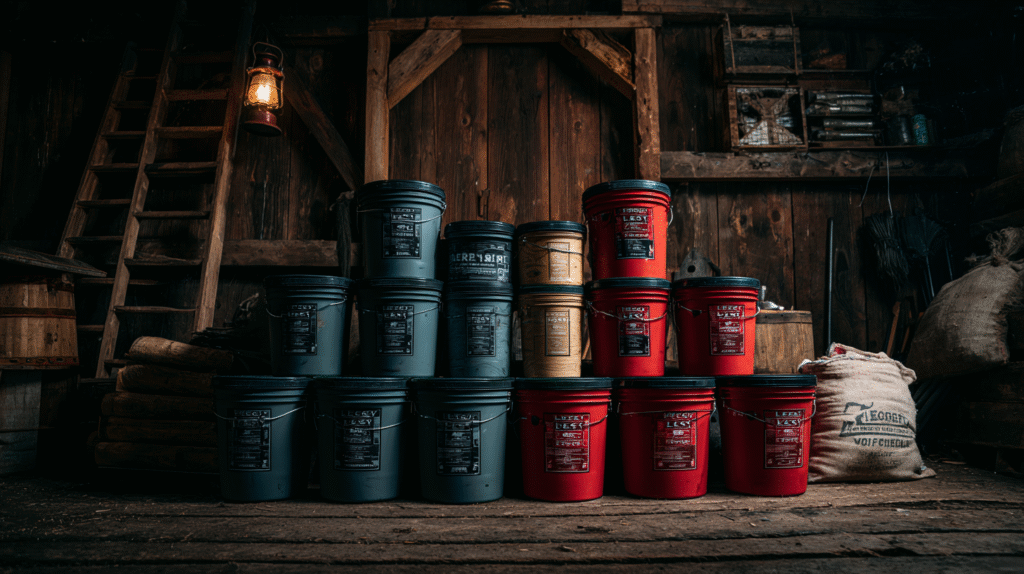
Store freeze-dried meals, sealed grains, and bulk beans in Mylar or vacuum-sealed containers. This tier ensures lasting self-sufficiency during prolonged crises.
Expanding Beyond Food
Your emergency pantry isn’t complete without supporting tools and supplies. Include:
- Manual can opener
- Propane or solar cooking stove
- Matches or lighters
- Water filtration system
To make your food supply functional in any situation, explore our post on portable cooking equipment for emergency situations.
Conclusion
Building a long-term emergency food supply is one of the most practical and empowering things you can do for your family’s safety. With the right mix of canned goods, freeze-dried meals, grains, and proteins, you can thrive even when the unexpected happens.
By investing a little time and planning today, you ensure that tomorrow’s crises won’t catch you off guard. Keep your storage organized, rotate your stock, and choose foods you’ll actually enjoy eating.
For the final piece of your preparedness foundation, explore our cornerstone guide on the top 10 must-have items in your disaster supply kit, which ties together everything—from shelter and lighting to the food reserves that keep you alive and well.