
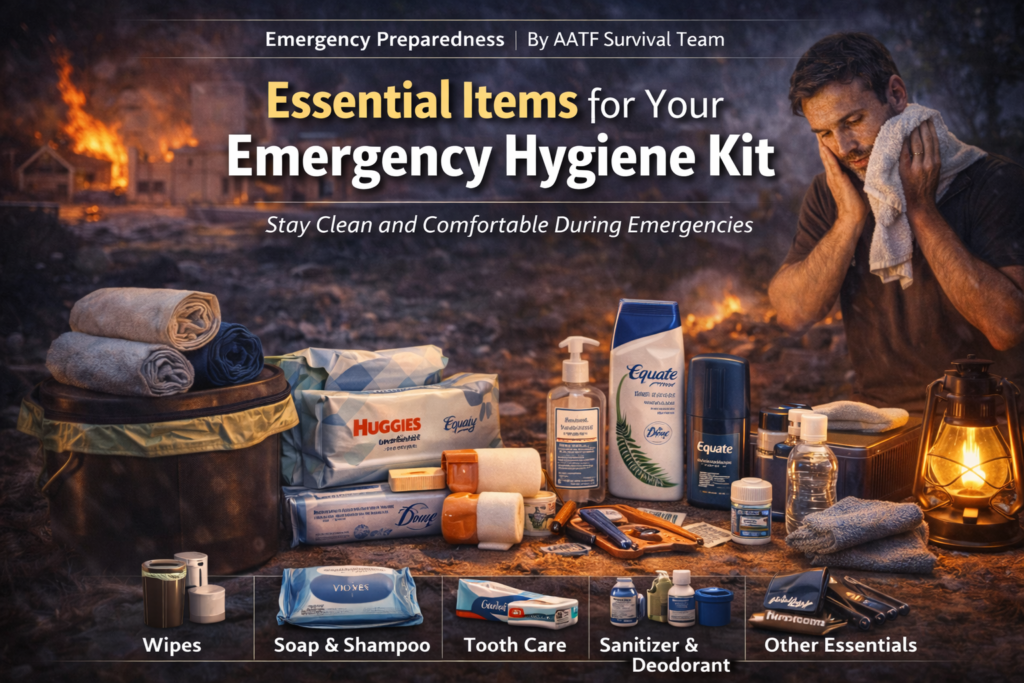
In the chaos of an emergency, clean water and sanitation often become the first luxuries to disappear. Proper emergency kit maintenance can help you ensure these essential items are available when needed. Yet maintaining hygiene is just as critical to survival as having food or shelter. Neglecting it can lead to illness, infection, and unnecessary discomfort—especially during prolonged crises.
That’s where an emergency hygiene kit comes in. Designed to help you stay clean and healthy when normal routines break down, it’s one of the most overlooked but essential parts of any preparedness plan. For a broader foundation of what every household should have ready, start with our cornerstone guide on essential items for your emergency preparedness kit.
What Is an Emergency Hygiene Kit?
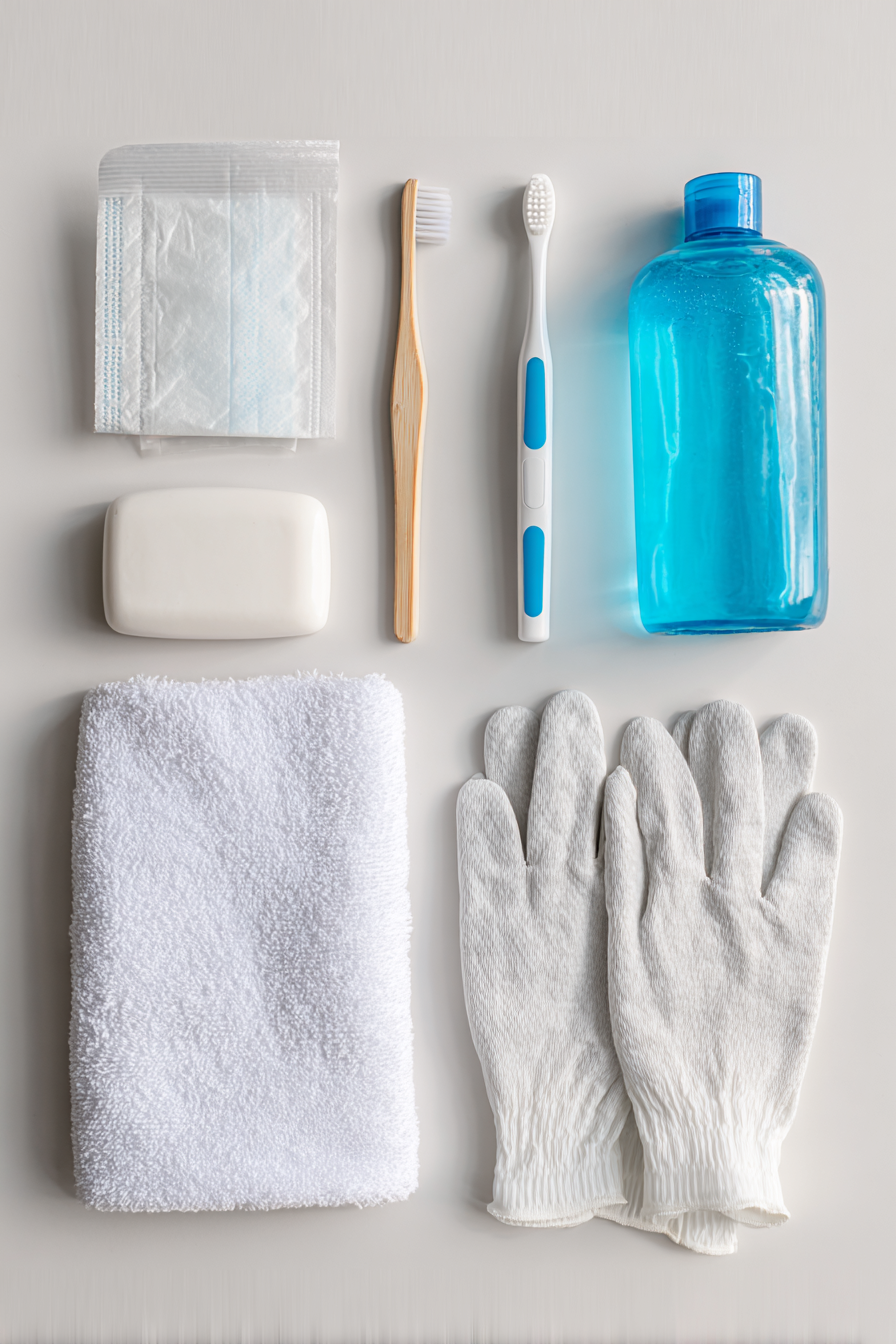
An emergency hygiene kit is a compact collection of personal-care essentials that help you maintain cleanliness when access to running water, electricity, or stores is cut off. It bridges the gap between comfort and survival by preventing infection, preserving dignity, and boosting morale.
Your hygiene kit should cover the basics—cleaning, disinfection, waste management, and first-aid sanitation—while being lightweight and portable enough to move with you in an evacuation.
1. Basic Personal Hygiene Supplies
Start with the fundamentals that keep you feeling refreshed and protected in any situation:
- Travel-sized soap or body wash: Compact and easy to store, small bottles or bars prevent waste and save space.
- Toothbrush and toothpaste: Oral hygiene prevents gum disease and infection, even during power or water outages.
- Deodorant: Staying odor-free boosts morale when living in close quarters with others.
- Comb or brush: A simple grooming tool helps prevent scalp irritation and keeps hair manageable.
If you prefer a one-step solution, a pre-assembled kit like the Convenience Kits International Men’s/ Women’s Hygiene Set keeps all these essentials organized and ready for travel or evacuation.
2. Sanitation and Disinfection
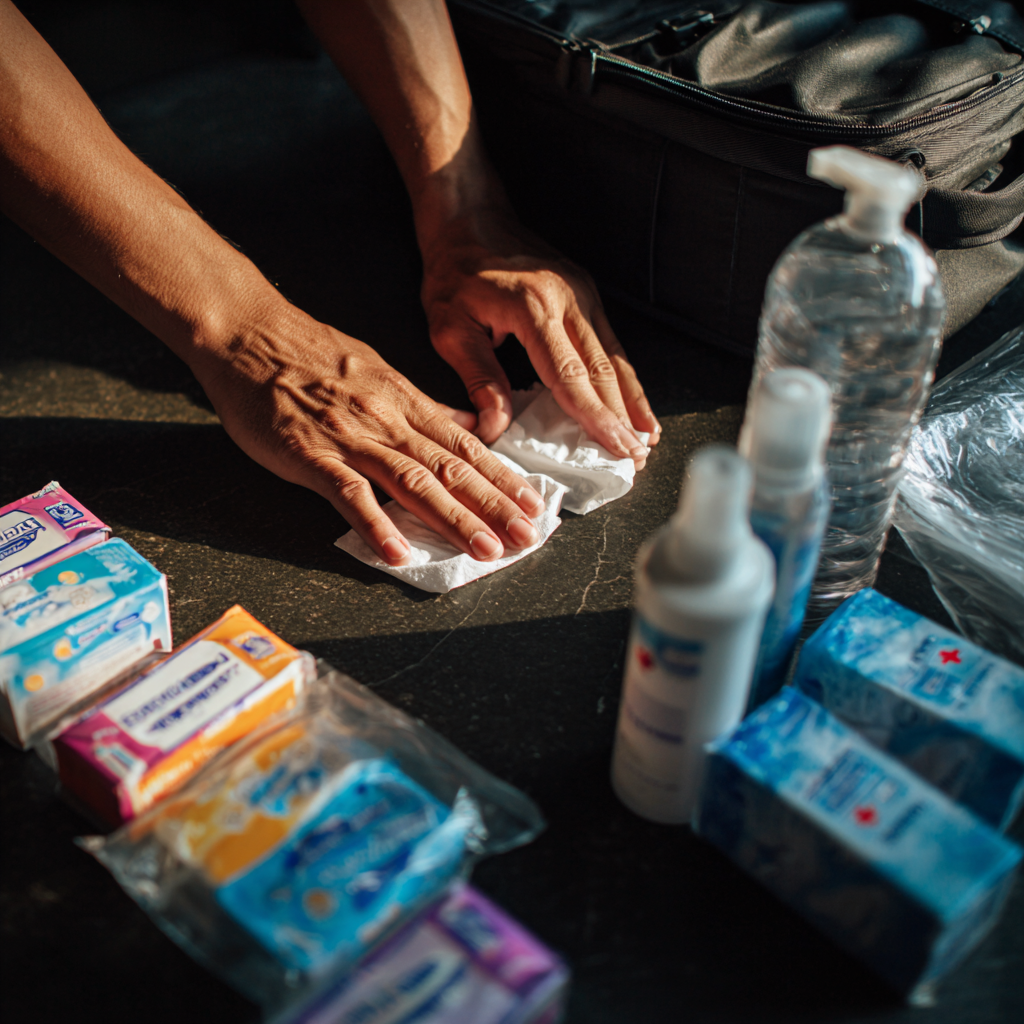
Clean hands and surfaces are your first defense against disease. During emergencies, soap and running water may be limited, so your kit should include fast-acting sanitizers and disinfectants.
- Hand Sanitizer: Choose one with at least 60% alcohol, such as Purell Advanced Hand Sanitizer, which kills most common germs effectively.
- Antibacterial Wipes: Quick and convenient, Lysol Disinfectant Wipes can clean hands, utensils, or surfaces when water isn’t available.
- Disposable Gloves: Protect your hands during cleanup, medical care, or sanitation tasks.
For larger-scale hygiene setups or when dealing with limited facilities, learn how to manage waste and contamination safely in our post on emergency sanitation supplies: how to stay clean when it matters most.
3. First Aid and Medical Hygiene
Injuries are common during disasters, and infection risk rises when proper sanitation isn’t maintained. Integrating basic first-aid hygiene into your kit ensures you can clean and dress wounds quickly.
Essential items include:
- Adhesive bandages and gauze pads
- Antiseptic wipes or cream
- Medical tape
- Tweezers and small scissors
The Adventure Medical First Aid Kit provides a comprehensive selection of wound-care tools, antibiotics, and protective gear in a compact package.
For a deeper look at what your medical section should include, see comprehensive first aid kit supplies for any emergency.
4. Period and Personal Care Products
Personal hygiene varies from person to person, so customize this part of your kit to suit every family member’s needs.
- Feminine Hygiene: Pack both disposable and reusable options such as pads, tampons, or menstrual cups. Store them in sealed bags for cleanliness.
- Adult Hygiene: Adult diapers or incontinence pads may be vital for elderly or immobile family members.
- Baby Care: Stock up on baby wipes, diapers, and diaper rash cream if you have infants.
For sustainability and space savings, consider reusable cloth pads or washable wipes that can be cleaned and reused safely once water access returns.
5. Water, Cleaning, and Soft Goods
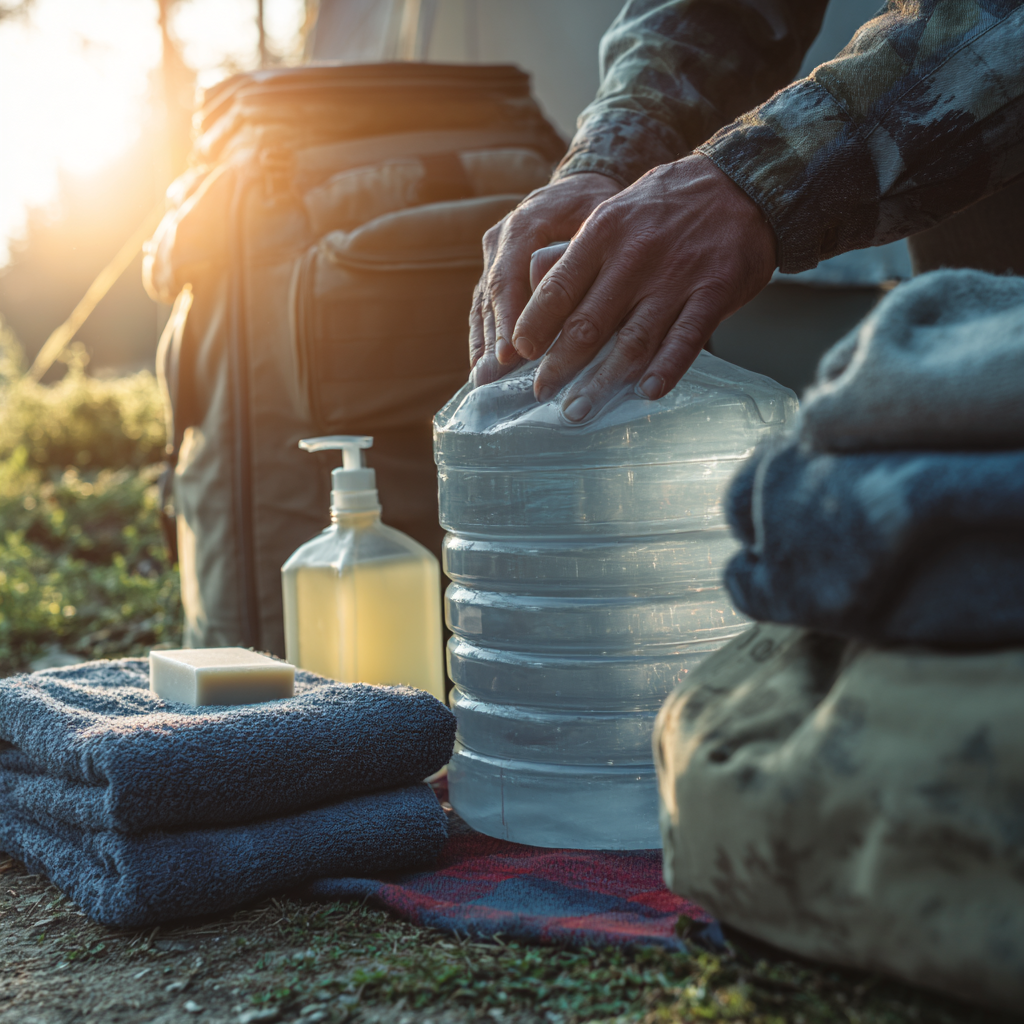
Hygiene depends on clean water. During emergencies, safe water may not be available, so include purification tools and quick-dry materials in your kit.
- Water Purification Tablets: A lightweight solution that neutralizes bacteria and viruses.
- Portable Filter: The LifeStraw Personal Water Filter removes 99.999% of waterborne bacteria and parasites.
- Quick-Dry Towels: Compact and super-absorbent, Rainleaf Microfiber Towels dry fast and resist odors.
- Plastic Bags: Durable options like Hefty Strong Plastic Bags can store waste or keep wet items separate.
Water safety is a major part of hygiene preparedness—see our detailed post on emergency water storage and purification methods to learn how to ensure long-term access to clean water.
6. Storing Your Emergency Hygiene Kit
A good hygiene kit is only effective if it’s accessible and well-preserved. Here’s how to store and maintain it properly:
- Container: Use a waterproof case or heavy-duty backpack to protect supplies from moisture.
- Accessibility: Keep one kit at home, another in your vehicle, and a smaller version at work.
- Labeling: Mark items with expiration dates and check them twice a year.
- Rotation: Replace expired disinfectants, soaps, and medications.
It’s smart to integrate hygiene maintenance into your broader preparedness plan. Read how to maintain and update your emergency kit for a full schedule and checklist system.
For mobility or evacuation readiness, ensure a smaller hygiene kit is part of your go-bag. Our guide on building your essential 72-hour emergency kit explains how to balance weight and practicality.
If you spend long hours on the road, consider adapting a version for your vehicle—see car emergency kit: what to pack for everyday readiness.
7. Hygiene Tips During Extended Emergencies
Even with supplies on hand, maintaining cleanliness under pressure takes creativity.
- Use antibacterial wipes sparingly—one for hands, one for surfaces—to conserve resources.
- Wash hands with purified water before handling food or wounds.
- Disinfect personal items such as utensils, doorknobs, and flashlights regularly.
- Dispose of waste away from living or cooking areas.
Encourage every family member to understand where hygiene kits are stored and how to use each item efficiently.
Conclusion
Cleanliness isn’t just comfort—it’s survival. A well-prepared emergency hygiene kit helps prevent illness, boosts morale, and maintains your family’s safety when the unexpected strikes.
Start small, gather the essentials, and store them properly so your kit is always ready to go. Combine personal hygiene, first aid, and sanitation tools into one organized system that keeps everyone healthy, no matter what happens.
To round out your overall preparedness plan, review our cornerstone post on top 10 must-have items in your disaster supply kit. By prioritizing hygiene alongside food, shelter, and water, you’ll build resilience and confidence to face any emergency with calm and control.