
When most people think about survival gear, items like food, water, and first aid kits often come to mind—but few realize how critical an emergency blanket can be. These lightweight, heat-retaining tools have saved countless lives in disasters, cold-weather rescues, and power outages. An emergency blanket may seem small, but in the right moment, it can mean the difference between mild discomfort and hypothermia.
Whether you’re building a bug-out bag, preparing for vehicle emergencies, or enhancing your home survival kit, understanding which type of emergency blanket to choose is essential. To see how this item fits into a full survival setup, start with our cornerstone guide on essential items for your emergency preparedness kit.
What Is an Emergency Blanket?
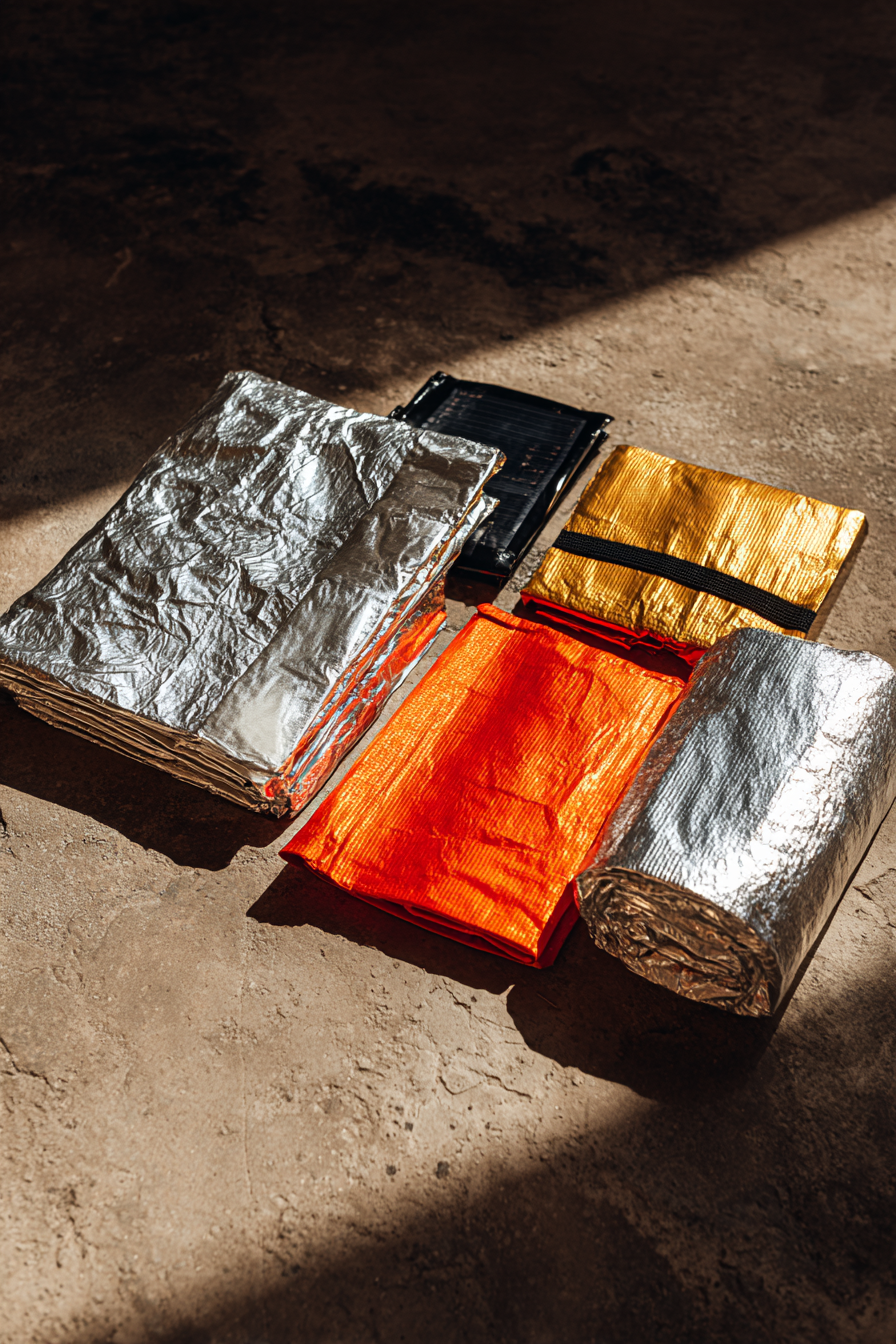
An emergency blanket—also known as a space blanket—is a thin, heat-reflective covering originally developed by NASA in the 1960s. It works by reflecting up to 90 percent of your body heat back toward you, creating a barrier against wind, rain, and cold.
Modern emergency blankets are compact, waterproof, and versatile. You can wrap them around your body to preserve warmth, use them as ground insulation, or even signal for rescue thanks to their reflective surfaces. Because they’re inexpensive and lightweight, they should be part of every go-bag, car kit, and home emergency setup.
Main Types of Emergency Blankets
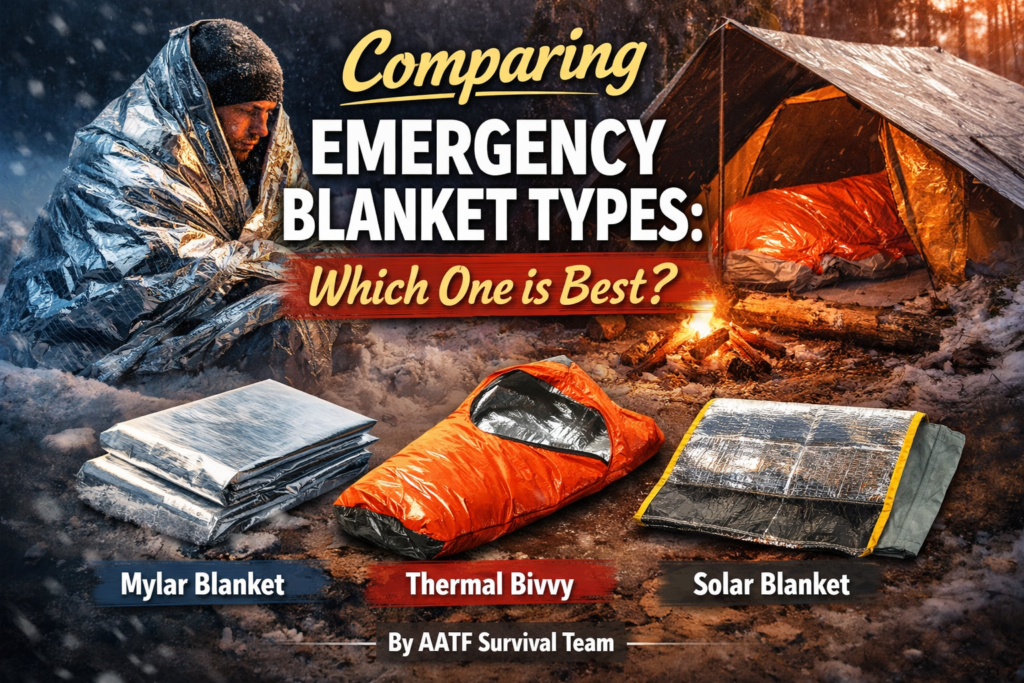
There isn’t a one-size-fits-all solution—each blanket type has strengths depending on your situation. Below are the four primary categories and how they differ.
1. Mylar Blankets
The Mylar emergency blanket is the classic choice for preppers, hikers, and first responders. Made from thin, metallized plastic, it’s incredibly compact and reflects heat effectively.
Advantages:
- Extremely lightweight and portable
- Retains up to 90% of body heat
- Water and wind-resistant
- Affordable and disposable
Mylar blankets are perfect for short-term emergencies and inclusion in compact kits. They’re not the most durable, but their low weight means you can pack several.
A trusted option is the Ready America Emergency Thermal Blanket, designed for multiperson coverage and made from reflective material durable enough for reuse.
For more guidance on choosing compact, portable survival items, see our related post on bug out bag essentials.
2. Aluminum Foil Blankets
Aluminum foil blankets function similarly to Mylar but are thicker and better suited for repeated use. Their durability makes them ideal for rough terrain, camping trips, or vehicle kits that experience temperature swings.
Advantages:
- Higher tear resistance
- Excellent heat reflection
- Can double as a signaling device
- Suitable for windy or rainy conditions
They’re especially effective for car emergencies, where moisture, cold, and wind can become life-threatening. One of the best-rated options is the Everlit Emergency Survival Blanket, featuring rugged construction and multipurpose use for both insulation and signaling.
If you’re creating a vehicle preparedness plan, complement your blanket with the gear outlined in assembling a comprehensive car emergency kit.
3. Insulated Blankets (Thermal Bivvies)
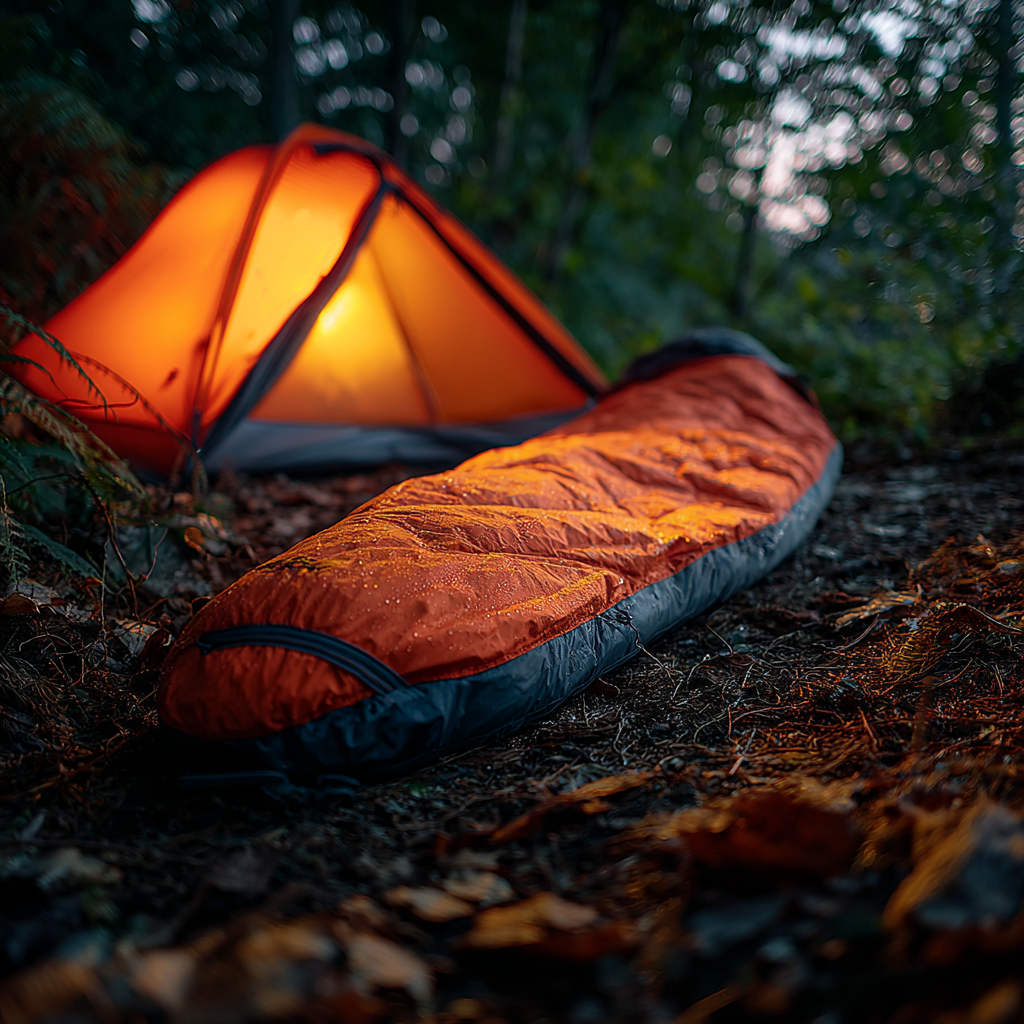
Insulated emergency blankets—sometimes called thermal bivvies—combine reflective materials with added padding or lining for warmth and comfort. They’re ideal for extended outdoor use or camping where you might need to sleep overnight in unpredictable conditions.
Advantages:
- Highest heat retention
- Comfortable for long-term use
- Reusable and often waterproof
- Can replace a lightweight sleeping bag
A popular option is the Reusable Emergency Thermal Sleeping Bag. It’s effectively a reinforced blanket you can climb inside, keeping you warm while shielding you from rain or snow.
Insulated blankets also fit perfectly with long-term survival setups and outdoor shelters. For additional gear recommendations, check our guide on emergency shelter options.

4. Solar Blankets
Solar blankets are advanced emergency covers designed to collect and amplify heat from sunlight. They’re especially useful in desert or cold-daylight survival scenarios where radiant warmth is essential.
Advantages:
- Generates additional warmth via solar absorption
- Can help dry wet clothing
- Multi-use: warmth, signaling, shade, or tent lining
- Long-lasting materials suitable for reuse
One excellent model is the SOL Survivor Solar Blanket, known for its robust design and versatile survival functions.
Pairing solar gear with a reliable power source can further boost your self-sufficiency. Explore options in our post on emergency lighting and solar lanterns.
How to Choose the Right Blanket for You
The right choice depends on where and how you plan to use it. Consider these key factors:
1. Climate and Location
Cold or wet climates demand insulated or aluminum models, while hot or variable regions may benefit from solar or Mylar designs.
2. Intended Use
For car kits, go for durable blankets that withstand abrasion. Backpackers and hikers should favor lightweight Mylar for space efficiency.
3. Duration of Use
Short-term sheltering requires quick-deploy Mylar or foil, whereas long-term scenarios favor insulated bivvies for comfort.
4. Multi-Purpose Features
Some blankets double as tarps, ground cloths, or improvised shelters. Multi-functional gear maximizes survival value.
When assembling your household or travel kit, align your choice with your broader survival plan—whether it’s a home preparedness system or a 72-hour emergency kit.
Caring for and Storing Emergency Blankets
Proper care extends your blanket’s lifespan and reliability:
- Avoid punctures by keeping them in sealed pouches or zip bags.
- Clean gently with a damp cloth if needed; harsh detergents can damage reflective coating.
- Store in multiple locations: one at home, one in your vehicle, and one in your go-bag.
Regular inspection ensures that the material hasn’t degraded or developed tears over time. Similar to rotating your other gear, follow our guide on emergency kit maintenance for seasonal checks.
Recommended Products (Affiliate Selection)
Here’s a quick recap of the top-rated blankets mentioned above:
- Ready America Emergency Thermal Blanket – Lightweight, compact, and ideal for compact emergency kits.
- Everlit Emergency Survival Blanket – Durable aluminum build with superior wind resistance.
- Reusable Emergency Thermal Sleeping Bag – Perfect for long-term outdoor or cold-weather use.
- SOL Survivor Solar Blanket – Combines solar heating with durability for extended survival scenarios.
Each of these is designed to meet different survival conditions while maintaining portability and reliability.
Conclusion
Emergency blankets are small, affordable, and powerful tools every prepared household should own. Understanding the differences between Mylar, aluminum, insulated, and solar varieties helps you choose the right one for your unique environment and needs.
By keeping a blanket in your car, home, and go-bag, you can ensure warmth and safety in virtually any situation. Preparedness isn’t about fear—it’s about foresight and responsibility.
Round out your readiness plan by exploring our cornerstone guide on the top 10 must-have items in your disaster supply kit, where you’ll learn how an emergency blanket complements the other essentials every family should have on hand.