
When the water stops flowing from the tap, you don’t have days to figure things out—you have minutes. Without clean drinking water, you can’t cook, clean, or stay healthy. That’s why every home needs a simple 72-hour water plan. Follow these 5 steps and your family will be ready for any outage, storm, or emergency.
Step 1: Know How Much Water You Need
You need at least 1 gallon of water per person, per day.
- Drinking: About 2–3 liters
- Cooking: About 1 liter
- Cleaning: Minimal, but still needed
💡 Example:
A family of 4 needs 12 gallons for 3 days. That’s equal to 24 large 2-liter soda bottles.
Don’t forget:
- Pets need water too—add at least 1 quart (about 1 liter) per pet per day.
- Hot weather? You’ll need 1.5–2 gallons per person per day.
Step 2: Store Water the Right Way
Water storage isn’t just about having bottles—it’s about keeping it safe.
- Use food-grade containers or clean soda bottles.
- Rinse with bleach before filling.
- Store in a cool, dark place—away from gasoline, paint, or chemicals.
- Label containers with the date filled.
💡 Rotation rule: Replace stored water every 6 months to keep it fresh.
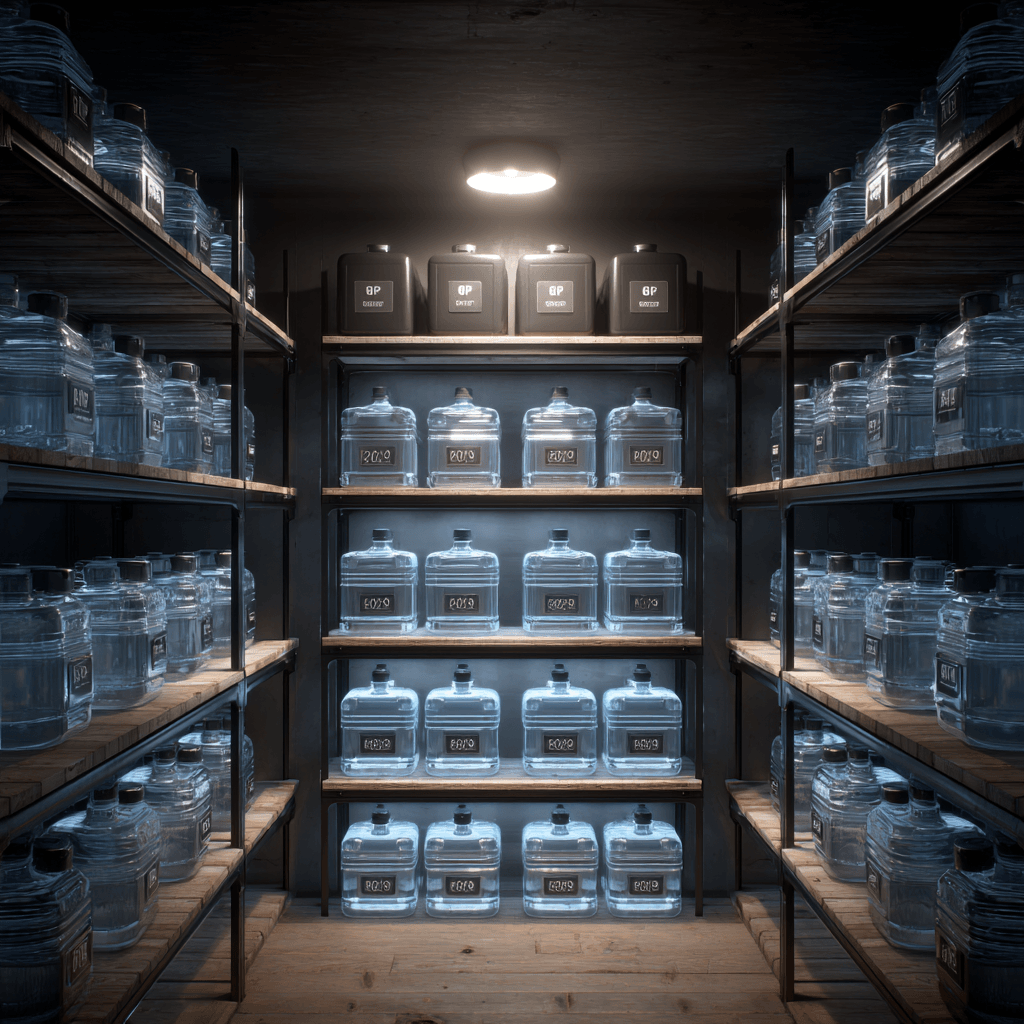
Properly labeled and stored water containers ensure your supply stays fresh and safe during emergencies.
Step 3: Purify Water in an Emergency
If you run out of stored water, you’ll need to purify what you can find—rainwater, streams, lakes, or melted snow.
Here’s how:
- Boiling: Bring water to a rolling boil for 1 minute (3 minutes if you live in the mountains).
- Water purification tablets: Keep a few packs in your emergency kit.
- Portable filters: Remove dirt, bacteria, and parasites—easy to carry anywhere.
💡 Tip: Always strain water through a clean cloth before boiling or filtering to remove debris.
Step 4: Make Your Own Water
Stored water runs out. Purification can be tricky.
But being able to produce your own clean water? That’s the ultimate survival move.
Some devices pull moisture from the air—turning it into fresh, drinkable water, even in dry climates.
That’s why I recommend this off-grid water system, because it does exactly that.
- Works without plumbing or city water
- Can make up to 30 gallons per day
- Small enough to fit in your home or cabin
- Runs on very little power
An off-grid water generator can provide a steady supply of clean drinking water anywhere, anytime.
Step 5: Create Your Family Water Plan
Make sure everyone knows the plan before trouble starts.
- Assign roles: Who collects water? Who purifies it?
- Keep all water gear in one labeled bin for fast access.
- Practice boiling, filtering, and measuring water so it’s second nature.
💡 Extra Tip: Mark the minimum water line on your containers. This helps you see when it’s time to restock or produce more.
Final Thoughts
Clean water is the first step to survival.
- Store it safely
- Purify it when needed
- Produce it if possible (and its possible click here to learn how)
Start your 72-hour water plan today so you’re never caught unprepared.
If you want the fastest, easiest way to guarantee clean water during any crisis, checking out this survival water device is a requirement.