Forget the romanticized images you see splashed all over social media. For someone serious about preparedness, what is off grid living is a calculated decision to sever ties with public utilities—the power grid, municipal water, and sewer systems—to forge a life of genuine resilience.
Think of it as cutting the tethers to a system that’s proven to be fragile. You’re essentially turning your home into a self-contained vessel, capable of weathering any storm that comes its way.
Even if you live in an urban environment, you can still adopt the principles of off-grid living. For those in cities or suburban areas, a urban survival guide can help you prepare for emergencies, build resilience, and maintain essential skills—no matter where you call home.
Defining Real Off Grid Living For Preparedness
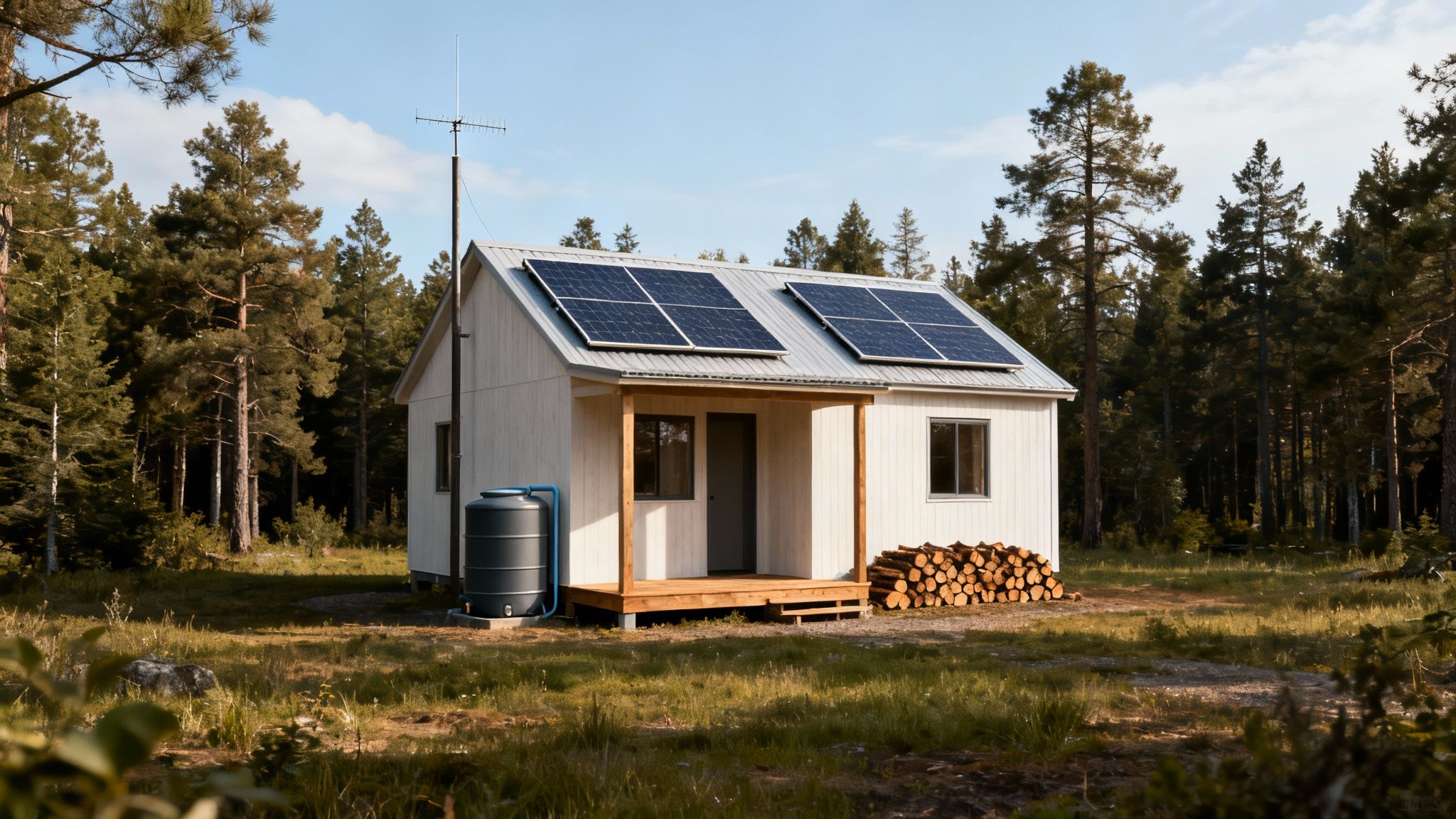
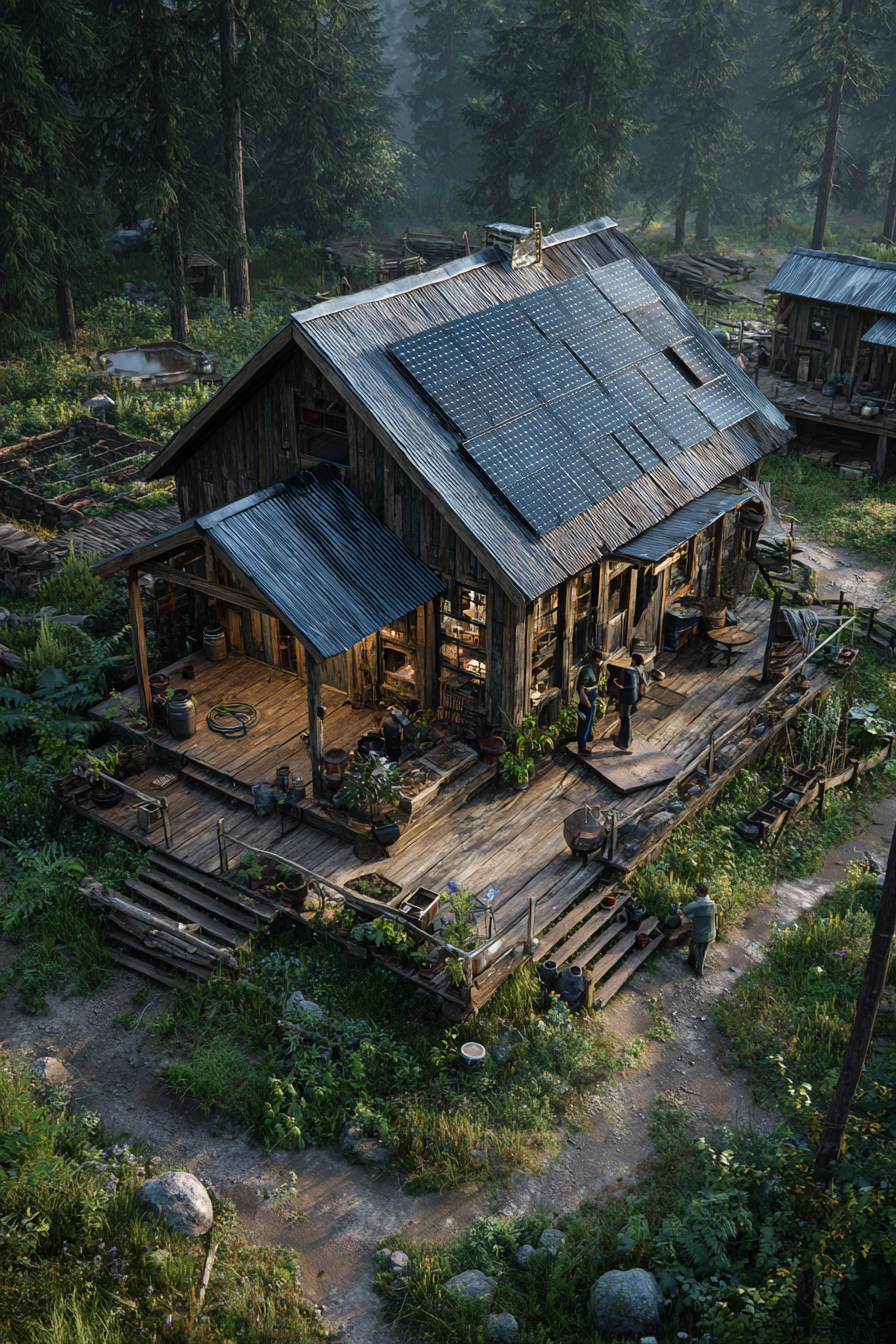
For a prepper, this isn’t about escaping society. It’s about taking proactive control to ensure your family’s safety and well-being during a grid-down scenario, a supply chain collapse, or any other major crisis. It means building a life where your most basic needs are met by systems you own and operate yourself.
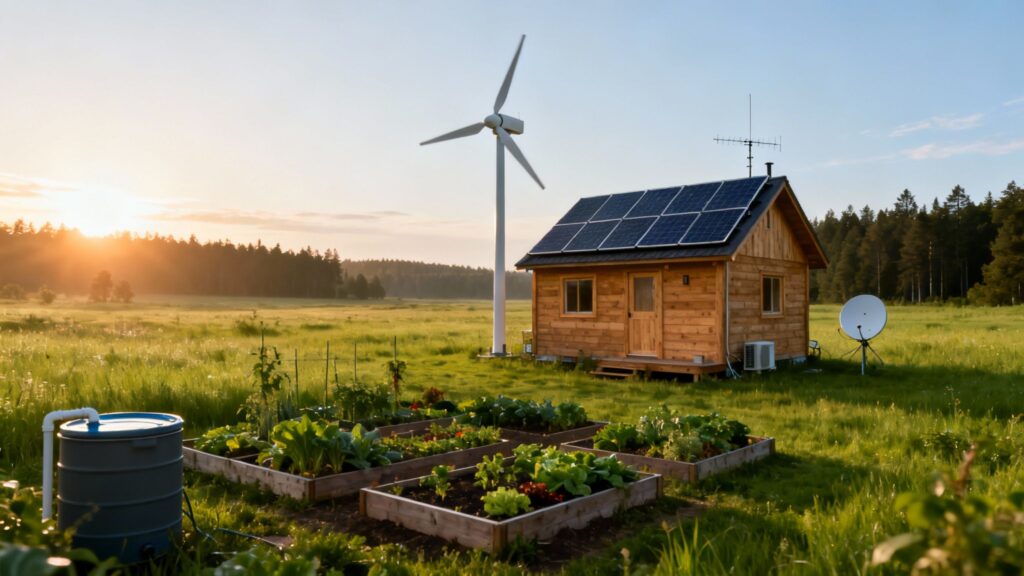
This entire lifestyle rests on five fundamental pillars that work in concert to create true independence.
- Energy: Generating your own electricity, most often through solar panels, but also wind or micro-hydro systems.
- Water: Securing, collecting, and purifying your own water from sources like a private well, rainwater catchment, or a nearby spring.
- Food: Growing, raising, and preserving a significant portion of what you eat.
- Waste: Managing all household waste right on your own property, from trash to sewage.
- Communications: Maintaining a reliable link to the outside world when the usual cell and internet networks go dark.
The Spectrum of Self-Reliance
It’s crucial to understand that going off-grid isn’t an all-or-nothing leap. It exists on a spectrum. Many people ease into it, adopting a phased approach that fits their skills, budget, and specific preparedness goals.
For those just starting out, getting a handle on the fundamentals is the best first move. If that’s you, check out our guide on how to start prepping for practical advice on building those initial skills. The journey can take many forms, each with its own level of commitment and payoff in resilience.
One of the biggest myths is that off-grid living means a primitive, isolated existence. The reality is, modern technology allows for a remarkable degree of comfort and connectivity, making this a practical strategy for anyone serious about long-term security.
Three Common Approaches to Off-Grid Living
To get a clearer picture of what this might look like for you, let’s break down the most common ways people tackle it.
The different ways people approach off-grid living each come with their own set of goals and requirements. The table below outlines these common strategies, helping you see where you might fit in on the spectrum of self-reliance.
Comparing Off Grid Living Approaches
| Approach | Grid Connection | Primary Goal | Common For |
|---|---|---|---|
| Full-Time Off-Grid | Completely disconnected | Total self-sufficiency and independence | Homesteaders, dedicated preppers, those seeking maximum resilience |
| Part-Time or Hybrid | Often disconnected (at a secondary property) or grid-tied with robust backups | Testing systems, creating a bug-out location, partial self-reliance | Individuals with a primary residence, preppers building a retreat |
| Grid-Tied with Backup | Connected to the grid | Resilience against short-to-medium term disruptions | Most homeowners, beginners in preparedness, urban/suburban preppers |
Ultimately, the right path is the one that aligns with your personal situation and preparedness philosophy.
Now, let’s look closer at what each approach entails:
1. Full-Time Off-Grid:
This is the deep end of the pool. It’s the most complete expression of self-sufficiency, where you are entirely disconnected from every public utility. You generate your power, source your water, and manage all waste on-site. While this path offers the absolute highest level of resilience, it also demands the biggest investment in skills, time, and infrastructure.
2. Part-Time or Hybrid Off-Grid:
This is a very popular middle ground. Many use an off-grid property as a secondary location—a “bug-out” cabin or weekend retreat. This setup allows them to develop skills and test systems without completely uprooting their conventional lives. Others live in a grid-tied home but have installed robust, independent backup systems for power and water that can keep them going for weeks or even months at a time.
3. Grid-Tied with Backup:
This is the most accessible and common starting point. Your home stays connected to the grid, but you fortify it with serious backup power solutions. This could be a solar array with a large battery bank or a powerful generator tied into your home’s electrical panel, often supplemented by portable power stations like a Goal Zero Yeti for critical devices. The goal here isn’t total independence, but building resilience against the increasingly common temporary disruptions we all face.
You can start small by building a solid foundation with an emergency preparedness checklist to ensure you’re ready for any situation, even during a grid-down event.
Think about ditching the power company entirely, running your home on solar panels and batteries while harvesting food from your own garden. That’s the heart of off-grid living—a self-reliant lifestyle that’s gaining traction worldwide. According to the World Bank’s Off-Grid Solar Market Trends Report, off-grid solar solutions were already powering the lives of over 560 million people globally as of last year.
The Five Pillars Of A Self-Sufficient Homestead
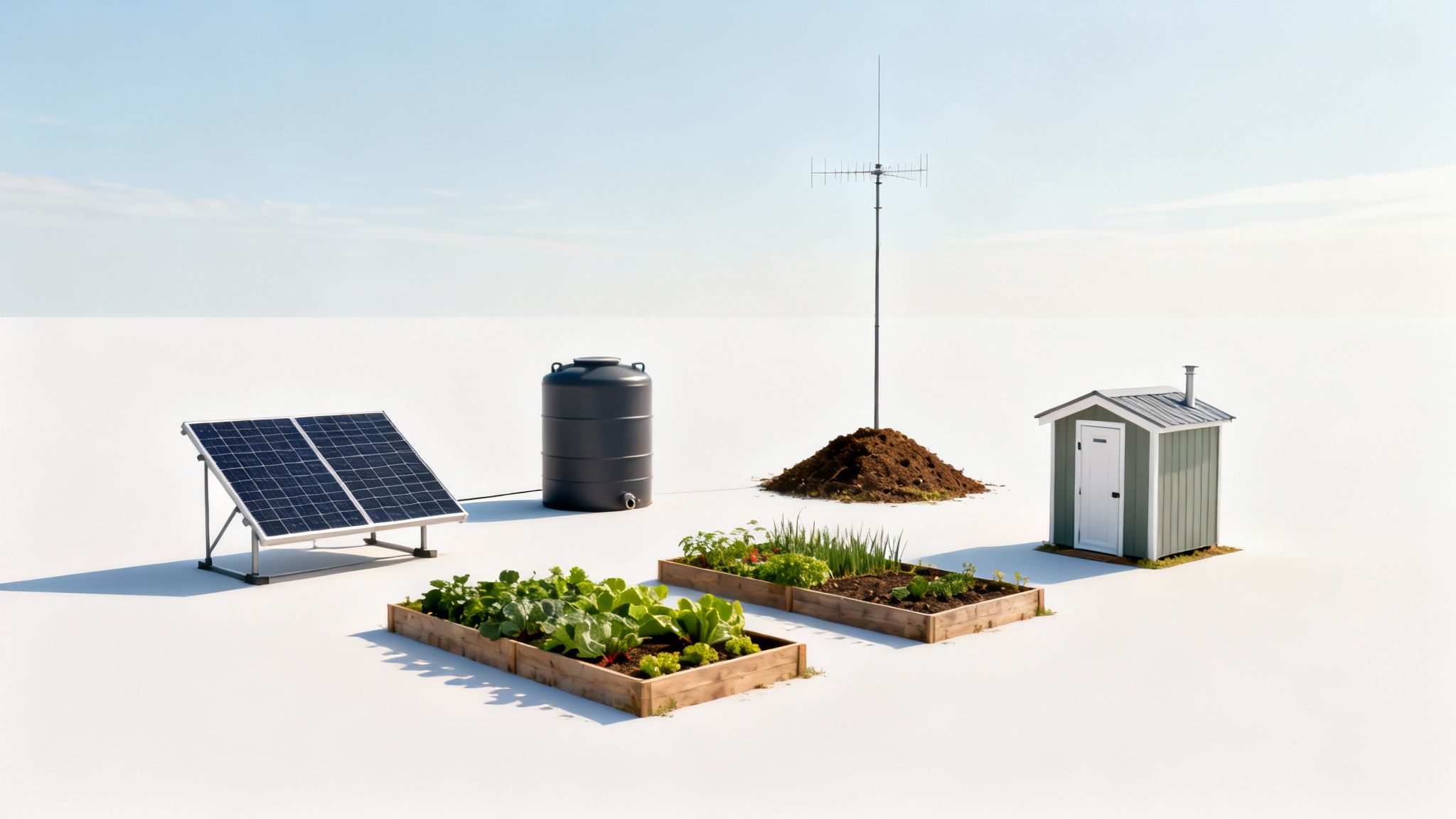
A truly resilient off-grid homestead doesn’t just happen. It’s built on a foundation of five interconnected systems, each one absolutely critical for genuine independence.
Think of these as the structural pillars holding up your self-sufficient life. If one is weak, the entire structure is compromised. These five pillars—Energy, Water, Food, Waste, and Communications—are the blueprint for any functional and secure homestead. Let’s dig into what each one means in the real world.
Pillar 1: Energy Independence
Power is the lifeblood of a modern homestead. It’s what runs the well pump delivering your water, keeps the freezer preserving your food, and powers the lights that cut through the darkness. Without a reliable, independent power system, you’re not living off-grid—you’re just camping. Think of an off-grid solar system like a rainwater catchment setup. You need a way to collect the resource (sunlight), a place to store it for later use, and a method to get it where you need it. Each part of that chain is critical to making sure the lights stay on long after the sun goes down.
For most people, this starts with a solar power system. If you’re just starting out or have minimal needs, a portable solar generator like a Jackery Explorer 1000 is a fantastic entry point. It can power essential devices during an outage or at a remote campsite. For a permanent homestead, the system gets serious, usually involving a large solar panel array, a robust battery bank, and a high-quality inverter from a company like Victron Energy to turn stored DC power into the usable AC power your home runs on.
But solar isn’t the only game in town. Depending on your property, you might look at:
- Wind Power: A great option for properties with consistent, strong winds. A turbine can be your primary power source or a powerful supplement, especially in areas that don’t get a ton of sun.
- Micro-Hydro: This is the holy grail for some. If you’re lucky enough to have a year-round creek or stream with a decent drop in elevation, a micro-hydro system can provide incredibly reliable, 24/7 power.
Pillar 2: Water Security
Clean water is non-negotiable. Period. An off-grid homestead must have a secure, renewable source of water completely separate from municipal supplies. You become responsible for every single step: collection, storage, filtration, and distribution.
The most common solutions tap into what nature provides. A private well is often considered the gold standard, giving you a consistent supply of groundwater. Just know that drilling a well can be expensive and depends entirely on the local water table. Another killer strategy is rainwater harvesting, which uses your roof to collect rain and funnel it into large cisterns for storage.
No matter where it comes from, all water must be considered unsafe until you’ve proven otherwise. Filtration and purification aren’t optional—they are critical safety protocols.
This is where good gear is essential. A gravity-fed filtration system, like a Big Berkey Water Filter, is a prepper’s best friend. It can remove bacteria, viruses, and other nasty contaminants without needing any electricity, making it perfect for both daily use and emergencies.
Pillar 3: Food Production And Preservation
The third pillar is all about shortening your supply chain down to zero. This means growing a significant portion of your own food, raising livestock, and becoming a master of preservation. The goal isn’t just a cute summer garden; it’s creating a system that can feed your family all year long.
Even with a strong food production system, budget constraints can make it hard to sustain long-term self-reliance. That’s why prepping on a budget is essential—focusing on high-impact, low-cost strategies that build resilience without breaking the bank.
This pillar breaks down into a few key skills:
- Sustainable Gardening: We’re talking more than just raised beds. You need to understand your soil, get a composting system going, learn to save seeds, and choose crops that are calorie-dense and thrive in your climate.
- Raising Small Livestock: Animals are an incredible asset. Chickens give you eggs and meat, goats can provide milk for cheese and yogurt, and rabbits are a famously fast-reproducing source of lean protein.
- Long-Term Food Preservation: Growing the food is only half the battle. You have to make that harvest last through winter and lean times. Canning, dehydrating, and fermenting are non-negotiable skills. A quality dehydrator, such as an Excalibur Food Dehydrator, can process large batches of produce efficiently.
Proper food storage is just as important as growing it. For anyone serious about long-term reserves, figuring out how to maintain a cool, stable environment is crucial. Our guide on underground food storage methods covers detailed strategies to protect your food for months or even years.
To maintain food safety and extend shelf life, consider learning lost Amish skills like root cellaring and natural preservation methods that don’t rely on electricity.
Pillar 4: Waste Management
When you live off-grid, the garbage truck isn’t coming. There’s no sewer line to magically whisk your waste away. You are 100% responsible for managing everything you produce, and the smart homesteader learns to turn that “waste” into a resource.
For household trash, the mantra is “reduce, reuse, recycle, and refuse.” You’ll become hyper-aware of every piece of packaging you bring onto your property. Composting kitchen scraps and yard waste is a given—it creates black gold for your garden.
For human waste, you basically have two routes. A modern septic system is a common choice, acting as a mini wastewater treatment plant on your property. A more sustainable and water-saving option is a composting toilet, such as a Nature’s Head Self-Contained Composting Toilet, which uses zero water and, over time, turns waste into a safe, usable compost.
Pillar 5: Reliable Communications
The final pillar is your connection to the outside world, especially when the normal systems go down. Being off-grid doesn’t mean being isolated. In an emergency, being able to get information or call for help can be a lifesaver. This means having redundant communication systems that don’t depend on the grid.
Your comms plan should be layered:
- Satellite Internet: Services like Starlink can give you high-speed internet almost anywhere. It’s a reliable way to stay connected for work, news, or coordinating with others.
- GMRS Radios: General Mobile Radio Service radios are perfect for short-to-medium range comms. Think talking to family members across your property or coordinating with a local mutual assistance group. A pair of Midland GXT1000VP4 radios is a popular choice.
- HAM Radio: This is for serious, long-distance communication and tapping into emergency information networks. Getting a HAM license and a solid handheld unit like the popular Baofeng UV-5R is an invaluable asset for any prepper.
Put them all together, and these five pillars create the unshakable foundation for a life of true self-reliance and preparedness.
Powering Your Freedom With Off Grid Energy
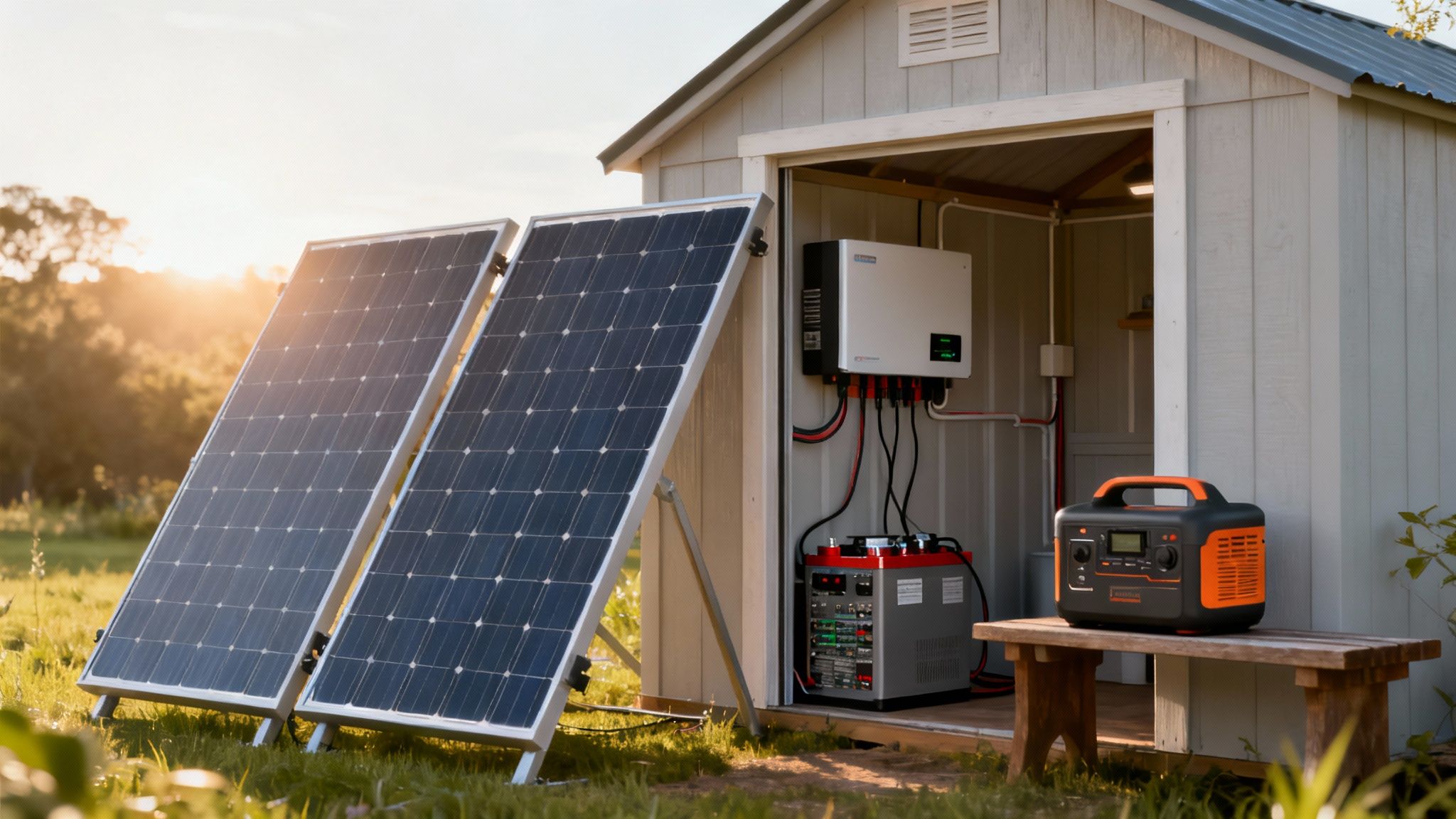
Energy is the lifeblood of any modern off-grid setup. It’s what runs the well pump delivering your water, keeps the freezer preserving your food, and powers the lights that cut through the darkness. Without a reliable, independent power system, you’re not living off-grid—you’re just camping.
Think of an off-grid solar system like a rainwater catchment setup. You need a way to collect the resource (sunlight), a place to store it for later use, and a method to get it where you need it. Each part of that chain is critical to making sure the lights stay on long after the sun goes down.
The Core Components Of A Solar System
Putting together a solar system really comes down to four key parts working in harmony. Once you understand what each one does, the whole process of capturing the sun’s energy for your homestead becomes a lot less intimidating.
Solar Panels (The Collectors): These are the most obvious part of the system. Just like a roof gathers rainwater, solar panels are designed to collect photons from sunlight and convert them into DC (Direct Current) electricity. The more panel surface area you have, the more energy you can pull in on a good, sunny day.
Charge Controller (The Flow Regulator): Your charge controller is the unsung hero of the system. It sits between the panels and your batteries, managing the flow of electricity to prevent overcharging. A bad charge can literally cook your expensive battery bank, so this little device is non-negotiable for system health and safety.
Battery Bank (The Storage Tank): This is your energy reservoir, storing the power your panels collect for use at night or on those frustratingly cloudy days. Lithium iron phosphate (LiFePO4) batteries, like those from Battle Born Batteries, have become the go-to for serious off-gridders due to their long lifespan and high efficiency. The size of this bank dictates how long you can run your essentials when the sun isn’t shining.
Inverter (The Tap): Your batteries store power as DC, but almost every appliance in your house—from the coffee maker to the TV—runs on AC (Alternating Current). The inverter is the magic box that converts that stored DC power into usable AC power. It’s the tap that lets you access all that stored energy.
First Step Conduct An Energy Audit
Before you even dream of buying a single solar panel, you have to know exactly what your power needs are. The biggest, and most expensive, mistake beginners make is wildly underestimating how much energy they actually use. This leads to a system that constantly fails.
Doing a personal energy audit is straightforward but absolutely vital. For a week, write down every single electrical device you consider essential and how many hours you use it each day. A cheap electricity usage monitor, like the P3 P4400 Kill A Watt, is perfect for getting precise readings on power hogs like refrigerators and freezers. This data is the bedrock of a system design that won’t let you down.
A well-designed off-grid power system isn’t about running everything you currently do; it’s about reliably running everything you need. Prioritizing essentials like water pumps, refrigeration, and basic lighting is the key to resilience.
This audit will also shine a spotlight on where you can make easy cuts. For example, replacing an old, inefficient chest freezer with a modern Energy Star model can drastically shrink the size—and cost—of the solar system you’ll need to run it. If your needs are smaller or you’re just planning for temporary outages, you can also check out our guide to portable power sources for emergency preparedness.
Exploring Alternatives To Solar
While solar is king for most off-gridders, it’s not the only game in town. Depending on your property’s geography and climate, other renewable sources might be a better fit or a fantastic way to supplement your solar array.
Wind Power: If your land gets consistent, steady winds, a small-scale wind turbine can be an absolute game-changer. Wind is especially valuable because it often kicks in when solar is offline—at night and during stormy weather.
Micro-Hydro Power: For those lucky enough to have a year-round creek or stream with a decent drop, a micro-hydro system is the gold standard of off-grid power. It can generate reliable, consistent electricity 24/7, no matter the weather, making it one of the most stable energy sources you can get.
Going off-grid with solar is more than just a lifestyle choice; it’s a core preparedness strategy. The residential sector makes up a massive 78% of the off-grid market, which is growing at a 7.32% annual clip. Just last year, nearly 9 million off-grid solar kits were sold across the globe, bringing essential power for lighting, refrigeration, and communication to 116 million people and proving its vital role in building self-reliance.
A Realistic Look At The Off Grid Lifestyle
Deciding to live off-grid is a monumental choice, one that requires a stone-cold, honest look at the incredible rewards and the very real challenges. It’s easy to get swept up in the romantic vision you see online—quiet mornings, overflowing gardens, and total freedom. That’s part of the picture, sure, but it’s not the whole story.
The truth is, this lifestyle is demanding. It’s a full-time commitment that requires grit, a hunger for learning, and an acceptance that hard work is your new normal.
The Trade-Offs Of True Independence
The upside? You achieve true self-reliance, shielding your family from skyrocketing utility bills and the flimsy nature of our public infrastructure. For many, this ability to stand strong during disasters—whether it’s a simple blackout or a full-blown supply chain collapse—is the number one reason to make the jump.
But that freedom has a price, and it’s not just paid in dollars. You’re looking at a serious upfront investment in land and gear. You’ll also face a steep learning curve for skills you’ve probably never even thought about, not to mention the constant grind of maintaining your own systems. In the city, a problem is just a phone call away from being fixed. Out here, you are the plumber, the electrician, and the mechanic.
You might also run into legal roadblocks with local zoning laws or building codes, which aren’t always set up for off-grid homes or alternative septic systems. It’s a life of constant problem-solving, plain and simple.
Weighing The Decision Pros vs Cons Of Going Off Grid
To really wrap your head around what you’d be getting into, it helps to see the good and the bad laid out side-by-side. This isn’t about talking you out of it—it’s about making sure you go in with both eyes open.
| Advantages (The Rewards) | Disadvantages (The Realities) |
|---|---|
| Complete Self-Reliance You are in total control of your power, water, and food. | Significant Upfront Investment Land, a dwelling, and core systems can easily run into the tens or hundreds of thousands. |
| Resilience Against Disasters Your home keeps running when the public grid fails or emergencies strike. | Steep Learning Curve You have to get good at gardening, plumbing, basic electrical work, and mechanics—fast. |
| No More Utility Bills You’re free from the endless cycle of rising electricity, water, and gas prices. | Constant System Maintenance Everything—solar panels, water filters, waste systems—needs regular checks, cleaning, and repairs. |
| Deeper Connection to Nature Your daily rhythm becomes synced with the seasons and the land around you. | Potential Legal and Zoning Hurdles Not all counties or towns are friendly to off-grid living or alternative building methods. |
| Lower Environmental Impact You dramatically shrink your carbon footprint by living on renewable energy. | Isolation and Reduced Convenience Getting to a store, a doctor, or a social event often requires a significant drive. |
At the end of the day, only you can decide if the rewards of independence are worth the realities of the hard work involved.
A Real-World Transition
Take the Miller family. They moved to a 20-acre homestead in rural Appalachia with a plan that looked perfect on paper. Reality, of course, had other ideas.
During their first winter, a long stretch of cloudy weeks proved their solar array was too small, forcing them to burn through expensive generator fuel. The next summer, an unexpected drought nearly drained their rainwater tanks, teaching them a brutal lesson about water conservation.
One of their biggest scares was food preservation. A huge harvest of vegetables was on the verge of spoiling because they couldn’t rely on their big chest freezer. This crisis forced them to master non-electric methods on the fly. Learning how to preserve food without electricity went from being a neat idea to an essential survival skill.
They quickly bought a high-quality All American 921 Pressure Canner and learned to use a sun oven for dehydrating. That near-disaster became the cornerstone of their robust, shelf-stable food supply. Their story gets to the heart of what off-grid living really is: it’s not about having a perfect plan, but about how you adapt and overcome when that plan inevitably fails.
Your Step-By-Step Plan To Start Living Off Grid
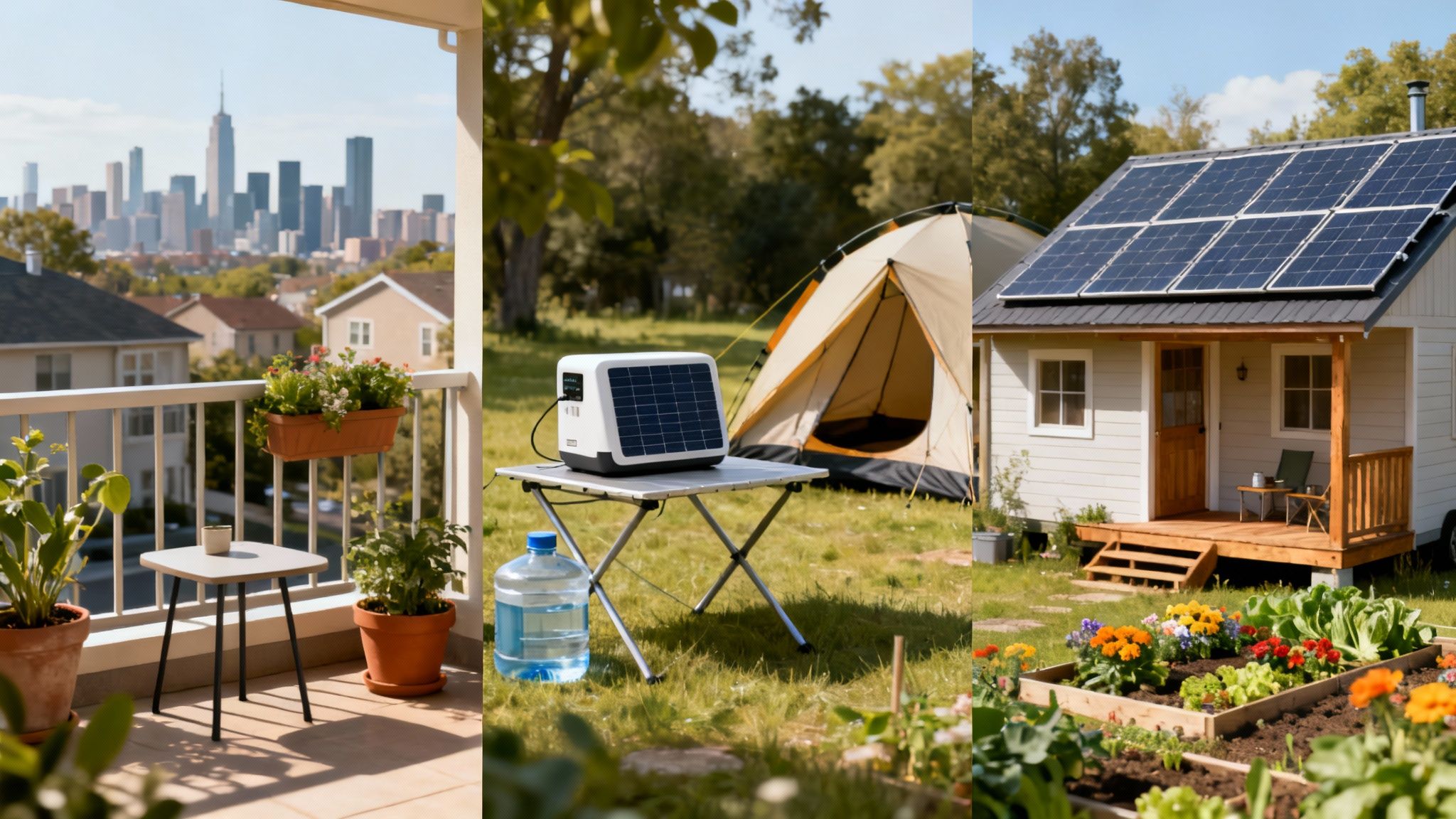
Making the move to an off-grid life isn’t like flipping a switch. It’s a journey, not something you accomplish overnight. The folks who succeed don’t just jump in headfirst; they follow a phased, methodical plan that builds their skills, resources, and confidence over time.
This roadmap will guide you through the process in manageable stages, preventing the kind of overwhelm that sinks most attempts before they even start.
The very first, and most critical, step is to get crystal clear on your end goal. What does “off-grid” actually look like for you? Are you picturing a fully self-sufficient homestead that can feed your family year-round, or is this a hardened bug-out location for emergencies? The strategy for each is wildly different.
A full-time homestead demands a deep dive into local growing seasons and water rights. A bug-out property, on the other hand, prioritizes security, low maintenance, and how quickly you can get there from home. Be brutally honest with yourself here, because this one decision will shape every single choice you make from this point forward.
Phase 1: Define And Research
Before you spend a single dime on gear or land, your first investment is time. This is the foundation that prevents catastrophic mistakes down the road.
Legal Deep Dive: This part is non-negotiable. Start digging into local zoning laws, building codes, and any regulations about rainwater collection, septic systems, or alternative homes like tiny houses or yurts. Some counties are notoriously hostile to off-grid living. Finding that out after you’ve bought land is a nightmare you don’t want.
Skills and Budget Audit: Grab a notebook and make two lists. On one side, write down every relevant skill you already have—gardening, basic mechanics, first aid, anything. On the other, list every skill you need to learn. Next to that, create a realistic budget outlining what you can actually afford for land, a dwelling, and the core systems for power, water, and waste.
Location Scouting: With your goals and legal research in hand, you can start identifying potential regions. Think about climate, the length of the growing season, water availability, and the local community. Don’t underestimate the advantage of being reasonably close to a town with a good hardware store and medical facilities, especially in the early years.
Phase 2: Skill Building And Small-Scale Testing
This is where the theory stops and the real work begins. You’ll start developing the practical abilities you’ll depend on every single day, but you’ll do it in a low-risk environment. The goal is to build competence long before you’re in a situation where failure has real consequences.
- Practice with Purpose: Turn your weekend camping trips into training missions. Practice starting a fire in the rain, identifying a few local edible plants, and purifying water with a filter like the Sawyer Squeeze. These small adventures are your personal boot camp.
- Start a “Grid-Down” Garden: Even if it’s just a few pots on a balcony, a small garden teaches you invaluable lessons about soil, pests, and the real effort it takes to grow your own food. Focus on calorie-dense, easy-to-grow crops like potatoes, squash, and beans.
- Acquire Foundational Gear: Start investing in high-quality gear that has a dual use. A small portable solar generator can keep your phone charged during a power outage now, and it can serve as a backup system on your homestead later. A good pressure canner lets you practice food preservation today with produce from the farmer’s market.
Phase 3: The Gradual Transition
Once you have a solid base of skills and research, you can start making bigger moves toward your goal. This phase can easily span several years as you strategically buy land and begin building out your core infrastructure piece by piece.
The off-grid transition is a marathon, not a sprint. Every skill learned and every piece of gear tested in your current life is a direct investment in your future resilience. Rushing the process is the most common path to failure.
It’s no secret that the demand for this lifestyle is surging. The global off-grid housing market, valued at USD 2.4 billion, is projected to more than double to USD 4.76 billion by 2032, with North America leading the charge. For preppers, this trend opens up practical starting points, like investing in a simple off-grid cabin kit to begin gaining years of self-sufficiency experience. If you want to dig into the numbers, you can read the full report on the off-grid housing market.
Common Questions About Going Off The Grid
Thinking about cutting the cord and going off-grid brings up a ton of questions. It’s one thing to dream about total self-sufficiency, but the nuts and bolts of making it happen can feel overwhelming. Let’s tackle some of the most common questions and myths head-on, so you get clear, practical answers from a prepper’s point of view.
Getting these details straight before you dive in is critical. This isn’t just a lifestyle change; it’s a commitment.
How Much Does It Really Cost To Go Off-Grid?
This is the big one, and the only honest answer is: it depends. There’s no magic number. Your total cost boils down to three main things: the land, your house, and the core systems that keep everything running—power, water, and waste.
You can definitely do it on a tighter budget. Buying raw, undeveloped land for a few thousand dollars an acre and building a simple cabin or tiny home yourself is one way. Throw in a modest solar setup and a rainwater catchment system, and you might get started for under $50,000.
On the flip side, if you’re looking at a large property with a custom-built home, a deep well, a serious solar array, and a modern septic system, you could easily be looking at $300,000 or more.
Can I Still Have Internet And Modern Comforts?
Absolutely. The idea that off-grid living is like stepping back into the 1800s is one of the biggest myths out there. Modern tech makes it totally possible to have high-speed internet, a refrigerator, and even a washing machine while being completely disconnected from the grid.
Services like Starlink can give you solid satellite internet in most rural spots, keeping you connected for work or emergencies. A correctly sized solar power system will have no problem running efficient appliances, from a chest freezer to your laptop. The trick is to do a thorough energy audit and choose energy-efficient models to keep your power needs realistic.
What Are The Biggest Mistakes Beginners Make?
The road to a successful off-grid life is paved with the mistakes of those who came before. Learn from them so you don’t repeat them.
- Underestimating Power Needs: This is, without a doubt, the number one screw-up. People guess how much power they’ll need and end up with an undersized solar system that can’t keep up. That means constant power shortages and a whole lot of frustration. Do the math first.
- Ignoring Local Regulations: It’s heartbreaking to see someone buy their dream property only to find out they can’t legally build what they want or that they don’t have the rights to collect rainwater. Do your homework on zoning laws, building codes, and water rights before you buy.
- Lacking Essential Skills: Moving to the middle of nowhere without knowing basic gardening, simple mechanics, or first aid is setting yourself up for failure. When you’re an hour from the nearest town, you’re the handyman and the first responder. This also includes knowing survival basics; our guide on how to purify water covers methods that are non-negotiable when you’re the one in charge of your supply.
Is It Possible To Live Off-Grid Near A Town?
Yes, and for a lot of people, this is the sweet spot. “Suburban homesteading” or partial off-grid living gives you a fantastic balance of independence and access to the real world. You can find a smaller plot of land just outside of town, giving you enough space for a big garden, some chickens, and a solid solar backup system.
This hybrid approach makes you far more resilient against short-term grid-down situations without forcing you to completely disconnect from jobs, schools, and medical care. It’s a practical way to embrace the off-grid mindset without going completely off the map.