
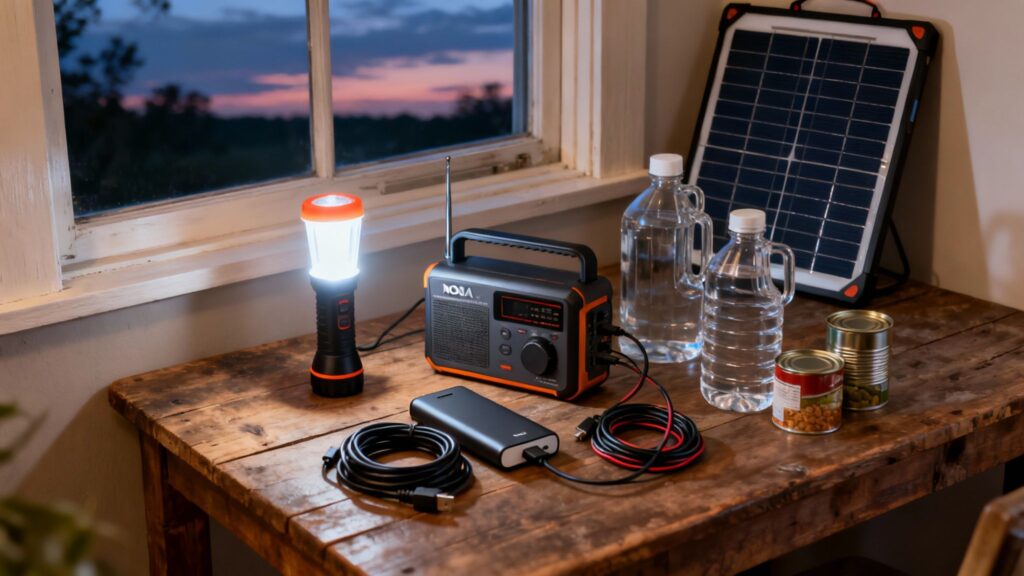
When the lights go out, your level of preparation is what separates a minor inconvenience from a genuine crisis. True readiness for a power outage isn’t just about stashing a few flashlights and some canned goods; it’s about having the right supplies, a clear plan, and the knowledge to keep your family safe and comfortable when the grid goes down.
This means gathering essentials like food, water, and lighting, but also creating a solid family communication strategy and truly understanding the risks that make being prepared so critical today.
Why Power Outage Preparedness Matters More Than Ever
Blackouts aren’t a distant “what if” anymore—for millions of us, they’re becoming a regular part of life. With an aging power grid and weather that seems to get more unpredictable by the year, the conversation has shifted from if it happens to when.
Having a plan isn’t about being paranoid—it’s about taking practical steps and preparing for power outages to ensure your family can handle things on their own when the power fails.
The numbers don’t lie. Between 2000 and 2023, a staggering 80% of all major power outages in the U.S. were caused by severe weather. We’re talking everything from brutal winter storms and hurricanes to heatwaves. States like Texas, Michigan, and California have been hit the hardest, but no area is immune. You can dig deeper into these trends on Wikipedia’s List of major power outages.
The Three Pillars of Effective Preparation
A solid preparedness strategy really boils down to three key areas. Get these right, and you’ll be in a much better position to handle whatever comes your way.
- A Well-Stocked Supply Kit: This is your foundation. Think non-perishable food, water, light sources, a first-aid kit, and tools to stay informed. Having it all in one place, ready to go, eliminates that last-minute panic.
- A Smart Food and Water Strategy: It’s not enough to just have food; you need a plan for it. This means knowing how to safely manage what’s in your fridge and freezer and having a way to purify water if you need to.
- A Clear Family Communication Plan: When cell towers go down, you can’t rely on your phone. A simple, pre-arranged plan ensures everyone in the family knows how to get in touch, where to meet, and who to call for help.
True preparedness is about creating a bubble of safety and normalcy for your family when outside systems break down. It’s the confidence that comes from knowing you have the resources and the plan to handle the situation calmly and effectively.
Moving from Planning to Action
Thinking in terms of these pillars helps turn the big, overwhelming idea of “preparedness” into small, manageable tasks. You can build up your capabilities one step at a time, starting with the basics and adding more as your skills and budget allow. The goal is simple: create a household that can stand on its own for at least a few days.
This guide will walk you through each of these pillars with practical advice and actionable checklists, and if you want additional strategies, check out our comprehensive guide on how to prepare for a blackout.
Assembling Your Essential Power Outage Kit
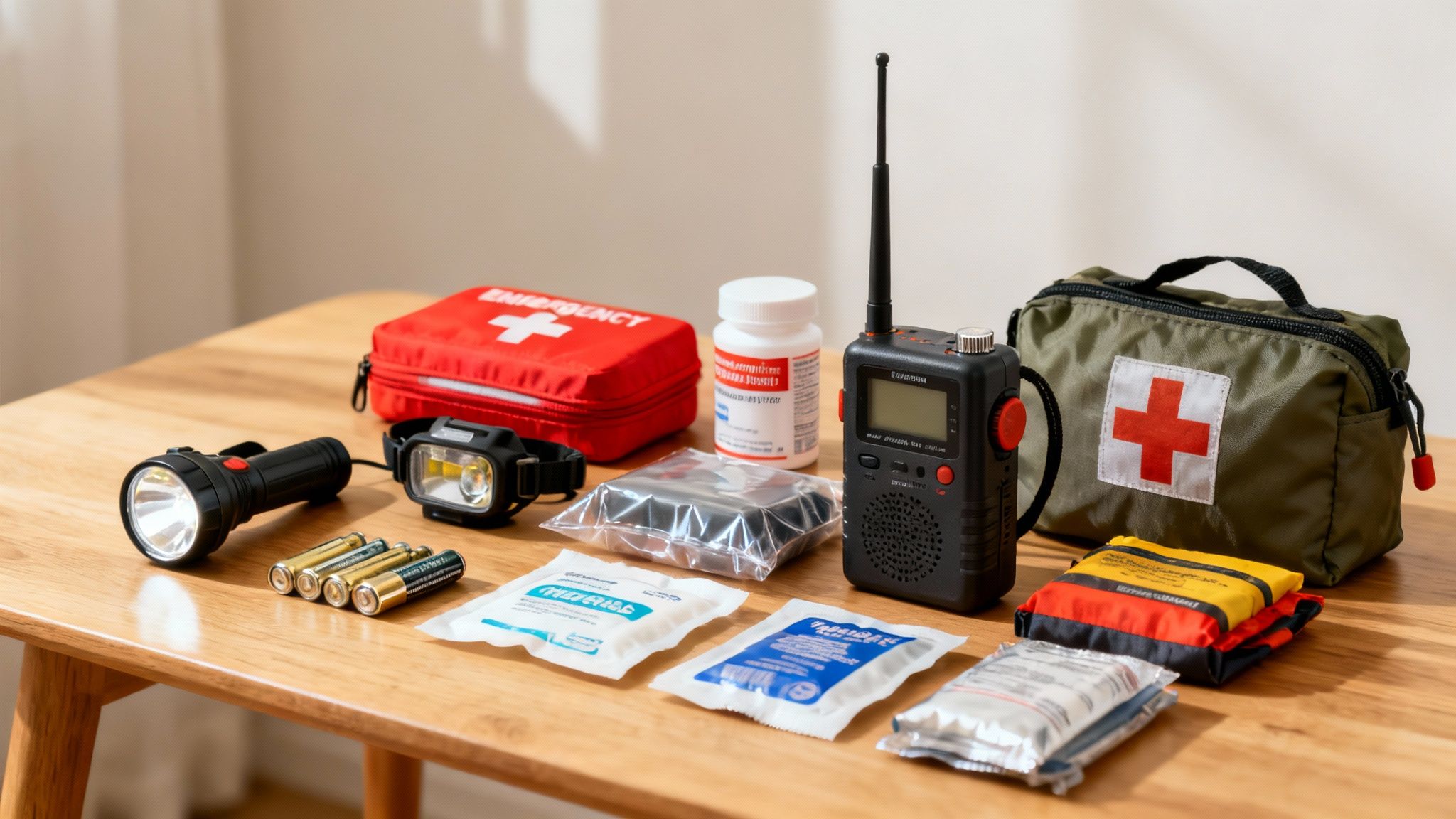
A well-stocked, organized kit is the absolute cornerstone of any real power outage plan, and building a comprehensive disaster supply kit ensures you have everything needed to stay safe, informed, and reasonably comfortable.
Your first objective should be a solid 72-hour kit. This three-day cache of supplies is the gold standard for handling most short-term emergencies. Once that’s locked down, you can start layering in additional items to push your self-sufficiency out to a week or even longer, giving you a serious buffer against extended disruptions.
Core Components for Your 72-Hour Kit
Let’s start with the non-negotiables. These are the items you’ll be reaching for almost immediately when the lights go out.
Reliable Lighting (Without the Fire Hazard)
First rule: ditch the candles. They’re a massive fire risk, especially when you’re already dealing with a stressful situation. Modern LED tech is infinitely safer, brighter, and more efficient.
- LED Flashlights: Have a few. You’ll want one high-powered tactical flashlight for checking on things outside and smaller, simpler ones for each person in the house. Well-regarded brands like Maglite or Fenix are known for their durability.
- Headlamps: These are a game-changer. They keep your hands free for everything from flipping a breaker to cooking or handling a first-aid issue. Brands like Petzl or Black Diamond are popular choices for their reliability.
- Battery-Powered Lanterns: Nothing beats a good lantern for lighting up a whole room. It helps create a sense of normalcy, which is huge for morale during family meals or games.
- Extra Batteries: This seems obvious, but it’s often overlooked. Stock up on every size you need for your gear. Keep them somewhere cool and dry, and make a habit of checking and rotating them twice a year.
Vital Communication
When the power is out, your Wi-Fi is down, and cell towers can get overloaded or lose power themselves. Staying plugged into official updates is critical.
Your single most important tool here is a battery-powered or hand-crank NOAA Weather Radio. This device gets broadcasts directly from the National Oceanic and Atmospheric Administration, giving you access to emergency alerts when every other line of communication is dead. Many models from companies like Midland even have a USB port for a trickle charge to your phone.
A dedicated emergency radio isn’t a “nice-to-have”—it’s an absolute necessity. It’s your direct link to life-saving information when your phone is just a useless brick. Relying solely on a smartphone is one of the biggest mistakes people make.
First-Aid and Personal Medications
A simple cut can become a serious problem when you can’t just run to the store. Your first-aid kit needs to be comprehensive and up-to-date.
Of course, you need the basics: bandages, antiseptic wipes, pain relievers, and gauze. But you need to go further. Customize it with a seven-day supply of all prescription medications for everyone in your family, plus copies of the prescriptions themselves. Don’t forget personal items like spare glasses or contact lens solution. Many people start with a pre-made kit from a brand like My Medic and then customize it with personal items.
Extending Your Kit for Longer Outages
Once your 72-hour kit is dialed in, it’s time to think longer-term. This means bulking up quantities and adding supplies for sanitation and sustained comfort. A lot of the principles here overlap with building a full bug-out bag; for a deeper look, check out our guide on how to build a 72-hour emergency kit.
Sanitation and Hygiene
Staying clean isn’t just about comfort—it’s about preventing the spread of illness, which is a real threat in a prolonged grid-down event.
- Moist towelettes, garbage bags, and plastic ties for personal sanitation.
- Hand sanitizer that’s at least 60% alcohol.
- A portable camp toilet and supplies, just in case your plumbing is out of commission.
- Feminine supplies and any other personal hygiene items you rely on daily.
Customizing for Unique Family Needs
A one-size-fits-all kit doesn’t exist. Real preparedness means tailoring your supplies to the actual people (and pets) who depend on you.
- For Infants: Formula, diapers, bottles, and wipes are non-negotiable.
- For the Elderly: Make sure you have backup power for medical devices, easy-to-open food, and any specific items they need for comfort.
- For Pets: Pack several days of their food and extra water, plus any medications they require.
To make this easier, here’s a checklist breaking down the essentials for both a basic and an extended kit.
Essential Power Outage Kit Checklist
This table outlines the core items for your first 72 hours and the additional supplies needed to stay self-sufficient for a week or more.
| Item Category | 72-Hour Kit (Core Essentials) | 1-Week+ Kit (Extended Preparedness) |
|---|---|---|
| Lighting | LED Flashlights, Headlamps, Batteries | Additional Lanterns, Solar/Crank Lights, More Batteries |
| Communication | NOAA Weather Radio (Hand-Crank/Battery) | Portable Power Bank, Solar Phone Charger |
| First-Aid | Comprehensive First-Aid Kit, 7-Day Meds | Extra Prescription Meds, Advanced First-Aid Supplies |
| Food & Water | 3 Gallons Water/Person, Non-Perishable Food | 7+ Gallons Water/Person, Water Filter, More Food |
| Tools & Safety | Multi-tool, Whistle, Dust Masks, Wrench | Fire Extinguisher, Work Gloves, Tarp, Duct Tape |
| Sanitation | Wet Wipes, Hand Sanitizer, Trash Bags | Portable Toilet, Toilet Paper, Soap, Hygiene Items |
| Documents | Copies of IDs, Insurance, Bank Records | Digital Copies on a USB Drive, Emergency Cash |
| Special Needs | Baby Supplies, Pet Food, Elderly Care Items | Expanded Supplies for Infants, Pets, and Elderly |
Use this as a starting point and customize it for your family’s specific situation. A well-thought-out kit is your best defense against the uncertainty of a power outage.
Smart Storage and Maintenance
Your kit does you no good if you can’t find it or if the batteries are dead. Keep everything together in one or two easy-to-grab containers, like heavy-duty plastic bins or large duffel bags. Find a spot for it that’s cool, dark, and easily accessible—a hall closet or a dedicated shelf in the garage is perfect.
Finally, put a recurring reminder on your calendar to check your kit every six months. This is your chance to swap out any food, water, or medications that are nearing their expiration date and to replace all your batteries. A little routine maintenance ensures that when the power goes out, your gear will be ready to go.
Securing Your Food and Water Supply Off-Grid
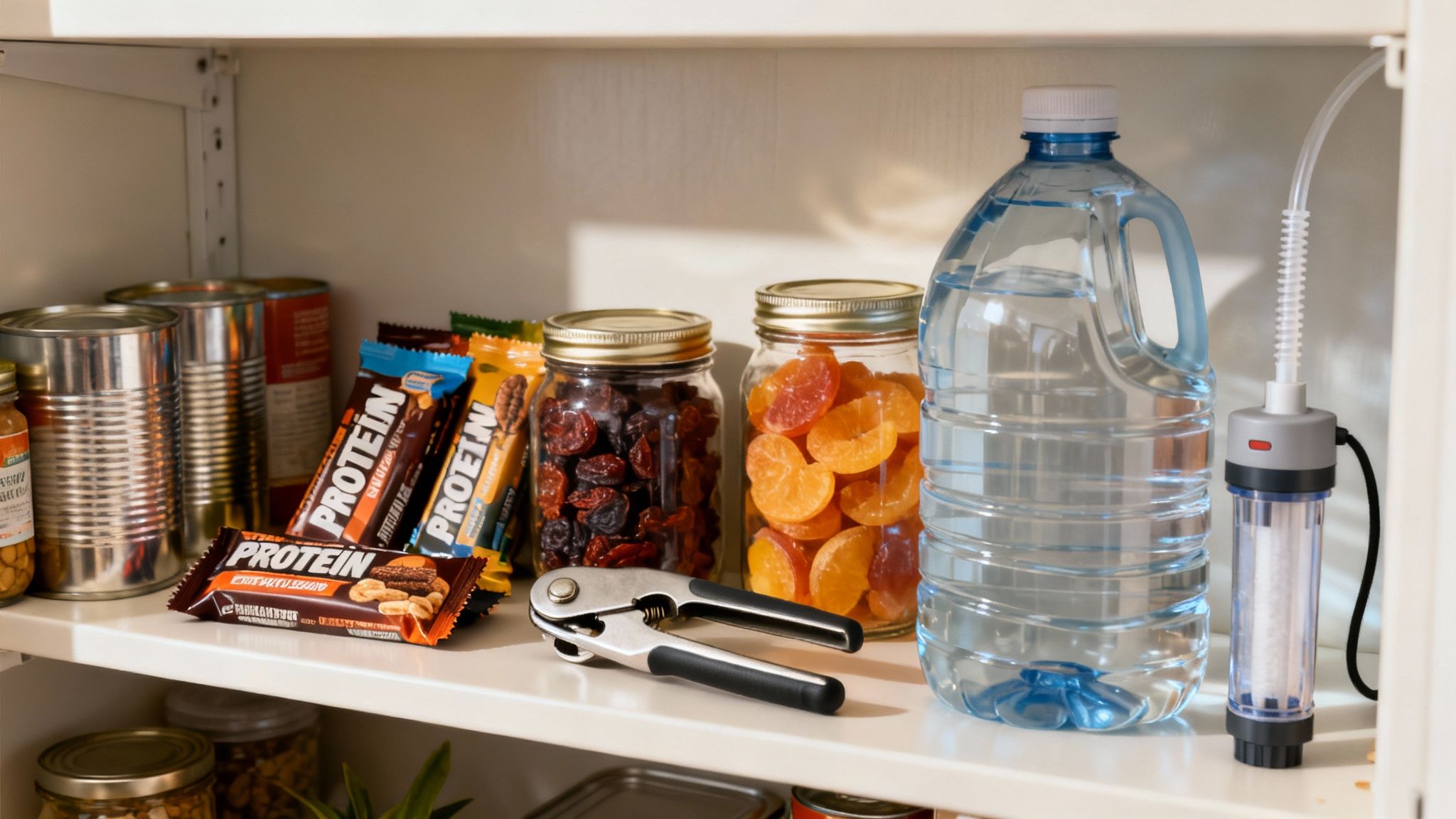
When the lights go out, your attention will snap to the most basic needs: food and water. Suddenly, your kitchen is a different world. The refrigerator becomes a ticking clock, and clean water from the tap is no longer a guarantee.
A solid plan isn’t just about stockpiling cans. It’s about smart strategies to keep your family fed and hydrated when modern conveniences are gone. This means knowing exactly how to handle spoiling food, building a practical no-cook pantry, and having reliable ways to store and purify water.
Managing Your Refrigerator and Freezer
The moment the power cuts, your fridge and freezer are living on borrowed time. The golden rule? Keep the doors shut. Every time you open them, you’re letting the cold escape.
A full freezer can keep food frozen for about 48 hours if you don’t open it. A half-full one will only last about 24 hours. Your refrigerator is far more fragile, keeping food safe for only around four hours.
To stretch that time, have a few good coolers and plenty of ice packs ready to go. Once the fridge hits that four-hour mark, move critical items like milk, meat, and leftovers into a cooler packed with ice. A durable cooler from a brand like YETI can extend this time significantly. That simple move can buy you a day or two.
After a power outage, never taste food to determine its safety. A good rule to live by is: “When in doubt, throw it out.” Food that has been above 40°F for two hours or more can harbor dangerous bacteria.
Building Your No-Cook Emergency Pantry
During a blackout, your pantry is your lifeline. You’ll want to focus on nutrient-dense, non-perishable foods that don’t require any cooking or refrigeration. This ensures you can eat well even if you can’t fire up a camp stove.
A smart emergency pantry should cover all your nutritional bases to keep energy levels from crashing.
- Proteins: Canned tuna, chicken, or salmon; beef jerky; protein bars; peanut butter; and nuts are all fantastic options.
- Carbohydrates: Crackers, pretzels, granola bars, and ready-to-eat cereals offer that quick energy boost.
- Fruits and Vegetables: Canned varieties, dried fruit like raisins or apricots, and applesauce provide crucial vitamins.
- Comfort Foods: Don’t forget about morale. A few cookies, some hard candy, or instant coffee can provide a small but powerful sense of normalcy.
And the single most overlooked tool? A reliable manual can opener. Don’t find yourself with a pantry full of cans you can’t get into. You can get more ideas by checking out our guide on how to preserve food without electricity.
Ensuring a Safe and Plentiful Water Supply
Water is non-negotiable—even more critical than food. The standard rule is to store at least one gallon of water per person per day. Aim for a minimum three-day supply, but a two-week supply is the ideal goal.
Store commercially bottled water in a cool, dark place. Keep it out of direct sunlight, which can break down the plastic and affect the water’s taste and quality.
What if your stored water runs out? You need a backup plan to purify water from other sources, whether it’s a nearby stream or the water in your hot water heater tank.
- Water Filters: A quality portable water filter is an invaluable piece of gear. A personal filter like the LifeStraw can make questionable water sources drinkable by removing bacteria and protozoa. For family use, larger gravity-fed filters like those from Sawyer are great for processing gallons at a time.
- Purification Tablets: These are a lightweight, foolproof backup. Just drop a tablet into a container of water and wait. They’re perfect for a bug-out bag or your car’s emergency kit.
- Boiling: If you have a safe way to heat water, bringing it to a rolling boil for at least one minute is the most effective purification method out there.
Safe Off-Grid Cooking Methods
If the outage stretches beyond a day, you’ll want a way to heat food or boil water. You have to be extremely careful here, as using fuel-burning appliances indoors can produce deadly carbon monoxide gas.
Never, ever use a charcoal grill, camp stove, or generator inside your home or garage. Your safest bet is to use appliances designed for outdoor use and operate them well away from the house. A simple propane camp stove from a brand like Coleman is a versatile and affordable choice for most families. If you want something more self-sufficient, a BioLite CampStove not only cooks your food but also generates electricity from the heat to charge small devices.
No matter what method you use, always have a working, battery-operated carbon monoxide detector inside. It’s a small investment that can literally save lives when you’re relying on alternative cooking sources during a power outage.
Choosing the Right Backup Power for Your Home
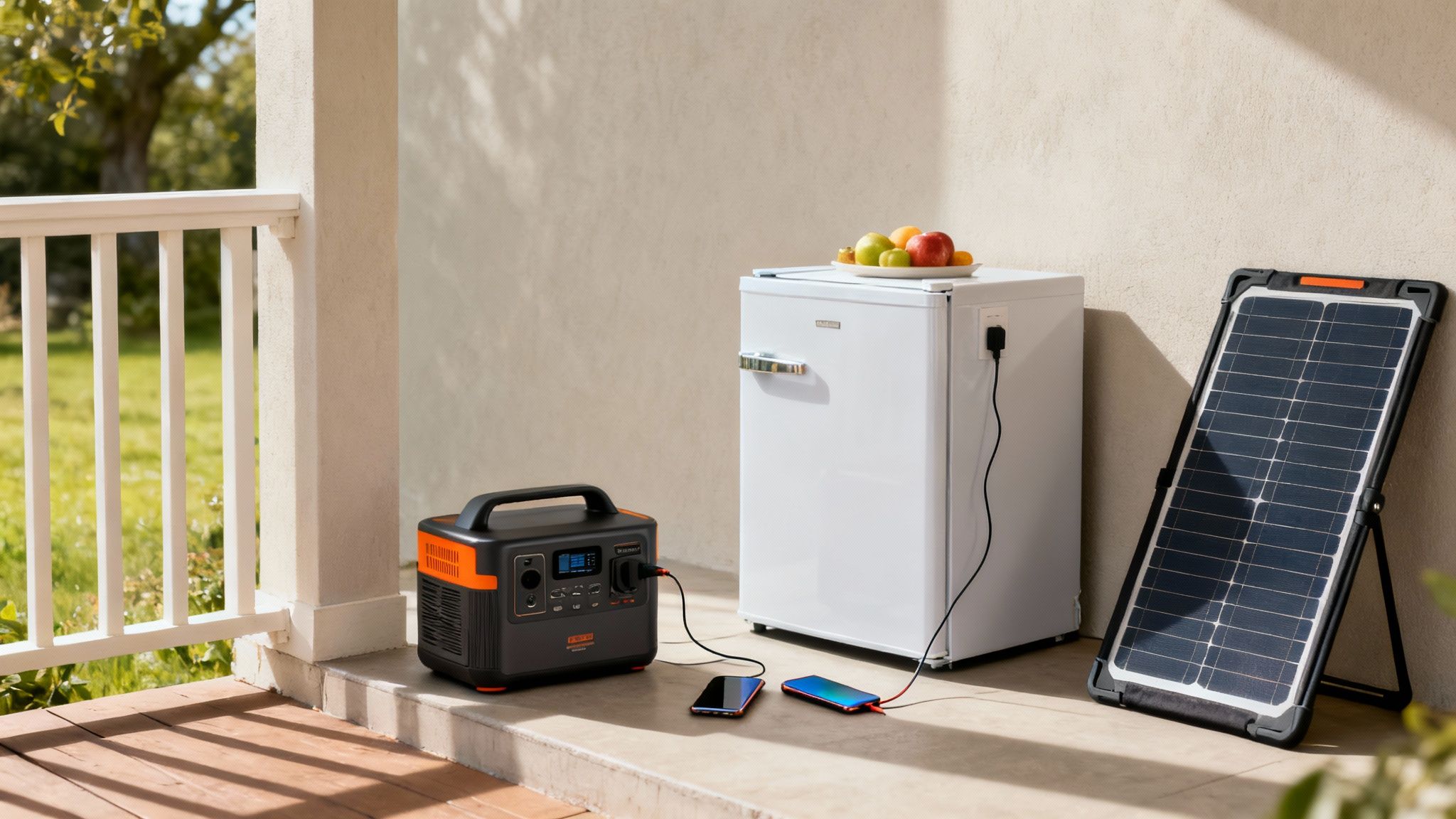
When the grid goes down, your ability to generate even a little bit of electricity can make all the difference. Backup power isn’t just a nice-to-have; it’s a lifeline that keeps medical devices running, phones charged for communication, and a small fridge cold enough to save your food.
The good news is that you have more options than ever before. They range from simple power banks that fit in your pocket to robust systems that can energize key circuits in your home. The trick is to understand what each type of system can realistically do, so you can pick the right tool for your specific needs and budget.
Starting Small: Portable Power Banks and Stations
For a lot of people, the first step into backup power is just about keeping small electronics online. A handful of fully charged power banks from a reliable brand like Anker is a fantastic, low-cost way to keep phones and tablets going during the first few hours of an outage.
When you need a bit more juice, a portable power station is the next logical step up. Brands like Jackery or Goal Zero have made these large, rechargeable battery units incredibly popular. Think of them as silent, fume-free generators you can safely use right inside your house.
The most important number to look at is watt-hours (Wh), which tells you the station’s total energy capacity. For instance, a 500Wh station could power a 50-watt device for about 10 hours. This makes them perfect for running small appliances like a mini-fridge, charging laptops, or powering a CPAP machine through the night. Our detailed guide on portable power sources can help you figure out the right size for your situation.
Gas Generators: The Traditional Powerhouse
If you need to power bigger appliances—a full-sized refrigerator, a chest freezer, or a window AC unit—a traditional gas-powered generator has long been the go-to solution. They pack a serious punch for their price and will run as long as you can keep them fueled. Common household brands include Honda and Generac.
But that power comes with a major trade-off: safety. Gas generators produce deadly, odorless carbon monoxide (CO) gas, and you absolutely cannot cut corners here.
CRITICAL SAFETY WARNING: Never, ever run a gasoline-powered generator inside your home, garage, basement, or any enclosed space. It must be operated at least 20 feet away from your house, with the exhaust pointed away from all doors, windows, and vents. A working, battery-operated CO detector inside your home is non-negotiable if you own a generator.
Solar Generators: A Silent, Renewable Alternative
A solar generator is really just a portable power station that comes with solar panels. This setup gives you the ability to recharge your power source using nothing but the sun, making it a sustainable option for longer outages.
These systems are completely silent, don’t require fuel, and produce zero emissions, so they’re perfectly safe to use indoors, and many of these principles align with what off-grid living is all about—generating your own power independently from the grid.
Just remember that a solar setup’s effectiveness depends entirely on the weather, and if you’re interested in a permanent installation, our guide on solar power for cabins covers larger-scale renewable energy systems.
Comparing Your Backup Power Options
Making the right call comes down to your budget, what you absolutely need to power, and your tolerance for noise and maintenance. Each system has its clear pros and cons.
| Power Source | Best For | Pros | Cons |
|---|---|---|---|
| Power Banks | Phones, tablets, small USB devices | Inexpensive, portable, easy to use | Very limited capacity |
| Power Stations | Small appliances, medical devices, laptops | Silent, safe for indoor use, no fumes | Limited capacity, needs recharging |
| Gas Generators | Large appliances, multiple circuits | High power output, relatively low cost | Loud, requires fuel, CO poisoning risk |
| Solar Generators | Long-term outages, off-grid power | Renewable energy, silent, no fuel costs | Higher initial cost, weather dependent |
This kind of layered approach to power is becoming more and more necessary. A recent analysis found that weather-related power outages are surging. The Southeast, for example, experienced 360 of these outages between 2000 and 2023, while the South and Northeast each saw over 350. These numbers hammer home the growing need for every household to be more self-reliant. You can dig into the data in the report from Climate Central on rising weather-related outages.
Ultimately, the best strategy often involves a mix of these options—power banks for immediate needs, a power station for critical indoor devices, and maybe a generator for the heavy-lifting.
Creating a Household Emergency Plan That Actually Works
Having the right gear is a fantastic start, but it’s only half the equation. The best supplies in the world won’t help if your family doesn’t know what to do when the lights go out. A solid emergency plan turns a chaotic situation into a set of clear, manageable steps that everyone, even young children, can follow.
This doesn’t need to be a complicated, 50-page binder. A simple, one-page document covering communication, roles, and safety procedures is far more effective. It’s the playbook that ensures your household functions as a calm, coordinated team when things get stressful.
Establish Your Communication Lifeline
When a blackout hits, don’t assume your cell phone will work. Local networks can get jammed or lose power entirely. Your plan absolutely must include multiple ways to stay connected with family members who might be at work, school, or running errands.
Start by creating a simple communication tree. Everyone should have a physical, laminated card in their wallet or backpack with key phone numbers. This must include an out-of-state contact. In a regional disaster, it’s often easier to make a long-distance call than a local one. This person can act as a central message board for the entire family.
Your plan should also designate two specific meeting points: one just outside your home for sudden emergencies like a fire, and another outside your neighborhood in case you can’t return home. Make these locations unmistakable, like a specific park bench or the front of the public library.
Define Roles and Practice Drills
In the heat of the moment, people can freeze up. Assigning specific jobs beforehand gives everyone a sense of purpose and direction, preventing that crucial hesitation.
- Person 1: Responsible for grabbing the emergency kit and lighting. They should also check the circuit breaker to confirm the outage is external and not just a tripped fuse. A reliable multi-tool, like a Leatherman, is useful for this and other minor tasks.
- Person 2: In charge of rounding up pets and ensuring they are secure. If the outage seems like it might be a long one, they also start filling bathtubs with water for sanitation.
- Person 3: Responsible for unplugging sensitive electronics to prevent surge damage when the power returns. They also need to tune the NOAA Weather Radio to an emergency channel for updates.
Running drills is non-negotiable, especially with children. Walking through the steps every six months builds muscle memory and confidence. It’s your chance to discover what works and what doesn’t before a real crisis hits.
Home Safety and Community Connection
A solid plan also includes critical home safety procedures. For instance, everyone in the household who is old enough should know how to manually open the garage door. This simple skill can be a lifesaver if you need to evacuate by car during an outage.
Don’t overlook the power of your community. Knowing your neighbors is a huge asset. Agree to check on each other, especially those who are elderly or have medical needs. A connected neighborhood is a more resilient one. The vulnerability isn’t just local; World Bank Enterprise Surveys show how widespread outages can be, with businesses in some developing nations facing dozens of outages a month. These events disrupt lives and economies everywhere, reinforcing the need for robust household plans. You can explore more about these global impacts on the UN Data website.
Finally, get everything down in a clear, accessible format. A well-written plan is one of your most important pieces of gear. For a great starting point, you might be interested in our guide that includes an emergency preparedness plan template.
Common Questions About Preparing for a Power Outage
Even the best-laid plans bring up questions. Getting ready for a power outage can feel like a massive project, and it’s totally normal to have specific concerns pop up as you’re putting your kits and strategies together. Let’s tackle some of the most common questions we hear to help you fine-tune your preps and build real confidence.
How Long Should My Emergency Supplies Actually Last?
You’ve probably heard the standard advice: have a 72-hour kit. While that’s a great starting point, the hard truth is that recent severe weather events have shown it’s often not enough. Power grids are getting hit harder, and outages are lasting longer—sometimes a week or more.
A better way to think about it is in layers. Start with that solid 72-hour kit. That’ll see you through the most common, shorter outages. It’s your foundation.
Once that’s locked in, aim to extend your self-sufficiency to one full week. This means more water, more non-perishable food, and enough fuel or battery power to last seven days. If you live somewhere prone to major disasters like hurricanes, crippling ice storms, or earthquakes, the gold standard is a two-week supply. This gives you a serious buffer, not just for your family, but maybe even to help a neighbor in a pinch.
Can I Run a Portable Generator in My Garage if I Keep the Door Open?
No. Absolutely, unequivocally, no. This is one of the most dangerous—and tragically common—mistakes people make during an outage. Portable gas generators crank out carbon monoxide (CO), an invisible, odorless killer.
Even with the garage door wide open, CO can build up to deadly levels in minutes and silently seep into your home through any crack, vent, or doorway. The only safe place to run a portable generator is outdoors, at least 20 feet away from your house.
Point the generator’s exhaust away from all doors, windows, and air intakes. And please, treat a battery-operated carbon monoxide detector as non-negotiable. If you own a generator, you must have a working CO detector from a brand like First Alert or Kidde inside your home. It’s that simple.
What Is the Very First Thing I Should Do When the Power Goes Out?
Before you start digging out supplies, take a breath and quickly assess the situation. Is it just your house, or is the whole neighborhood dark? A quick glance at your circuit breaker panel can tell you if you’ve just tripped a breaker.
If the breakers look good and your neighbors are dark too, here’s your immediate action plan:
- Report It: Grab your cell phone and report the outage to your utility company. Don’t assume someone else has. The more reports they get, the faster they can pinpoint the problem and get crews rolling.
- Light It Up: Switch to your emergency lighting. This is why you have LED flashlights and headlamps ready to go. Avoid using candles as your main light source—they’re a huge fire risk, especially when you’re stressed and moving around in the dark. We’ve got a whole guide on safe emergency lighting options in our article.
- Save Your Food: Keep the refrigerator and freezer doors shut. Every time you peek inside, you let the cold air out, drastically shortening how long your food will stay safe.
- Tune In: Get your battery-powered or hand-crank NOAA Weather Radio running. This is your most reliable connection to official updates when cell towers might be overloaded or down.
How Can I Keep My Phone Charged During a Long Outage?
Your phone is your lifeline for information and connecting with family, so keeping it powered up is a top priority. Relying on just one charging method is a gamble; a layered approach is much smarter.
- First 24 Hours: A couple of fully charged portable power banks are perfect for this. They’re cheap, simple, and will get you through the initial phase.
- Multi-Day Outages: This is where a portable power station really shines. It’s a big step up, capable of recharging your phones many times over and even running other small devices.
- Indefinite Power: For true long-term resilience, nothing beats a solar generator or a power station paired with solar panels. As long as the sun is out, you can generate your own power.
And don’t forget the charger you drive every day. Your car can charge your devices, but be mindful not to kill its battery. Only run the engine in a well-ventilated area—never inside a garage—to avoid CO poisoning. The easiest trick of all? Put your phone in low-power mode immediately and resist scrolling. That alone will stretch your battery life further than you think.