
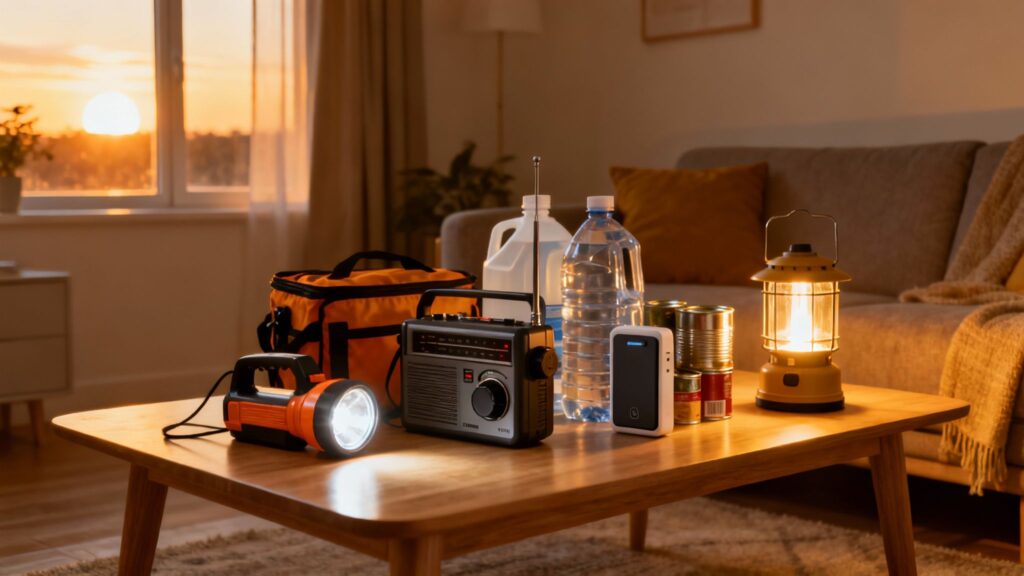
When the power goes out, it’s more than just an inconvenience. It’s a sudden, stark reminder of how much we depend on the grid for just about everything—communication, food, climate control, you name it. A flickering light during a storm is one thing, but a true blackout plunges us back a century. That’s why being prepared isn’t just a good idea anymore; it’s a basic household necessity.
We often take electricity for granted until it’s gone. But the reality is, our power grid is getting hammered. Aging infrastructure, record-breaking energy demands, and increasingly wild weather are a recipe for more frequent and longer-lasting outages. This isn’t just a hunch—the numbers tell the story.
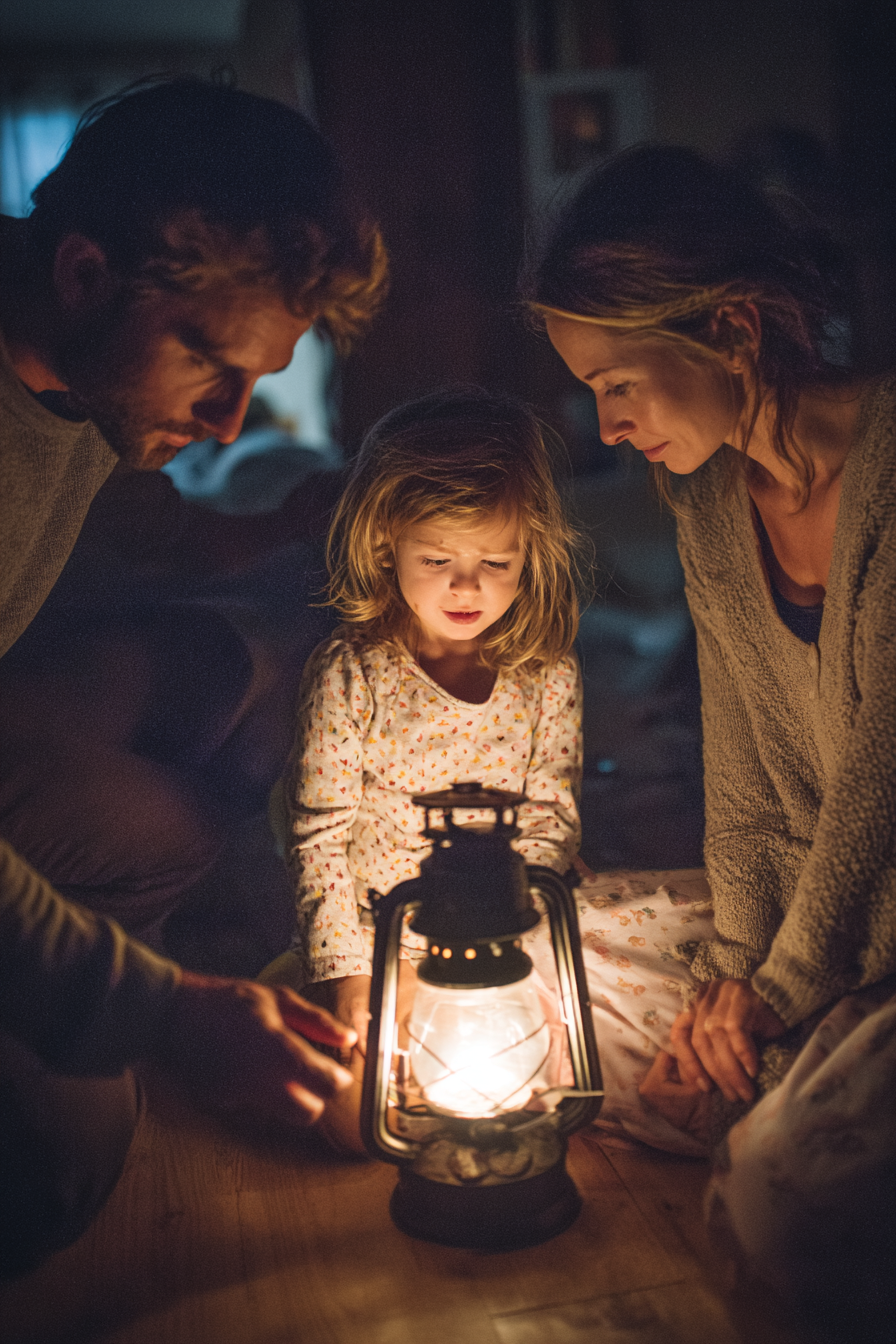
The Weather Factor: An Unavoidable Threat to the Grid
Weather is the undisputed champion of knocking out power. A staggering 80% of all major U.S. power outages between 2000 and 2023 were caused by weather events. We’re talking about everything from hurricanes and tornadoes to crippling ice storms and heatwaves.
Think about this: in 2020 alone, American utility customers sat through a collective 1.33 billion outage hours. That means the average person was without power for over eight hours that year. Whether you’re in Texas, California, or Michigan, no region is immune. You can dig into the historical outage data on Wikipedia to see just how common this is becoming.
A power outage is a pop quiz for your household’s resilience. A solid plan turns a moment of panic into a manageable problem, putting you back in control when the systems we rely on fail.
These aren’t rare, “what-if” scenarios. They are predictable emergencies that demand we get our act together before the lights go out.
It Starts with a Self-Reliant Mindset
Real preparedness isn’t just about having a box of flashlights and some extra batteries stashed in a closet. It’s about developing a mindset of self-reliance. It’s knowing that for at least 72 hours, you and your family can get by without outside help.
So, how do you get there? It boils down to a few key principles:
- Think Through Your Day: Walk through a normal day and make a mental list of everything that needs electricity. How will you cook? How will you stay warm or cool? How will you see after dark or get news updates? This is where your plan begins.
- Get Your Gear Now: Don’t wait for the storm warnings. By then, the store shelves are already empty and you’re in panic-buying mode. Gather your essentials when things are calm.
- Run a Drill: A plan on paper is just a piece of paper. You have to walk through it. Make sure everyone in your family knows where the supplies are, what their role is, and what to do in different scenarios.
When you start treating power outages as expected events rather than freak accidents, your whole perspective changes. You move from a place of anxiety to one of confidence. The goal here is simple: keep your loved ones safe and comfortable when the grid can’t.
For a step-by-step walkthrough of the entire preparation process, see our complete guide on how to prepare for a blackout.
This guide will show you exactly how to do that, with practical, no-nonsense steps. And if you’re looking to build out your preps more broadly, our ultimate emergency preparedness checklist for 2025 is a great place to start.
Assembling Your Essential Blackout Survival Kit
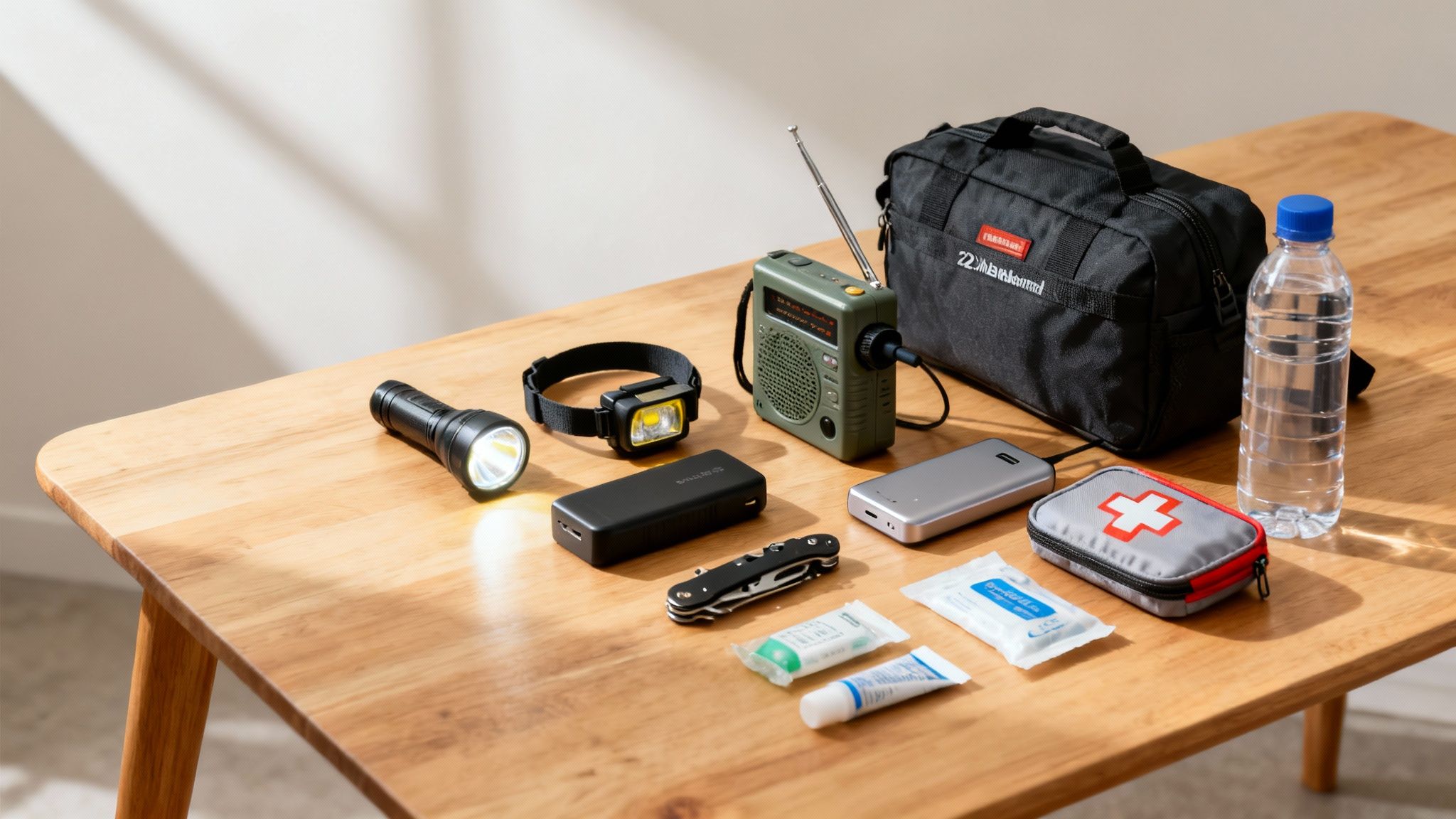
Think of it as your first responder bag, similar to a comprehensive disaster supply kit that addresses multiple emergency scenarios.
When the lights go out, the first few hours can feel chaotic. That initial uncertainty is exactly why a pre-packed, easy-to-grab kit is non-negotiable. It’s what turns confusion into calm, decisive action.
Our goal is a practical 72-hour survival kit—not just a random box of supplies, but a carefully chosen set of tools to solve the immediate problems you’ll face in the dark.
Think of it as your first responder bag. Keep it somewhere everyone in the house knows and can get to in seconds, whether that’s a hall closet, under the stairs, or in the garage.
Lighting and Communication
A blackout plunges you into darkness and silence. Your first two moves should be to fix that. Restoring light is a huge morale booster and a basic safety measure, while getting information from the outside world tells you what’s going on.
LED Flashlights and Headlamps: Ditch those old, dim incandescent flashlights. Modern LEDs from trusted brands like Maglite or Coast are brighter, tougher, and their batteries last ages longer. I always recommend a headlamp for everyone in the family; it keeps your hands free for cooking, checking on the kids, or fixing things.
Extra Batteries: It sounds simple, but this is the number one thing people forget. Make sure you have the right sizes for all your gear, keep them in a waterproof bag, and get into the habit of swapping them out twice a year when the clocks change. Many people rely on quality brands like Duracell or Energizer for their long shelf life.
Once you can see, you need to be able to hear. Your phone is a paperweight if the cell towers are down. This is where an old-school emergency radio earns its keep. A hand-crank model like the Midland ER310 is perfect because it pulls in AM/FM and critical NOAA weather alerts without needing grid power or batteries. It’s your lifeline to official updates.
When preparing for power outage events, your kit should address the immediate human needs for safety, information, and comfort. Light dispels fear, a radio provides clarity, and a power source maintains a link to your personal network.
The following checklist is designed to help you gather the absolute essentials for the first 72 hours of a blackout. This isn’t an exhaustive list for a long-term disaster, but a focused kit to get you through the initial, most critical phase safely and comfortably.
Core 72-Hour Blackout Kit Checklist
| Category | Essential Items | Recommended Quantity (Per Person) |
|---|---|---|
| Lighting | LED Flashlight or Headlamp | 1 |
| Extra Batteries (for all devices) | 2 full sets | |
| Glow Sticks or Battery-Powered Lantern | 1-2 | |
| Communication | Hand-Crank/Battery-Powered Radio (NOAA) | 1 per household |
| Fully Charged Power Bank | 1 | |
| Whistle (to signal for help) | 1 | |
| First-Aid | Comprehensive First-Aid Kit | 1 per household |
| Prescription Medications (7-day supply) | As needed | |
| Non-Prescription Meds (pain relievers, etc.) | As needed | |
| Hygiene | Wet Wipes & Hand Sanitizer | 1 large pack |
| Toothbrush & Toothpaste | 1 | |
| Feminine Hygiene Supplies, Diapers | As needed | |
| Tools & Safety | Multi-Tool or Pliers | 1 per household |
| Work Gloves | 1 pair | |
| N95 or KN95 Dust Masks | 2-3 | |
| Documents | Copies of IDs, Insurance, Bank Records | Stored digitally and in a waterproof bag |
| Local Maps (paper copies) | 1 set | |
| Emergency Contact List (written down) | 1 |
Remember, this checklist is a starting point. Tailor it to your family’s specific needs, including items for infants, the elderly, or pets. Having these items organized and ready to go provides immense peace of mind.
Power and Tools
You can’t power the fridge, but you can keep your most important small electronics alive. A simple power bank is enough to keep a phone charged for emergency calls or to access documents you’ve saved offline.
Look for solar-rechargeable options like the Anker PowerCore Solar. If the outage drags on for a few days and you get some sun, you’ll have a sustainable way to keep small devices topped off. Just make sure you keep the power bank charged as part of your weekly routine.
A good multi-tool like a Leatherman Wave is another must-have. It’s a toolbox in your pocket, perfect for opening a stubborn can of beans, tightening a loose battery cover, or handling countless other small tasks without having to search for tools in the dark.
For a deeper look at your lighting choices, check out our detailed guide on emergency lighting options.
First-Aid and Personal Hygiene
During an emergency, a small cut or scrape can become a big deal. Your kit needs a solid first-aid supply with everything from bandages and antiseptic wipes to pain relievers and gauze. Many people start with a pre-made kit from a brand like Adventure Medical Kits and then customize it. Most importantly, make sure you have at least a seven-day supply of any essential prescription medications.
Don’t underestimate hygiene. Staying clean is vital for both health and morale. A basic kit with toothbrushes, soap, hand sanitizer, and wet wipes can help you feel human again when your routine is completely upside-down. This small touch of normalcy makes a huge difference.
Managing Food and Water Without Power
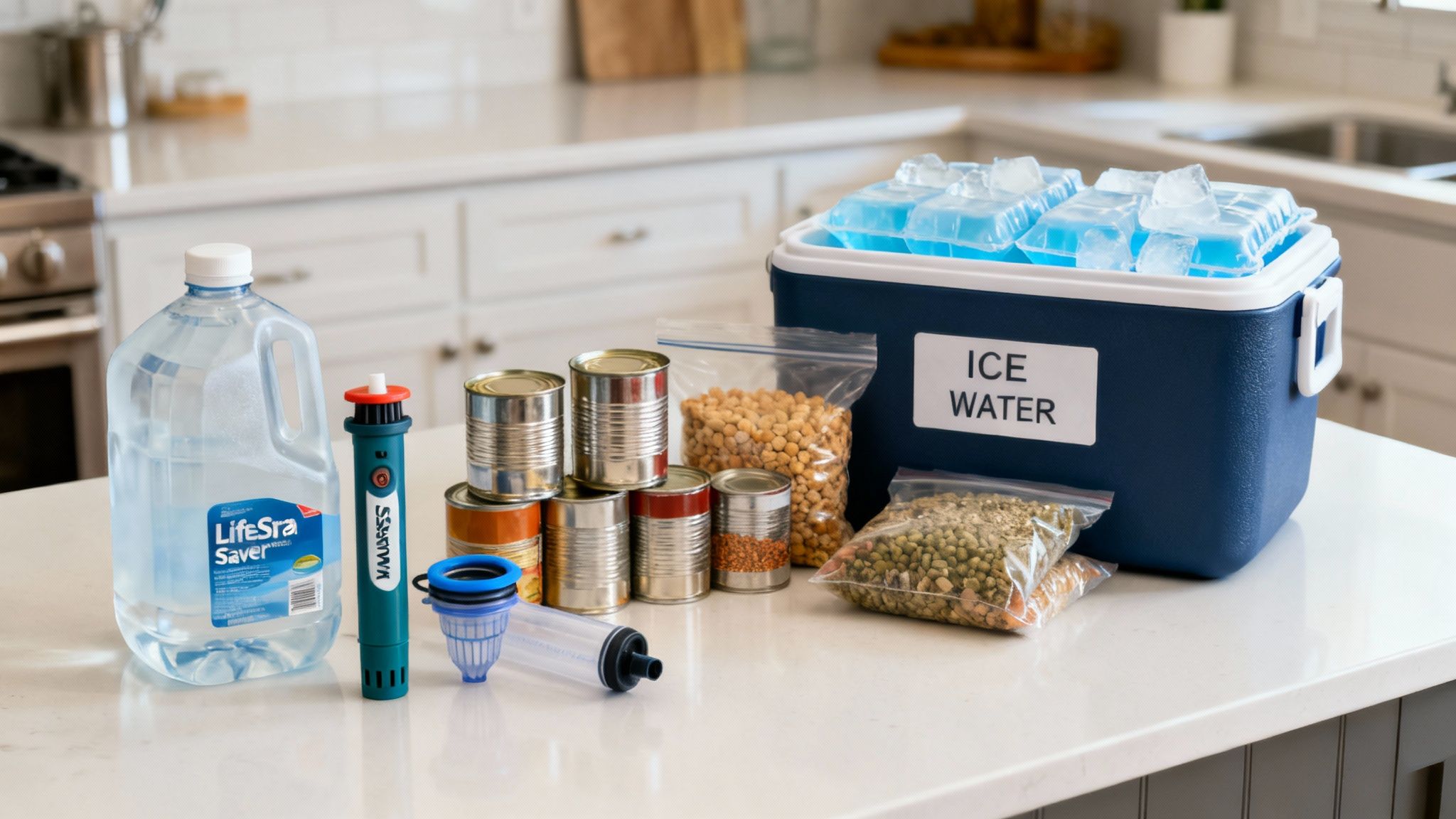
When the grid goes down for an extended period, your two most critical resources—food and water—become the top priority. Without a working fridge or running tap, even the simplest daily routines can fall apart. This is where your prep work really pays off, turning a potential crisis into a manageable challenge.
The first thing to think about is hydration. A good rule of thumb is to store one gallon of water per person, per day. I always aim for a minimum three-day supply, but having a week’s worth gives you a much better buffer.
This doesn’t mean you need to hoard cases of expensive bottled water. You can easily store tap water in clean, food-grade containers. Just make sure to label them with the date and tuck them away in a cool, dark place.
Securing Your Water Supply
Storing water is just the first step. What if your home’s pipes or the municipal supply become contaminated during the event? You need a reliable backup for purification. Having a way to make questionable water safe to drink is a total game-changer.
Boiling is a classic and effective method, but it chews through your fuel supply. A more sustainable option is a high-quality water filter. Personal filters like the LifeStraw are fantastic for individual use and small enough to stash in any kit. For a family, a gravity-fed system like the Berkey Water Filter can process much larger volumes with hardly any effort, filtering out nasty bacteria and protozoa.
Keep your refrigerator and freezer doors closed as much as possible. A full, unopened freezer will keep food frozen for about 48 hours (24 hours if half-full). An unopened refrigerator will keep food cold for about 4 hours.
Managing Your Refrigerator and Freezer
The second the power cuts out, the clock starts ticking on your perishable food. Your fridge and freezer are now just insulated boxes, and every time you peek inside, you speed up the spoilage. A little bit of know-how here can save a lot of food and prevent you from getting sick.
First, focus on eating the perishable items from the fridge. Think milk, leftovers, and fresh meats. I always keep a sturdy cooler, like one from YETI, and some frozen gel packs on standby to extend the life of anything valuable.
Once the refrigerator’s internal temperature climbs above 40°F (4°C) for more than two hours, you have to start tossing things. This is non-negotiable for items like meat, poultry, fish, eggs, and soft cheeses. My motto is simple: when in doubt, throw it out.
Your freezer buys you a bit more time. If you have the space, group frozen items together to create a solid frozen mass—it will stay cold much longer that way. A simple freezer thermometer is an invaluable tool for knowing exactly when your food has entered the danger zone.
Building a No-Cook Emergency Pantry
A well-stocked pantry is your best friend during an outage. The key is to focus on foods that require zero cooking or just minimal prep with something like a simple camp stove. This strategy saves your fuel and water for more critical needs.
Build your pantry around a core of versatile, calorie-dense staples. Here are the essential categories I always recommend stocking:
- Ready-to-Eat Proteins: Canned tuna, salmon, chicken, and beans are protein powerhouses that require zero cooking. Beef jerky from brands like Jack Link’s and protein bars are also excellent, lightweight choices.
- Fruits and Vegetables: Canned or dried fruits provide necessary vitamins and a much-needed morale boost. Canned veggies like corn, peas, and green beans can be eaten cold or warmed up easily.
- Carbohydrates for Energy: Crackers, pretzels, rice cakes, and granola bars are perfect for a quick energy hit. Instant oatmeal or couscous can be made with just a bit of hot water.
- Comfort Items: Don’t underestimate the psychological lift from small comforts. Instant coffee, tea, powdered drink mixes, or even hard candies can make a huge difference in how you feel.
The goal here is to think in terms of meals, not just ingredients. For instance, a can of black beans mixed with a can of corn and some salsa served on crackers makes a surprisingly decent meal. Peanut butter on rice cakes is another simple, high-energy option. Thinking through these easy combinations ahead of time takes the stress out of figuring out what to eat in the dark.
If you really want to get serious about this, you can learn more about how to preserve food without electricity in our dedicated guide.
Choosing the Right Backup Power Solutions
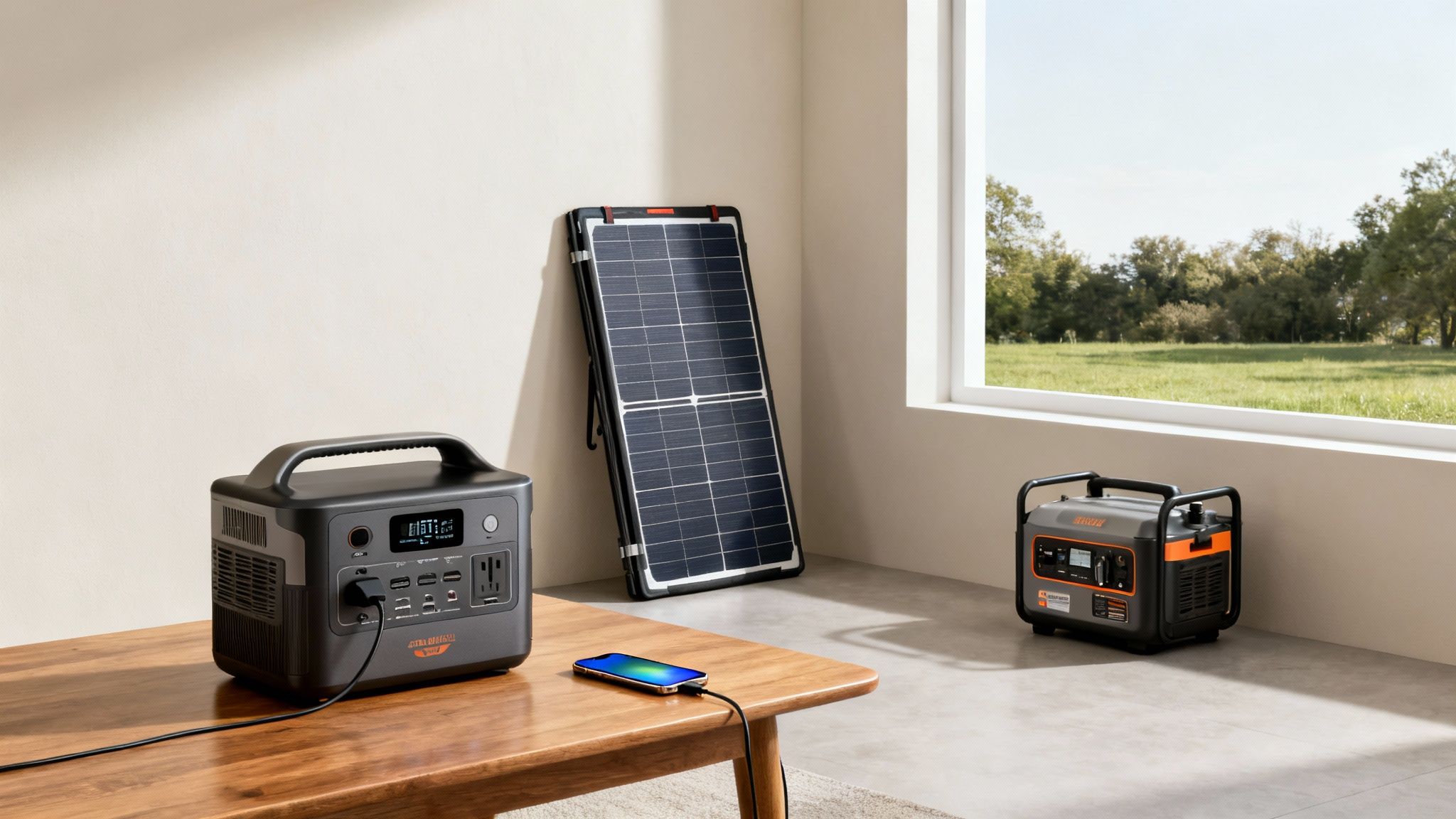
Once your food and water are squared away, it’s time to tackle the next big piece of the preparedness puzzle: backup power. The options can feel a bit dizzying, from silent little battery packs to beastly generators that can run half your house. The right choice for you really boils down to your budget, where you live, and what you absolutely need to keep powered on.
Don’t underestimate the need. Severe weather is increasingly our grid’s biggest enemy. In fact, major weather-related outages in the U.S. have doubled over the last decade (2014-2023). With a staggering 80% of major grid disruptions from 2000-2023 caused by weather, it’s clear this isn’t a problem that’s going away. Climate Central’s full report dives deeper into these trends, but the takeaway is simple: having a power plan is more critical than ever.
Portable Power Stations: Indoor-Safe Solutions
For a lot of folks, especially those in apartments or who just need to keep the basics running, a portable power station is the perfect answer. Think of them as giant, super-smart batteries in a box with outlets you can plug things into. They are completely silent, produce no fumes, and are safe to use right inside your living room.
If you’re interested in long-term energy independence beyond emergency backup, explore our guide to off-grid living essentials for sustainable power solutions.
Brands like Jackery Explorer or Goal Zero Yeti have really taken off because they’re just so easy to use. They’re perfect for keeping phones charged, running a laptop, powering a CPAP machine, or just keeping a few lights on. Their big limitation is capacity—don’t expect one to run your fridge or AC. But for staying connected and comfortable, they are an amazing, no-fuss solution. Many can even be hooked up to solar panels, giving you a way to recharge if the outage drags on.
Gas Generators: The Heavy-Duty Option
When you need serious power—enough to keep the refrigerator and freezer humming, or maybe run a window AC unit in a sweltering summer blackout—you’re looking at a traditional gas-powered generator. These workhorses from manufacturers like MaXpeedingrods or Generac pump out way more electricity than a power station, potentially saving you hundreds of dollars in spoiled food.
But that power comes with a massive responsibility: safety. Gas generators kick out deadly carbon monoxide (CO) gas, which is completely odorless and invisible.
CRITICAL SAFETY WARNING: Never, ever run a gasoline generator inside your home, garage, basement, or any enclosed area. It needs to be at least 20 feet away from your house, with the exhaust pointed away from any doors or windows. And a working carbon monoxide detector isn’t optional; it’s a non-negotiable piece of safety gear if you own a generator.
When you handle them right, generators are incredible tools. But cutting corners on safety can be fatal, so you have to know the rules and follow them to the letter.
Low-Tech Alternatives for Comfort and Cooking
Being prepared for an outage isn’t all about fancy electronics. Some of the most dependable tools are the simplest ones that don’t need any electricity at all. These low-tech backups are often cheaper and give you a great layered defense.
- Cooking Without Power: A simple camp stove or a wood-burning stove like the Solo Stove lets you boil water and cook meals outside. This saves your precious generator fuel for keeping the freezer cold.
- Staying Warm Safely: In a winter outage, an indoor-safe propane heater is a game-changer. Models like the Mr. Heater Buddy are specifically designed with safety features like low-oxygen sensors and tip-over shutoffs, making them safe for indoor use with proper ventilation.
- Alternative Lighting: Sure, your power station can run a lamp, but having backups is smart. Good oil lamps or a few bright, battery-powered LED lanterns give you hours of light without draining your primary power source.
By mixing a main power source with these simple, reliable backups, you build a much more resilient plan. It’s this balanced approach that ensures you can stay safe and reasonably comfortable no matter how long the lights are out. For a closer look at the different options, check out our guide on other portable power sources.
Creating a Smart Family and Community Response Plan
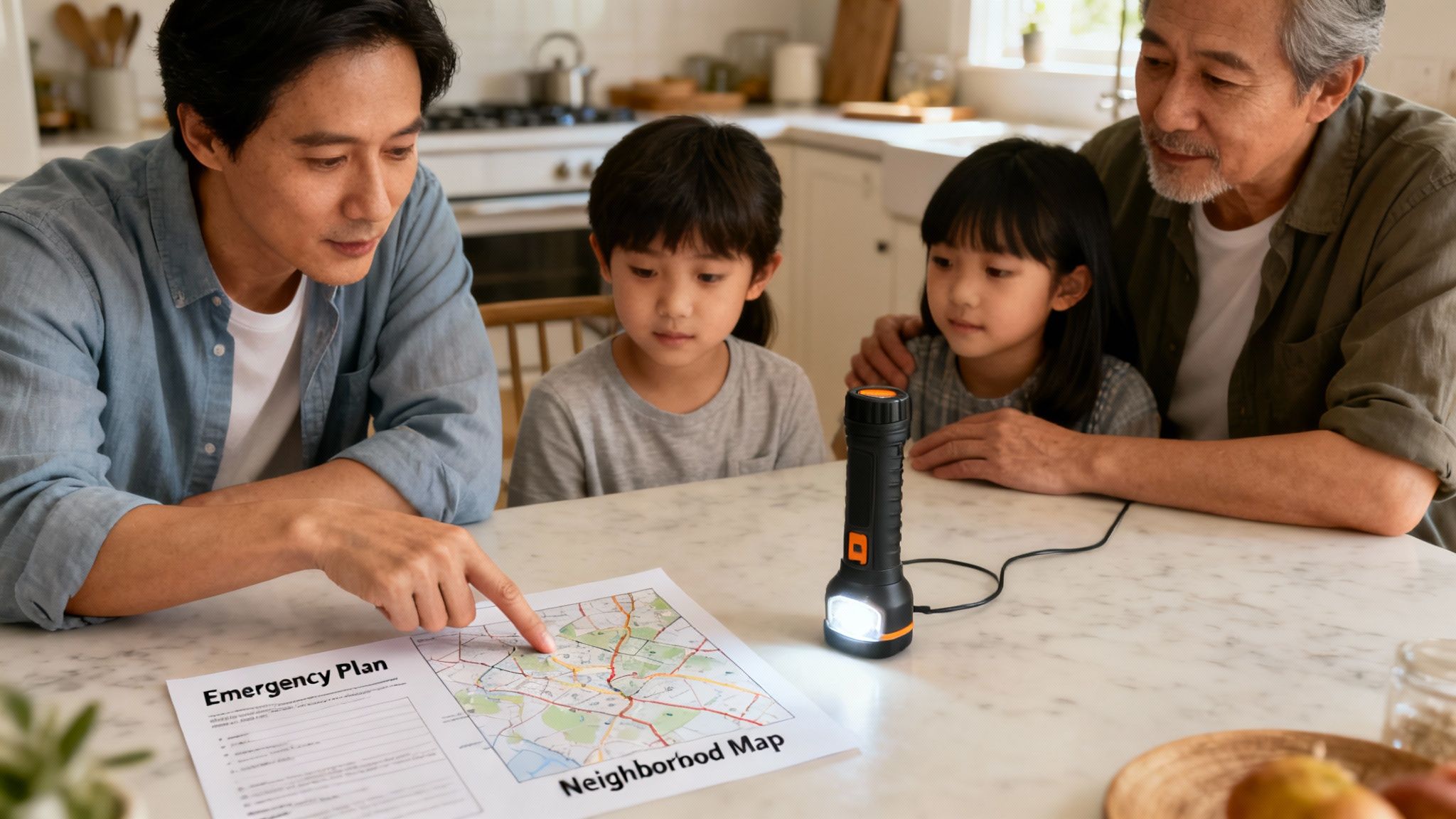
For families with children, our comprehensive emergency preparedness for families guide offers additional strategies tailored to keeping kids safe and calm during crises.
All the best gear in the world is just a pile of stuff without a clear plan of action. When the lights go out, stress levels shoot up, and trying to make critical decisions on the fly is a recipe for mistakes. A simple, well-rehearsed plan is what turns chaos into a coordinated response, making sure everyone knows exactly what to do.
This isn’t about writing a complicated instruction manual. It’s about setting up straightforward rules that cover the absolute basics: communication, safety, and who’s responsible for what.
Establishing Household Protocols
The first domino to fall in an outage is usually communication. Cell towers get jammed or lose power themselves, leaving you cut off. Your plan has to tackle this head-on by setting clear expectations and backup methods for staying in touch.
A core part of this is picking a designated family meeting point. This needs to be a specific, easily recognizable landmark in your neighborhood—think a certain park bench or the steps of the local library. If an emergency strikes and you get separated, everyone knows where to go. No questions asked.
Assigning roles is another game-changer. Who’s in charge of checking on the pets? Who grabs the emergency kit from the closet? Who’s tasked with filling bathtubs with water for flushing toilets? Giving each person a clear job minimizes confusion and makes sure all the essential tasks get done, and fast.
Tailoring Your Plan for Different Needs
Every family is different, and your emergency plan has to reflect that. A one-size-fits-all approach is useless when you have family members with specific needs.
- Families with Young Children: Make preparedness a game. Build an “adventure kit” together and practice using flashlights in the dark. Giving kids a simple, helpful task, like counting the batteries, helps them feel involved and less afraid.
- Households with Elderly Members: Make sure they have easy access to at least a week’s supply of medications and any medical devices they depend on. Keep a printed list of their doctors, prescriptions, and dosages right inside your emergency binder.
- Pet Owners: Your animals are part of the family, so they need to be in the plan. Stockpile an extra supply of their food and any medications they need. Have a sturdy carrier or leash ready to go in case you have to evacuate.
The strength of a family plan lies in its simplicity and practice. A 15-minute drill every six months is far more valuable than a perfect plan nobody has ever read. It builds muscle memory, so when a real outage hits, everyone can act with confidence instead of panic.
For anyone looking to put their strategy on paper, using a structured guide can be a huge help. You can find an excellent emergency preparedness plan template to get you started on the right path.
Building Resilience Beyond Your Walls
True self-reliance doesn’t mean going it alone. In a widespread, long-term outage, your greatest asset is often your neighbors. A connected community is a resilient one, and preparing together makes everyone safer.
This doesn’t have to be some formal, complicated arrangement. It can start by simply getting to know the people on your block. Who has medical training? Who owns a generator? Who has a chainsaw for clearing downed trees? Knowing these things ahead of time lets you pool resources and skills when it really counts.
Don’t forget that emergencies can strike when you’re away from home—keeping a well-stocked car emergency kit ensures you’re prepared wherever you are.
From there, creating a basic neighborhood communication tree is a powerful next step. It can be as simple as a shared list of phone numbers and an agreement to check on each other, especially elderly or vulnerable residents.
Power outages are more than just an inconvenience; they’re a growing threat. In the U.S., a tracked 73% of the population experiences an average of 520 million customer-hours without power each year. A staggering 75% of those long blackouts are tied to severe weather. These numbers underscore why personal planning and community collaboration are so critical. In a real crisis, your neighbors are your first line of support.
Common Questions About Power Outage Preparedness
Even the best-laid plans bring up questions once you start putting them into practice. Getting straight answers to these common concerns is the best way to sharpen your strategy and build real confidence for when the lights go out. Here are some of the things people ask most often.
How Long Should My Power Outage Kit Last?
While everyone talks about a 72-hour kit, and that’s a great starting point, major weather events are proving that’s often not long enough. I tell everyone to think in layers. Your first goal should be to build a rock-solid 3-day kit. Get that done first.
Once you have the basics covered, you can methodically expand it to last a full week or more. That means gradually adding more water, more long-shelf-life food, extra fuel for your camp stove, and more batteries. The real goal is to be self-sufficient longer than your neighbors, giving you a critical buffer when help is slow to arrive.
What Are the Biggest Mistakes People Make?
Most of the critical errors happen in the first hour. By far, the most common mistake is constantly opening the refrigerator and freezer. I get it, you want to check on things, but every time you do, you’re letting precious cold air escape, and your food will spoil that much faster.
Another huge—and potentially deadly—mistake is running a gas generator inside a garage or too close to the house. This creates a massive carbon monoxide risk that can be fatal. People also get caught without any cash on hand, which becomes king when credit card machines and ATMs go down. But maybe the biggest mistake of all is just assuming the power will be back “any minute,” which keeps them from taking smart, proactive steps right away.
I’m on a Tight Budget. What Should I Get First?
Being prepared doesn’t have to be expensive. If you’re working with a tight budget, you need to focus on the absolute lifelines—the things that give you the most bang for your buck.
- Water is your #1 priority. You don’t even have to buy it. Start by storing tap water in clean, sanitized containers. Then, pick up a simple, reliable filter like a Sawyer Mini. It’s cheap and will last for years.
- Next up is light. A few decent LED flashlights and a pack of extra batteries don’t cost much, but they provide a huge boost to safety and morale when everything is dark.
- Finally, cover basic safety and energy. Pull together a simple first-aid kit from things you might already have, and stock up on no-cook, high-energy foods. Think protein bars, nuts, and peanut butter.
These core items handle your immediate needs for hydration, light, safety, and calories without draining your wallet.
Turning preparedness into a family activity can make it feel less like a chore and more like a shared mission. Involve kids in age-appropriate tasks like checking flashlight batteries or picking out their favorite non-perishable “adventure snacks” for the emergency kit.
How Can I Prepare Kids Without Scaring Them?
This is a big one for parents. The key is to frame it as an adventure, not an emergency. We call our practice drills “indoor camping nights.” It immediately makes it sound fun and takes the fear out of it.
Get them involved in building the kit. Let them pick their own special flashlight or a few “emergency-only” snacks they love. When you give kids a specific job and make the process familiar and positive, you replace their fear of the unknown with confidence. It empowers them and makes them feel like a helpful part of the team, which makes the entire family more resilient when a real outage happens.