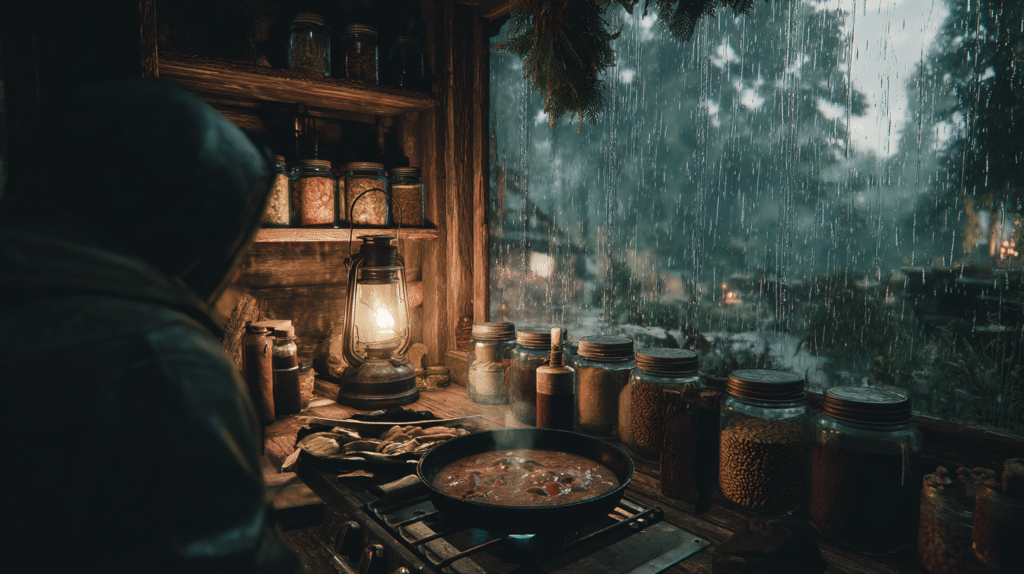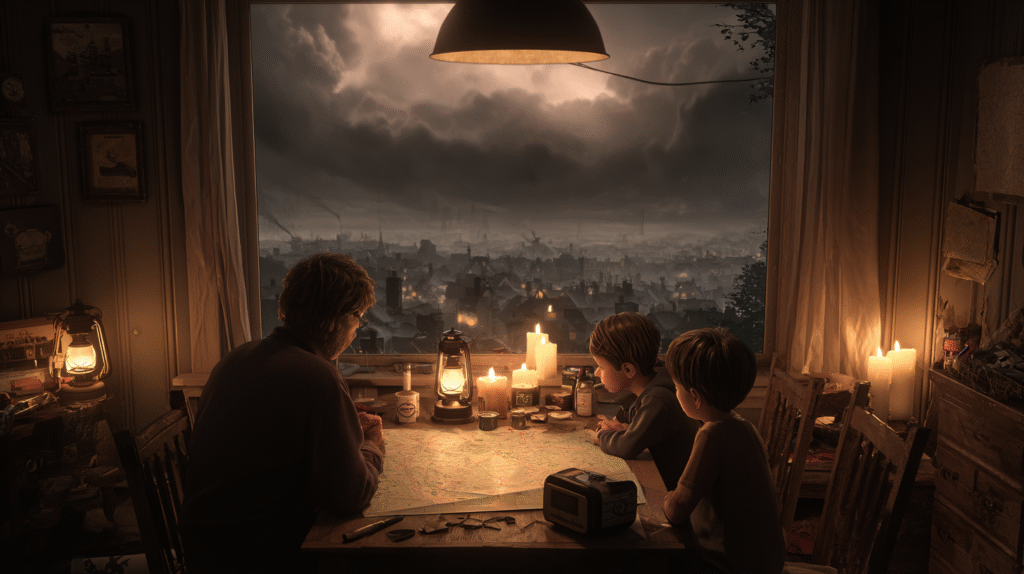
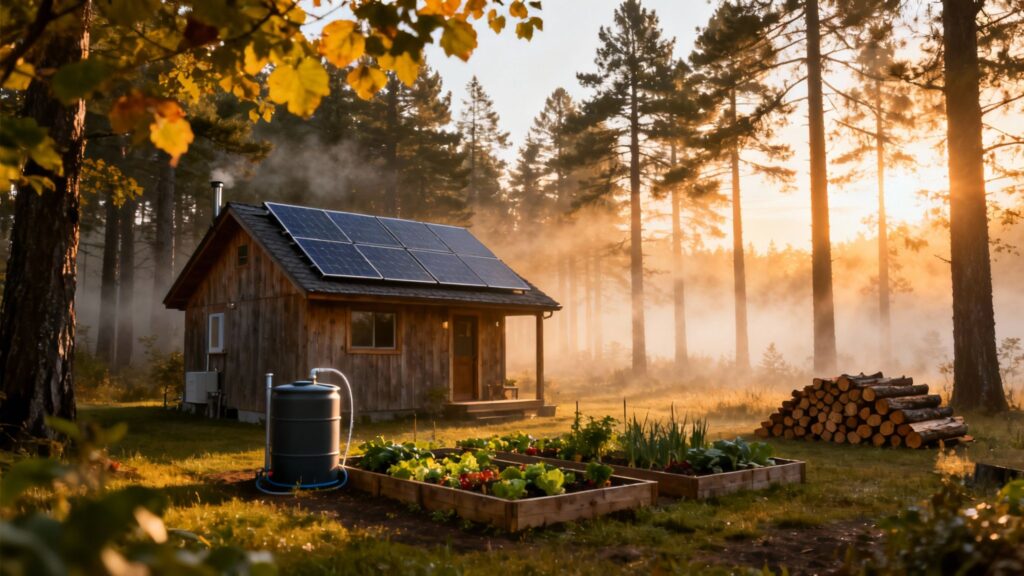
When you first hear “off-grid living,” you might picture a lone cabin deep in the woods, completely cut off from the world. While that’s one way to do it, the reality is a lot more practical and flexible. At its heart, off-grid living is about becoming self-reliant by disconnecting from public utilities—the power grid, city water, and sewer systems.
It’s a journey toward independence, and it looks different for everyone. It could be a family in the suburbs with a solid solar and battery backup system, or it could be a full-blown homestead. The core idea is simple: you take direct control over the resources your family needs to thrive.
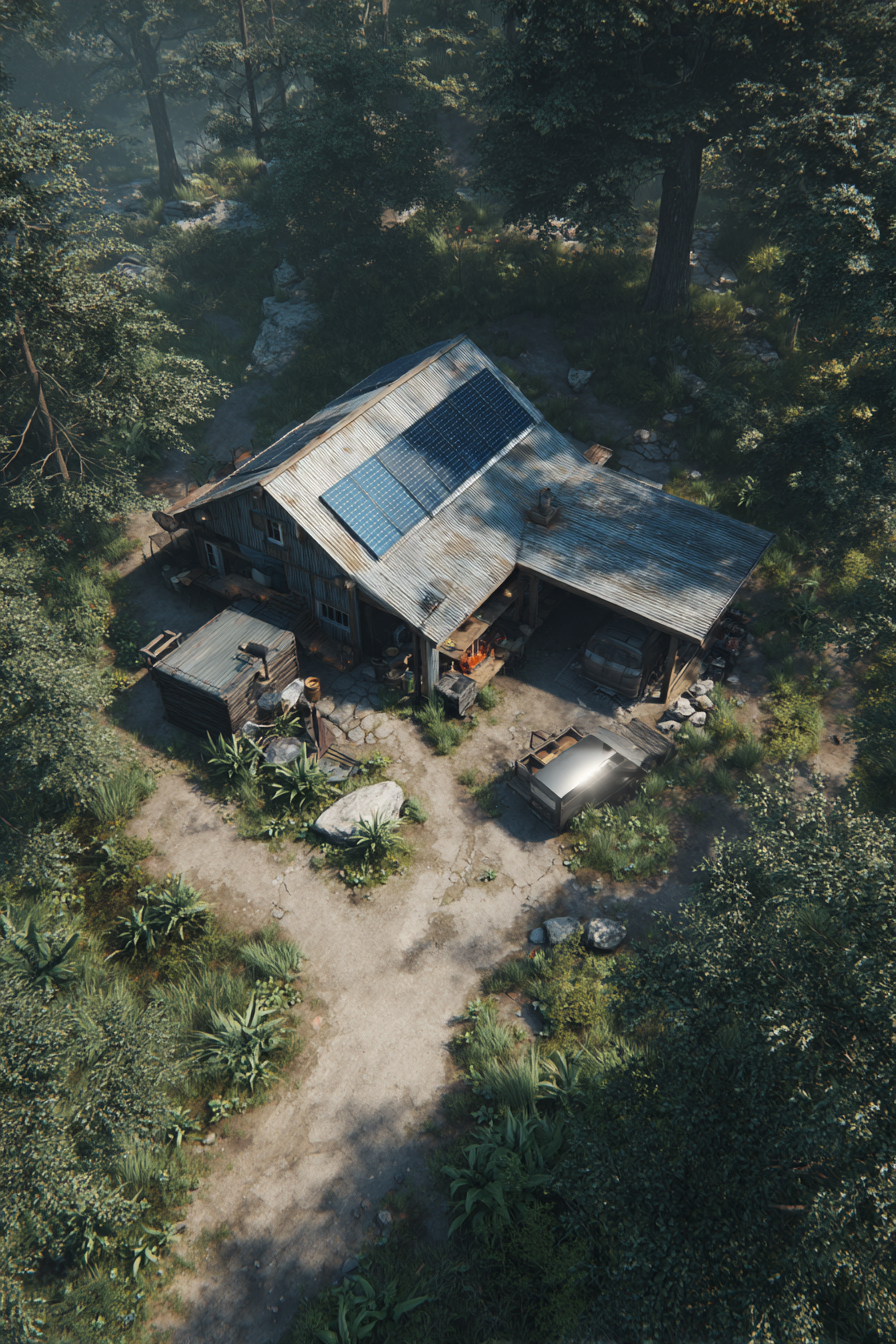
What Off-Grid Living Really Means
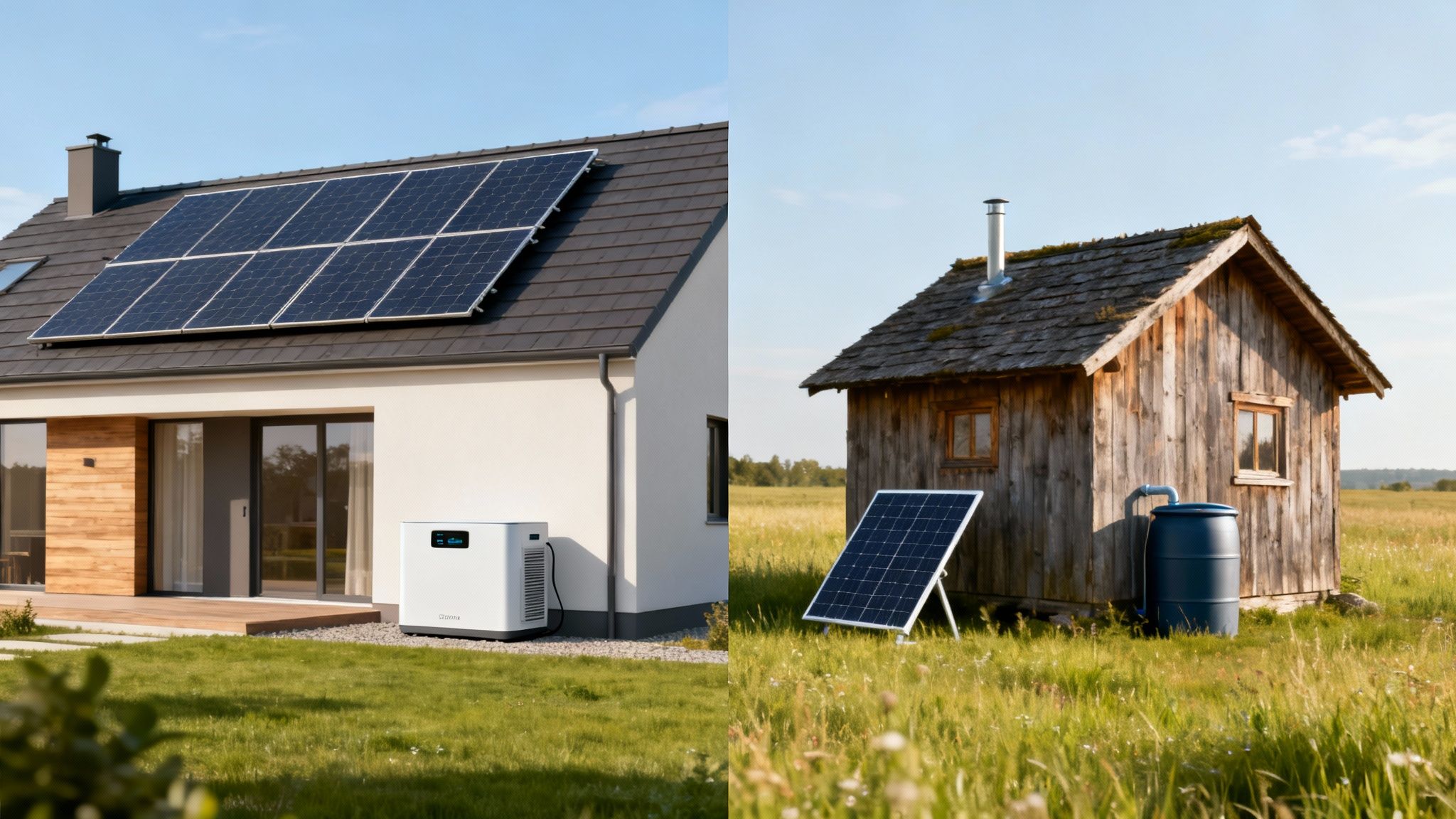
Forget the extreme stereotypes for a moment. Think of off-grid living as a spectrum of self-reliance.
On one end, you might have a suburban homeowner who installs solar panels and a battery bank to keep the lights on during a blackout. On the far end, you’ve got the homesteader who generates their own power, harvests rainwater, grows their food, and manages their own waste. Most beginners find a comfortable spot somewhere in between.
For a deeper dive into the philosophy and practical aspects, check out our comprehensive guide on what is off-grid living and how to get started.
Why Choose This Path
Before you buy a single solar panel, you need to figure out your personal “why.” This is the single most important part of the journey because your motivation will guide every single decision you make, from the systems you install to the skills you learn.
People come to this lifestyle for a few powerful reasons:
- Emergency Preparedness: Many are looking for resilience against natural disasters, fragile supply chains, or long-term power outages. They want to know their family will be safe and comfortable no matter what happens.
- Financial Freedom: Getting rid of monthly utility bills can free up a surprising amount of cash over the long run, leading to a simpler, more secure financial future.
- Environmental Values: Living off-grid often means a lighter footprint on the planet. You become incredibly conscious of your resource use when you’re the one managing it all.
- Personal Sovereignty: For some, it’s about the deep satisfaction of not depending on anyone else for your basic needs. It’s a powerful feeling of freedom and control.
Living off-grid is a paradigm shift; you don’t just turn on the sink and magically get water. You have to set up systems and monitor them. It’s about consciously managing the resources that sustain your life.
The Five Pillars of Off-Grid Life
To pull this off successfully, you need to master five foundational pillars. We’ll dive deep into each one later in this guide, but it’s critical to see how they all work together right from the start.
- Power: Generating your own electricity, usually with solar panels, and storing it for when you need it.
- Water: Finding, collecting, filtering, and storing a safe, reliable supply of clean water.
- Food: Growing, raising, hunting, or foraging for your own food and learning how to preserve it.
- Waste: Responsibly handling everything from kitchen trash to human waste in a sanitary, sustainable way.
- Shelter: Having a home, whether you build it or adapt an existing one, that’s designed to function efficiently without being tied to the grid.
Your First Step Into Energy Independence
The thought of designing an entire off-grid power system can be intimidating for a beginner. A fantastic way to get your feet wet is with a portable solar generator. These portable units also make an excellent addition to your car emergency kit, providing backup power when you’re on the road or stranded in remote areas.
Products like the Goal Zero Yeti or Jackery Explorer series are perfect for this. They pack a battery, an inverter, and a solar charge controller into one simple box. You can use it to run small appliances during a power outage or take it camping. This kind of hands-on experience is invaluable—it teaches you the real-world basics of solar power, how much energy your devices actually use, and what battery capacity feels like, all on a small, manageable scale.
A portable power station is also a critical component of any emergency preparedness checklist, ensuring you’re ready for unexpected power outages or natural disasters.
Designing Your Off-Grid Power System
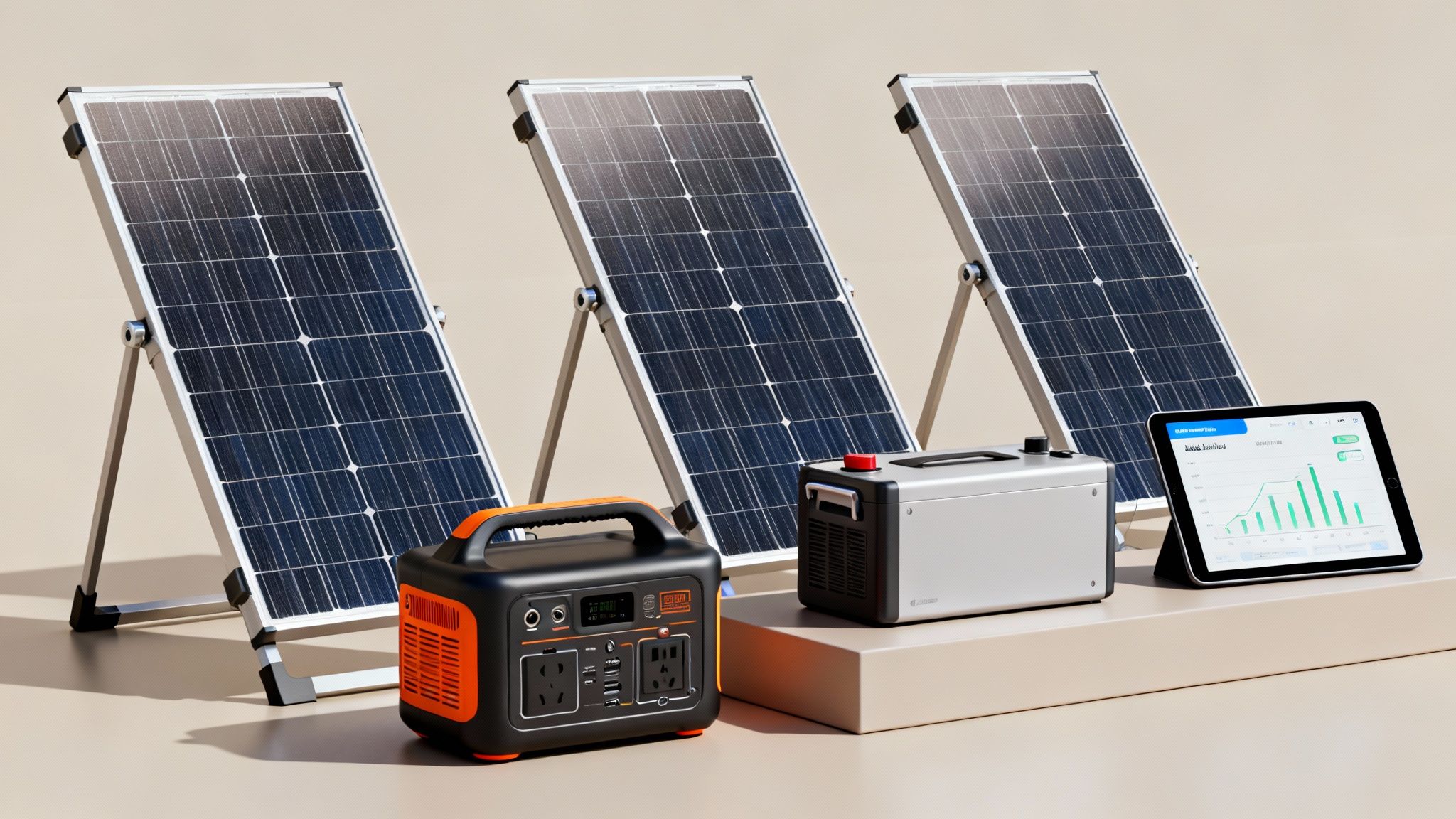
This is where the rubber meets the road on your self-sufficiency journey. Building your own personal power plant is one of the most empowering steps you can take, and for most beginners, solar energy is the most reliable and straightforward place to start.
Think of your power system like a simple rainwater harvesting setup. The solar panels are your roof, catching the sun’s energy. The batteries are the water tank, storing that power for when you need it. Finally, the inverter is the faucet, converting the stored energy into electricity your appliances can actually use.
Start With an Energy Audit
The single biggest mistake newcomers make is guessing their power needs. That almost always leads to an undersized system that just can’t keep up. To get it right the first time, you have to run a personal energy audit.
It’s simpler than it sounds. Just make a list of every single thing you plan to run on your system—from the fridge right down to your phone charger. Find the wattage for each device (it’s usually on a sticker) and multiply it by the number of hours you’ll use it each day. Add it all up, and that’s your total daily “watt-hour” target.
Don’t skip this step. A thorough energy audit is the blueprint for your entire system. It determines the number of solar panels you need, the size of your battery bank, and the capacity of your inverter, preventing costly mistakes down the line.
Core Components of a Solar Power System
Building a system might sound intimidating, but it really just boils down to four key parts working in harmony. Once you understand what each one does, planning your setup becomes much clearer.
- Solar Panels: These are your energy collectors. When sunlight hits them, they generate DC (direct current) electricity. Reputable brands like Renogy have a huge range of panels that are perfect for getting started and can be easily expanded later.
- Charge Controller: This is the brain of the operation. It manages the flow of power from your panels to your batteries, preventing overcharging that can wreck your batteries and drastically shorten their lifespan. A well-regarded model like a Victron SmartSolar controller provides excellent performance and monitoring capabilities.
- Battery Bank: This is your energy savings account. Batteries store the DC power from the panels so you can have electricity at night or on cloudy days. Lithium batteries from companies like Battle Born are a top choice for their long life and efficiency.
- Inverter: Your appliances run on AC (alternating current) power, not the DC power your batteries store. The inverter’s job is to convert that DC power into usable AC power for your home.
This self-contained power model is exploding in popularity across the globe, which is great news for beginners—the technology has never been more reliable or affordable. In fact, as of 2023, off-grid solar solutions were benefiting over 560 million people worldwide. The market more than doubled from $2.3 billion in 2018 to $3.9 billion in 2022, proving this is a resilient and growing trend. You can find more data on this global shift toward energy independence over at PV-Tech.
To help you get a handle on what this looks like in practice, here is a quick sizing guide for a basic beginner’s setup.
Beginner’s Off-Grid Power System Sizing Guide
This table provides a rough estimate for powering a few essential devices. Use your own energy audit for precise calculations, but this will give you a solid starting point.
| Appliance | Estimated Daily Watt-Hours (Wh) | Recommended Solar Panel Watts | Recommended Battery Capacity (Ah) |
|---|---|---|---|
| Mini Fridge | 1,000 Wh | 200 – 300 W | 100 Ah |
| LED Lights (4) | 160 Wh | 50 W | 20 Ah |
| Laptop Charging | 100 Wh | 50 W | 10 Ah |
| Phone Charging (2) | 40 Wh | 20 W | 5 Ah |
| Total | 1,300 Wh | 300 – 400 W | 150 – 200 Ah |
Remember, this is a simplified example. Factors like your location’s average daily sunlight (“sun hours”) and system inefficiencies will influence your final design. Always build in a little extra capacity to be safe.
Beyond Solar Power
While solar is the undisputed king of off-grid energy for its simplicity, it’s not the only game in town. Depending on your property, you might want to add other sources to make your system even more robust.
- Wind Power: If you live in an area with consistent, strong winds, a small-scale wind turbine can be a fantastic supplement. It’s especially great for generating power at night or during storms when solar output drops.
- Micro-Hydro: If you’re lucky enough to have a year-round stream or creek with a good vertical drop, a micro-hydro system is the holy grail. It can provide an incredibly steady stream of power, 24/7.
Many seasoned off-gridders end up with a hybrid system, combining solar with wind or hydro to create a more resilient energy supply. You can also ease into it by starting with smaller systems first; check out our guide on choosing the best portable power sources for emergency and off-grid use. By starting with a clear audit of your needs and an understanding of the components, you can build a power system that will serve you reliably for years.
Securing Water and Managing Waste Sustainably
Once you have a handle on power, your next non-negotiable is water. Off-grid, you are the water company. You’re in charge of the entire cycle—from collection and purification to safe disposal. It’s a huge shift from just turning on a tap.
This means you’re not just a consumer anymore; you become a steward of your own life-sustaining resource. Building a robust system to source, clean, and manage water is a foundational pillar of a healthy and sustainable off-grid life.
Finding Your Off-Grid Water Source
The land itself will tell you what your best water options are. Every property is different, and it’s critical to understand your choices before you ever break ground.
- Wells: A drilled well is often seen as the gold standard. It taps into groundwater that’s naturally filtered, providing a consistent source of clean water. The upfront cost can be steep, but the long-term reliability is hard to beat. Just remember, you’ll need a pump—solar, electric, or even a manual hand pump like the popular Simple Pump—to get that water to the surface.
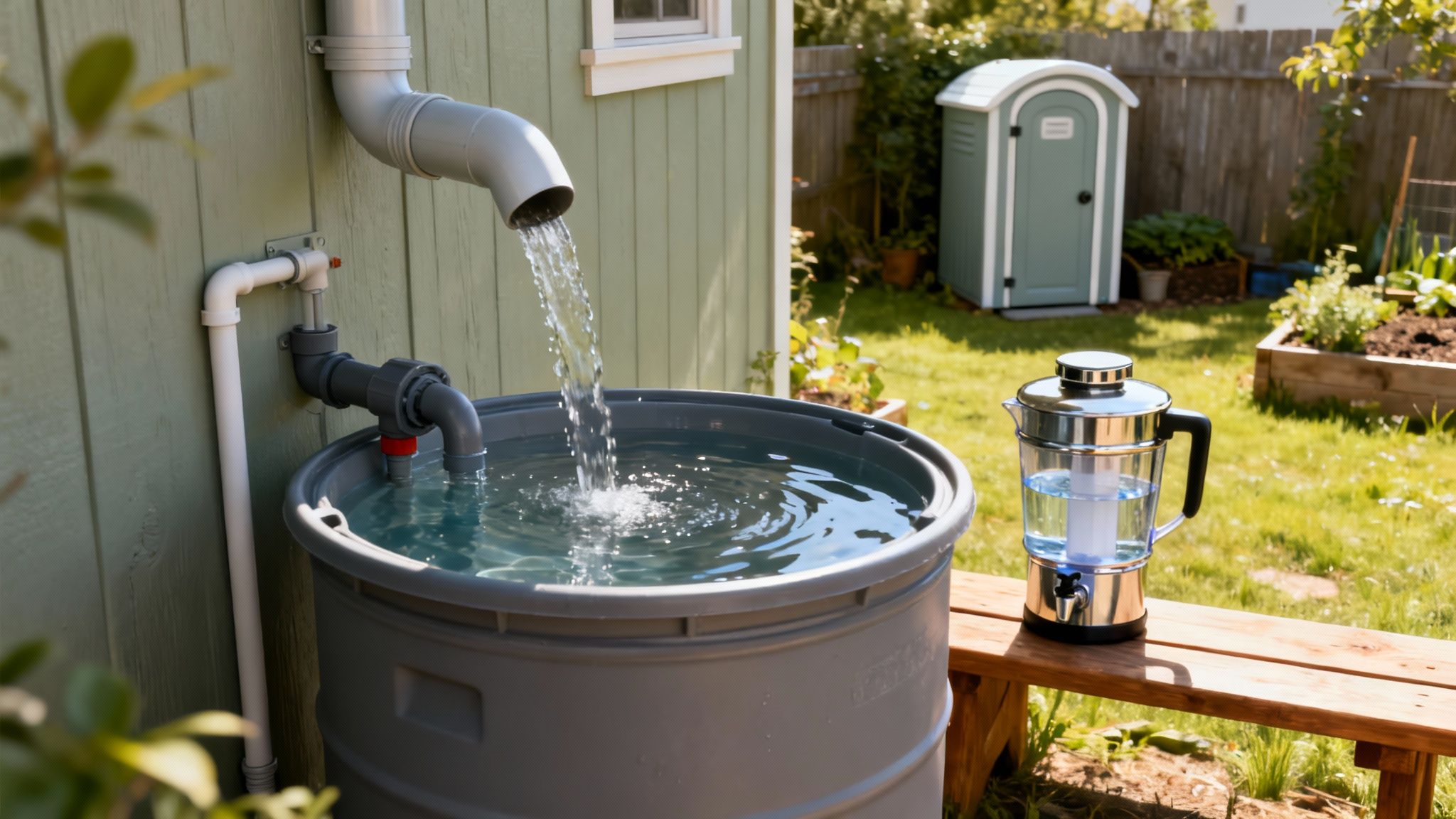
- Rainwater Harvesting: This is one of the easiest ways for beginners to get started. A simple setup with gutters feeding into food-grade barrels or a larger cistern can collect a surprising amount of water. In fact, a 1,000-square-foot roof can capture over 600 gallons of water from just a single inch of rain.
- Natural Springs or Creeks: If you’re lucky enough to have a natural spring or a year-round creek on your land, you’ve got a fantastic resource. But tapping into surface water isn’t a free-for-all. You have to verify your legal water rights and be prepared for a more intensive purification process to handle potential contaminants.
Water security isn’t about finding the one perfect source; it’s about building in redundancy. A truly resilient setup might use a well for drinking water while relying on harvested rainwater for the garden and animals. That way, a drought or a broken pump doesn’t turn into a full-blown crisis.
Making Your Water Safe to Drink
Never, ever assume that water from a well, spring, or rain barrel is safe to drink as-is. Contaminants can range from invisible bacteria and viruses to chemical runoff from miles away. The only way to guarantee your family’s safety is with a multi-layered approach to purification.
Your daily-use system should be built around a high-quality filter. Gravity-fed units like the Berkey Water Filter are incredibly popular in off-grid circles for a good reason—they work without electricity and can remove an enormous spectrum of nasty stuff, from bacteria to heavy metals. For portable needs, a Sawyer Squeeze is an excellent, lightweight option to have on hand.
For backups and emergencies, nothing beats the reliability of chemical purification. Potable Aqua tablets are lightweight, last for years in a bug-out bag, and are extremely effective at killing pathogens. To get a better handle on all the options, you can explore the different water purification methods that fit any scenario.
Responsibly Managing Your Waste
What goes in must come out. Managing wastewater and human waste is a part of the deal that you can’t afford to get wrong. If you mess this up, you risk contaminating your own water sources and causing serious health problems.
- Septic Systems: For an off-grid home with modern plumbing, a conventional septic system is a common solution. Think of it as your own personal sewage treatment plant. Solids settle in a tank while liquids are dispersed into a drain field. They work great but require professional installation and periodic pumping. Plus, not all land and soil types can support them.
- Composting Toilets: If you want to conserve massive amounts of water and turn waste into a valuable resource, a composting toilet is the way to go. Respected brands like Nature’s Head make self-contained units that separate liquids and solids, using carbon-rich material like coconut coir to break down waste without any odor. They completely eliminate the need for a septic system for human waste, which is a huge win for both your water bill and the environment.
Choosing your water and waste systems is about building a safe, self-contained ecosystem. When you plan how to collect, clean, use, and dispose of these resources, you’re laying the foundation for a truly resilient off-grid life.
Building a Resilient Food Strategy
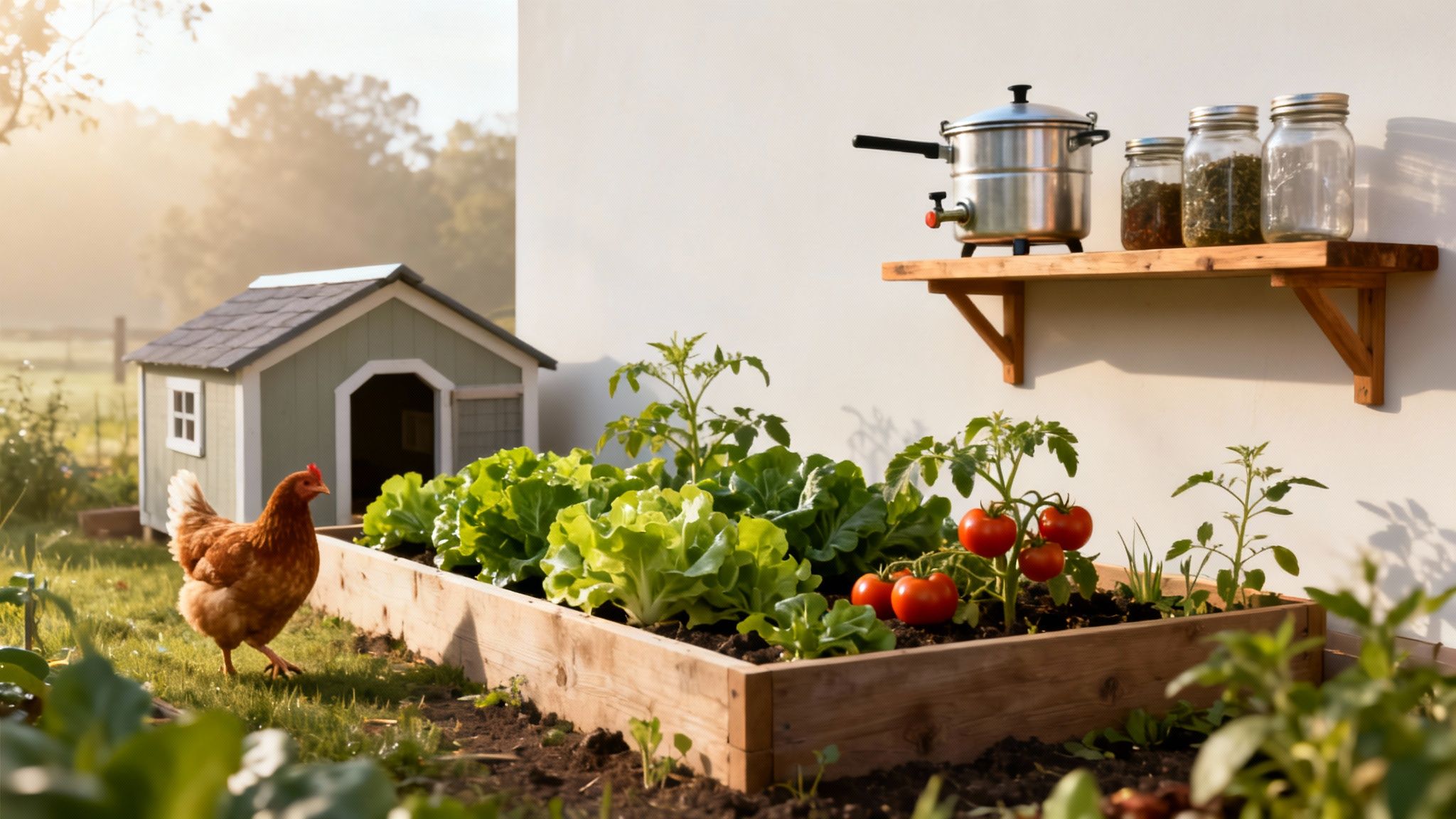
Once you’ve got a solid plan for power and water, it’s time to tackle the next pillar of self-reliance: food. A truly resilient food strategy is so much more than just sticking a few tomato plants in the ground. It’s a complete cycle—growing, raising, preserving, and storing—that ensures your family has plenty to eat, no matter what’s happening in the world.
For many folks just starting out, this is the most rewarding part of the off-grid journey. You get to work with your hands, see exactly where your food comes from, and build a sense of security that no grocery store aisle can ever match.
Starting Your Homestead Garden
You don’t need a sprawling farm to grow a surprising amount of your own food. The real secret is starting with great soil and picking plants that are hardy and forgiving for a beginner.
Building healthy soil is the single most important investment you’ll make. A couple of proven methods can help you create rich, fertile ground from scratch:
- Raised Beds: These are perfect for beginners because they give you total control. You can fill them with a perfect mix of high-quality compost and topsoil, bypassing any issues with the native ground.
- “Lasagna” Gardening: This is a fantastic no-dig technique. You simply layer organic materials—think cardboard, leaves, grass clippings, and compost—right on the ground. Over a season, it all breaks down into beautiful, black soil.
For your first year or two, don’t get overwhelmed. Stick to easy-to-grow, high-yield vegetables like zucchini, bush beans, potatoes, and leafy greens from a reliable seed source like Baker Creek Heirloom Seeds. They’ll give you a quick win and build your confidence right away.
Raising Small Livestock
Bringing animals into the mix is a game-changer for producing your own protein. If you’re new to all this, chickens are hands-down the best place to start.
They’re fairly low-maintenance, don’t need a ton of space, and will give you a steady supply of fresh eggs. As a bonus, they’re fantastic little foragers who will help with pest control and turn your kitchen scraps into amazing fertilizer for the garden.
A small flock of just four to six hens can easily provide a dozen or more eggs every week. That’s a cornerstone of food independence right there—a self-sustaining source of high-quality protein.
The Art of Food Preservation
Growing a massive harvest is only half the job. The real skill is knowing how to make all that food last through the winter and other lean times. Mastering a few key preservation techniques is non-negotiable for year-round food security.
Canning is a time-tested classic for a reason, letting you put up everything from garden vegetables to meats. For low-acid foods like green beans, corn, and any kind of meat, a pressure canner is an absolute must for safety. A reliable workhorse like an All American Pressure Canner gets hot enough to kill dangerous bacteria that water-bath canners can’t touch.
Dehydration is another incredibly simple and effective method. By removing the moisture, you can make food lightweight, compact, and shelf-stable for years. With a good Excalibur Dehydrator, you can easily make dried fruits, jerky, and even vegetable powders, turning your fresh harvest into long-term pantry staples. To get started, you can learn more about how to preserve food without electricity in our detailed guide.
Building Your Deep Pantry
No off-grid food system is complete without a deep pantry. This is your insurance policy—your buffer against a bad harvest, severe weather, or any other curveball life throws your way. It should be stocked with calorie-dense, long-lasting staples that supplement everything you produce yourself.
Think of it as your own private grocery store. Start by buying bulk items that form the foundation of countless meals.
Sample Starter Pantry List:
- Grains: White rice, oats, wheat berries, pasta
- Legumes: Dried beans (pinto, black, kidney), lentils
- Fats & Oils: Coconut oil, olive oil, lard
- Sweeteners: Honey, sugar, molasses
- Canned Goods: Canned meats, fish, vegetables, and fruits
- Essentials: Salt, baking soda, yeast, spices, powdered milk
Beyond food storage, make sure you have a complete disaster supply kit with essential non-food items like first aid supplies, tools, and emergency gear to handle any crisis situation.
When you combine a productive garden, a few animals, solid preservation skills, and a well-stocked pantry, you create a layered food system that gives you true resilience and peace of mind.
Finding Land and Navigating Legal Hurdles
Every off-grid dream starts with finding that perfect piece of land. But here’s a hard truth: your entire vision lives or dies by local rules and regulations. This is the one step where cutting corners will come back to haunt you. The wrong property can kill your project before you even hammer the first nail.
This way of life is exploding in popularity. The global off-grid housing market was valued at USD 2.4 billion in 2023 and is on track to nearly double by 2032. North America is leading the way, with states like Colorado and Alaska issuing thousands of permits a year for setups like tiny homes. You can explore more data about this growing market to see what it means for newcomers.
Your Land Evaluation Checklist
It’s easy to fall in love with a scenic view, but you need to think like a detective before you get emotionally invested. A beautiful piece of land that can’t support your goals is just a very expensive mistake.
Use this checklist to guide your initial investigation:
- Water Access: Is there a reliable, year-round water source? You need to confirm the potential for drilling a well, the legality of rainwater harvesting, or access to a clean spring or creek.
- Sunlight Exposure: Does the property have clear, south-facing exposure for solar panels? Hills and dense trees can throw long shadows, wrecking your power generation potential. An app like Sun Seeker is a fantastic tool for mapping the sun’s path across a property throughout the year.
- Soil Quality: Can you actually grow food here? Get the soil tested. You need to know if it’s too rocky, acidic, or contaminated to support the garden you’re planning.
- Accessibility: How are you getting in and out, especially when the weather turns? A dirt road that becomes a mud pit in the spring or gets buried in snow can leave you completely cut off.
Decoding the Legal Landscape
This is where so many aspiring homesteaders get tripped up. Just because a property is out in the country doesn’t mean it’s a free-for-all. Every single county and township has its own rulebook dictating what you can and can’t do.
The most expensive land you can buy is the one you can’t use. Failing to verify local ordinances before purchasing is one of the most common and devastating mistakes in off-grid living for beginners.
Key Regulations to Investigate
Before you even think about making an offer, march down to the local county planning or building department. You need to ask direct questions about these specific rules.
- Zoning Ordinances: This is the big one. Zoning laws determine if land is for residential, agricultural, or recreational use. They can put strict limits on the type and size of home you’re allowed to build.
- Building Codes: Some counties enforce rigid building codes that have no room for alternative structures like yurts, earthships, or tiny homes. Others have exemptions for small buildings or structures classified for agricultural use. You have to know which applies.
- Covenants and Restrictions: These are private rules left by a previous owner or a homeowners’ association. They can control everything from whether you can raise chickens to the color you’re allowed to paint your cabin.
- Septic and Waste Regulations: Your land has to pass a percolation or “perc” test to prove the soil can handle a standard septic system. If it fails, you might be forced to install a hugely expensive alternative system—if they even allow one.
Choosing the right spot is a balancing act between finding your dream location and confirming it’s a place where you can legally build that dream. Putting in this homework upfront will save you an incredible amount of money and frustration, making sure your off-grid vision has solid ground to stand on.
The Financial Realities of Your Off-Grid Journey
Let’s talk money. The dream of going off-grid is all about self-reliance and freedom, but making that dream a reality comes down to a solid financial plan. The upfront costs can feel like a punch to the gut, but you have to shift your thinking: this isn’t an expense, it’s a long-term investment in your family’s future.
You’re essentially trading years of monthly utility bills for a few big, one-time investments. Get this part right, and you’re buying yourself a lifetime of financial predictability.
Major Upfront Investments
A few big-ticket items will make up the bulk of your initial budget. Getting a clear handle on these costs is the first, most critical step in planning your new life.
- Land: This is almost always the biggest check you’ll write. The price swings wildly depending on where you look, how many acres you want, and whether it has essentials like a water source.
- Shelter: Whether you’re picturing a simple cabin, a modern homestead, or a tiny home on wheels, your house is a foundational cost.
- Core Systems: These are the non-negotiables. Your power, water, and waste systems are the lifeblood of your homestead. A good solar setup, a well or rainwater harvesting system, and a septic or composting toilet are major investments, but absolutely essential.
The whole idea is to front-load your expenses to kill off those recurring bills. That initial cash outlay is the price of freedom from the grid, and it paves the way for a stable, low-cost life down the road.
Long-Term Returns and Generating Income
Here’s where the magic happens. The real financial payoff of off-grid living shows up month after month, year after year. Every time you don’t pay an electric or water bill, that’s real money staying in your pocket. This economic freedom is what makes the lifestyle truly sustainable.
This isn’t just a small-scale idea, either. The global shift toward off-grid solutions is creating huge economic ripples. Since 2010, for example, solar kits have led to an estimated $26.6 billion in household savings and income worldwide. Closer to home, the North American off-grid housing market was worth $2.4 billion in 2023, with beginners often saving $2,000-$5,000 a year on utilities alone. You can dig into the numbers yourself in the latest GOGLA report.
But it’s not just about saving money—it’s about making it, too. A powerful solar system can easily support a remote work career or an online business. Your land itself can become an asset; think selling extra eggs and garden vegetables at a local farmers’ market or crafting goods to sell. For those just starting out, our guide on prepping on a budget is packed with practical tips to manage these initial costs.
When you combine cutting out utility bills with creating new ways to earn, you’ll find the return on your investment can happen a lot faster than you think. This is how you build a truly resilient financial foundation for your new life.
Common Questions About Starting an Off Grid Life
Jumping into the off-grid world naturally kicks up a ton of questions. Let’s tackle some of the biggest ones beginners have, so you can move forward with a clear head and a solid plan.
How Much Does It Really Cost to Start Living Off Grid
This is the million-dollar question, but the answer can range from surprisingly affordable to a serious investment. If you’re willing to go minimalist with a simple tiny home and basic systems, you could get started in the $25,000 to $50,000 range—especially if you’ve got the skills to do most of the work yourself.
On the other hand, a more comfortable family homestead with a professionally drilled well, a full septic system, and a robust solar array can easily top $150,000. The big-ticket items are almost always the land itself, your shelter, and the power system. Think of it as a massive upfront payment that erases decades of future utility bills, creating huge long-term savings.
Can I Have Internet and Modern Conveniences Off Grid
Absolutely. “Off-grid” just means you’re disconnected from public utilities—not from technology or the rest of the world. Plenty of off-gridders run successful online businesses and enjoy all the modern comforts you’d expect.
Services like Starlink have been a game-changer, bringing high-speed satellite internet to just about anywhere. As long as you design your power system to handle the load from computers, TVs, and kitchen appliances, you can live a completely modern life. It all boils down to doing a thorough energy audit and planning ahead.
The biggest mistake beginners make is underestimating the sheer amount of work involved and overestimating their skills. Maintaining your own life-support systems is a constant, hands-on job that requires a foundational level of competence and preparation.
Another huge pitfall is buying land without digging into the local laws and zoning rules first. That mistake can stop a project dead in its tracks with legal nightmares. The key is to start small and treat this as a journey, not a sprint. To build that essential readiness, our guide on how to start prepping gives you a step-by-step framework for developing the right skills and a resilient mindset.