
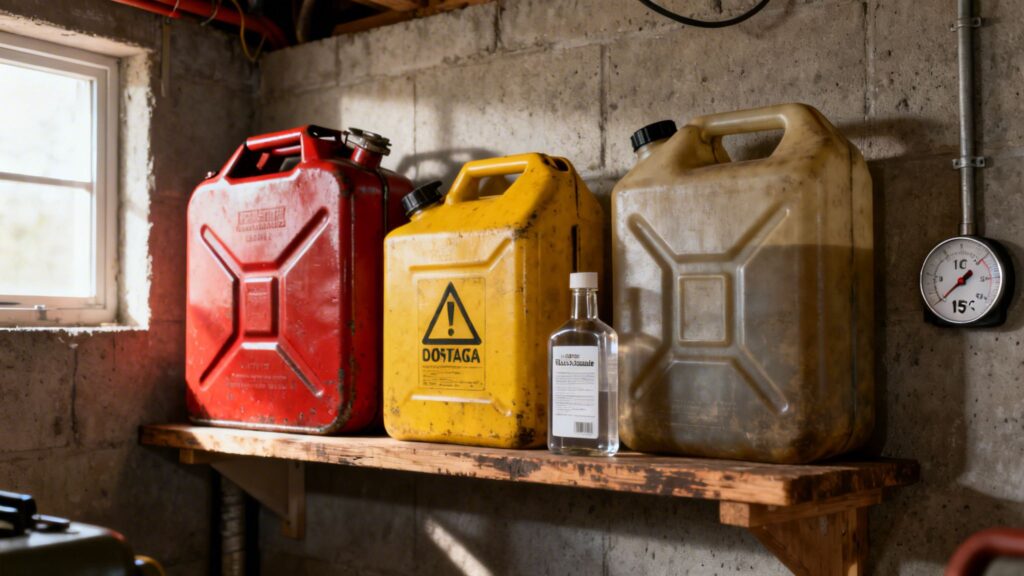
When it comes to long-term survival, fuel is power. It’s the lifeblood of your generator, the get-out-of-dodge ticket in your vehicle’s tank, and the muscle behind your chainsaw. Having a reliable gasoline supply is a non-negotiable part of any serious preparedness plan, yet it’s a resource that’s incredibly easy to mismanage.
The real challenge isn’t just having the fuel; it’s making sure that fuel is still good when you desperately need it. Gasoline, by its very nature, is a volatile compound that starts going bad much faster than most people think.

The Problem With Modern Fuel
Let’s get one thing straight: the gasoline you buy today is not built to last.
Untreated regular gasoline sitting in a basic can or even your car’s tank starts turning into a gummy, engine-clogging mess in just 3 to 6 months. But the E10 blend, which makes up 96% of what’s sold at U.S. pumps, is even worse. Its ethanol content actively pulls moisture from the air, accelerating degradation. You’re lucky to get 1-3 months out of it.
In an average garage, up to 80% of stored E10 can go bad within 90 days. This breakdown creates varnish and gunk that can slash a fuel injector’s flow by 50%. That can of gas you’ve had in the shed for a year? It’s probably more of a liability than an asset. It won’t just fail to start your generator—it could wreck it for good.
Here’s a quick look at what you’re up against.
Gasoline Shelf Life At A Glance
This table breaks down the typical shelf life you can expect from gasoline, both with and without proper treatment. Notice how big of a difference a little effort makes.
| Fuel Type | Untreated Shelf Life (Typical Conditions) | Stabilized Shelf Life (Ideal Conditions) |
|---|---|---|
| Ethanol-Free Gas | 3-6 Months | Up to 2 Years |
| E10 Gasoline | 1-3 Months | Up to 1-2 Years |
| E15 / E85 Gasoline | 2-3 Weeks | Not Recommended for Storage |
As you can see, simply adding a stabilizer and storing fuel correctly transforms it from a short-term convenience into a long-term asset.
The Three Pillars of Smart Fuel Storage
To successfully store gasoline, you need a system. It’s not complicated, but you can’t skip any part of it. Think of it as a three-legged stool—if one leg is missing, the whole thing comes crashing down.
- The Right Container: Your fuel is only as good as the can holding it. That means using certified, properly sealed containers designed specifically for gasoline. No old milk jugs or flimsy cans.
- The Right Treatment: This is the game-changer. A quality fuel stabilizer, like STA-BIL or Sea Foam, is essential. It chemically slows down the oxidation and breakdown process, keeping your fuel fresh and potent.
- The Right Environment: Heat, sunlight, and air are the enemies. A cool, dark, and well-ventilated location is non-negotiable for pushing that expiration date as far out as possible.
A proactive storage plan isn’t just about stockpiling; it’s about actively preserving a critical resource. The difference between a well-maintained fuel cache and a neglected one is the difference between having reliable power and having a collection of useless, hazardous liquid.
Thinking through these pillars is a core part of any real preparedness strategy. For a wider view of what else should be in your plans, our comprehensive emergency preparedness checklist covers all the bases. Get these fundamentals right, and you’ll build a fuel reserve you can actually count on when everything else fails.
Selecting The Right Containers For Your Fuel Cache
The success of your entire fuel storage plan hinges on one critical choice: the container. A cheap, flimsy can is a point of failure waiting to happen. It can leak fumes, crack under pressure, or let moisture ruin your precious gasoline.
Investing in the right container isn’t just a recommendation—it’s the foundation of a reliable fuel cache that will be there when you need it.
Choosing the wrong can is a shockingly common mistake. Imagine a blizzard knocks out power for a week. You head to your shed for that gas you stored six months ago, only to find the cheap plastic has become brittle in the cold and cracked. Now you’re left with a hazardous puddle and a useless generator. This is why understanding your options is non-negotiable for anyone serious about long-term fuel storage.

Comparing Common Fuel Can Types
Not all fuel cans are created equal. Far from it. Each type comes with distinct pros and cons that depend on your budget, where you’ll store it, and how you plan to use the fuel down the road.
Standard Plastic Cans (HDPE): These are the ubiquitous red cans you see everywhere. Made from high-density polyethylene, they’re lightweight and cheap. But they’re also the most likely to degrade from UV light and extreme temperature swings, causing them to swell, crack, or warp. Fine for a quick lawnmower top-off, but they are the least reliable option for a serious, long-term cache. Some people use a Terra Pump to easily transfer fuel from these cans to equipment.
Military-Style Steel Jerry Cans: For rugged durability, it’s hard to beat a NATO-spec steel jerry can. Brands like Wavian are legendary for their tough-as-nails construction, featuring a 0.9mm steel body and a cam-lock spout that creates a truly airtight seal. These cans are built to take a beating, making them a favorite among preppers and overlanders. They’re heavier and cost more, but their longevity is unmatched.
OSHA-Approved Safety Cans: Often found in professional garages and industrial sites, safety cans are the gold standard for fire prevention. Brands like Justrite engineer these cans with features mandated by OSHA. Their key components include a spring-loaded, self-closing lid and a flame arrestor—a mesh screen that stops sparks from igniting the vapors inside. They’re the most expensive choice, but they offer the highest level of safety you can get.
The container is your first line of defense against fuel degradation and safety hazards. Your choice should reflect the value you place on your fuel reserve—a cheap can offers cheap protection.
Critical Safety and Filling Protocols
Picking a great can is only half the battle. Using it correctly is just as important for preventing dangerous accidents and ensuring the longest possible shelf life for your gasoline.
A crucial guideline comes from the National Fire Protection Association (NFPA). NFPA 30, the Flammable and Combustible Liquids Code, sets the standard for safe storage. While local rules vary, a common residential limit is 25 gallons stored outside of an approved cabinet. Do yourself a favor and check your local fire codes to ensure you’re compliant.
When you’re filling your containers, one rule is non-negotiable: leave an air gap.
Never, ever fill a fuel can to the very top. Gasoline expands and contracts with temperature changes. A 5-10% air gap, often marked by a “fill line,” gives it the headspace it needs for this thermal expansion. A can filled to the brim on a cool morning could easily swell and leak—or even rupture—on a hot afternoon. This simple step is vital.
A properly filled and stored fuel can is also a key component of a complete car emergency kit, ensuring you have the fuel you need to get out of dodge if you have to.
Mastering The Use Of Fuel Stabilizers
Fuel stabilizer is the single most important ingredient for anyone serious about long-term gasoline storage. Think of it as the difference between having a reliable energy source when you need it most and a can full of corrosive, engine-destroying sludge.
Without it, even the best non-ethanol gasoline will degrade in just a few months. With it, you can safely stretch that lifespan to a couple of years.
Gasoline’s two biggest enemies are oxidation and water absorption. When fuel sits, oxygen starts breaking down its chemical compounds, forming gummy residues and varnish that will clog up an engine in no time. A stabilizer acts as a powerful antioxidant, stopping that destructive chemical reaction before it starts.

Why Ethanol-Blended Fuel Needs Extra Protection
The problem gets a lot worse with modern E10 gasoline. The ethanol in the blend is hygroscopic, which is a fancy way of saying it actively sucks water right out of the air.
Once the fuel gets saturated, a nasty process called phase separation occurs. This is where the ethanol and water mixture splits from the gasoline and sinks to the bottom of your container. That separated gunk is highly corrosive and won’t combust properly. Once it happens, the fuel is ruined for good.
A quality fuel stabilizer contains demulsifiers that prevent this separation, protecting both your fuel and your engine. For this reason, adding a stabilizer isn’t just a suggestion—it’s absolutely mandatory for storing any fuel, especially E10 blends.
Choosing The Right Product And Dosage
When it comes to fuel preservation, a few trusted names consistently stand out. These products are staples in the prepper and small engine communities because they flat-out work.
Here’s a quick look at some of the top contenders and how they stack up.
Top Fuel Stabilizer Comparison
| Product Name | Treats (Gallons per Bottle) | Recommended Dose | Max Protection Claim |
|---|---|---|---|
| STA-BIL Storage | 80 gallons (32 oz) | 1 oz per 2.5 gallons | Up to 24 months |
| Sea Foam Motor Treatment | 16 gallons (16 oz) | 1 oz per gallon | Up to 24 months |
| PRI-G Fuel Treatment | 2,048 gallons (32 oz) | 1 oz per 16 gallons | Indefinite |
| Star Tron Enzyme Treatment | 256 gallons (32 oz) | 1 oz per 8 gallons | Up to 24 months |
While brands like STA-BIL are famous for storage, others like Sea Foam are praised for also cleaning fuel systems. PRI-G offers an incredibly concentrated formula for treating large volumes. The key is to pick one and use it correctly.
Proper dosing isn’t a suggestion—it’s a requirement. You have to follow the instructions on the bottle for the product to work as advertised.
Crucial Timing: Fuel stabilizer must be added to gasoline when it’s fresh. For the best results, pour the stabilizer into your empty fuel can before you fill it at the pump. This ensures it mixes thoroughly and starts protecting the fuel immediately. Waiting weeks or months to treat your stored gas is a complete waste of money; by then, the degradation process has already begun.
Non-Ethanol Gas: The Superior Choice
While stabilizers do an amazing job with E10 gasoline, pairing them with non-ethanol fuel is the gold standard for long-term storage. You can often find it sold as REC-90 at marinas or specialty stations.
Because it has no ethanol, this fuel doesn’t have the same weakness to water absorption, making it far more stable from the get-go.
Combining non-ethanol gas with a quality stabilizer is the ultimate one-two punch. Research shows pure REC-90 can last 6-12 months on its own, but adding a stabilizer can stretch its usability up to 2 years while retaining 95% of its octane. The rate of oxidation slows by an incredible 70%.
In controlled tests, stabilized REC-90 stored at a cool 55°F showed only a 2% loss in volatility after 18 months. The untreated samples? They lost 30%.
This combination is perfect for powering sensitive equipment you’ll depend on in an emergency, like generators or chainsaws. If you’re looking for more ways to keep essential gear running when the grid goes down, check out our guide on choosing the best portable power sources to round out your preps.
The small extra cost for non-ethanol fuel pays for itself many times over in reliability and pure peace of mind.
Designing Your Ideal Fuel Storage Location
You can buy the best stabilizer and the toughest cans on the market, but they can’t win a fight against a hostile environment. Where you store your gasoline is just as important as what you store it in. Heat and direct sunlight are the arch-enemies of a stable fuel supply, dramatically speeding up the chemical reactions that turn good gas into useless sludge.
Getting the storage environment right is a non-negotiable part of the process. So many people make the simple mistake of stashing fuel cans in a hot garage or a sun-baked shed, unknowingly sabotaging their own efforts. These spots are notorious for wild temperature swings that can literally cut the life of your fuel in half.

Understanding The Impact Of Temperature
The science is crystal clear: heat is the silent killer of your gasoline stockpile. Its effect is compounding, too. Every 18°F rise in temperature above 60°F effectively doubles the rate of fuel degradation. Research has confirmed that sustained temperatures over 80°F can boost oxidation rates by 40-60%. This causes the fuel’s most volatile compounds to evaporate, slashing its energy content.
This isn’t just theory. It means a can of gas stored in a 90°F garage will go bad significantly faster than the exact same can stored in a 60°F basement. A cool, dark, and stable environment isn’t just a suggestion—it’s a scientific necessity for long-term preservation.
The ideal storage location is one that maintains a consistently cool temperature, away from direct sunlight and ignition sources. Think of it less as storage and more as a preservation chamber for your most critical liquid asset.
Identifying The Best Storage Spots
With temperature stability as your main goal, some locations are obviously better than others. The worst places are almost always the most convenient ones, like an attached garage or a simple outdoor shed, which can easily top 120°F in the summer.
Here are some much better options to consider:
- A Detached Shed or Outbuilding: If it’s properly insulated and ventilated, a detached structure is often the safest choice. It keeps flammable vapors away from your home’s living spaces and potential ignition sources like furnaces or water heaters.
- A Cool Basement or Cellar: The stable, subterranean temperatures of a basement make it an excellent environment for fuel longevity. However, proper ventilation is absolutely essential to prevent fume buildup. You might also want to look into how to properly insulate a cellar ceiling to improve temperature stability even further.
- A Buried Cache: For the most dedicated prepper, a properly designed buried storage container offers the ultimate in temperature stability and security. Just know this is an advanced method that requires careful planning to manage moisture and access.
No matter where you choose, always store fuel cans off bare concrete floors. Concrete is porous and can wick moisture, which will rust out steel cans in no time. It also acts as a heat sink, causing unwanted temperature fluctuations. A simple wooden pallet or some sturdy shelving is all you need to create an air gap and protect your containers.
Critical Safety And Ventilation Rules
Storing fuel responsibly is every bit as important as storing it effectively. Gasoline vapors are heavier than air and can travel along the floor until they find an ignition source. This is exactly why proper ventilation is a life-or-death matter.
Your storage area must have adequate airflow to dissipate any potential fumes. This could be a passive vent system in a shed or even a small, explosion-proof fan in a more enclosed area, depending on your setup.
For larger quantities, it’s wise to invest in a dedicated storage solution. An approved flammable liquid storage cabinet, like those made by brands such as Eagle, provides a fire-resistant enclosure. According to OSHA and NFPA 30 guidelines, these vented cabinets are often required for storing more than 10-25 gallons indoors, depending on local codes. Always check with your local fire department to make sure you’re compliant and, more importantly, safe.
A Practical System For Fuel Rotation And Testing
Okay, so you’ve treated your gasoline and stored it properly. That’s half the battle. But even the best-stabilized fuel won’t last forever. If you want to guarantee your stockpile is fresh and ready when you need it, you need an active management system. This isn’t a “set it and forget it” kind of prep; think of it as a living part of your overall plan that needs a little attention now and then.
A solid system takes the guesswork out of the equation. It turns a simple collection of red cans into a reliable energy reserve. Without one, you’re just hoping the fuel is still good, and you might find out it’s gone bad at the absolute worst time—right in the middle of the emergency you prepared for.

Implementing A First-In, First-Out (FIFO) System
The gold standard for managing anything you store for the long haul, from food to fuel, is the First-In, First-Out (FIFO) method. The concept is dead simple: the oldest can of gas you have is always the next one you use. This simple discipline ensures no single can sits around long enough to degrade into useless varnish.
For FIFO to work, you need to label everything clearly and consistently. Every single time you fill a can, you need to jot down a few key details right on the container.
A durable waterproof label or a simple tag looped through the handle works great. I’ve even seen guys just use a Sharpie paint marker directly on the can. Whatever you choose, make sure your label includes:
- Fill Date: The exact date you bought the fuel (e.g., 07/15/2024).
- Fuel Type: Be specific. Is it “E10” or, ideally, “Ethanol-Free”?
- Stabilizer Added: Note what you used and when (e.g., “STA-BIL Added 07/15/2024”).
This simple habit of labeling is the bedrock of a successful fuel rotation plan. It removes all guesswork and provides an at-a-glance status of your entire inventory, turning a potential liability into a well-managed asset.
This approach is exactly how you should handle other preps, too. The principles are universal. If you want to see how this works with food, check out our guide on applying a similar system with our food stockpile rotation guide.
Setting A Practical Rotation Schedule
With your cans all labeled up, the next step is to actually use them. The whole point is to burn through your oldest stored gasoline and replace it with fresh, treated fuel on a regular cycle.
For stabilized gasoline, a 6 to 12-month rotation cycle is a realistic and effective target. Here’s a painless way to do it:
- Grab the Oldest Can: Go to your storage area and pull the can with the earliest fill date.
- Use It: The next time your car or truck needs gas, just pour this can right into the tank before you head to the pump.
- Refill and Treat: Take that empty can with you to the gas station. Fill it with fresh fuel, add your stabilizer on the spot, and label it with the new date.
- Put it in the Back: When you get home, place the newly filled can at the very back of your storage lineup. This automatically pushes the next-oldest can to the front.
This cycle seamlessly folds your fuel cache into your normal routine. Your supply is constantly getting refreshed without any extra trips or hassle.
Simple Field Tests For Stored Gasoline
Look, things happen. Maybe you inherit some old fuel from a family member or just lose track of a can in the back of the shed. Before you dump questionable gas into a sensitive engine like a generator, there are a couple of quick, no-cost tests you can do.
- The Smell Test: This is your first line of defense, and it’s surprisingly effective. Fresh gasoline has that distinct, sharp, almost sweet chemical smell. Old, bad gas smells sour and funky, almost like varnish. If it smells “off,” trust your nose. It probably is.
- The Jar Test: This is a great visual check for water contamination and phase separation, which is when the ethanol and water drop out of the gasoline. Pour a little bit of the gas into a clean glass jar, screw the lid on, and let it sit perfectly still for about 10-15 minutes.
Good fuel will be clear and uniform in color. If you see distinct layers, little floaties, or sediment at the bottom, that fuel is contaminated. Don’t even think about putting it in an engine.
Common Questions About Storing Gasoline Long Term
Even with a solid plan, you’re bound to run into some specific questions about long-term gasoline storage. Getting straight answers is critical, not just for the effectiveness of your fuel cache, but for your safety.
Here are some of the most common queries I see from folks in the preparedness community, answered without the fluff. These are the practical, real-world details that can make or break your entire fuel strategy.
How Much Gasoline Can I Legally Store At Home?
This is one of the first and most important questions to ask, and the answer is almost always local. There isn’t a single federal law dictating residential storage limits, which means your local fire code is the final word on the matter.
That said, a widely accepted guideline, often pulled from the NFPA 30 code, is a limit of 25 gallons for a residence. This number usually applies to fuel in approved containers and doesn’t count what’s already in your vehicle’s tank.
If your needs exceed that 25-gallon mark, you’ll likely need to step up to a dedicated flammable liquid storage cabinet. Think of the heavy-duty steel cabinets made by brands like Eagle. They’re specifically designed to contain a fire. But before you buy a single can, your first call should be to your local fire department to get the exact rules for your area.
Is Storing E10 Ethanol Gasoline Really That Bad?
In a word: yes. It’s a massive headache compared to non-ethanol fuel. The ethanol in E10 gasoline is hygroscopic, which is a fancy way of saying it’s a water magnet—it literally pulls moisture right out of the air. This creates two huge problems.
First, you get phase separation. The water-ethanol mix separates from the gasoline, sinks to the bottom of the can, and forms a corrosive sludge that will absolutely wreck an engine. Second, ethanol is notorious for degrading rubber and plastic components, especially in the fuel systems of older engines or small equipment.
While a top-tier fuel stabilizer is a must for storing any gasoline, it’s completely non-negotiable for E10. If you have the choice, always, always opt for non-ethanol (often called REC-90) gasoline for your long-term cache. It’s just inherently more stable and a much safer bet for fuel you’re counting on in an emergency.
Storing E10 is a calculated risk that requires constant vigilance and the best stabilizers you can find. Forgetting to treat it or letting it sit too long will almost certainly result in unusable fuel right when you need it most.
Can I Safely Store Gas In An Attached Garage?
Lots of people do it, but it’s a practice loaded with serious risks that you have to actively manage. Your attached garage is probably full of ignition sources you don’t even think about—the pilot light on your water heater, sparks from a power tool, or even a simple electrical outlet. Gasoline fumes are heavier than air, so they can creep along the floor, find one of those sources, and flash over in an instant.
If you have no other choice but to store gas in an attached garage, you have to follow these rules religiously:
- Use Proper Containers: Don’t cheap out. Use high-quality, sealed containers like steel Wavian jerry cans or Justrite safety cans that are designed to minimize vapor leaks.
- Keep It Away From Ignition Sources: Store the cans as far away as physically possible from any appliance with a pilot light, electric motors, or any source of open flame.
- Ensure Ventilation: Your garage needs decent ventilation to prevent any potential fume buildup.
- Store It Off The Floor: Never set your cans directly on a concrete floor. Put them on a wooden pallet or a sturdy shelf to prevent rust and protect them from temperature swings.
Honestly, a detached shed or a separate outbuilding is always the safer location. If the garage is your only option, you have to be meticulous about taking these extra precautions to mitigate the danger.