Growing food inside your home gives you a personal, renewable food source, totally insulated from disasters, economic shocks, or a grid-down event. It’s about taking direct control over your family’s nutrition and guaranteeing you have fresh, living food when everything else fails.
This guide will walk you through exactly how to get started.
Why Your Survival Plan Needs an Indoor Garden
When you think about a survival scenario, what’s the first thing that comes to mind? For most people, it’s shelves stacked high with canned goods and bags of rice. That stuff is absolutely essential, but it overlooks a critical piece of the puzzle: fresh, nutrient-dense food.
Understanding the trade-offs between canned vs freeze-dried food helps you build a more complete storage strategy that your indoor garden can supplement.
An indoor garden is the bridge that fills this gap. It transforms your passive stockpile into an active, life-sustaining system.
Imagine the chaos of a prolonged blackout or a complete supply chain meltdown. Trips to the grocery store become desperate hunts for whatever is left. Now, what if you could just walk over to your living room and harvest fresh greens for dinner?
This isn’t some far-fetched idea. The global indoor farming market hit $40.51 billion in 2023 and is projected to explode to $118.17 billion by 2033. This massive growth is a direct response to real-world threats, from climate disruptions to urbanization swallowing up farmland. Recent events have laid bare just how fragile our “just-in-time” delivery system is, making local food production more critical than ever.
Food Security in Your Direct Control
An indoor garden fundamentally shifts your preparedness strategy from being dependent to being self-reliant. Instead of only counting on what you’ve stored away, you become a producer. Of course, proper storage requires the right equipment—learn more about selecting the best food storage containers to protect your stockpile. This gives you some huge advantages in a crisis:
- Renewable Nutrition: Your garden produces food over and over, offering a steady stream of vital vitamins and minerals that are tough to get from long-term storage foods.
- Insulation from External Shocks: It doesn’t matter if the roads are blocked, the stores are empty, or the economy is in a tailspin. Your personal food supply is right there in your home.
- Control Over Your Food Source: You know exactly what goes into your food. No pesticides, no herbicides, no mystery contaminants—just clean, healthy produce you grew yourself.
In a long-term emergency, morale is just as important as supplies. The psychological boost of seeing green, living things and harvesting your own food cannot be overstated. It provides a sense of normalcy, purpose, and hope when they are needed most.
More Than Just a Hobby
It’s crucial to reframe indoor gardening as a core survival skill. This isn’t about a cute kitchen window box; it’s about building a resilient system that works alongside your other preps.
Indoor gardening is just one of many lost Amish skills that modern preppers are rediscovering to build true self-reliance.
While you rely on your stored goods for the bulk of your calories, your indoor garden provides the fresh components that maintain health and well-being. Our guide on food storage for survival shows you exactly how these two strategies work hand-in-hand.
Even a tiny setup—a single tray of microgreens or a few pots of herbs—can dramatically improve your family’s diet. These plants grow fast, take up almost no space, and deliver a concentrated burst of flavor and nutrition. This small step is a powerful move toward true self-sufficiency, turning your home into a sanctuary that can sustain your family through whatever comes next.
Choosing Your Indoor Growing System
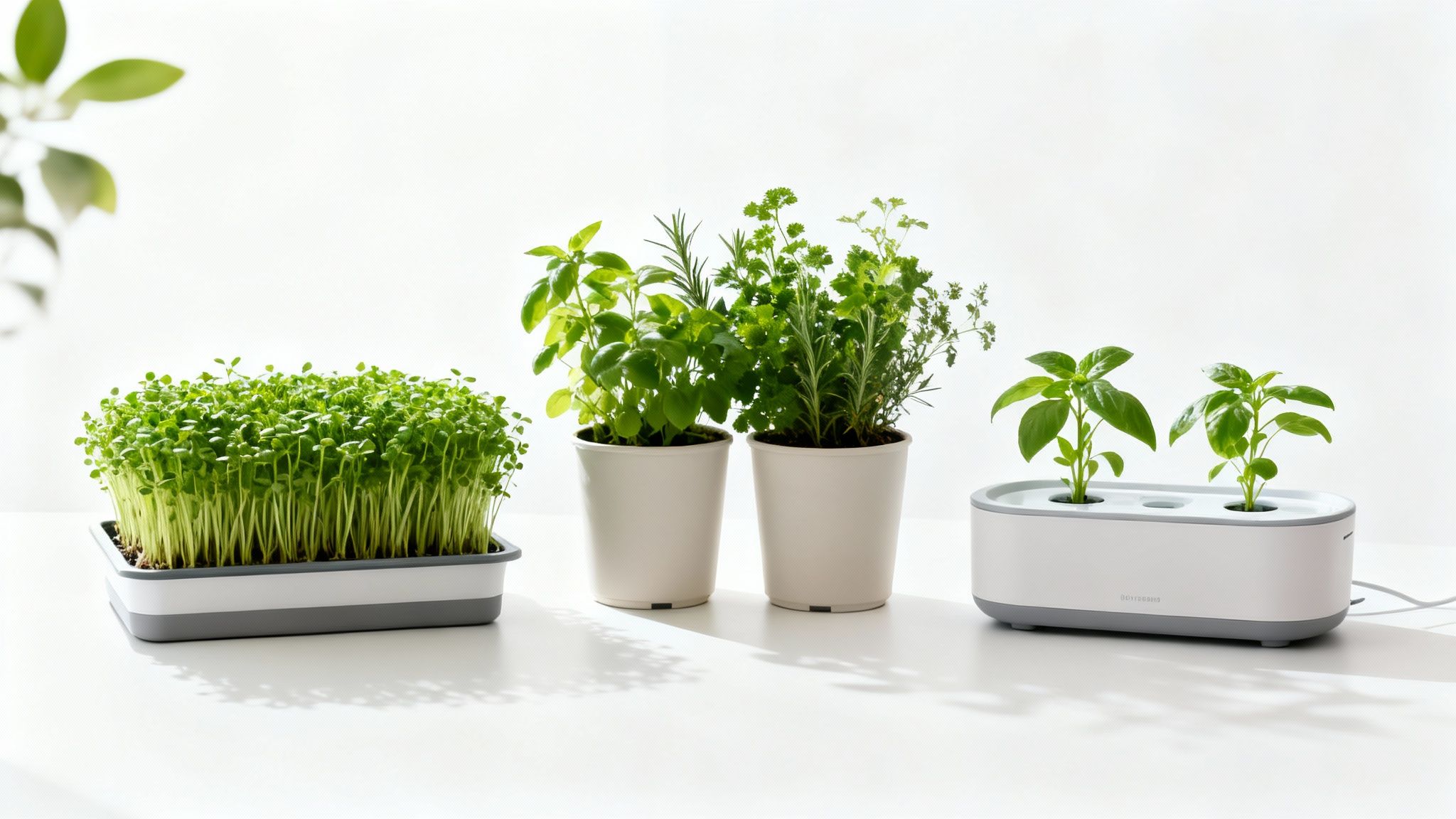
Alright, this is where the rubber meets the road. Deciding how you’re going to grow food indoors is the first real step toward building a reliable food supply. The great thing about indoor gardening is that it’s completely scalable. Your “farm” can be as simple as a jar on the counter or as sophisticated as a fully automated hydroponic rig in the basement.
The key is to start with a method that fits your reality—your space, your budget, and the time you can honestly commit. For beginners, the goal is a quick win. You want a successful first harvest to build your confidence and prove that this is doable. You don’t need a bunch of expensive, complicated gear to start putting fresh, nutritious food on your table.
Start With The Easiest Wins
Want the fastest way to get fresh, living food? Look no further than sprouting and microgreens. I always recommend these for anyone just starting out because they’re cheap, take up almost no space, and have an insanely short growth cycle. We’re talking fresh food in 7-14 days.
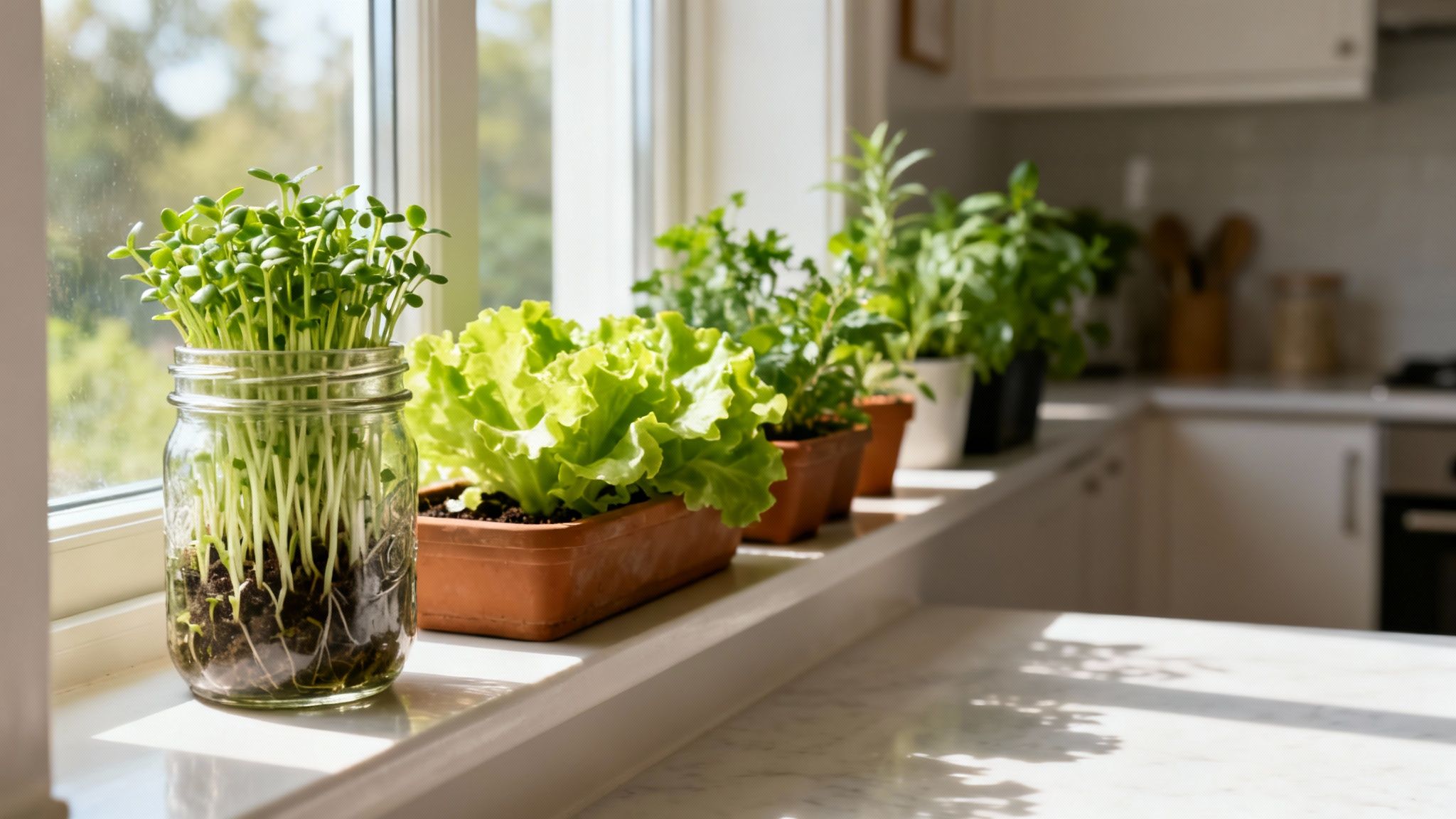
- Sprouting: This is about as simple as it gets. You just need sprouting seeds (alfalfa, mung bean, and broccoli are fantastic), a wide-mouthed jar, and a screen lid. Most of us already have Ball mason jars, and they work perfectly. Just soak the seeds, drain, and rinse them twice a day. Before you know it, you’ll have fresh sprouts.
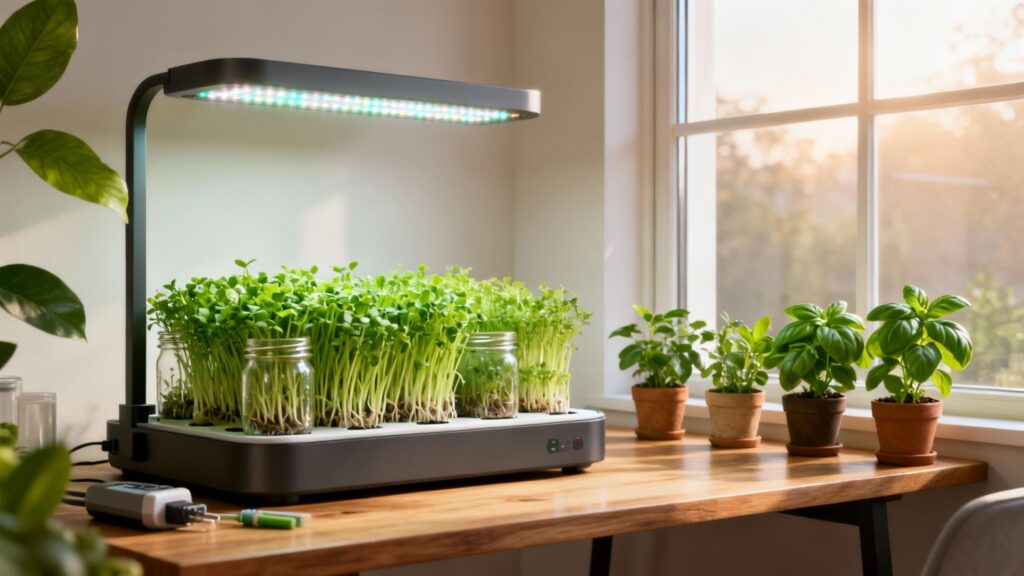
- Microgreens: These are just the young seedlings of everyday veggies and herbs, but they’re harvested right after their first real leaves pop up. The payoff is huge—they can have up to 40 times more nutrients than the full-grown plants. All it takes is a shallow tray, a bit of soil or a growing mat, and a spot on a sunny windowsill. A basic grow light works even better.
Don’t dismiss these as just practice runs. In a real grid-down scenario, the ability to produce a vitamin-packed food source in under a week with minimal gear is an absolute game-changer.
Traditional Container Gardening Indoors
If you’re ready to grow something more substantial—think herbs, heads of lettuce, or even dwarf tomatoes—then bringing traditional container gardening inside is your next logical move. It’s a familiar process for anyone who’s ever had a plant on their patio, just adapted for the indoors.
Success here really comes down to a few critical details. First, you absolutely must use a quality potting mix. Don’t just scoop dirt from your backyard; it will compact in the pot and suffocate the roots. Second, drainage is non-negotiable. Every single pot needs holes in the bottom. Waterlogged soil leads to root rot, which is probably the number one killer of indoor plants.
Make sure your containers are big enough for what you’re growing. A simple 5-gallon bucket from the hardware store is a fantastic, low-cost option for bigger plants like peppers or tomatoes. Smaller pots are fine for your herbs and leafy greens. Just remember that container plants dry out and use up nutrients much faster than plants in the ground, so they’ll need more frequent watering and feeding.
Stepping Up To Hydroponics
For anyone serious about cranking up their indoor food production, hydroponics is where it’s at. This method ditches soil altogether and grows plants directly in a nutrient-rich water solution. The results speak for themselves. Hydroponic systems can use up to 90% less water than soil gardening and often produce bigger yields, faster, because you’re feeding the roots directly.
There are a few hydroponic methods that are perfect for home growers:
- The Kratky Method: This is the ultimate passive hydroponics system. A plant sits suspended over a container of nutrient solution. As it drinks, it creates an air gap, allowing the roots to breathe. It’s a true “set it and forget it” setup that requires no pumps or electricity.
- Deep Water Culture (DWC): In a DWC system, the plant’s roots hang in an oxygenated nutrient solution. A simple air pump and air stone—the kind you see in fish tanks—constantly bubble oxygen through the water. This prevents root rot and fuels explosive growth.
- Turnkey Systems: If you want an all-in-one solution without the guesswork, companies offer complete kits. A popular setup like a VIVOSUN hydroponic system usually includes a grow tent, lights, fans, and all the DWC or drip system components you need. Having the right gear makes a huge difference, especially if you plan to run it off-grid. Check out our guide on solar power for cabins to see how you could integrate these systems with alternative energy.
Indoor Growing Methods at a Glance
Choosing the right system can feel overwhelming, so I’ve put together this quick comparison table. It breaks down the most common indoor methods to help you decide where to start based on your budget, space, and how much food you want to grow.
| Method | Initial Cost | Space Required | Maintenance Level | Typical Yield |
|---|---|---|---|---|
| Sprouting | $ (Very Low) | Minimal (Countertop) | Very Low (Rinse 2x daily) | Small, frequent batches |
| Microgreens | $ (Very Low) | Small (Windowsill/shelf) | Low (Daily check) | Nutrient-dense greens |
| Container Gardening | $$ (Low-Moderate) | Moderate (Floor/shelf space) | Moderate (Watering/feeding) | Varied (Herbs, vegetables) |
| Hydroponics (DIY) | $$$ (Moderate) | Varies by setup | Moderate (Nutrient checks) | High (Fast growth) |
| Hydroponics (Kit) | $$$$ (High) | Varies (Often compact) | Low-Moderate | Very High |
Ultimately, picking the right method is about balancing simplicity with output. There’s no wrong answer. Starting small with sprouts or microgreens gives you an immediate, tangible result. From there, scaling up to container gardening or a full hydroponic system can dramatically increase your ability to grow a diverse supply of food indoors, securing your family’s well-being no matter what’s happening outside.
Assembling Your Essential Indoor Farm Gear
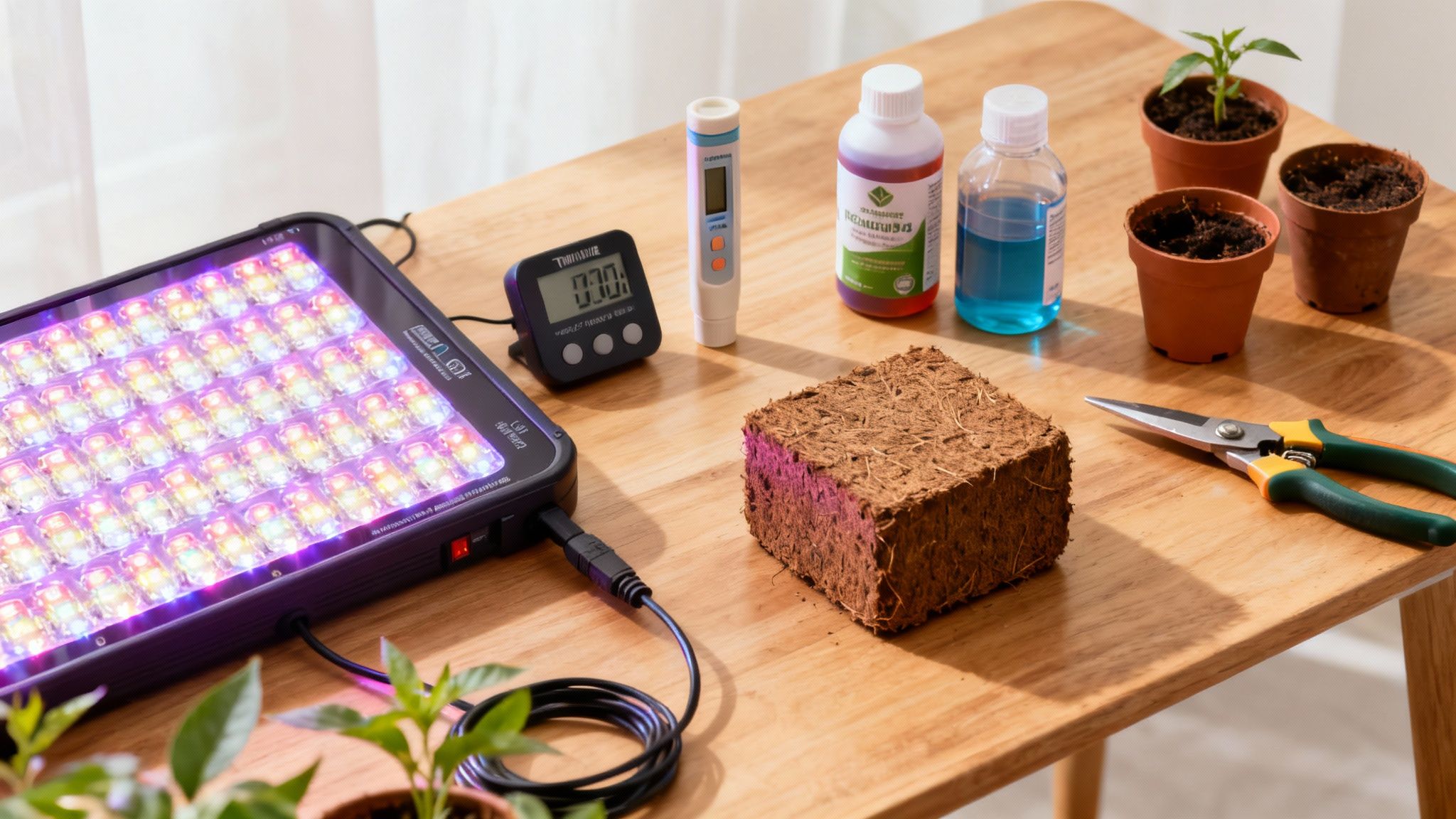
Once you’ve mapped out the right growing system for your space and goals, it’s time to gather your gear. This isn’t about grabbing every gadget you see online. It’s about being strategic and assembling the non-negotiable tools that will make your indoor garden actually work.
A successful setup, no matter how simple or complex, boils down to getting three core components right: lighting, growing media, and environmental controls. Think of these as the foundation of your indoor farm. Cutting corners here is a fast track to frustration, weak plants, and disappointing harvests. My advice? Invest in a few quality pieces from the start. It’s the most direct path to producing fresh food when you need it most.
Mastering Your Indoor Sunshine
Let’s be realistic: unless you’re lucky enough to have a south-facing sunroom with zero obstructions, you’re going to need artificial lighting. The natural daylight filtering through a typical window just isn’t intense or long-lasting enough to fuel vigorous growth, especially in the winter. Your plants need the right kind of light, and plenty of it.
You have two main options here: T5 fluorescent tubes and LED grow lights.
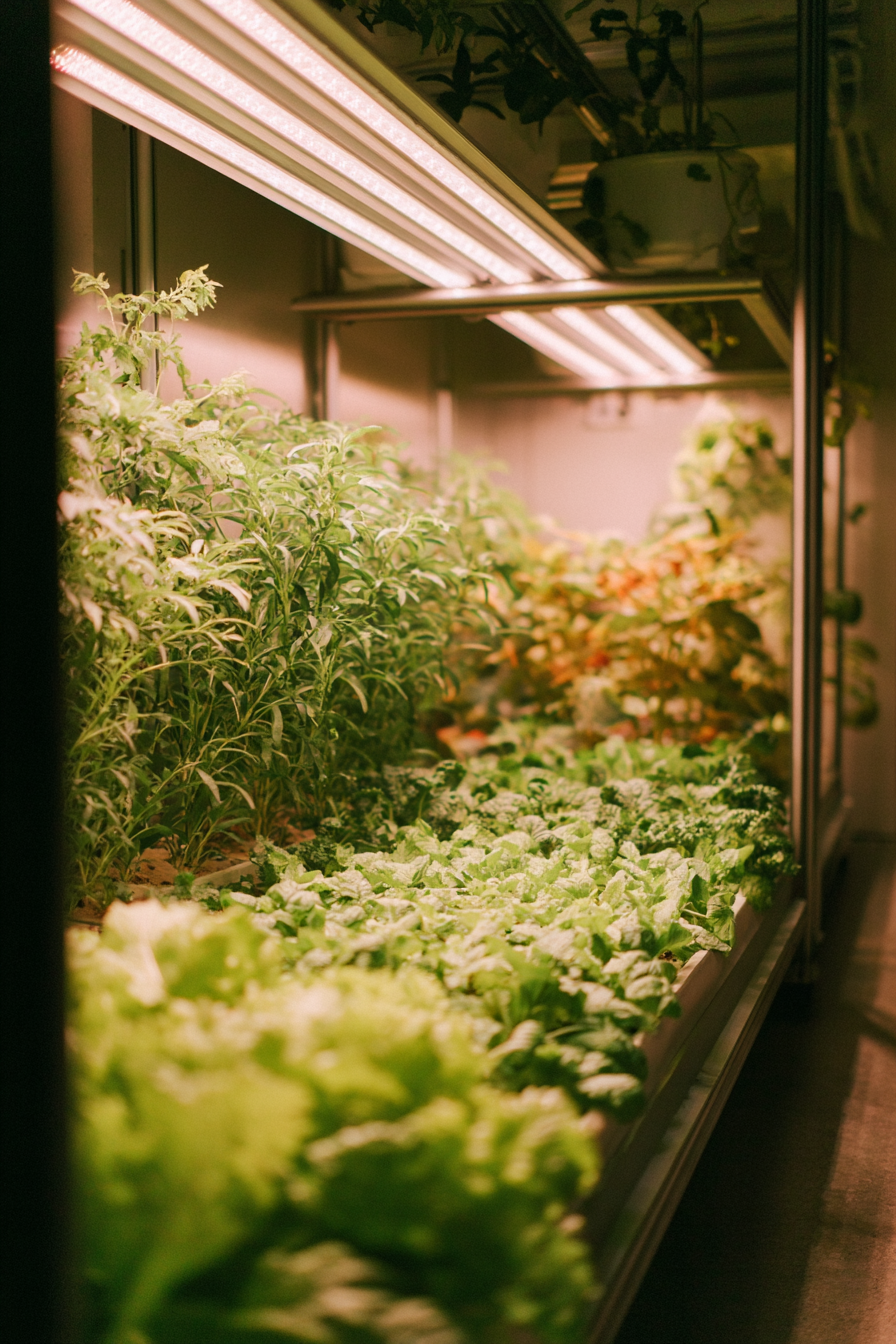
- T5 Fluorescent Lights: These are a classic, budget-friendly choice, particularly for getting seedlings started or growing leafy greens like lettuce and spinach. They run cool, so you can keep them close to your plants without scorching the leaves. The downside is they’re less energy-efficient, and their light spectrum isn’t optimized for all growth stages.
- LED Grow Lights: This is where modern indoor growing really excels. High-efficiency, full-spectrum LEDs from trusted brands like MARS HYDRO or Spider Farmer are the gold standard for a reason. They use significantly less power, produce very little heat, and provide a tailored light spectrum that supports everything from leafy growth to flowering and fruiting.
In a preparedness scenario, the energy efficiency of LEDs is a massive advantage. Less power consumption means a smaller solar generator or power bank can keep your lights running longer during a grid-down event. If you want to dive deeper into off-grid energy, check out our guide on choosing the best portable power sources.
Choosing Your Growing Medium
The “soil” you choose for your indoor setup is just as critical as the light. Whatever you do, don’t just scoop up soil from your yard. It compacts terribly in containers, drains poorly, and is a welcome mat for pests and diseases. You need a sterile, lightweight growing medium designed for indoor use.
Here are my top choices for both soil-based and hydroponic systems:
- Coco Coir: Made from coconut husks, coco coir is a fantastic, sustainable alternative to peat moss. It holds moisture incredibly well but still provides excellent aeration. It’s a perfect base for any container mix.
- Perlite: Those little white volcanic glass pebbles are incredibly lightweight and porous. Mixing perlite into your coco coir or potting mix creates vital air pockets, which is crucial for preventing root rot and helping roots breathe.
- Rockwool: For hydroponic systems, rockwool cubes are a go-to starting medium. They are sterile, give seedlings great support, and have a neutral pH, which means you have total control over the nutrient solution.
Your choice of growing medium directly impacts how often you need to water and feed your plants. A good mix of coco coir and perlite offers a forgiving balance of moisture retention and drainage, which is perfect for beginners.
Tools for Environmental Control
Your final set of essential gear is all about managing your garden’s environment. Consistency is everything when you grow food indoors, and these tools take the guesswork out of the equation.
First up, a simple digital timer for your lights is non-negotiable. Plants thrive on a consistent light/dark cycle (photoperiod), which is typically 16 hours of light and 8 hours of darkness for leafy greens. A timer automates this, ensuring your plants get their daily “sun” without you having to think about it.
For hydroponics, monitoring your water is absolutely critical. A reliable pH and TDS (Total Dissolved Solids) meter is essential. A common choice like the VIVOSUN pH and TDS Meter Combo gets the job done. The pH level determines if your plants can even absorb nutrients, while the TDS meter tells you how concentrated those nutrients are.
Finally, you need the nutrients themselves. For hydroponics, a proven liquid nutrient system like the General Hydroponics Flora Series is a fantastic place to start. This three-part system lets you customize nutrient ratios for different plants and growth stages, giving you precise control. With this essential gear in hand, you’re truly ready to build a productive and reliable indoor garden.
Getting the Light, Water, and Nutrients Right for a Bountiful Harvest
Having the right gear is one thing. Actually knowing how to use it to create the perfect growing environment—that’s what separates a struggling plant from a thriving one. Managing light, water, and nutrients is the hands-on skill that really turns you into a food producer.
Think of yourself as the chef. Your plants have a specific “recipe” for success, and it’s your job to provide the key ingredients in the right amounts at the right time. Nail these three elements, and you’ll be well on your way to a continuous, reliable supply of fresh food, no matter what’s happening outside.
Decoding Your Plant’s Light Needs
Plants don’t just see light; they consume it. Different colors, or spectrums, trigger different growth stages. Don’t worry, it’s not as complex as it sounds. For what we’re doing, you really only need to know two things:
- Blue light is what drives strong vegetative growth. This is the stuff that helps your lettuce get leafy and your seedlings grow stout and strong instead of tall and spindly.
- Red light is absolutely essential for flowering and fruiting. If you’re growing anything that produces a fruit—like tomatoes or peppers—you need a solid dose of red in your light spectrum.
This is exactly why full-spectrum LED grow lights are so popular; they deliver a balanced diet of both. Beyond the type of light, you also need to manage the photoperiod—the daily duration of light. For most of the leafy greens and herbs we’re focused on, a cycle of 16 hours on and 8 hours off is the sweet spot.
Mastering Hydroponic Nutrients and Water Quality
In a hydroponic system, you are the sole provider of everything that plant needs to live. This gives you incredible control, but it also means you have to pay close attention to your nutrient solution.
The two most important metrics you’ll need to watch are pH and Electrical Conductivity (EC).
- pH Level: This simply measures how acidic or alkaline your water is. If the pH is off, your plants can’t absorb the nutrients you’re giving them, a frustrating condition called nutrient lockout. For most hydroponic crops, you want to keep that pH level between 5.5 and 6.5.
- Electrical Conductivity (EC): This is just a fancy way of measuring the total amount of nutrients (salts) dissolved in your water. It tells you how “strong” your nutrient mix is.
Pro Tip: When you’re starting seedlings, always use a weaker nutrient solution, maybe half the strength recommended on the bottle. As the plants mature and their roots get established, you can gradually ramp up the EC to full strength. This keeps you from “burning” those delicate young roots.
Clean water is also a critical piece of the puzzle, especially in a survival context. While you’re focused on nutrients for your plants, ensuring your own water supply is safe is just as vital. You can learn more about securing your water source in our comprehensive guide on how to purify water.
Smart Watering for Your Soil-Based Garden
If you’re growing in containers with a soil-based medium, your main job is mastering the art of watering. The single biggest mistake I see beginners make is overwatering. Roots need oxygen just as much as they need water, and constantly saturated soil will suffocate them and lead to root rot.
Here’s a simple, reliable way to check if your plants are thirsty: stick your finger about an inch into the soil. If it feels dry at that depth, it’s time to water. When you do, water it thoroughly until you see a little bit of excess draining out of the bottom. This ensures the entire root zone gets hydrated and also helps flush out any built-up salts.
For preparedness, the sheer efficiency of these indoor systems is a game-changer. As many preppers know, good, arable land is becoming harder to come by. Vertical farming can effectively double lettuce output per square foot, a crucial metric when soil-based gardens fail during a blackout.
Recirculating hydroponic systems can save up to 95% more water than traditional agriculture, and modern LEDs can slash energy consumption by 50% compared to older HPS lights. For a family in a grid-down situation, this efficiency translates directly to nutrient-packed meals. Kale, for example, thrives at 65-75°F, and using a 16-hour light cycle can boost its biomass by 40%. You can explore more of these findings about the indoor farming market’s efficiency if you want to dig deeper.
Best Survival Crops to Grow Indoors
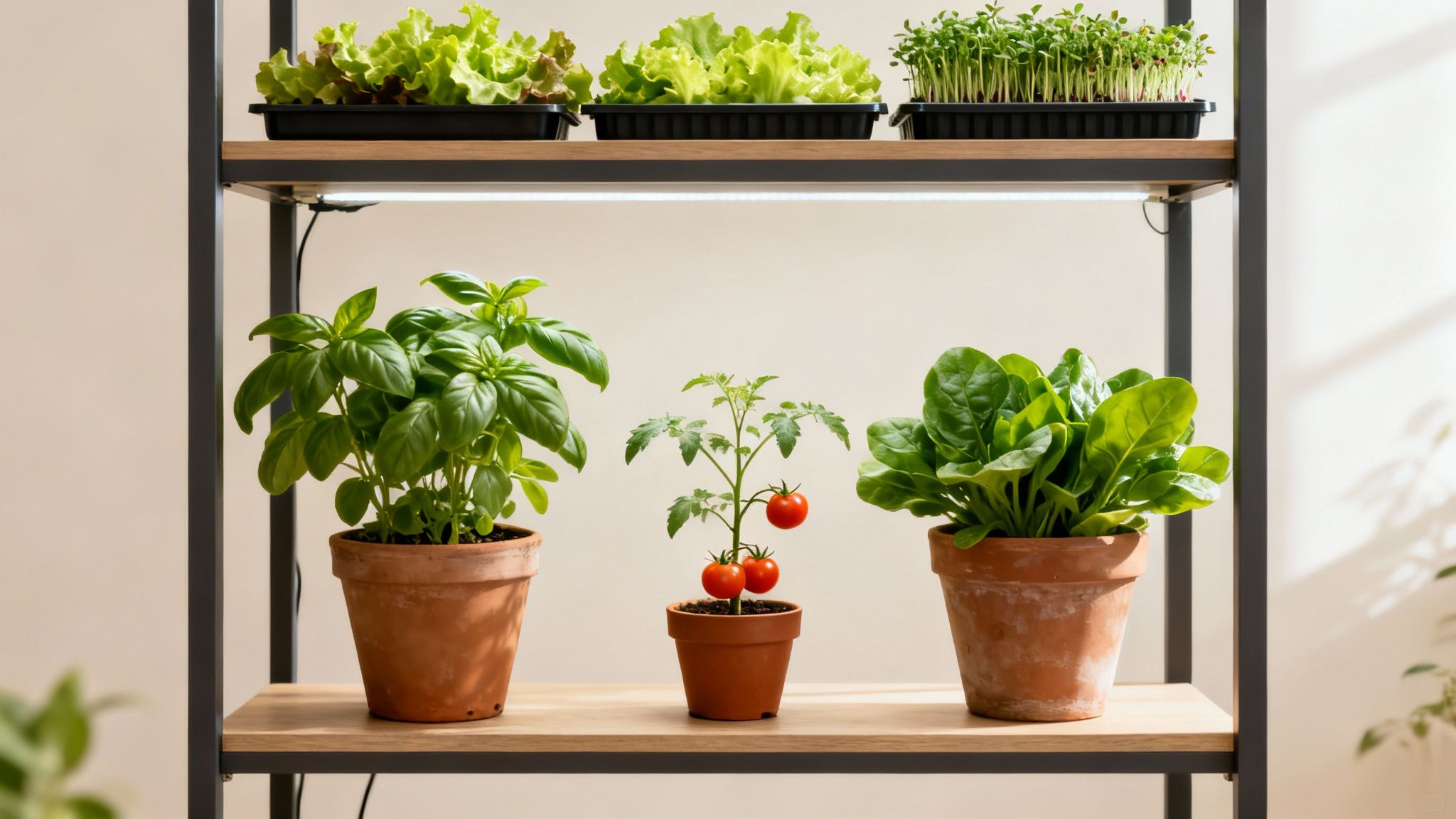
When every square inch of your space matters, choosing the right crops isn’t just gardening—it’s strategy. Not every plant is cut out for an indoor survival garden. The whole point is to maximize your return on investment, whether that’s measured in nutrients, calories, or just a much-needed morale boost.
To keep things simple, let’s break down the best indoor crops into three practical groups. I always recommend starting with the easiest ones to get some quick wins, then expanding as your skills and setup improve.
Fast and Easy Harvests
This category is all about momentum. These plants give you quick, tangible results and a near-instant nutritional boost. They’re perfect for anyone just starting out because they’re forgiving, grow like weeds, and don’t need a lot of complicated gear or space.
- Leafy Greens: Think loose-leaf lettuce, spinach, and arugula. These are the bread and butter of indoor gardening. You can start snipping the outer leaves in just 30-45 days, and the plant will keep on giving for weeks.
- Microgreens: As we’ve touched on, these are tiny nutritional powerhouses. Things like sunflower shoots, pea shoots, and radish greens are ready in a flash—just 7-14 days from seed to harvest. That’s a fast, reliable source of vitamins.
- Radishes: Probably the fastest root vegetable you can grow inside. A variety like ‘Cherry Belle’ will be ready to pull in about 25-30 days. Just make sure your container is at least 6-8 inches deep.
High-Value Nutrients
Once you’ve got a handle on the quick-growing stuff, you can start focusing on crops that pack a serious nutritional and flavorful punch. They might take a little longer to mature, but the dietary payoff is huge—something that becomes critical when other food sources are scarce.
A controlled indoor setup can churn out some amazing yields. We’re talking 10-20 times higher per square foot compared to a traditional outdoor field. Tomatoes can ripen in 60 days instead of 90, and a small hydroponic basil system can easily produce a pound a week.
Crops in this group include herbs like basil and cilantro, which add both flavor and key nutrients. Spinach is another star performer here, loaded with iron and vitamins. For a real spirit-lifter, try a compact, everbearing strawberry variety—with the right light, they can produce fresh fruit all year long.
Calorie-Dense Options
If you’ve got a more advanced setup—maybe a larger hydroponic system or a dedicated grow tent—it’s time to aim for crops that provide more substantial calories. These plants are more demanding, needing more light, space, and nutrients, but they deliver a much more significant food source in return. To round out your calorie intake, don’t forget to stock the best oils for survival—they’re essential for cooking and provide concentrated energy.
- Dwarf Tomatoes: Look for varieties like ‘Tiny Tim’ or ‘Red Robin’ that were specifically bred for containers. They stay compact but still manage to produce a surprising amount of fruit.
- Peppers: Both sweet and hot peppers do really well indoors. They’ll need strong light and warmth to really get going, but your reward is a continuous harvest.
- Bush Beans: These are a fantastic option because they don’t need a big trellis to climb. They’re fairly easy to manage and give you a good source of both protein and fiber.
By planning your indoor garden around these tiers, you build a sustainable system of food production. This way, you always have something ready to harvest while your more substantial, calorie-heavy crops are still growing. To get the most out of this approach, check out our guide to survival food nutrition to see how you can balance these crops to truly meet your family’s needs in a crisis.
Troubleshooting Common Indoor Growing Problems
Even the most seasoned growers run into a few snags. Think of your indoor garden as a living, breathing system—learning to read its signals is just part of the journey. This section is all about decoding those signals and fixing the common frustrations that pop up.
Don’t ever look at a yellowing leaf or a stalled sprout as a failure. It’s a lesson. Understanding why something went wrong is the fastest way to sharpen your skills and build a truly resilient food source for any situation.
How Much Will an Indoor Garden Affect My Power Bill?
The big energy draw, without a doubt, is your lighting. But it’s probably less than you think. A small, efficient setup with a modern 100-watt LED grow light running for 16 hours a day might only add $5-$15 to your monthly utility bill, depending on what you pay for electricity.
Of course, for true self-sufficiency, getting off the grid is the end goal. A small but reliable portable power station can easily run your whole garden. Pairing something like a Jackery Explorer or Goal Zero Yeti with a few solar panels creates a completely self-contained food production loop. Your garden will keep running, even when the rest of the world goes dark.
What Are the Most Common Beginner Mistakes?
New growers almost always stumble in the same few areas. The good news? They’re all incredibly easy to sidestep once you know what to watch for. Nail these fundamentals from day one, and you’ll save yourself a world of headaches.
- Overwatering Soil Plants: This is the undisputed champion of killing container plants. Roots need to breathe, and soggy, waterlogged soil literally suffocates them, leading to root rot. The fix is simple: always stick your finger an inch or two into the soil. If it feels damp, wait to water.
- Ignoring pH in Hydroponics: In any soil-free setup, pH is king. If it drifts outside the sweet spot (usually 5.5-6.5), your plants can’t absorb the nutrients you’re feeding them. This is called “nutrient lockout,” and it’s a frustrating dead end. A simple pH test needs to be a non-negotiable part of your daily check-in.
- Inadequate Lighting: Using a weak desk lamp or placing your lights too far away will give you sad, “leggy” seedlings that stretch desperately for light. These plants are weak, flimsy, and will never be productive. Spending a little extra on a quality full-spectrum LED light is one of the single best investments you can make for a real harvest.
The realistic goal of an indoor survival garden is powerful supplementation, not total replacement. While surviving entirely on indoor crops is extremely difficult, your garden provides a continuous supply of fresh, nutrient-dense foods like greens and herbs that are otherwise impossible to store long-term.
If you’re ready to move beyond basic indoor gardening and build a truly self-sustaining food system, the “Backyard Miracle Farm“ offers a practical, step-by-step solution. This digital guide teaches you how to create a closed-loop system that combines aquaponics, vermiculture, and hydroponics — all in one simple, low-cost setup. Designed for everyday people, it enables you to grow fresh vegetables, herbs, and even fish 24/7 with minimal effort, no complex equipment, and just a few hundred dollars in materials.
The system is built to be easy to assemble — requiring only about 3 hours and basic tools — and it runs on a fraction of the energy and water used by traditional gardens. It’s ideal for those who want to reduce reliance on grocery stores, lower food costs, and ensure a reliable food supply during emergencies. With detailed blueprints, a complete materials list, and lifetime support, the guide removes the guesswork and makes food independence achievable.
And because it’s designed to be self-contained and portable, it can be used at home, in a small yard, or even as an emergency backup. Whether you’re preparing for a long-term crisis or simply want to live more sustainably, this system offers a powerful way to grow your own food with minimal maintenance.
Click Here to get the full guide and start building your own “Miracle Farm”.
Can I Really Grow Enough Food Indoors to Survive?
This constant supply of fresh produce is a game-changer. It dramatically boosts the nutrition, flavor, and morale of a diet built on stored staples like rice and beans.
Think of your garden as the living, breathing component of your food security plan. It fills the dangerous nutritional gaps that canned and dried foods leave behind, making your family far healthier and more resilient during a long-term emergency. Your indoor garden guarantees you have access to vital micronutrients right when you need them the most.