
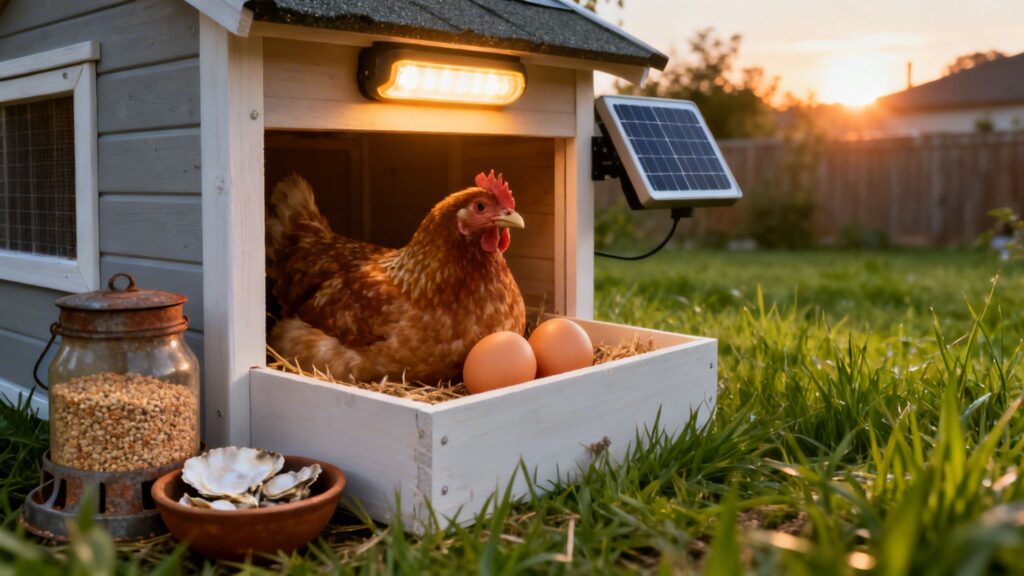
When you're aiming for true self-reliance, a steady stream of fresh eggs isn't just a bonus—it's a necessity. If you've been wondering how to get your chickens to lay more eggs, the answer isn't a single magic trick. It's a smart system built on good genetics, the right nutrition, smart lighting, and a happy, stress-free environment. This guide will show you how to turn your backyard coop into a dependable food production engine.
Your Blueprint For a High-Yield Backyard Flock
We're going to move past the generic advice you find everywhere else. Instead, you'll get actionable strategies for picking the right breeds, managing their feed, and designing a coop that's built for peak performance. You’ll see how all these pieces fit together to maximize what your flock can give you, ensuring you have a high-quality protein source even when supply chains falter.
For anyone serious about being prepared, a productive flock is a critical asset. Just a few hens can provide a family with daily protein, an invaluable resource when store shelves are bare. This is a core principle in many self-sufficiency circles. You can explore more concepts like this in our guide to what is off-grid living.
Understanding Modern Egg Production
It’s easy to take today's incredible egg yields for granted, but this level of output is a fairly recent achievement. Back in the 1940s, the average hen in the U.S. laid maybe 100-150 eggs a year. Today, that number has shot up to over 300 eggs annually—a productivity jump of more than 100%.
How did that happen? Through decades of focused improvements in genetics, nutrition, and environmental management. These are the very same principles you can apply, on a smaller scale, in your own backyard. You can dig into some of these historical trends over at UnitedEgg.com.
A consistent supply of fresh eggs is a game-changer during blackouts or supply chain breakdowns. Mastering the variables that influence egg production transforms your flock from a hobby into a reliable food source.
The rest of this guide is designed to give you the practical steps to build that truly productive flock. We'll focus on the big four:
- Genetics: Choosing breeds that are literally built for high output.
- Nutrition: Providing the right fuel for daily egg laying.
- Environment: Creating a coop that encourages productivity and safety.
- Health: Keeping your flock healthy to prevent any dips in production.
Choosing The Right Breeds And Feed For Peak Production

To get a steady supply of eggs, you have to nail two things right from the start: genetics and nutrition. You can build the perfect coop and give your hens the best care, but if they aren't bred for laying or getting the right fuel, you’ll constantly be wondering why your egg basket is half-empty. Get these two basics right, and you're already halfway there.
Selecting Your Egg-Laying Champions
When your goal is a reliable food source, not all chickens are created equal. Breed selection is everything. Sure, heritage breeds are gorgeous and have great personalities, but they often lay fewer eggs and can go "broody," meaning they stop laying to sit on a nest—which is great for hatching chicks but terrible for your breakfast supply.
For sheer volume, production hybrids are the undisputed champions. Breeds like Golden Comets and Isa Browns were specifically developed to be egg-laying machines. These birds are the workhorses of the backyard flock, often cranking out over 300 eggs a year in their prime and converting feed into eggs with incredible efficiency.
Choosing the right breed from the start can make a huge difference in your egg count. Here’s a quick look at how some of the most popular high-production breeds stack up for homesteaders.
Comparing High-Production Chicken Breeds For Homesteads
| Breed | Average Eggs Per Year | Temperament | Best For |
|---|---|---|---|
| Isa Brown | 300-320+ | Docile, friendly | Maximum egg output with a calm flock |
| Golden Comet | 280-320 | Very friendly, curious | Families wanting lots of eggs and interactive birds |
| Leghorn | 280-320 | Active, flighty | Efficient layers for free-range setups (large white eggs) |
| Rhode Island Red | 200-300 | Hardy, assertive | Dual-purpose (eggs & meat) birds for rugged climates |
| Australorp | 250-300 | Gentle, quiet | Reliable layers with a calm disposition in smaller backyards |
While dual-purpose heritage breeds like Rhode Island Reds have their place, especially if you also want meat, starting with a top-tier layer like an Isa Brown gives you a serious strategic advantage for egg security.
Fueling The Egg Machine With Optimal Nutrition
Genetics loads the gun, but nutrition pulls the trigger. A hen’s body is a factory, and an egg is its primary product. It takes a massive amount of protein, vitamins, and minerals to create one every 24 to 26 hours. If you cheap out on feed, you'll see it in your egg basket almost immediately.
The gold standard for laying hens is a complete layer feed with 16-18% protein. That number isn't a suggestion; it's a requirement to provide the amino acids needed for daily egg formation. This isn't just theory—the shift to scientifically formulated feeds after the 1950s is what pushed the average U.S. hen's output from under 200 eggs a year to over 300. Proper nutrition is non-negotiable for a resilient food supply.
Don’t think of quality feed as a cost; see it as an investment. The difference between a cheap, low-protein feed and a premium layer ration will show up directly in your egg basket.
Calcium is the other non-negotiable ingredient. A single eggshell is almost pure calcium carbonate. Over a year, a hen laying 300 eggs will use more than 20 times the amount of calcium stored in her own skeleton just to make those shells.
To keep up with that demand, you must provide a separate, free-choice source of crushed oyster shell. Don't mix it into their feed. Keep it in its own container so each hen can take exactly what her body needs. This simple step prevents thin shells, which means fewer frustrating, broken eggs in the nesting box. For anyone serious about food security, mastering the basics of survival food nutrition is just as important for your flock as it is for your family.
Essential Supplements For a Hardy Flock
While a high-quality layer feed covers most bases, a few simple additions will keep your flock healthy and laying strong, especially if you're aiming for self-sufficiency.
- Grit: Chickens don't have teeth. They rely on tiny stones stored in their gizzard to grind up food. If your birds aren't free-ranging on gravelly soil, you have to provide commercial grit. Without it, they can't digest their food properly and won't get all the nutrients they need to lay well.
- Diatomaceous Earth: Many chicken keepers swear by food-grade Diatomaceous Earth. Mixed into their dust bath area, this natural powder can help control external parasites like mites and lice. A stressed, itchy hen is not a productive hen.
- Stockpiling Feed: A prepper understands that the supply chain is fragile. Your chicken feed is no exception. Store bags of layer pellets in a cool, dry place safe from rodents. A 3-6 month supply is a smart goal to weather any disruption. You can learn to mix your own feed from stored grains, but it's a science—getting the protein and calcium balance right is critical.
Designing A Coop Environment For Maximum Eggs

A hen’s environment is a powerful trigger for her laying cycle. You can have the best feed and the most productive breeds, but it won't mean a thing if your chickens are living in a stressful, unsafe, or poorly designed coop. To really get your hens laying consistently, you have to build a space that signals safety and stability.
It all starts with security. Predators are the number one cause of stress and flock loss for backyard chicken keepers, period. Your coop needs to be a fortress, and that means using hardware cloth over all openings—not flimsy chicken wire that a determined raccoon can rip through in seconds.
When your flock can roost peacefully behind a solid, lockable door, their bodies can focus energy on producing eggs instead of constantly being on high alert.
The Non-Negotiables Of A Productive Coop
Beyond basic security, a few design elements are absolutely essential for getting the most out of your flock. A classic mistake I see all the time is poor ventilation. Chickens produce a surprising amount of moisture and ammonia, and if that gets trapped, it creates a recipe for respiratory illnesses that will shut down egg production fast.
Proper ventilation isn't about creating a draft. You need openings high up in the coop, well above the roosts, to let warm, damp air escape. This simple design feature keeps the air fresh and the bedding dry, preventing the growth of nasty bacteria and mold. It’s the same core principle of preparedness we talk about in our guide on designing a shelter for winter.
Space is the other big one. Overcrowding is a massive stressor that leads to pecking, illness, and a steep drop in laying. As a rule of thumb, plan for at least 3-4 square feet of floor space per hen inside the coop and another 8-10 square feet per bird in their run. And honestly, more is always better.
A well-designed coop isn't a luxury; it's a production tool. Every element, from the locks on the door to the placement of the vents, sends a signal to your hens that this is a safe, stable place to live and lay.
Creating The Perfect Nesting Boxes
Once the main coop structure is sound, it's time to focus on the nesting boxes. This is where the magic happens. Making them comfortable and inviting is the secret to getting clean, easy-to-collect eggs. If the boxes aren't right, hens will just find somewhere else to lay, and you’ll be stuck on a frustrating egg hunt for dirty or broken eggs.
Here’s the ideal setup:
- The Right Ratio: Aim for at least one nesting box for every 3-4 hens. Any fewer and you'll have competition and stress.
- Privacy and Comfort: Hens are hardwired to find dark, quiet, and secluded spots to lay. Place your nesting boxes in the dimmest corner of the coop.
- Clean Bedding: Keep the boxes filled with several inches of fresh, dry bedding like pine shavings or straw. This not only cushions the eggs but also helps keep them clean.
Clean, appealing nesting boxes directly encourage laying. When a hen feels secure in her spot, she’ll be far more productive.
Managing Light For Year-Round Production
Of all the environmental factors you can control, light is probably the most powerful. A hen's pituitary gland is stimulated by light, which is the biological trigger that tells her body to release an egg. To keep production high, you need to provide a consistent 14-16 hours of light every single day.
Nature takes care of this during the long days of spring and summer. But once fall and winter roll around, the shorter days cause egg production to plummet.
When societal disruptions hit, optimizing lighting is a proven, low-tech way to increase egg production by up to 25%. For resilient homesteads, installing low-wattage bulbs on timers to provide 14-16 hours of light daily has been shown to boost output from 60% to 85% hen-days in lay. You can see more about how environmental factors impact the industry in these poultry production statistics.
For the self-reliant homesteader, depending on the grid for this is a major weak link. The solution is an off-grid lighting setup. A small solar panel, like those from a Jackery kit, connected to a deep-cycle battery can easily power a low-wattage LED bulb.
To put it on autopilot, connect the light to a DC timer. This simple device turns the light on and off at the same time every day, giving your flock the unwavering light schedule they need to lay right through the darkest months of winter. That’s how you ensure your vital protein source stays steady when you need it most.
Keeping Your Flock Healthy and Stress-Free

Here’s a hard truth of chicken keeping: a sick or stressed hen will not lay eggs. It’s that simple. Her body will redirect every last bit of energy away from egg production and toward pure survival. This makes proactive health management one of the most important skills you can develop for a full egg basket.
The best tool you have is your own two eyes. Spend time with your flock every single day—and I don’t just mean grabbing the eggs and leaving. Watch them. A healthy bird is a busy bird. She’s alert, active, with a bright red comb and wattle. An unhealthy chicken, on the other hand, might hang back from the group, look lethargic, or have a pale, droopy comb. Catching these subtle shifts early is your first and best line of defense.
Proactive Health: Prevention Over Treatment
Your goal should always be to prevent problems before they start. Parasites, both inside and out, are a constant battle that can silently drain a hen's vitality and put a dead stop to egg laying. External pests like mites and lice are notorious for hiding under feathers, especially around the vent, causing severe irritation and even anemia.
Providing a good dust bath—a simple pit filled with a mix of dry dirt, sand, and food-grade diatomaceous earth—is the best preventative. It’s how chickens naturally keep themselves clean and pest-free. For a really bad mite infestation, you might need a targeted treatment like Elector PSP to get things under control, but a good dust bath solves most issues before they begin.
Internal parasites like worms are another silent threat. While some keepers stick to a rigid deworming schedule, a more natural path involves boosting their immune systems. Something as simple as adding a crushed clove of garlic to their water once a week can work wonders as a natural preventative without resorting to harsh chemicals.
Biosecurity sounds like a complicated, scientific term, but it really just boils down to one thing: don't track disease into your coop. It’s the single most effective way to prevent a flock-wide disaster that could wipe out your egg supply for weeks.
A few non-negotiable biosecurity habits are essential for any prepared homesteader:
- Quarantine New Birds: Never, ever add new chickens directly into your main flock. Keep them in a separate area for at least 30 days to watch for any signs of illness.
- Dedicated Coop Shoes: Have a pair of boots or shoes, like rugged Muck Boots, that you only wear inside the coop and run. This simple step prevents you from tracking in nasty bacteria or viruses from the outside world.
- Lock Down the Feed: Keep your feed in rodent-proof containers and consider netting over the run to keep wild birds out. They are notorious carriers of diseases and parasites.
These little habits build a resilient flock. Just as you'd have a first-aid kit for your family, you need a well-stocked poultry health kit. You can get some great ideas by checking out our guide on creating a pet emergency kit and just adapting the concepts for your flock.
Stress: The Silent Production Killer
Stress is the invisible enemy of egg production. A hen’s reproductive system is incredibly sensitive to her environment. Anything that makes her feel unsafe, threatened, or insecure can shut the whole system down almost overnight.
The most common stressors I see in backyard flocks are:
- Overcrowding: Too many birds in too little space is a recipe for disaster. It leads to pecking, fighting, and constant competition.
- Predator Threats: Even the shadow of a hawk flying overhead or a raccoon rattling the coop wire at night can be enough to put the entire flock off lay for days.
- Chaos and Inconsistency: Chickens are creatures of habit. They thrive on a predictable routine. Changing feeding times, letting them out at random hours, or constant loud noises can create a lot of anxiety.
Focus on creating a calm, safe, and predictable world for them. Secure your run, especially from above if you have hawks. Give them things to do to prevent boredom—a hanging cabbage, a few logs to perch on, or a pile of leaves to scratch in can make a huge difference.
What to Do With a Broody Hen
Sooner or later, you'll run into a broody hen. This is a hen whose hormones have convinced her it's time to stop laying and sit on a nest to hatch chicks—even if there are no eggs, or the eggs aren't fertilized. It’s a powerful natural instinct, but it’s a roadblock for your egg supply.
The trick is to "break" her broodiness gently but firmly. The goal is to cool down her breast and underside, which signals her body to stop producing broody hormones. The most common method is to place her in a "broody breaker," which is just a wire-bottomed cage or crate with food and water. The air circulation underneath her prevents her from getting warm and cozy, and it usually resets her system in just a few days. Getting good at managing broodiness is a final, critical piece of the puzzle for keeping those egg baskets full.
Troubleshooting Common Egg Production Problems
Sooner or later, every chicken keeper walks out to the coop expecting a basket full of eggs and finds… well, not much. It happens to all of us. Before you panic, know that a dip in egg production is usually a straightforward problem to solve. Think of yourself as a chicken detective—your job is to figure out what's changed and get your hens back on track.
When the egg count drops off a cliff overnight, the culprit is almost always stress. You need to think like a hen for a minute. What happened in the last 24-48 hours? Did the neighbor's dog get loose and terrorize the run? Was there a big, loud thunderstorm? Did you add a few new birds to the flock? Any sudden change can be enough to signal "danger" to a hen's system, shutting down egg production instantly.
The first move is to identify and remove the stressor. Make sure the coop is secure and the flock feels safe. Once things calm down, they'll usually start laying again in a few days. If there's no obvious stress event, it's time to put on your detective hat and search the yard. A broody hen might have found a "better" nesting spot under a deck or in a thick bush.
Diagnosing Shell and Molting Issues
Are you finding weird eggs? Thin-shelled, soft-shelled, or even shell-less "jelly" eggs are a dead giveaway for a calcium deficiency. A hen's body is an egg-making machine, and it needs a massive amount of calcium every single day to form a strong shell. If she doesn't get it from her food, her body will steal it from her own bones—a recipe for health problems and poor-quality eggs.
Luckily, this is an easy fix. Get a separate feeder and keep it filled with free-choice oyster shell at all times. Don't mix it into their feed. This is crucial because each hen knows exactly how much she needs. Letting them self-regulate is non-negotiable for getting those perfect, hard-shelled eggs we all want.
Another common reason for a complete production halt is the annual molt. This usually kicks in during the fall as the days get shorter. Your hens will start looking ragged as they drop old feathers to grow a fresh, thick coat for winter. This process is a massive energy and protein drain.
Molting requires so much protein and energy that a hen's system simply cannot support both feather regrowth and egg production simultaneously. Expect egg laying to stop completely for several weeks to a few months during this time.
You can help them through it. Switch their feed to a high-protein formula, sometimes called a "feather fixer" or grower feed, that contains 20-22% protein. This gives them the building blocks to grow new feathers faster, which means they'll get back to the important business of laying eggs for your breakfast.
When your egg count suddenly drops, it's easy to jump to conclusions. But by working through the possibilities systematically, you can usually pinpoint the cause quickly. This checklist will help you diagnose the most common issues.
Egg Production Drop Diagnostic Checklist
| Symptom | Potential Cause | Recommended Action |
|---|---|---|
| Sudden, sharp drop in laying | Acute Stressor | Check for predators, loud noises, or recent changes to the flock in the past 48 hours. Remove the stressor and give hens a few days to recover. |
| No eggs, feathers everywhere | Annual Molt | Switch to a high-protein (20-22%) feed to support feather regrowth. Production will resume in several weeks to a few months. |
| Thin, soft, or missing shells | Calcium Deficiency | Provide free-choice oyster shell in a separate container immediately. Do not mix it into their regular feed. |
| Gradual decline in the fall/winter | Decreased Daylight | Add supplemental light on a timer to provide 14-16 hours of light per day. A solar-powered setup is a great off-grid option. |
| No obvious signs, just fewer eggs | Hidden Nest | Thoroughly search your property, especially under bushes, in tall grass, or in quiet corners of outbuildings. |
| Consistent, slow decline over time | Age | Hens' production naturally drops 15-20% each year after age two. Plan to integrate a new batch of young pullets every couple of years. |
This checklist isn't exhaustive, but it covers the vast majority of problems you'll encounter. Start with the most likely culprits based on the season and your flock's recent behavior, and you'll have your egg baskets full again in no time.
Handling Seasonal and Age-Related Dips
As the days get shorter in the fall, you’ll notice a very predictable drop in eggs. It's not you; it's nature. A hen's reproductive cycle is triggered by light, and she needs 14-16 hours of it per day to keep laying consistently.
If you want a steady supply of eggs through the winter, supplemental lighting is the answer. For preparedness, an off-grid system is ideal. A small solar panel connected to an LED light on a DC timer ensures your flock gets what it needs, even if the power grid goes down. That simple timer is a powerful tool for food security.
Finally, you have to account for age. A hen's prime egg-laying years are her first two. After that, her production will naturally decline by about 15-20% each year. You can't fix this—it's just the lifecycle of a chicken. A homesteader serious about a constant egg supply will plan for this by introducing a new group of young pullets every other year. This creates an age-diverse flock and keeps production numbers high.
Common Egg Production Questions Answered
Even when you've done everything right, chickens can be a bit of a mystery. Specific questions always pop up when you're trying to keep those nesting boxes full. Here are some of the most common issues chicken keepers face and the straight answers you need to keep your egg supply steady—a critical goal for any self-reliant household.
How Long Will My Hens Lay at Their Peak?
Your best layers, especially high-production breeds like Isa Browns or Golden Comets, will hit their egg-laying prime somewhere between six months and two years of age. During this window, don't be surprised to get an egg from a healthy hen almost every single day. It's a fantastic return on your investment.
But after that second year, you'll see a natural, gradual decline. Expect production to drop by about 15-20% each year. For anyone relying on a consistent food source, this is a number you have to plan for. A smart move is to cycle in a new batch of young pullets every other year. This keeps a steady stream of peak producers in your flock and ensures your daily egg count stays reliable.
Can I Just Feed My Chickens Kitchen Scraps to Get More Eggs?
While your flock will go absolutely wild for kitchen scraps, you have to think of them as treats, not their main course. It's easy to throw off the precise nutritional balance a hen needs for daily egg production by overdoing it with leftovers. Overloading them with greens, bread, and other scraps dilutes their protein intake, and fewer eggs will be the result.
To keep them laying at their best, follow the 90/10 rule. A bare minimum of 90% of their diet needs to be a high-quality, balanced layer feed. The other 10% can come from healthy scraps like veggie peels or leafy greens. That discipline is the secret to consistent laying.
A well-formulated layer feed is engineered for one purpose: to turn raw ingredients into eggs as efficiently as possible. If you stray too far from that formula, you can almost guarantee a drop in your egg count.
Do I Really Need a Rooster for My Hens to Lay Eggs?
This is probably one of the biggest myths out there for new chicken keepers. The answer is a simple, straightforward no. You do not need a rooster for your hens to lay eggs. Hens will lay eggs based on their own reproductive cycle, which is almost entirely triggered by the number of daylight hours.
You only need a rooster if you want fertilized eggs to hatch your own replacement chicks. For a flock that's purely for egg production, an all-hen setup is often much simpler and quieter. Roosters can add a lot of stress, aggression, and unnecessary competition for food into the mix.
How Do I Stop My Chickens From Eating Their Own Eggs?
Egg-eating is one of the most frustrating habits a flock can develop. It usually starts by accident when a thin-shelled egg breaks in the nesting box. Once a hen gets a taste of that delicious, protein-packed snack, the behavior can spread like wildfire.
The key is to remember that egg-eating is almost always a symptom of a different problem. To stop it, you have to find and fix the root cause.
- Check for Deficiencies: Nine times out of ten, this habit starts with a calcium deficiency that leads to thin, easily broken shells. Make sure you have a separate feeder with free-choice crushed oyster shells available at all times.
- Fight Boredom: Give your flock something else to do. Hanging a head of cabbage for them to peck at, adding a few logs for perching, or scattering some scratch grains can keep their minds occupied.
- Collect Eggs Often: Get out to the coop and gather eggs at least twice a day, especially first thing in the morning when most laying happens. Leaving eggs in the nest is just asking for trouble.
- Use Decoy Eggs: Placing ceramic or wooden "dummy eggs" in the nests can work wonders. After a few frustrating pecks at an unbreakable object, many hens will simply give up. Some folks even fill a hollowed-out egg with mustard, which chickens hate, to really drive the point home.
Fixing this problem takes a multi-pronged attack, but it always starts with solid nutrition and a well-managed coop. Thinking about how to budget for your flock's needs is just as important as planning your own pantry. You can learn more about managing resources effectively by reading our guide on prepping on a budget.