
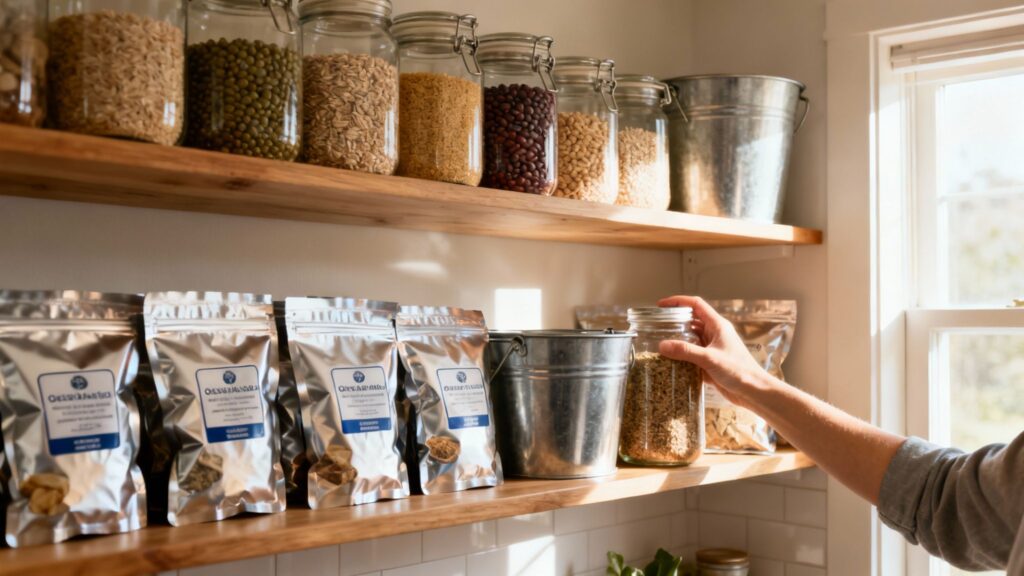
Having a solid plan for your family’s food storage for survival is one of the most practical things you can do to take control of your own security. It’s about building a buffer between your kitchen and an unpredictable world, making sure you have what you need to thrive—not just get by—when things go sideways. This isn’t about being paranoid; it’s about being prepared.
Why a Survival Pantry Is a Must-Have These Days
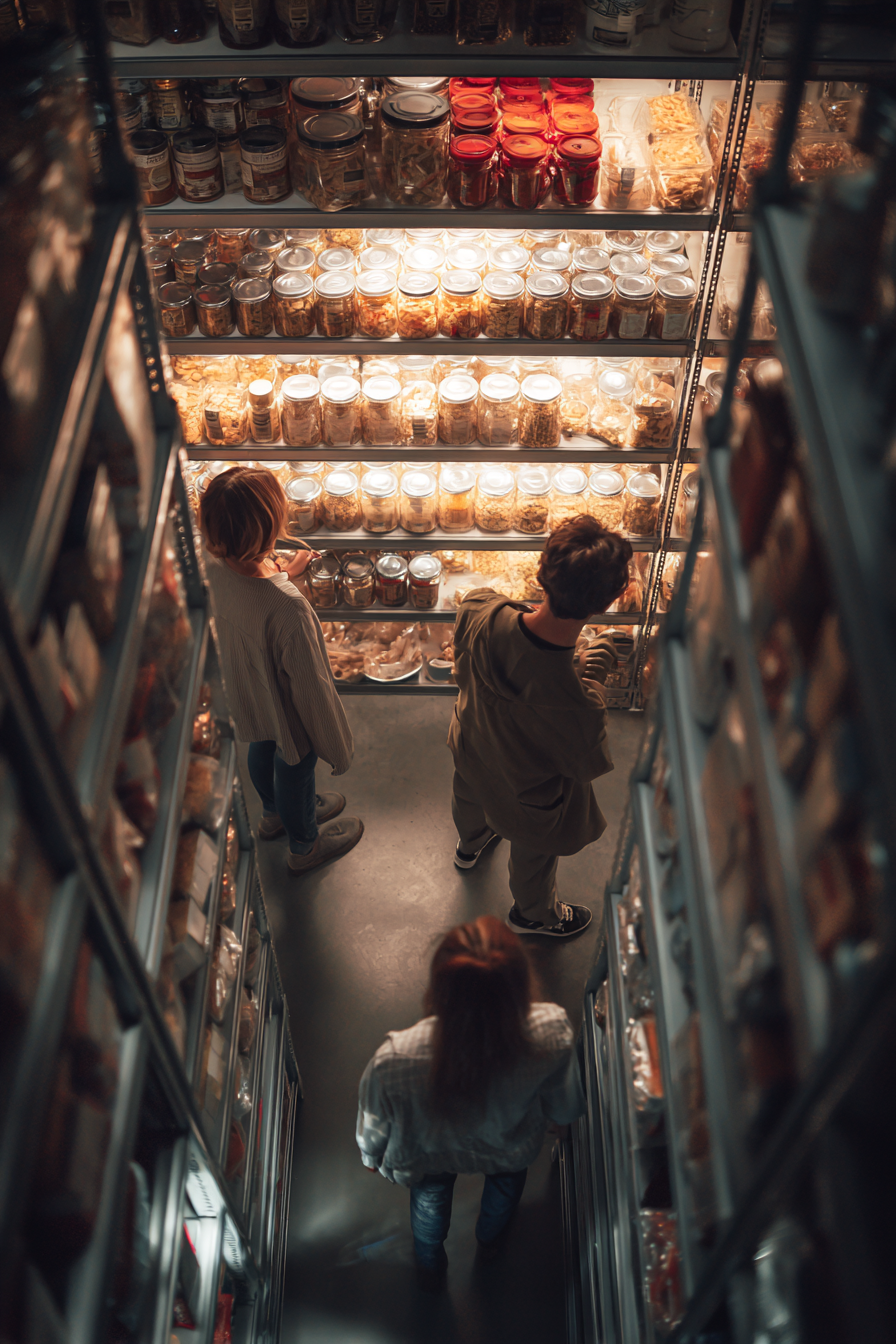
If the last few years have taught us anything, it’s how fragile our systems can be. We’ve all seen the empty grocery store shelves and watched natural disasters unfold on the news. Self-reliance has shifted from a fringe hobby to a core skill for modern living. A well-stocked pantry is your first line of defense, a real-world insurance policy for when supply chains break or an emergency hits close to home.
This guide is designed to cut through the noise and give you actionable steps. We’ll get into the nuts and bolts of building a food supply that’s both practical and resilient. The goal here is to create a resource you can actually depend on, giving you peace of mind no matter what’s happening outside your front door.
The Growing Need for Preparedness
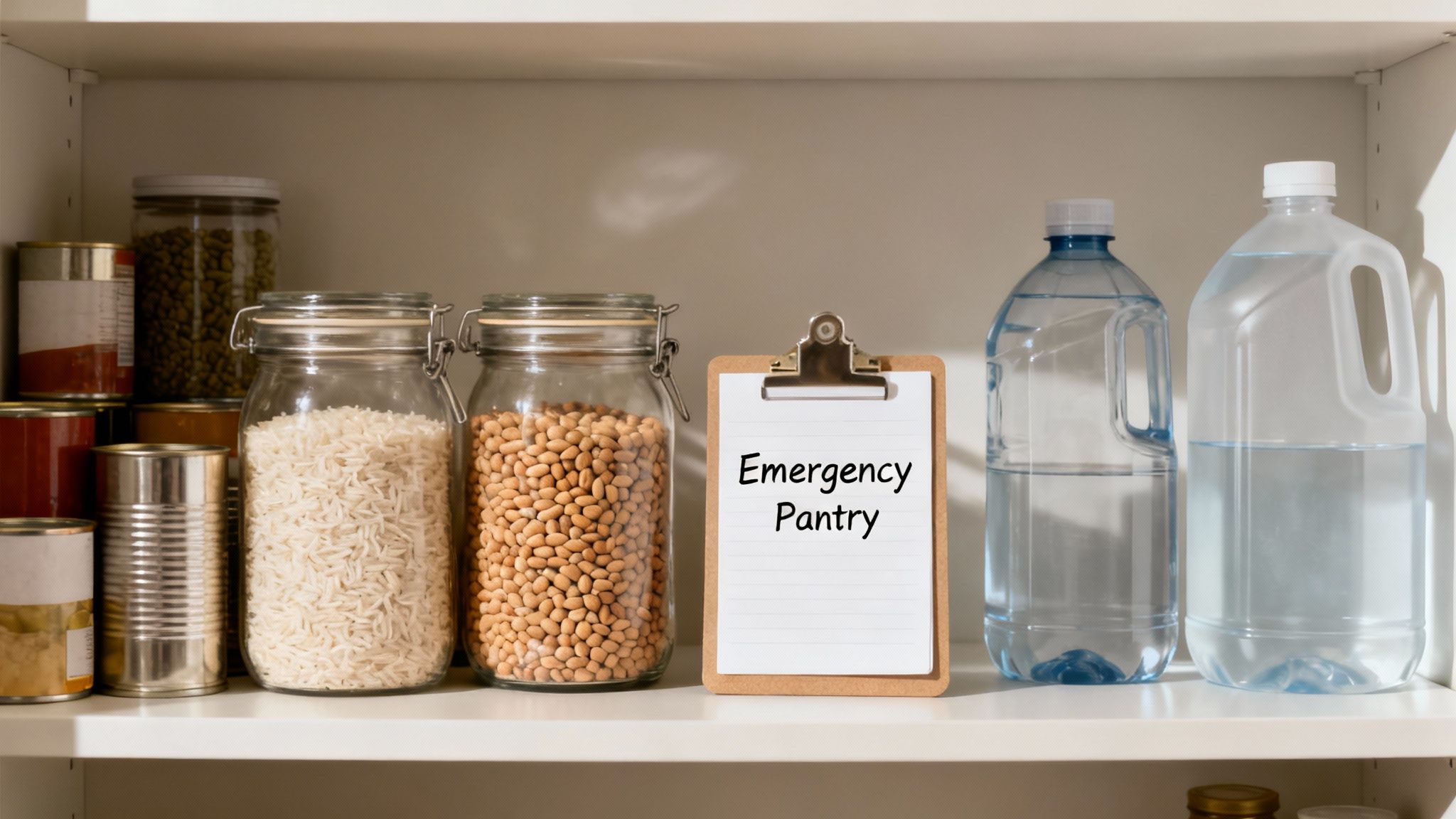
The move toward being more prepared isn’t just a feeling; you can see it in the numbers. The market for emergency survival food is booming, driven by real-world events that have shown just how vulnerable our supply chains are. This isn’t panic buying; it’s a widespread recognition that waiting for help to arrive isn’t a reliable plan.
Even so, a surprising number of people still aren’t ready. A 2020 survey showed that only 51% of people felt truly prepared for a disaster. That’s barely an increase of 2% since 2013. This gap shows just how much people need straightforward, practical advice on getting started.
A survival pantry is more than just calories on a shelf; it’s a statement of responsibility. It says you’re ready to take care of your family, turning anxiety about the unknown into confidence in your ability to handle it.
What You’ll Learn in This Guide
Putting together a solid food storage system doesn’t need to be complicated or break the bank. With the right strategies, you can build a pantry that works for your family. In fact, you can get started right away by learning how to build a survival pantry on a budget.
Here’s a quick look at what we’ll cover to get you squared away:
- Calculating Needs: We’ll figure out exactly how much food and water your household needs to have on hand.
- Choosing Foods: I’ll show you which shelf-stable, nutrient-dense foods should be the foundation of your supply.
- Preservation Techniques: You’ll learn proven methods like canning and dehydrating to make your food last for the long haul.
- Smart Storage: We’ll cover the right way to store your supplies to keep them safe from pests, light, and moisture.
Calculating Your Family’s Realistic Food Needs
To build a food supply that will actually see you through a crisis, you have to move beyond just grabbing extra cans at the grocery store. Guesswork is your enemy here. A reliable food storage plan starts with a simple, practical question: how many calories does my family really need to function each day?
A good rule of thumb is 2,000 to 2,500 calories per adult, per day. But that’s just a starting point. Your teenage son who seems to have a hollow leg will burn through far more than a sedentary grandparent. Likewise, an adult doing manual labor—like chopping wood or clearing debris—needs a lot more fuel than someone resting indoors.
This isn’t about just staying alive; it’s about maintaining the energy and health you’ll need when stress is high and resources are low. A stockpile of sugary junk food isn’t the answer. You need a balanced mix of proteins, fats, and carbs to provide real, sustained energy.
Daily Food And Water Needs Per Person
Before you buy a single bag of rice, you need a target. This table provides a quick reference to help you calculate the baseline daily needs for food and water in your household. It’s a simple tool, but it’s the foundation of a solid plan.
| Person Type | Daily Calorie Goal | Daily Water Requirement |
|---|---|---|
| Child (4-8 years) | 1,200 – 1,400 | 0.5 Gallons |
| Teenager | 2,200 – 2,800 | 1 Gallon |
| Sedentary Adult | 1,800 – 2,000 | 1 Gallon |
| Active Adult | 2,500 – 3,000+ | 1.5+ Gallons |
Remember, these are minimums. In hot climates or high-stress situations, water and calorie needs can easily go up. Use this as your starting point and adjust upwards for your specific circumstances.
Customizing Calories For Your Crew
Think of each family member’s needs individually. A small child might be fine with 1,200 calories, but an active adult in a physically demanding emergency could easily need 3,000 or more. Don’t forget to account for special circumstances—pregnant or nursing mothers have higher caloric and nutritional needs that are critical to plan for.
For a more precise estimate, you can find basic calorie calculators online that factor in age, sex, weight, and general activity levels. Taking five minutes to do this for each person gives you a much clearer goal to aim for.
The only effective survival food plan is a customized one. A generic, one-size-fits-all approach is a recipe for failure, leading to critical shortages of what you need and a surplus of what you don’t.
Structuring Your Supply Like A Pyramid
A great way to visualize your food storage is to think of it as a pyramid. The wide, sturdy base is made of the calorie-dense staples that will form the foundation of your meals day in and day out.
By starting with real numbers and building your supply in these strategic layers, you turn a random pile of cans into a genuine survival asset. This methodical approach ensures your food storage is balanced, sustainable, and ready when you need it most.
Building Your Pantry With Foundational Foods
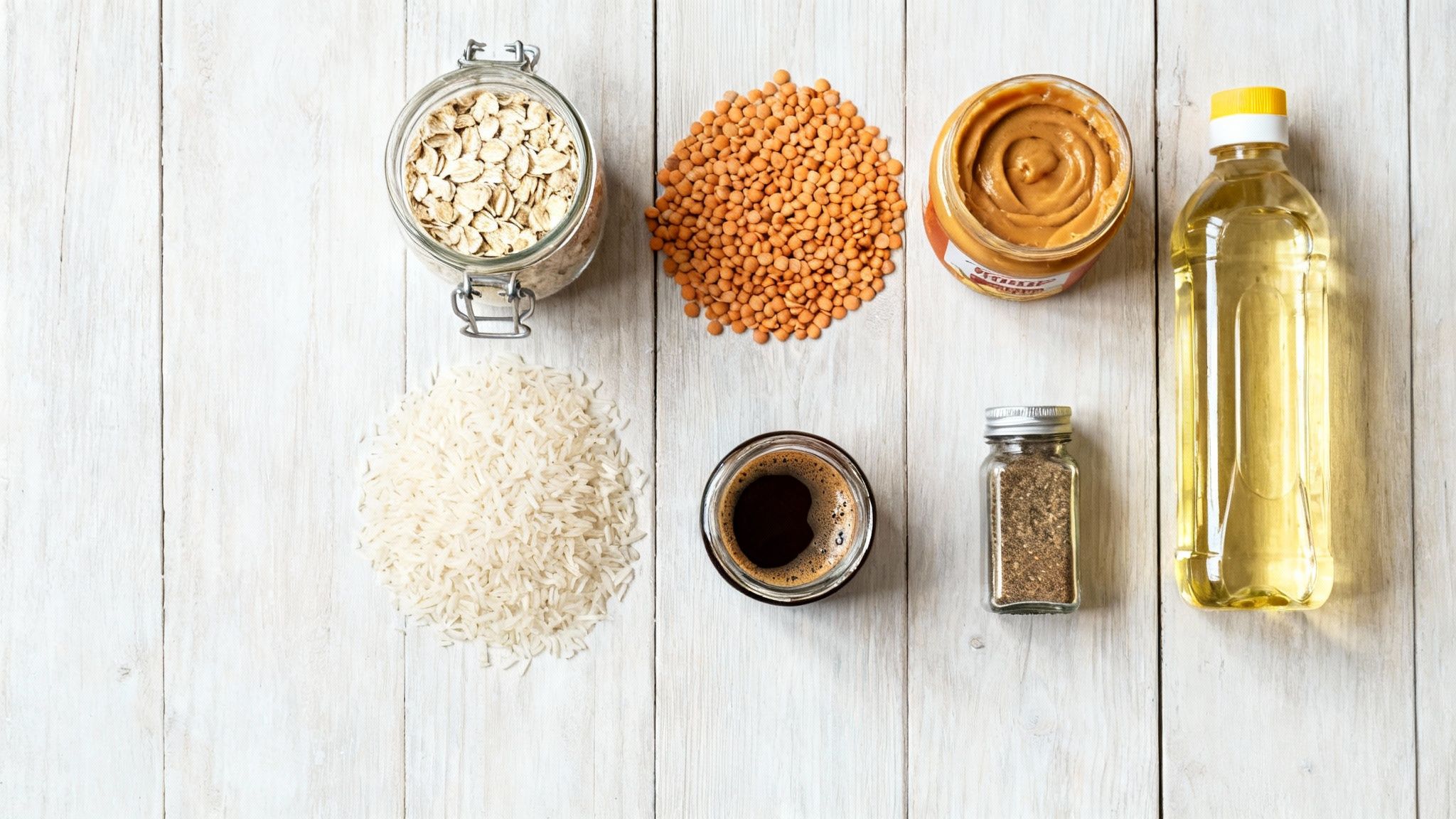
Once you’ve figured out how much food your family needs, it’s time for the fun part: stocking the shelves. But effective food storage for survival is about more than just grabbing cans off a shelf. It’s about being strategic and choosing the right kinds of calories. You’re looking for a solid mix of versatile, long-lasting staples that you can combine in a hundred different ways to make real meals.
If you’re looking for a faster way to get started, consider reviewing our guide to the best survival food kits that offer pre-packaged, balanced nutrition designed for long-term storage.
Think of it like building a kitchen from the ground up. Each food category is a building block. The goal is to get your hands on foundational items that are flexible, packed with nutrients, and have a proven shelf life. A well-designed pantry isn’t just a static pile of cans; it’s a dynamic resource that can keep you going for the long haul.
A smart approach makes sure you’ve got your macronutrients covered—carbohydrates for pure energy, proteins for strength and repair, and fats to keep you feeling full and your body functioning right. Let’s break down the core food groups that will be the backbone of your survival pantry.
Grains and Legumes: The Caloric Powerhouse
When it comes to long-term food storage, grains and legumes are the undisputed champions. They’re dense with calories, incredibly affordable when you buy in bulk, and can last for decades if you store them correctly. These are the base of your food pyramid, providing most of the calories you’ll need to power through stressful times.
White rice is always a top pick for its insane shelf life—we’re talking 20+ years when it’s sealed up right—and its caloric punch. Oats are another must-have, perfect for a hot breakfast that sticks to your ribs or for thickening up a soup. Legumes like pinto beans, black beans, and lentils are loaded with protein and fiber, making any simple meal feel much more substantial. Many experienced preppers go with trusted suppliers like Augason Farms, which sells bulk grains already packed for true long-term storage.
Proteins and Healthy Fats
Grains give you the gas to keep going, but protein is what keeps the engine from falling apart. It’s critical for maintaining muscle and overall health. Canned meats like chicken, tuna, and beef are fantastic choices because they last for years and are ready to eat right out of the can. Don’t forget about plant-based powerhouses like peanut butter; it’s a brilliant source of both protein and healthy fats.
Healthy fats are just as important for absorbing nutrients and making you feel full and satisfied. Look for these shelf-stable options:
- Cooking Oils: Coconut oil and olive oil are workhorses in the kitchen and add those necessary fats to your meals.
- Nuts and Seeds: Almonds, walnuts, and sunflower seeds are nutrient-dense snacks. Just be aware they have a shorter shelf life because of their high oil content, so you’ll need to rotate them more often.
- Canned Fish: Sardines and salmon are packed with not only protein but also those beneficial omega-3 fatty acids.
Having a good stock of these items makes sure your meals are balanced and satisfying, which is a huge factor in keeping your strength up during a crisis.
Sweeteners and Morale Boosters
Never, ever underestimate the psychological lift you get from small comforts when things are tough. They might not seem essential for survival, but items that boost morale can be just as critical as your core staples. A little sweetness or a familiar flavor can completely change your outlook.
Honey is a true survival superfood. It gives you a quick energy boost and is naturally antibacterial, which means it will literally last forever if you store it properly. Sugar and salt are also non-negotiable—salt for preserving and balancing electrolytes, and sugar for baking or just making a meal feel a bit more normal.
Beyond basic nutrition, the ability to make a meal taste good is a powerful tool for maintaining a positive mindset. Spices, coffee, tea, and cocoa don’t take up much space but deliver a huge return in comfort and familiarity.
Spices and Flavor Enhancers
Let’s be honest, a diet of plain rice and beans will get old, fast. A well-stocked spice collection is lightweight, takes up almost no room, and can turn a few bland staples into hundreds of different meals. Focus on the versatile basics that work in all kinds of dishes.
Think about stocking up on these:
- Salt and pepper
- Garlic powder and onion powder
- Bouillon cubes or powder
- Italian seasoning blends
- Chili powder and cumin
When you build your pantry with these foundational foods, you’re creating a flexible and resilient supply. You’re not just storing cans; you’re assembling the components of a functional kitchen. To dive deeper, you can explore our detailed list of the best non-perishable food items for any emergency. This strategic approach ensures your food storage for survival is not just about staying alive, but about living as well as you possibly can under difficult circumstances.
Mastering Long-Term Food Preservation At Home
Stocking up on store-bought goods is a solid first step, but truly taking control of your food supply means learning the art of long-term preservation. This is how you transform fresh harvests, bulk food deals, and game meat into shelf-stable assets that can last for years—sometimes even decades. These are the time-tested skills that build a deep, resilient, and cost-effective food storage for survival, and mastering long-term food storage techniques is what separates casual preparedness from true self-reliance.
The goal of any preservation method is simple: stop spoilage in its tracks. You need to eliminate or control the things that make food go bad—oxygen, moisture, light, and microorganisms. Each technique tackles this challenge differently. Learning even one or two of these methods gives you the power to create your own high-quality survival food, tailored exactly to your family’s needs.
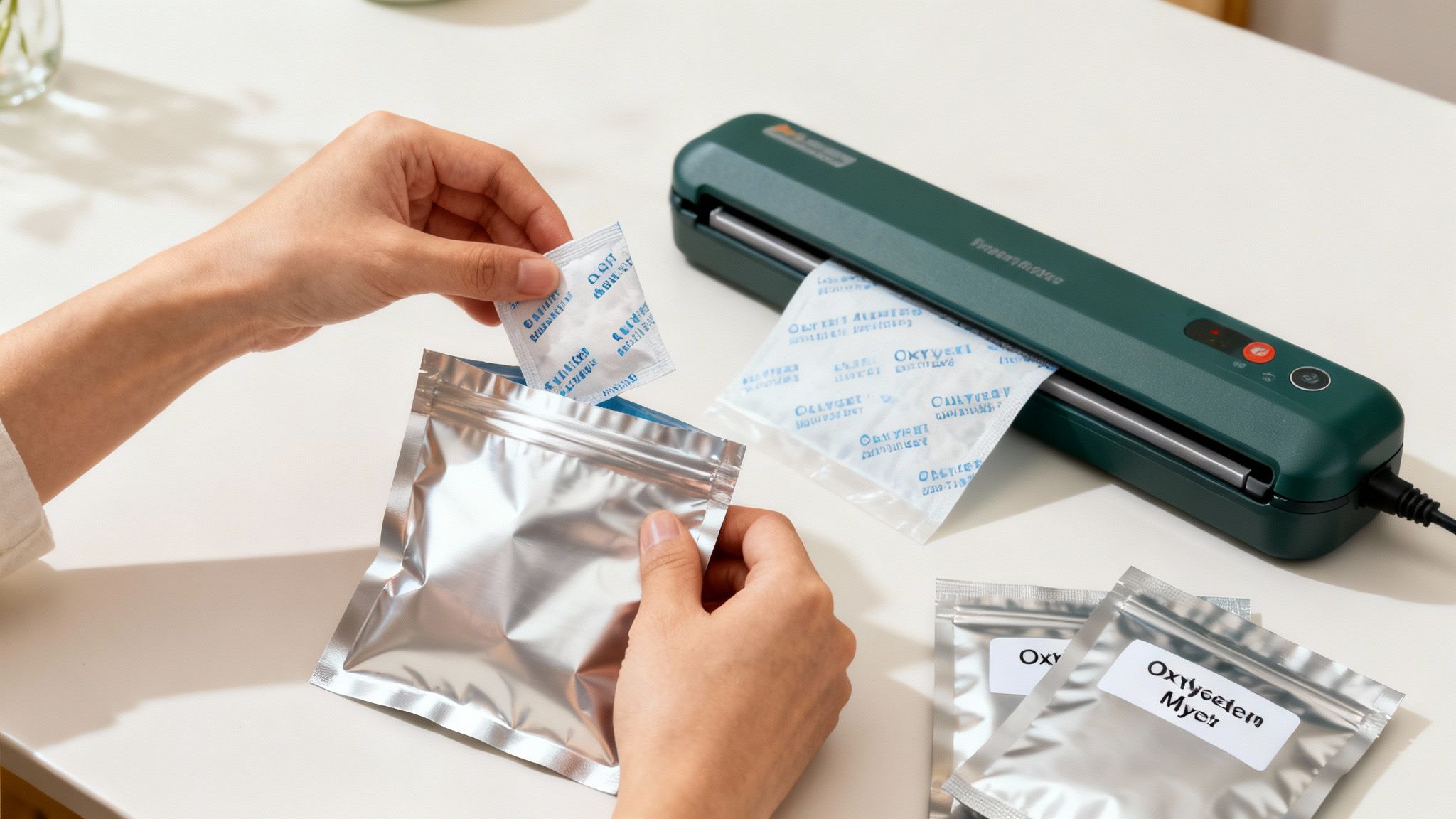
Sealing Dry Goods With Mylar and Oxygen Absorbers
When it comes to dry staples like white rice, beans, pasta, and oats, nothing beats the combination of Mylar bags and oxygen absorbers. It’s the gold standard for a reason. This simple but highly effective method creates a fortress for your food, protecting it from its three biggest enemies: oxygen, light, and moisture.
The process itself is surprisingly easy, and choosing the best Mylar bags for food storage ensures you’re getting reliable, food-grade materials that will protect your investment for decades.
This technique is a true game-changer. After Hurricane Katrina, it’s estimated that 30-40% of relief food was lost to spoilage simply because of inadequate storage. That’s a hard lesson in preparedness. Properly sealing food in Mylar prevents the mold and bacteria that thrive in the humid aftermath of a disaster, dramatically extending its shelf life.
The Art And Science Of Canning
Canning is a classic homesteading skill that lets you preserve everything from summer fruits and garden vegetables to meats and complete, ready-to-eat meals in glass jars. It’s an incredible way to have food on hand that requires zero cooking or extra water in an emergency. There are two main methods, and knowing which one to use is crucial for safety.
Water Bath Canning: This is strictly for high-acid foods. Think fruits, jams, jellies, and pickles. The food’s natural acidity works to prevent the growth of nasty botulism spores. Jars are simply boiled in water for a specific time to create a solid vacuum seal.
Pressure Canning: This is the only safe way to can low-acid foods like vegetables, meats, poultry, fish, and soups. A dedicated pressure canner, like a reliable workhorse from Presto, gets the internal temperature well above boiling, which is necessary to kill off dangerous bacteria that can otherwise thrive in a low-acid, oxygen-free jar.
Learning to can is a massive step toward real food independence. For a deeper dive into all the different ways you can preserve food, check out our detailed guide on how to preserve food.
Dehydrating For Lightweight and Compact Storage
Dehydration is all about removing moisture. By taking out enough water, you make it impossible for bacteria, yeast, and mold to grow. What you’re left with is nutrient-dense food that’s incredibly lightweight and compact, taking up a fraction of its original space. This makes it perfect for bug-out bag snacks or for stashing away vegetables to toss into soups and stews later.
Using a quality food dehydrator, like one from Excalibur, gives you the precise temperature control you need to safely dry different foods. You can make everything from beef jerky and fruit leathers to dried herbs. I love making “soup starters” by dehydrating a mix of chopped carrots, celery, and onions. To use them, you just soak the food in water until it’s rehydrated.
One of the biggest advantages of dehydrated food is its significant reduction in weight and volume. A pound of fresh carrots can be reduced to just a few ounces, making it perfect for portable emergency kits.
Freeze-Drying: The Ultimate Shelf Life
Freeze-drying is the peak of home food preservation technology. It produces food that can last 25 years or more while retaining up to 97% of its original nutrition. The process, called lyophilization, involves freezing the food solid and then using a powerful vacuum to turn the ice directly into vapor, gently removing it without damaging the food’s structure.
The upfront cost is higher, but a home freeze-dryer from a company like Harvest Right opens up a world of possibilities. You can preserve almost anything: full meals like lasagna, dairy like cheese and milk, and even raw eggs. The final product is astonishingly lightweight and rehydrates in minutes, often snapping right back to its original taste and texture. It’s the ultimate solution for building a serious, long-term, high-quality food supply.
Each of these methods has its place. By learning to use a few of them, you can build a diverse, robust, and long-lasting food storage system that will keep your family fed and secure, no matter what comes your way.
Smart Storage and Inventory Management
Having the right food is one thing, but how you store it will determine if it’s even edible when you need it most. Proper storage is the disciplined, behind-the-scenes work that protects your investment from the four horsemen of food spoilage: moisture, heat, light, and pests.
Think of your food supply like a battery. Storing it under the right conditions keeps that battery fully charged. But toss it in a hot garage, and you’re letting it drain until it’s completely useless. A chaotic pile of Mylar bags and cans isn’t an asset; it’s a liability. An organized, systematic pantry is a resource you can actually count on.
Understanding survival food shelf life for different items helps you prioritize what to rotate first and what can safely sit on the shelf for years to come.
Dialing In the Right Storage Environment
When it comes to long-term storage, the mantra is simple: cool, dark, dry, and secure. Get these four things right, and you’ve won half the battle.
Finding Storage Space in Any Living Situation
- Keep it Cool: Heat is the number one enemy of shelf life. It’s a simple rule of thumb: for every 18°F (10°C) rise in temperature, you can cut the shelf life of most foods in half. The sweet spot is between 50-70°F (10-21°C). Basements, cellars, or even an interior closet on a lower floor are your best bets.
- Keep it Dark: Sunlight is a killer. It degrades vitamins, bleaches colors, and turns fats and oils rancid in a hurry. Store everything in opaque containers or in a room with no windows.
- Keep it Dry: Moisture is a direct invitation for mold and bacteria to throw a party in your pantry. Your containers need to be sealed tight. If you’re in a humid area, a good dehumidifier is a non-negotiable piece of gear.
- Keep it Secure: Rodents and insects can chew through a year’s worth of food in a shockingly short amount of time. Use durable, pest-proof containers—think food-grade buckets or metal cans—and have a pest control plan in place.
Even if you’re in a small apartment without a dedicated cellar, you can find good spots. The back of a closet, under a bed, or a cabinet far from the oven or water heater can work just fine. You just have to be creative.
Storage Guidelines for Common Staples
To give you a better idea, here’s a quick cheat sheet for storing some of the most common staples.
Ideal Storage Conditions For Common Survival Foods
| Food Category | Ideal Temperature | Key Considerations |
|---|---|---|
| Grains & Flours | 50-70°F (10-21°C) | Must be kept absolutely dry in airtight containers to prevent mold and insect infestation. |
| Canned Goods | 50-70°F (10-21°C) | Avoid temperature fluctuations that can cause cans to expand and contract, breaking seals. Keep dry to prevent rust. |
| Dehydrated Foods | Below 60°F (15°C) | Light and moisture are the biggest enemies. Opaque, airtight containers (like Mylar bags) are essential. |
| Freeze-Dried Meals | 50-70°F (10-21°C) | Oxygen is the primary threat. Must be sealed in Mylar with oxygen absorbers. Sensitive to punctures. |
| Fats & Oils | 50-60°F (10-15°C) | Cool and dark storage is critical to prevent rancidity. Rotate these items more frequently. |
For a comprehensive breakdown of techniques and best practices, see our complete guide on how to store food long-term to maximize shelf life and protect your investment.
Getting these conditions right is what separates a food stockpile that lasts 25 years from one that spoils in 2.
The First-In, First-Out (FIFO) Rule
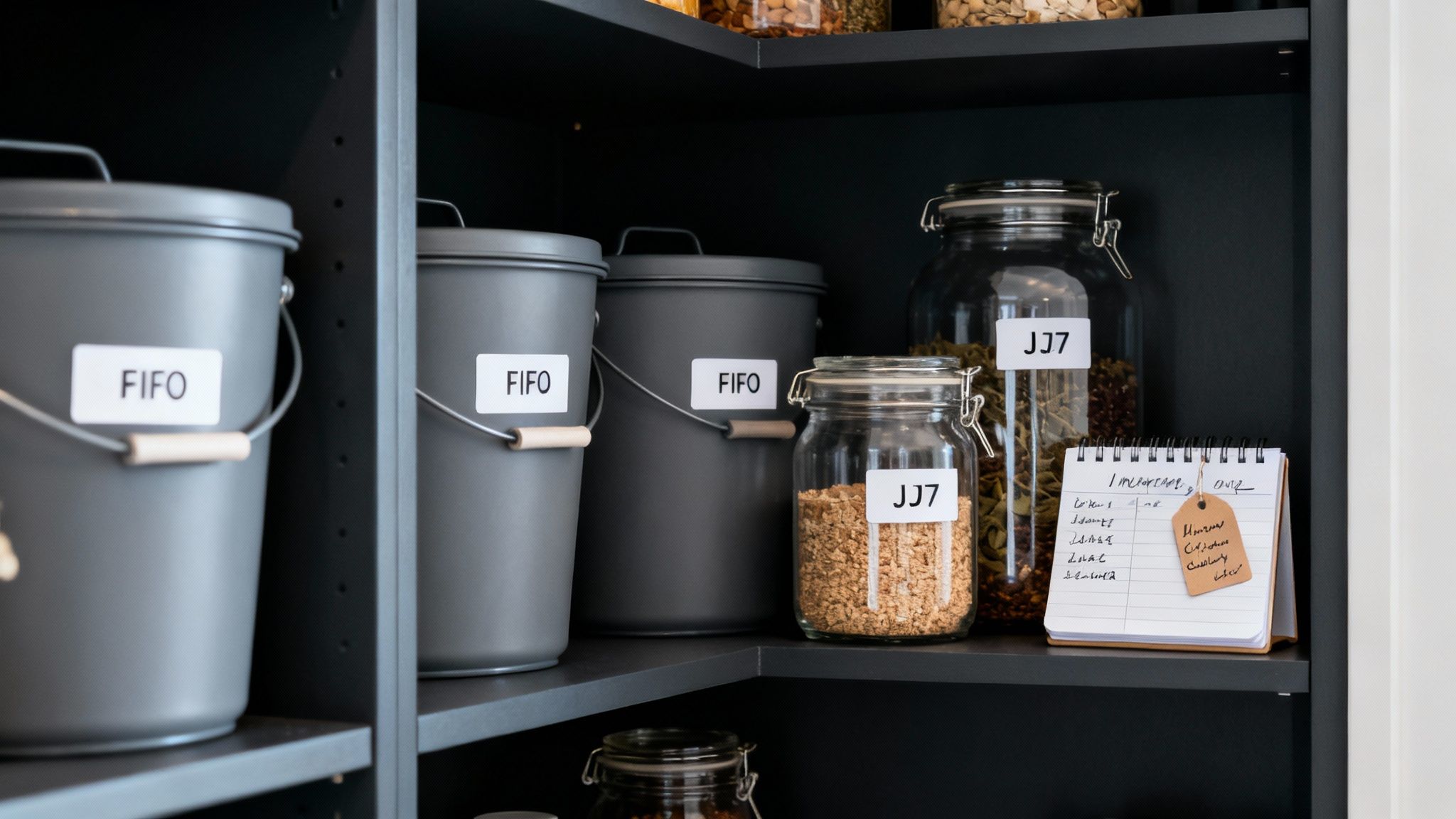
The biggest rookie mistake I see is the “set it and forget it” approach. People throw food on a shelf and don’t touch it for years. That’s how you end up with expired, wasted supplies. The only way to combat this is with the First-In, First-Out (FIFO) system.
It’s a simple concept: you use your oldest stuff first. This forces you to rotate your stock, ensuring nothing expires. It also transforms your pantry from a static museum of emergency cans into a living, working part of your kitchen. You get familiar with what you have and how to cook with it.
FIFO isn’t just a good idea—it’s non-negotiable for a reliable food supply. It prevents waste, saves money, and ensures the food you’re counting on is safe and nutritious when a crisis hits.
Putting FIFO into practice just requires a little discipline. Grab a permanent marker and write the purchase date on every single item you add. New stuff goes to the back; you always pull from the front. Simple.
Don’t Guess, Know What You Have
A messy, disorganized stockpile is almost as bad as having no stockpile at all. In an emergency, you don’t have time to dig through piles of cans to see if you have any beans left. You need to know exactly what you have, how much you have, and where it is.
A few methods work well for tracking inventory:
- The Humble Spreadsheet: A simple digital spreadsheet is my go-to. I have columns for the item, quantity, purchase date, and expiration date. It’s easy to update and sort.
- Inventory Apps: There are plenty of apps out there designed for preppers that let you scan barcodes and track expiration dates automatically.
- Pen and Paper: Never underestimate a good old-fashioned notebook. Keep it right there with your supplies and be diligent about updating it every time you add or remove something. The key, no matter the method, is consistency.
This isn’t just about being tidy. The 2017 American Housing Survey found that while 63% of households have some emergency water, 81% of those only have a three-day supply of non-perishables. That’s a razor-thin margin for error, and poor inventory management makes it even worse.
For a deeper dive into the most important part of inventory management, check out our guide on how to set up an effective food stockpile rotation system. A solid system is what turns a random collection of food into a lifeline you can trust.
Common Questions About Food Storage
Diving into food storage for survival always brings up a few key questions. Let’s tackle the common hurdles people run into, so you can build out your supply with total confidence.
How Can I Start A Food Supply On A Tight Budget?
You absolutely don’t need a huge pile of cash to get started. The real secret is consistency.
Just start small. Every time you go to the grocery store, grab one or two extra non-perishable items. A bag of rice this week, a couple of cans of beans next week. Keep an eye out for sales and focus on building those core staples slowly over time.
This “slow and steady” approach completely sidesteps a massive upfront cost and, believe it or not, can build a pretty substantial supply in less than a year. If you want to take it a step further, learn a simple skill like canning. You can buy produce in bulk when it’s cheap and in season, then preserve it for pennies on the dollar.
The most common error is the “set it and forget it” mindset. Buying supplies and forgetting them in a closet for years is a recipe for disaster. Your food supply is a living system that needs regular attention to be reliable.
What’s The Single Biggest Mistake People Make?
Forgetting about your food once it’s tucked away. That’s the one.
Without an active rotation system—what we call First-In, First-Out (FIFO)—food expires, packaging fails, and pests can find their way in. A neglected pantry isn’t security; it’s just a false sense of security.
What Kitchen Tools Are Non-Negotiable For An Emergency?
Your food is only as good as your ability to prepare it.
At the top of the list: a robust, manual can opener. It’s non-negotiable. You’ll also need basic utensils, a portable stove with plenty of extra fuel for boiling water, and some durable cookware like a cast-iron skillet. And of course, always have lighters and waterproof matches stashed where you can find them.
What’s The Best Way To Store Water?
The rule of thumb is a minimum of one gallon of water per person, per day.
The easiest and safest method is simply storing commercially bottled water. Keep it in a cool, dark place, well away from any chemicals. If you decide to use your own containers, make absolutely sure they are food-grade and have been sanitized thoroughly.
And for a critical backup, every plan needs a reliable water filter. A portable filter like the Sawyer Squeeze is perfect for individual kits, while larger gravity-fed systems are great for supporting a whole family.