When mother nature throws a wet blanket on your outdoor adventures, knowing how to start a fire could be the difference between comfort and crisis. As someone who’s spent countless hours teaching wilderness survival skills, I’ve learned that mastering fire-starting in wet conditions isn’t just a useful skill—it’s an essential one.
Fire-starting in adverse conditions is one of the 22 essential skills every prepper should learn.
The Wet Weather Challenge
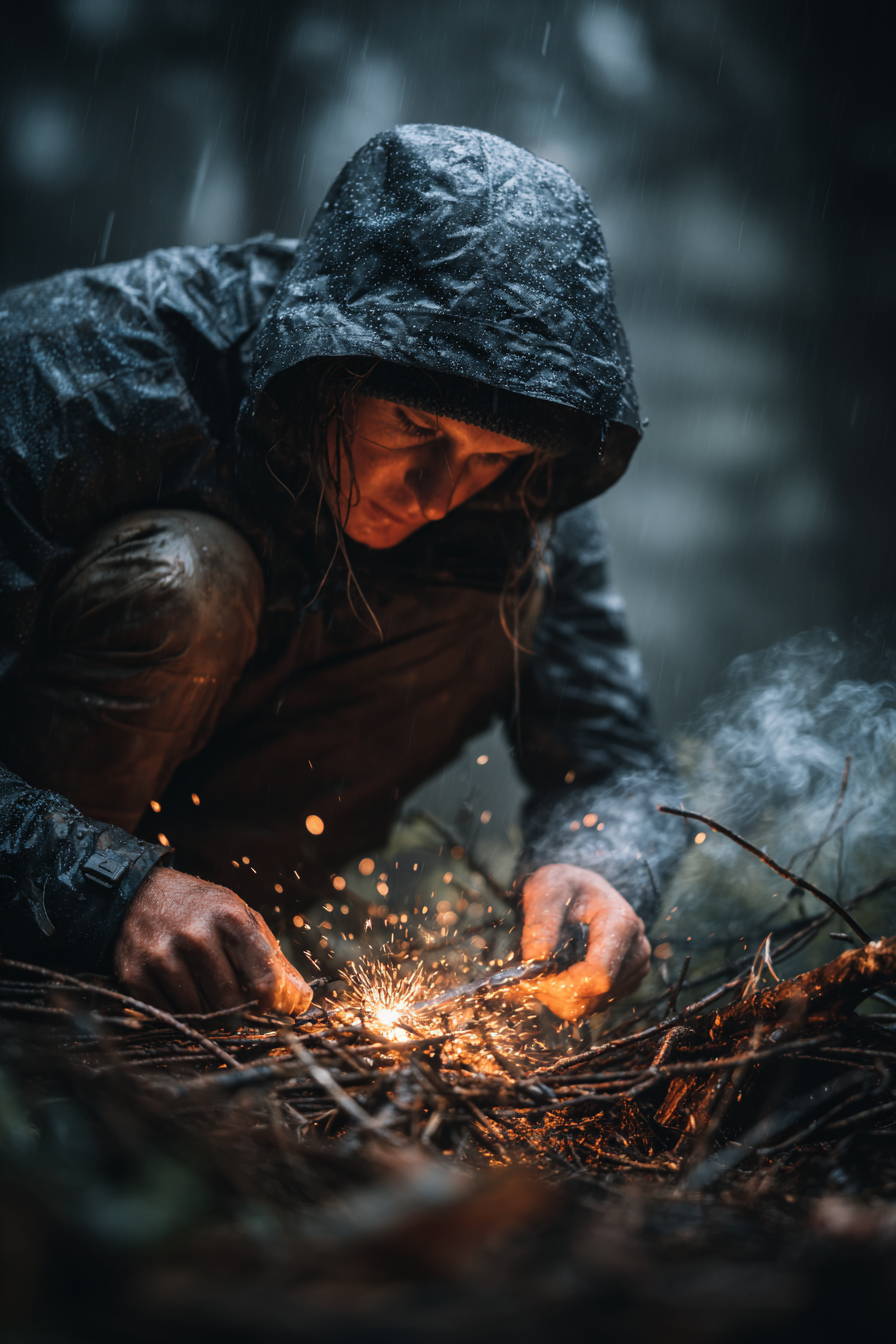
We’ve all been there: you’re out in the wilderness, everything is soaked, and you need to get a fire going. Whether it’s for warmth, cooking, or signaling for help, fire starting in wet conditions presents unique challenges that can test even the most experienced outdoor enthusiasts.
Understanding the Fire Triangle in Wet Conditions
Before diving into specific techniques, let’s talk about the fire triangle—heat, fuel, and oxygen—and how moisture affects each component:
- Heat: Moisture absorbs heat energy, making it harder to reach ignition temperature
- Fuel: Wet materials require more energy to ignite and maintain combustion
- Oxygen: Moisture can create steam that displaces needed oxygen
Prepare for any weather with the comprehensive survival skills offered in Grid Doctor 3300 EMP.
Essential Gear for Wet Weather Fire Starting
I never venture into the wilderness without my wet-weather fire-starting kit. Here’s what I consider essential:
Primary Fire Starters
- Ferrocerium rod (I personally rely on the Überleben Zünden Bushcraft Ferro Rod)
- Waterproof matches in a sealed container
- At least two reliable lighters
Tinder Materials
- Natural fatwood sticks
- Waxed fire starters
- Char cloth in a waterproof container
- Jute twine for creating tinder bundles
Adding reliable fire-starting tools to your survival kit is crucial—explore 50 essential survival items.
Stock your emergency kit with long-lasting resources like The Lost Superfoods.
Finding and Preparing Natural Materials
Even in wet conditions, nature provides if you know where to look. Here’s my tried-and-true process for gathering materials:

Locating Dry Tinder
1. Check under dense evergreen trees
2. Look for standing dead wood
3. Peel bark from birch trees
4. Search for dry material under fallen logs
Processing Wet Wood
1. Split larger pieces to access dry interior
2. Remove wet outer layers with a knife
3. Create fine shavings from the dry interior
4. Gradually increase material size
Learn to turn your backyard into a resource with My Survival Farm.
Learning to identify and gather natural materials for fire complements your foraging skills—explore edible wild plants.
Step-by-Step Fire Starting Process
Here’s my proven method for starting a fire in wet conditions:

1. Site Selection
Choose a location that offers natural protection from rain and wind. Clear away wet ground cover and create a platform using dry materials if possible.
2. Tinder Bundle Preparation
Create a golf ball-sized bundle using:
- Inner bark fibers
- Dried grass or leaves
- Shredded jute twine
- Fine wood shavings
3. Fire Lay Construction
Build your fire lay before attempting ignition:
- Create a base layer using small dry sticks
- Arrange your tinder bundle in the center
- Build a teepee of progressively larger sticks around it
- Keep extra dry materials nearby
4. Ignition and Maintenance
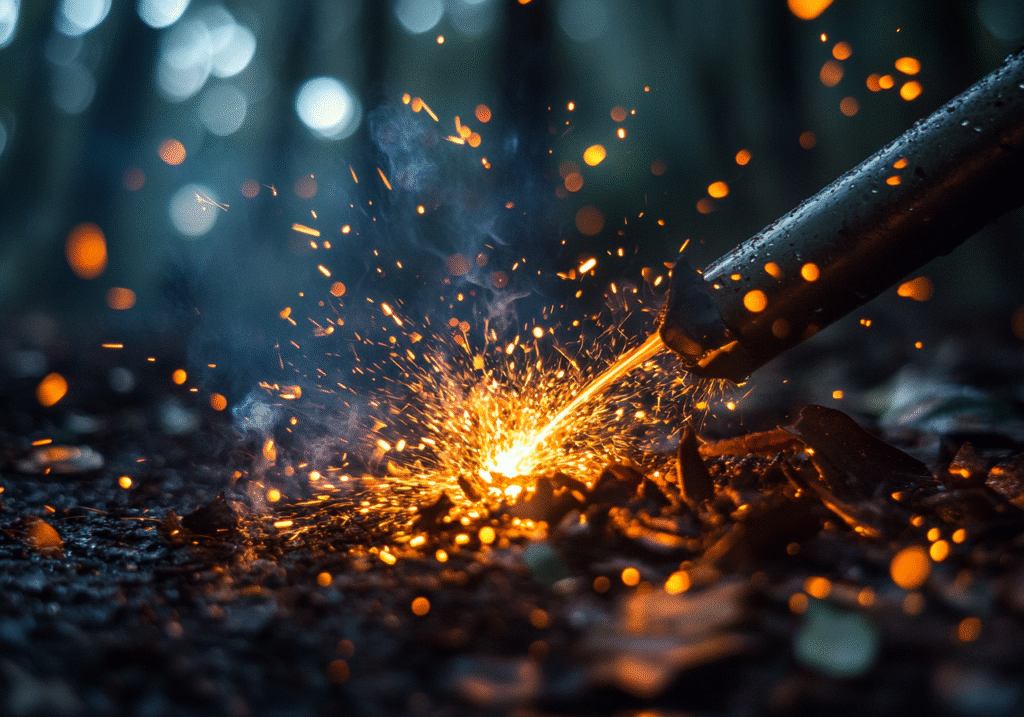
- Use your ferrocerium rod or other fire starter
- Shield the tinder from wind and rain
- Once lit, gradually add larger pieces
- Maintain the fire until larger pieces catch
Discover tools like The Air Fountain to stay prepared even in adverse conditions.
Advanced Techniques for Challenging Conditions
When conditions are particularly challenging, these methods have saved me countless times:

The Feather Stick Method
Create multiple feather sticks by carving thin curls that remain attached to the stick. This creates a larger surface area for ignition while keeping the wood’s core dry.
The Fire Board Platform
Construct a raised platform using dry logs to keep your fire off wet ground. This technique has helped me maintain fires even in swampy conditions.
Advanced fire-starting techniques are essential during prolonged emergencies like a year-long blackout.
Troubleshooting Common Problems
Over years of teaching wilderness skills, I’ve encountered every possible fire-starting challenge. Here are solutions to common issues:
When Everything Seems Wet
- Focus on finding fatwood-rich pine stumps
- Use the inner bark of cedar trees
- Create powder from dry wood by scraping
- Carry emergency fire starters like UST BlastMatch
Overcoming fire-starting challenges requires resilience—explore tips for building survival preparedness.
When Wind Is Your Enemy
- Create a wind block using your pack or natural features
- Build a reflector wall from logs
- Use a more enclosed fire lay design
Safety Considerations
Remember these crucial safety points:
1. Always maintain a safe distance from flammable materials
2. Keep your fire contained and manageable
3. Never leave a fire unattended
4. Fully extinguish your fire before leaving
5. Follow local regulations and fire safety guidelines
Ensuring fire safety in challenging conditions is just as important as starting one—explore fire-building tips.

Conclusion
Mastering fire starting in wet conditions takes practice, patience, and preparation. The key is to understand the principles, carry reliable gear, and know how to find and prepare natural materials. Remember, the best fire starter is the one you’ve practiced with before you needed it.
Start by practicing these techniques in your backyard or on short day trips. Work your way up to more challenging conditions, and always carry multiple fire-starting methods. With time and practice, you’ll develop the confidence to handle whatever weather conditions nature throws your way.
Equip yourself with BlastProof to navigate emergencies with resilience.
Ready to enhance your fire-starting skills? Grab some basic supplies and head outside—even on a rainy day. There’s no better teacher than experience, and no better time to start learning than now.