
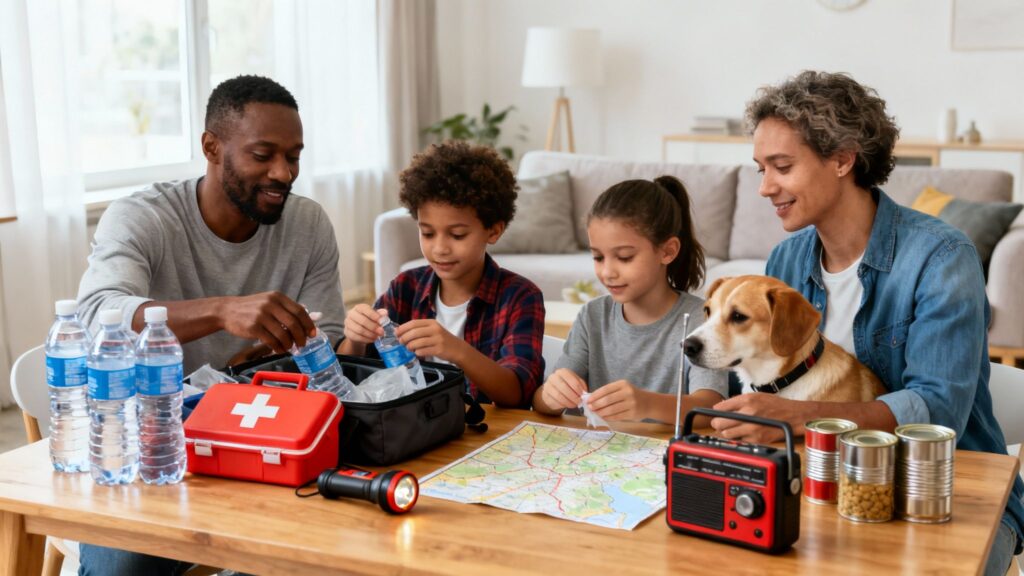
When you think about “emergency preparedness,” what comes to mind? For many of us, it’s a vague, nagging worry—something we know we should do, but it feels too big and overwhelming to start. At its core, though, family preparedness is simply about creating a clear plan and gathering the right supplies to keep your loved ones safe during the unexpected.
It’s about trading that anxiety for empowerment and control. By taking a few practical steps now, your family can learn to handle anything from a sudden power outage to a natural disaster with confidence.
Why Preparedness Is Your Family’s Best Protection
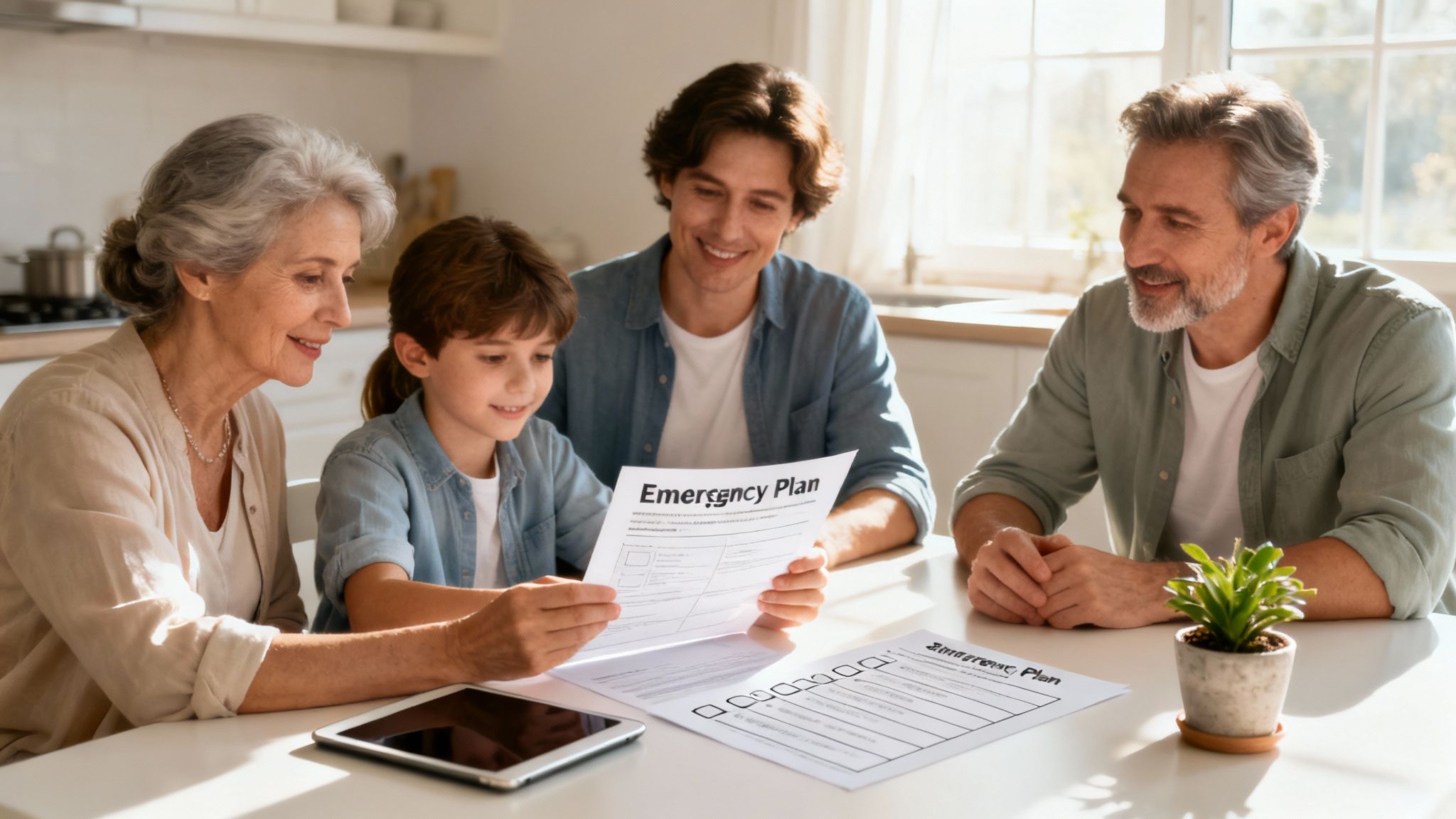
In a world full of unknowns, the instinct to protect your family is powerful. When you hear about severe weather rolling in or see news of a crisis unfolding, it’s completely normal to feel a little vulnerable. That feeling usually comes from not having a clear, go-to plan.
Ignoring the possibility of an emergency doesn’t make the risk go away. In fact, that feeling of unease is more common than you might think. A 2023 global report found that a shocking 43% of people feel totally powerless to protect themselves and their families from disasters.
But here’s the good news: the same report revealed that families who actually create a disaster plan feel a massive surge in confidence. You can dig into the full report on global disaster readiness at PreventionWeb.
This guide is designed to tackle that feeling of helplessness head-on. Family preparedness isn’t about living in fear. It’s about taking smart, practical steps to build resilience and keep everyone safe, no matter what comes your way.
If you want a broader overview of disaster readiness beyond just family-specific strategies, our complete guide on how to prepare for disasters covers everything you need to know.
The Power of a Proactive Plan
A well-thought-out plan is the bedrock of family safety. Think of it as a roadmap that guides you when stress is high and clear thinking is tough. Instead of scrambling and panicking, your family will have a set of steps to follow.
Preparedness is the ultimate expression of empowerment. It’s the conscious decision to replace “What if?” with “What’s next?” by creating a framework that protects the people you care about most.
A solid plan does more than just keep you physically safe—it provides incredible peace of mind. Knowing you have the right supplies and a way to communicate reduces anxiety for everyone, especially children.
What This Guide Will Cover
We’re going to walk through every critical step of building a solid emergency plan for your family. The focus here is on practical, life-saving actions that turn abstract worries into a concrete strategy that fits your unique household.
Here’s a look at what we’ll build together:
- Creating Your Action Plan: We’ll map out how to stay in touch if you’re separated, pick reunion spots, and make the crucial call between hunkering down (shelter-in-place) or getting out (evacuate).
- Assembling Your Survival Kits: You’ll learn how to put together personalized kits for everyone in the house—from the kids and pets to elderly family members who rely on specific medications.
- Securing Food and Water: We’ll dive into long-term strategies for storing safe drinking water and building a versatile, non-perishable food supply that your family will actually eat.
- Practicing Skills and Drills: Preparedness isn’t a “one and done” task. We’ll cover how to make it an active part of your family life with simple drills and essential skills training.
By the end of this guide, you won’t just have a plan; you’ll have a powerful shield of protection built around your family, ready for any challenge.
Building Your Family’s Emergency Action Plan
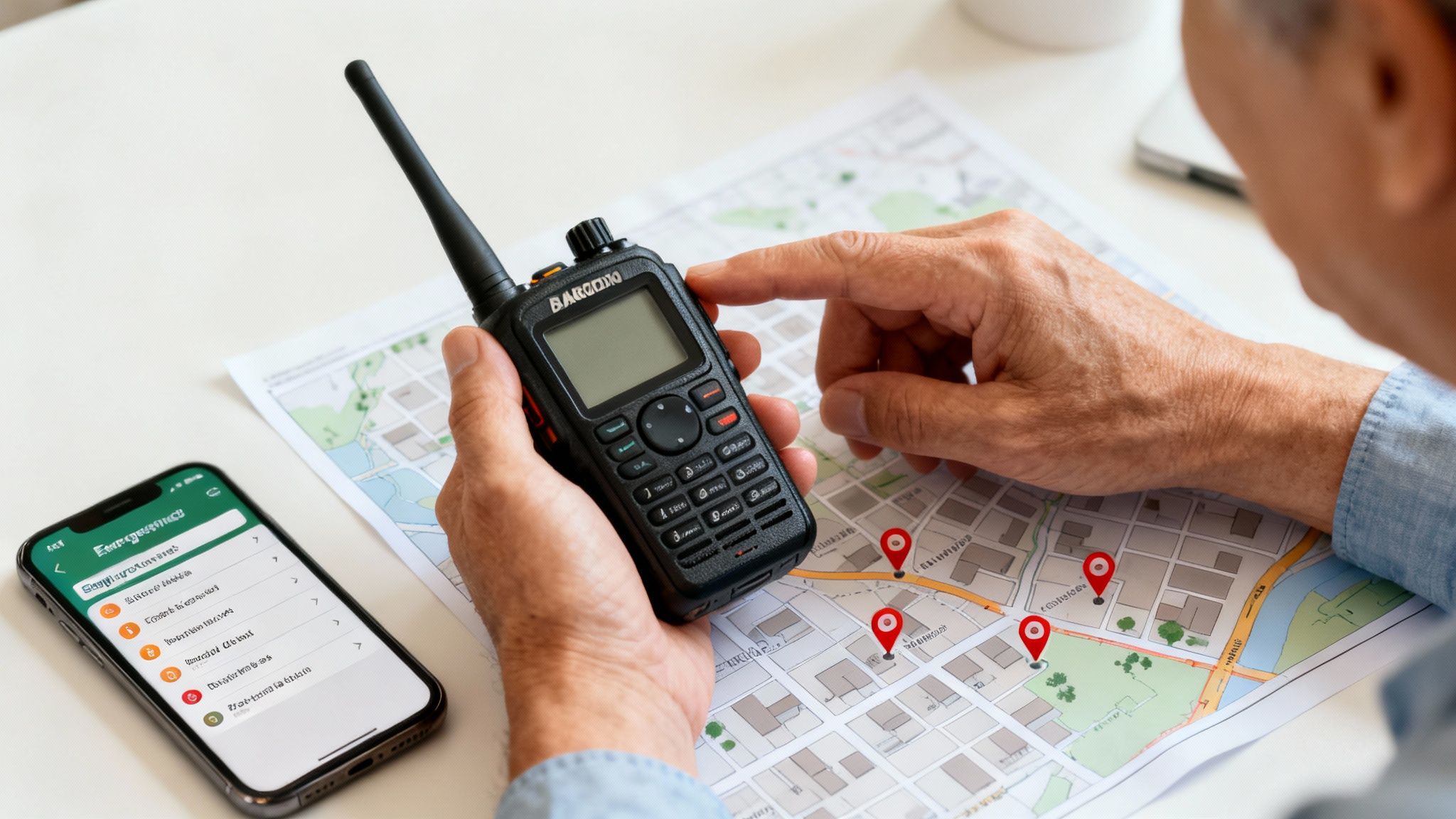
When things get chaotic, a good plan is what keeps you grounded. True emergency preparedness for families is more than just a pile of supplies—it’s a simple, shared playbook that everyone, even the kids, understands and can follow when stress is high and the power is out.
First things first, let’s get real. Your plan needs to match the actual threats you face. A family on the Florida coast has hurricanes at the top of their list, while a family in California is probably more worried about wildfires and earthquakes. Think through the most likely scenarios for your area, from big natural disasters to more common problems like a week-long power outage after a blizzard.
Basing your plan on these specific risks is what makes it truly useful. For a comprehensive breakdown of specific threats and how to protect your family from each one, check out our detailed guide on how to prepare for natural disasters. It shapes every other decision, from the gear you buy to the escape routes you map out.
The Three Pillars of Your Family Plan
A solid emergency plan really boils down to three key things: Communication, Reunification, and Shelter. Nail these three, and you’ve built a powerful safety net for your family. Think of them as the absolute essentials.
Pillar 1: Communication
When a crisis hits, your cell phone is often the first thing to become useless. Cell towers get jammed or damaged, making calls and texts a frustrating dead end. Your plan needs a backup for your backup.
- Out-of-State Contact: Pick a relative or a good friend who lives far away to be your family’s central check-in person. It’s a strange fact of emergencies that it’s often easier to get a long-distance call through than a local one. Make sure everyone has this person’s number saved in their phones and written down on a physical card in their wallet or bag.
- Alternative Methods: Sometimes, old-school tech is the most reliable. A simple battery-powered or hand-crank radio is non-negotiable for getting official updates. And for talking to each other locally when the grid is down, a set of handheld two-way radios like the Midland GXT1000VP4 can be a game-changer. They are user-friendly and offer reliable communication over several miles, perfect for keeping family members in contact.
Pillar 2: Reunification
If disaster strikes on a typical weekday, your family will be scattered—at work, at school, at home. A clear plan on how to get back together is critical.
The moments after a crisis are filled with uncertainty. A pre-established reunification plan is a powerful tool that replaces fear with a clear, actionable goal: getting everyone back together safely.
You need to set up a few different meeting spots, just in case your primary one isn’t safe or accessible. A good strategy includes:
- Neighborhood Meetup Point: A spot everyone can walk to easily, like the big oak tree at the corner of the park or your trusted neighbor’s front porch.
- Regional Meetup Point: A place further out, like the public library or a relative’s house across town, in case your whole neighborhood has to clear out.
- Out-of-Town Meetup Point: For a worst-case scenario requiring a major evacuation, have a designated spot like a family friend’s home one town over.
Pillar 3: Shelter
The final piece of the puzzle is making that critical call: do you hunker down or do you get out? The right answer changes with the threat.
- Shelter-in-Place: This is your move for things like a nasty thunderstorm, a tornado warning, or a winter storm that knocks out power for a day or two. It means staying put, keeping away from windows, and breaking out your home supply kits.
- Evacuation: This is when your home itself is in the direct line of fire from something like an advancing wildfire, a hurricane, or a flood. Your plan needs pre-mapped escape routes, a clear destination, and a ready-to-go “bug-out bag” for every person in the house.
Putting all this down on paper makes it real. To make it easy, we’ve put together a full guide and a downloadable worksheet. You can get started by checking out our emergency preparedness plan template and turning these ideas into your family’s official strategy.
Assembling Your Customized Survival Kits
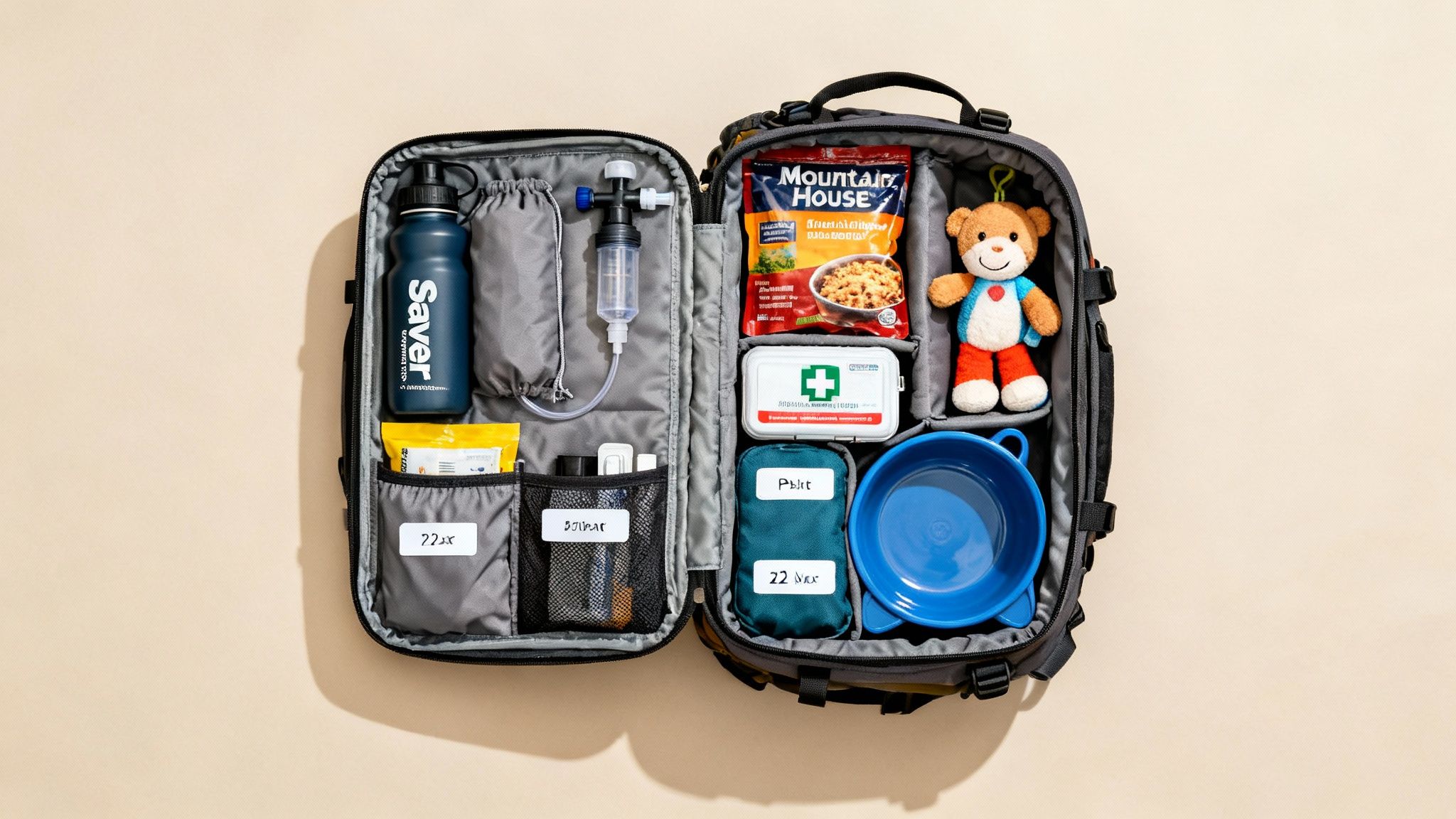
If your family’s action plan is the “software” that guides you through a crisis, then your survival kits are the “hardware.” They’re the physical tools and supplies that will keep you going when the power is out, the stores are closed, and help isn’t coming.
It’s tempting to buy a pre-made kit off the shelf and call it a day, but that’s a rookie mistake. Real emergency preparedness for families means building a system that’s tailored to your unique needs.
Think of your supplies in layers, with each one designed for a specific scenario. This isn’t about creating one giant, catch-all bag; it’s about having the right gear in the right place, whether you’re stuck across town or riding out a storm in your basement.
For a complete breakdown of exactly what belongs in each type of kit with specific product recommendations and quantities, check out our comprehensive guide on building a disaster supply kit.
The Four Layers of Family Kits
A truly resilient setup involves four distinct types of kits. Each one serves a unique purpose, covering everything from minor daily inconveniences to major evacuation scenarios.
- Everyday Carry (EDC): This is the stuff you have with you constantly, tucked into a pocket, purse, or on a keychain. We’re talking about a reliable multi-tool like a Leatherman Wave+, a small but bright flashlight, a loud whistle, and maybe a mini first-aid pouch.
- Get-Home Bag (GHB): This kit stays in your vehicle, and its only job is to get you home if you have to ditch your car and walk. It should have comfortable shoes, a local map, water, some high-calorie snacks, and a power bank for your phone.
- 72-Hour Bag (Bug-Out Bag): This is the classic survival kit everyone pictures. Every person in your family needs one packed and ready to go at a moment’s notice. It must contain everything needed to survive for at least three days: food, a water filter, shelter, clothes, and copies of critical documents. To really get this right, check out our in-depth guide to building a 72-hour emergency kit.
- Long-Term Home Supplies: Think of this as your personal stockpile for sheltering in place. It includes your deep food pantry, stored water, sanitation supplies, and tools to manage an extended blackout.
Customizing Kits for Each Family Member
A one-size-fits-all kit is guaranteed to fail when you need it most. The right way to do this is to start with a solid foundation—food, water, first aid, shelter—and then customize it for every single person. That personal touch is what makes a kit work under real-world pressure.
For example, clean water is non-negotiable. A reliable filter like the Sawyer Squeeze can purify thousands of gallons, making it a must-have for every 72-hour bag. The same goes for food; you need lightweight, calorie-dense meals that don’t require a kitchen. Freeze-dried options from brands like ReadyHour have a long shelf life and provide the fuel your body needs in a high-stress situation.
A truly prepared family understands that their survival kit is a living system, not a static checklist. It must be customized for infants, adapted for pets, and updated to meet the changing medical needs of every member.
Family Emergency Kit Customization Checklist
Beyond the essentials, your kits must address the specific needs of everyone in your household. This is where your preparedness plan becomes deeply personal. Use this checklist as a starting point to ensure no one’s critical needs are overlooked.
| Category/Member | Essential Items | Special Considerations |
|---|---|---|
| Infants & Toddlers | Formula, diapers, wipes, bottles, baby food, rash cream, pacifiers. | Pack more diapers and formula than you think you’ll need. Include a small, soft toy or blanket for comfort. |
| Children | Age-appropriate snacks, small games, coloring books, a favorite stuffed animal. | Involve them in packing their own “go-bag” to give them a sense of control. Label their bag clearly. |
| Pets | Dry food in a waterproof container, collapsible water bowl, leash/harness, medications, pet carrier. | Include a photo of you with your pet in case you get separated. Pack copies of vaccination records. |
| Elderly/Medical Needs | A 30-day supply of all prescription medications, spare eyeglasses, hearing aid batteries, medical equipment. | Keep a detailed list of all medications, dosages, and doctor contact information. Rotate medications to ensure they don’t expire. |
Building these kits isn’t just about stockpiling gear; it’s an act of responsibility and care. It gives you the physical tools to weather any storm and, more importantly, the peace of mind that comes from knowing you’re ready to protect the people who depend on you.
Securing Your Long-Term Food and Water Supply
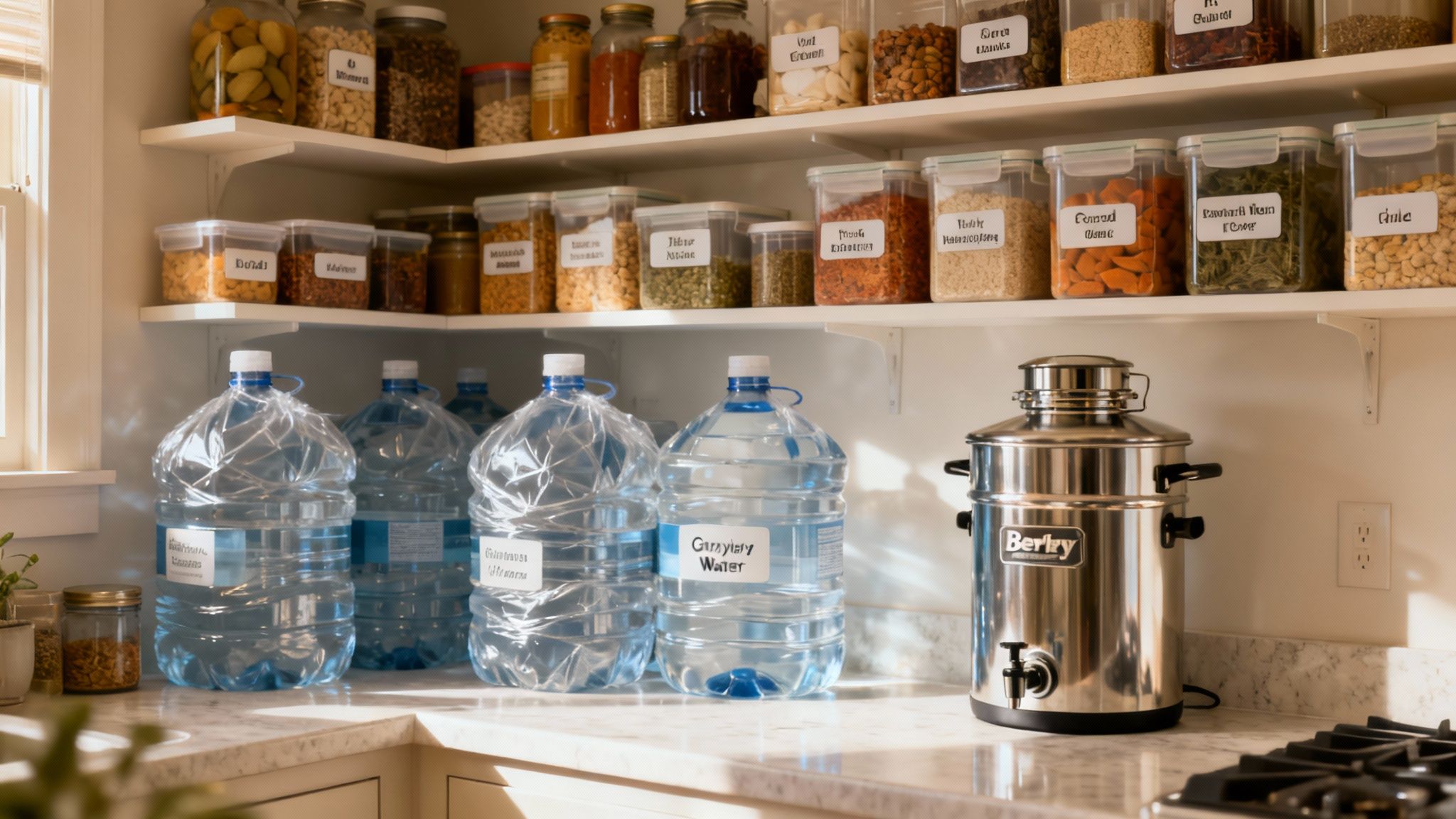
Sure, communication plans and bug-out bags are critical. But when the chips are down, nothing matters more than clean water and nutritious food. If a crisis knocks out utilities or breaks the supply chain, providing these fundamentals for your family is priority one.
A solid emergency preparedness for families plan isn’t about tossing a few extra cans in the cupboard. It’s about building a resilient system that can carry your household through an extended period, keeping everyone healthy and energized when nothing is normal.
Let’s dig into the most critical element first: water.
Mastering Your Family’s Water Security
A person can only last about three days without water. That makes it the single most urgent priority in any emergency. The gold standard is storing one gallon of water per person, per day, which covers drinking, cooking, and basic hygiene.
For a family of four, that’s 12 gallons just to cover a 72-hour event. But we need to think bigger. The real goal should be a minimum of two weeks’ worth of water tucked away.
Water is the cornerstone of resilience. A secure supply doesn’t just quench thirst; it enables cooking, maintains hygiene, and provides a sense of normalcy in a chaotic world. Mastering its storage and purification is the single most important skill in family preparedness.
You can get started today by simply buying commercially bottled water and storing it somewhere cool and dark. For a more self-reliant approach, invest in some food-grade water storage containers like the Aqua-Tainer and fill them from your tap. Treated and stored properly, that water will be good to go for years.
Reliable Water Purification Methods
Having stored water is step one. Step two is knowing how to make other water sources safe to drink. You never want to rely on just one method, because what works in one scenario might not in another.
- Boiling: This is the old-school, tried-and-true method for killing nasty pathogens. A rolling boil for at least one minute (or three minutes at elevations over 6,500 feet) will neutralize bacteria, viruses, and protozoa. Its only real downside? It requires fuel.
- Chemical Treatment: Purification tablets like Potable Aqua are an incredibly simple and effective backup. They are lightweight, have a long shelf life, and can make questionable water safe to drink with minimal fuss.
- Filtration Systems: Modern water filters are game-changers. A high-capacity gravity-fed system like a Berkey can purify huge amounts of water for your whole family at home. For a go-bag or mobile setup, a filter like the Lifestraw Family can process thousands of gallons and screen out contaminants with almost no effort.
Building a Deep and Versatile Food Pantry
Your food strategy should revolve around the “deep pantry” concept. This simply means stocking up on more of the shelf-stable foods your family already eats and loves. You create a rotating supply, using older items and replenishing them with new ones during your regular grocery runs.
This approach ensures nothing ever goes to waste, and more importantly, it means you’ll have familiar, comforting meals during a highly stressful time. Start with the foundational foods—things that are packed with calories, are easy to make, and can be used in dozens of different meals.
Foundational Pantry Staples
The goal here is a pantry full of versatile ingredients you can mix and match. Focus on items with a seriously long shelf life that provide the macronutrients your family needs to stay strong.
- Grains and Legumes: White rice, oats, pasta, and dried beans are cheap, packed with energy, and can last for decades if stored correctly.
- Canned Goods: Think meats like tuna and chicken, plus vegetables, fruits, and ready-to-eat soups. These are your instant-nutrition problem-solvers.
- Fats and Oils: Cooking oil, shortening, and peanut butter are calorie powerhouses, essential for cooking and adding much-needed flavor.
- Comfort Items: Don’t underestimate the power of morale. Coffee, tea, sugar, honey, and powdered drink mixes can make a tough situation feel a little more human.
For a complete breakdown of exactly what to stock and how to store it for the long haul, check out our in-depth guide on how to store food long term. With these systems in place, your food and water supplies become a powerful safety net, giving you and your family the ultimate peace of mind.
Mastering Skills and Practicing Family Drills
Having a detailed plan and a perfectly packed set of kits is a great start. But let’s be honest—a plan on paper and gear that’s never been used is just theory. True emergency preparedness for families happens when you get your hands dirty and turn that theory into practice. It’s about building the skills and muscle memory you need to act without hesitation when it counts.
Think of it like the fire drills we all did in school. The goal wasn’t to scare us; it was to make the escape route an automatic response. When you practice your family’s emergency plan, you’re doing the same thing. You’re replacing panic with quiet confidence, transforming a document into an instinct.
It’s a tough lesson, but most people only grasp the importance of practice after living through a crisis. A 2023 study revealed that people who had experienced a disaster were 233% more likely to have an evacuation plan and 134% more likely to have an emergency kit. Experience is a brutal teacher, but you can learn the same lessons ahead of time, on your own terms. You can read the full study on how personal experience shapes disaster preparedness behaviors.
Turning Your Plan into Action with Drills
The secret to making your plan second nature is running regular, low-stress drills. Frame them as a family activity—a team challenge—and you’ll make it engaging for kids while reinforcing that you’re all in this together.
Start small and build from there. The key is consistency, not intensity. Aim to run through each main scenario at least twice a year. A good time to do this is when you change the clocks for daylight saving time—it’s an easy reminder.
- Fire Escape Drill: This is non-negotiable and one of the most vital drills. Practice two ways out of every single room, test your smoke detectors, and gather at your designated meeting spot outside. Make it a game by timing yourselves.
- Shelter-in-Place Drill: When a tornado watch or other severe weather alert is issued, get everyone to your designated safe room (a basement or interior closet works well). Grab your home supply kits, hang out for 15-20 minutes, and test your flashlights and emergency radio.
- Evacuation “Go-Drill”: This one is a real eye-opener. Set a timer for 10 minutes. The goal: everyone grabs their 72-hour bags, secures the pets, and meets at the car. This simple exercise will instantly show you what you’ve forgotten, like who’s in charge of the pet carrier or the binder with your documents.
Essential Hands-On Skills for Every Family Member
Running drills is one half of the equation. The other is building practical skills that boost your family’s self-reliance. These are the abilities that turn your gear from just “stuff” into actual tools for survival.
Your emergency plan is a roadmap, but skills are the vehicle that gets you to safety. Knowing how to use a fire extinguisher or apply a pressure bandage is what bridges the gap between having a resource and actually being resourceful.
Make learning a family project. Older kids and teens are more than capable of mastering these fundamentals, which not only empowers them but also makes them a real asset in a crisis.
Key Skills to Master
First Aid and Medical Response
- Knowing how to stop bleeding, treat a burn, and perform CPR are universal life skills. A solid first aid kit, like those from Pasenhome, gives you the supplies, but the training is what makes them useful. Check for local classes from the Red Cross or your community center.
Utility Shut-Offs
- If you have a gas leak or busted pipe, you’ll need to shut off your home’s water, gas, or electricity fast. Find the main valves and breaker box now. Make sure everyone knows where they are and keep any necessary tools, like a wrench, right next to them.
Fire Extinguisher Use
- Just remember the P.A.S.S. acronym: Pull the pin. Aim at the base of the fire. Squeeze the handle. Sweep from side to side. It’s one thing to own an extinguisher; it’s another thing entirely to use it confidently.
Water Purification Techniques
- Master multiple methods of making water safe to drink, from boiling to using filters and purification tablets. Practice these skills before you need them.
These aren’t just for disasters; they are skills that will serve you and your family for a lifetime. For a deeper look at building your capabilities, check out our guide on the top survival skills you must master.
Alright, we’ve walked through the plans, the kits, and the skills you’ll need. Now it’s time to bring it all together. This is where we turn knowledge into action, using some simple tools to make emergency preparedness for families a real, manageable part of your life. Think of it less like a one-and-done project and more like a journey of small, consistent steps.
The idea here is to empower you, not overwhelm you. The easiest way to get organized and see your progress is by starting with printable checklists and templates. These documents are what turn abstract concepts into a concrete strategy your whole family can get behind.
If you need a push, just look at the world around us. Between 2020 and 2022, the U.S. was hit by 60 climate-fueled disasters that each caused at least $1 billion in damages. Yet, FEMA’s 2023 National Preparedness Report found that only about 40-50% of households have even the most basic emergency kits or plans. You can dig into these national preparedness findings from the ICC yourself. That’s a huge gap between the risks we face and how ready we actually are.
Your Printable Toolkit
To help you get started right now, we’ve put together a few essential resources. These checklists pull the core strategies from this guide into a simple, easy-to-use format.
- Family Emergency Plan Template: A fill-in-the-blank guide for your communication plan, reunification spots, and shelter-in-place instructions.
- Comprehensive Bug-Out Bag Checklist: A detailed list for every person in your family, so nothing critical gets left behind when you have to leave in a hurry.
- Home Pantry Inventory Sheet: An easy way to track your food and water, making it simple to rotate stock and see what you need.
- Family Drill Schedule: A basic calendar to remind you to practice fire escapes, evacuations, and other skills at least twice a year.
Preparedness is the ultimate expression of love and responsibility for your family. Each small step you take—packing a kit, running a drill, storing extra water—builds a powerful shield of resilience that protects the people who matter most.
Using these tools lets you build your family’s readiness one layer at a time. For a complete, print-and-go resource, grab our all-in-one emergency preparedness checklist. Start today, and turn that feeling of wanting to be safe into the confidence of knowing you are.
Common Questions and Straightforward Answers
Diving into family preparedness can bring up a lot of questions. Getting clear, practical answers is the best way to push past any holdups and build a plan that actually works for your family. Let’s tackle some of the most common concerns I hear.
How Do I Talk to My Kids About Emergencies Without Scaring Them?
This is a big one, and the answer is to focus on empowerment, not fear. Frame it all as a family team activity—something you do together to stay safe and look out for each other.
Use simple ideas they already get. Compare your evacuation drill to the fire drills they do at school. It’s just practice so everyone knows what to do.
Get them involved in age-appropriate ways. Let your youngest pick a special comfort item for their go-bag, like a small toy or a favorite book. Have older kids help test the flashlights or check the expiration dates on snacks. The message should always be positive and reassuring: our family has a plan to stick together and stay safe.
How Can We Prepare in an Apartment with Limited Space?
Living in an apartment just means you have to be smarter about your space. It’s all about efficiency and making every item count. Your absolute first priority should be a ready-to-go 72-hour bag for each person that you can grab in a second.
You’ll need to get creative with storage to make the most of every square foot.
- Go Vertical: Use shelving units inside closets to use that empty space up high.
- Look Under the Bed: Flat, rolling containers are perfect for storing water packs, blankets, and other supplies completely out of sight.
- Think Compact: Choose smaller, high-impact gear. A portable power station from a company like ALLWEI and Anker is a fantastic substitute for a bulky generator. Freeze-dried food pouches also take up a fraction of the space of cans.
Finally, know your building’s emergency plan inside and out. Find the evacuation routes and know where the designated shelter areas are before you ever need them.
How Can I Possibly Get Started on a Tight Budget?
Preparedness is a marathon, not a sprint. You absolutely do not need to buy everything at once. The best way to start is to build it into your normal routine. Just dedicate a tiny part of your weekly grocery budget—even five or ten dollars—to add one or two extra items to your stockpile.
Building a solid emergency supply on a budget is completely doable. It’s about consistency, not speed. A few extra cans of soup, a gallon of water, and a box of batteries each week will grow into a real safety net over time.
Start with the things that give you the most security for your dollar: a quality water filter, a well-stocked first-aid kit, and good, reliable lighting. You can find incredible deals on warm blankets, extra layers of clothing, and other useful gear at thrift stores. By adding just a little bit at a time, you’ll build a comprehensive supply without a big upfront hit to your wallet. If you’re completely new to preparedness and need a step-by-step roadmap, our guide on how to start prepping will walk you through the fundamentals from day one.
For dozens of money-saving strategies and specific product recommendations that won’t break the bank, dive into our full guide on prepping on a budget.