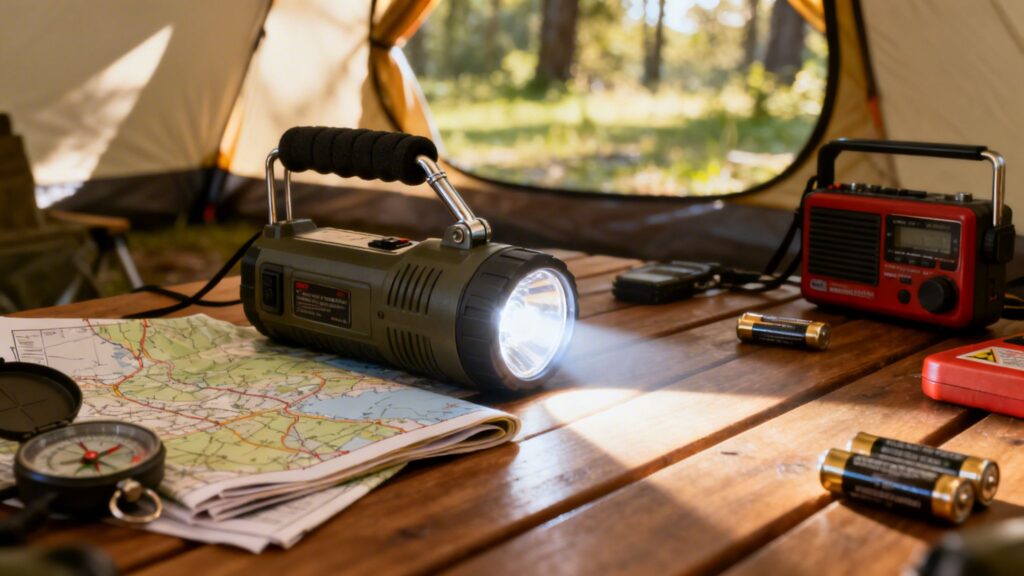
When the power goes out, having a reliable light source isn’t just a convenience—it’s a necessity. The best hand crank flashlights are the ones that marry a tough build with an efficient dynamo and throw in extras like a radio or USB charger. They’re a cornerstone of any solid emergency kit because they completely remove the need for batteries or grid power.
Why A Hand Crank Flashlight Is Your Most Reliable Light Source
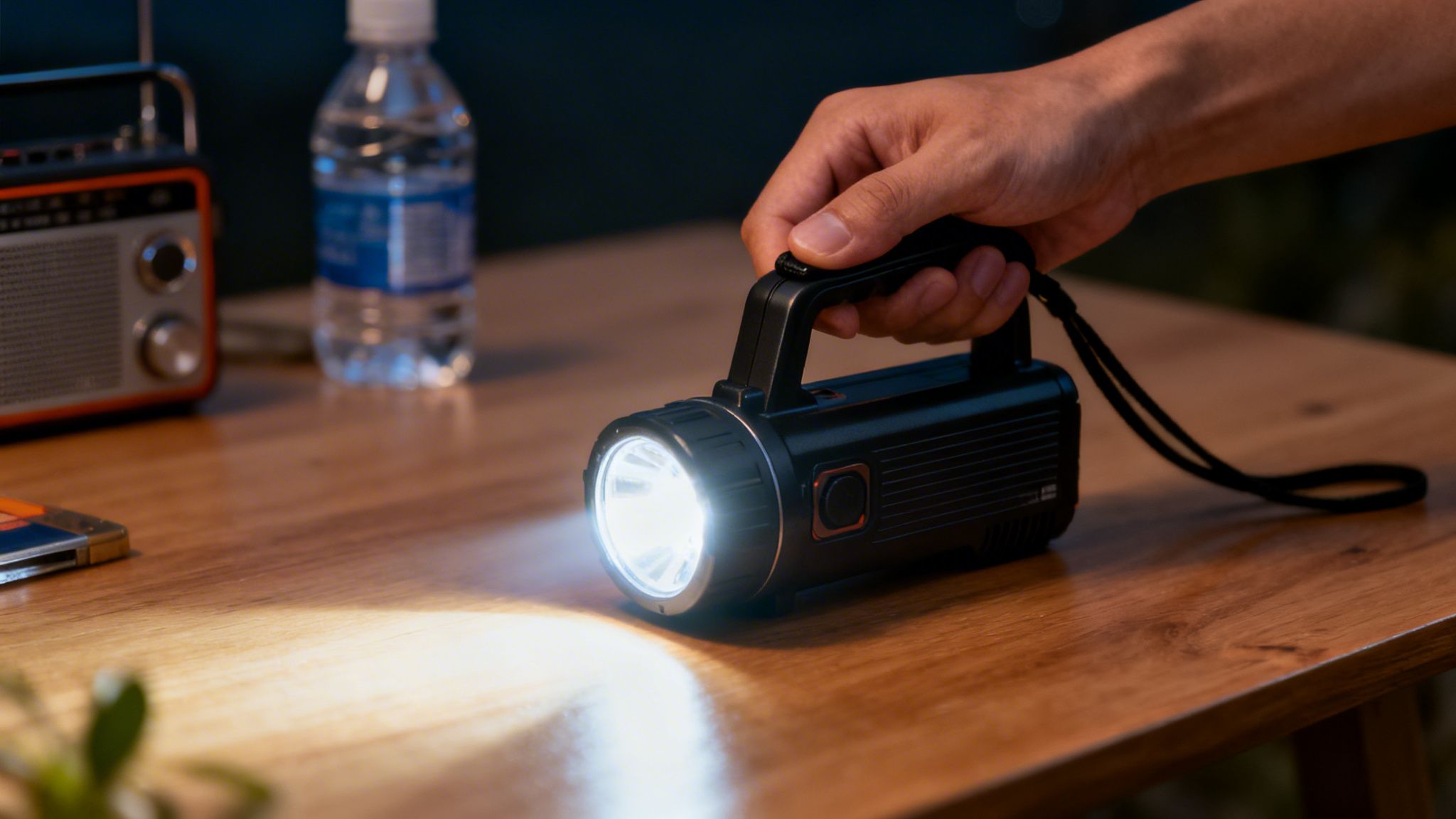
In any crisis, whether it’s a neighborhood blackout or a long-term grid-down event, light is non-negotiable. If you’re concerned about extended outages, our guide on how to prepare for a long-term power outage covers everything you need to stay resilient for the long haul.
A hand crank flashlight sidesteps that problem entirely. It’s the ultimate self-reliant tool, turning your own effort directly into light. This simple concept is powerful, guaranteeing you’re never left in the dark, no matter what’s happening outside.
The Power of On-Demand Energy
At the heart of every hand crank flashlight is a dynamo, which is just a small generator. When you turn the crank, you’re spinning a magnet inside a wire coil, and that motion generates an electric current. That power lights up the LED and tops off a small internal rechargeable battery.
The real advantage here is immediacy. Solar chargers need sun, but a hand crank flashlight works anytime, anywhere. Day or night, rain or shine, it doesn’t matter. Just one minute of steady cranking can generate anywhere from 20 to 60 minutes of usable light.
This on-demand power makes it an indispensable tool for unpredictable situations. Whether you need to find your way through a dark house, signal for help, or handle first aid after sundown, you have immediate light at your fingertips. For a deeper look at your options, check out our full guide on emergency lighting options.
More Than Just a Light
The hand crank devices on the market today have come a long way from being simple torches. Many are now multi-functional survival hubs, designed to be the workhorse of your emergency kit. To really judge the best ones, we have to look at them as a complete system.
Here are the core functions you’ll want to evaluate:
- Illumination Source: Its main job, providing light to see and stay safe.
- Information Hub: Many models include an AM/FM and NOAA weather band radio, which is critical for getting emergency broadcasts.
- Power Bank: A built-in USB port can give a dead phone just enough juice to make an emergency call.
- Emergency Beacon: Look for features like an SOS alarm or a flashing red light for signaling rescuers.
By packing all these functions into one rugged device, a good hand crank flashlight saves critical space and weight in a bug-out bag or home kit. It’s not just a light; it’s a lifeline for power, information, and communication — and a natural fit alongside the other essentials in your disaster supply kit.
How To Choose The Best Hand Crank Flashlight
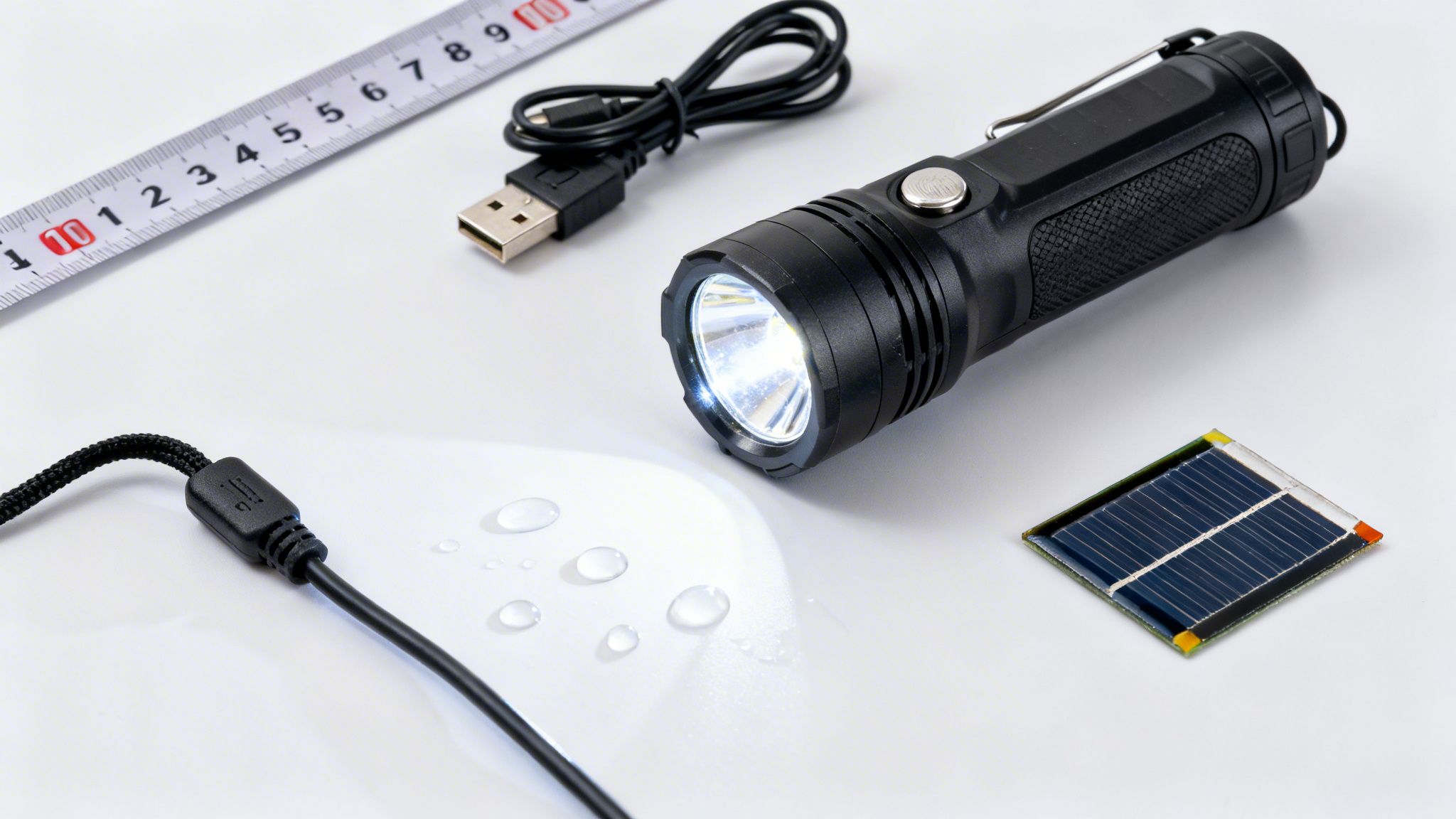
When you’re looking for the best hand crank flashlight, you’re buying more than just a light source—you’re investing in reliability. It’s easy to get drawn in by a low price tag, but a cheap gadget that fails when the power goes out is worse than useless. A true survival tool needs to perform when everything else has failed.
To make a smart choice, you need to know what to look for. We’ll break down the key metrics, from lighting power and cranking efficiency to build quality and extra survival features. This will help you tell the difference between a dependable lifeline and a disposable piece of plastic.
Core Lighting Performance
A flashlight’s main job is simple: light up the dark. But with hand crank models, it’s not just about brightness; it’s about how efficiently that light is generated.
Lumens and Beam Distance: Lumens measure a light’s total output. While it’s tempting to go for the highest number, a range of 100 to 300 lumens is plenty for navigating a dark house or repairing a fuse box. Beam distance is just as important, telling you how far the light will reach—critical if you’re trying to signal for help or find a path outside.
Crank-to-Light Ratio: This is where the rubber meets the road. It answers the most important question: how much light do I get for my effort? A solid device will give you 20-60 minutes of good, usable light from just one to two minutes of steady cranking. A poor ratio means you’ll be spending more energy turning the crank than actually using the light.
Internal Battery Capacity: The dynamo doesn’t power the light directly; it charges an internal battery, usually a NiMH or Lithium-ion cell. A larger capacity (measured in mAh) lets you “bank” your cranking effort, storing power for when you need it instantly without having to stop and crank first.
Durability And Build Quality
An emergency tool that breaks under pressure is a liability. For any gear you’re staking your safety on, durability isn’t a feature—it’s a requirement.
Look for a tough outer shell, often made with rubberized or shock-absorbing materials that can handle being dropped. Pay close attention to the crank mechanism itself. It’s the most critical moving part, so it needs to feel sturdy, not wobbly or fragile.
A key spec to look for is the Ingress Protection (IP) rating. An IPX4 rating, for example, means the device can handle water splashes from any direction. That’s the bare minimum for something you might need to rely on in a storm or flood.
The market for self-reliant gear like this is expanding. The global flashlight market was valued at USD 2.03 billion in 2024 and is expected to hit USD 3.76 billion by 2033. This growth is driven by rechargeable models, especially among North America’s 175.8 million outdoor participants who demand gear that won’t let them down.
Multi-Functional Survival Features
The best hand crank flashlights have become all-in-one survival tools, packing multiple functions into one device to save weight and space in your go-bag.
AM/FM/NOAA Radio: When the internet and cell towers are down, information is life. An integrated radio with the NOAA weather band gives you access to critical alerts and emergency broadcasts.
USB Charging Port: Let’s be realistic—it won’t fully charge your smartphone. But it can provide just enough juice for an emergency call or text. Think of it as a lifeline for small devices, like a Garmin inReach Mini, to keep a communication channel open. To see how these fit into a bigger power strategy, check out our guide on portable power sources.
Secondary Charging Options: Many top-tier models include a small solar panel, giving you a passive way to trickle-charge the battery Strategic Storage Locationsduring daylight. If you want to take solar charging further for a fixed location, explore solar power for cabins as a longer-term energy solution.
To help you put all this together, here’s a framework for comparing your options.
Hand Crank Flashlight Feature Comparison Framework
This table breaks down the essential features to look for, helping you prioritize what matters most for your specific survival plan.
| Feature | What to Look For | Why It Matters for Preppers |
|---|---|---|
| Crank-to-Light Ratio | 1 minute of cranking provides 30+ minutes of light | Maximizes light output for minimal physical effort, conserving your energy in a crisis. |
| Lumens | 100-300 lumens | Bright enough for navigation and tasks without draining the battery too quickly. |
| Battery Capacity | 2000+ mAh | Stores more power, allowing you to “bank” energy for instant use without cranking. |
| Durability | IPX4 or higher water resistance; shock-proof casing | Ensures the flashlight works reliably in harsh conditions like rain, floods, or drops. |
| Radio Bands | AM/FM and NOAA Weather Band | Provides access to critical emergency broadcasts and weather alerts when comms are down. |
| USB Output | At least 1A output | Offers enough power to make an emergency call on a phone or charge small devices. |
| Charging Options | Hand crank, solar, and USB input | Gives you multiple ways to recharge the device, adapting to any situation. |
| Weight & Size | Under 1 lb and compact enough for a go-bag | Portability is key. A bulky flashlight is one you’re likely to leave behind. |
By carefully evaluating these core areas—lighting, durability, and extra functions—you can confidently choose a hand crank flashlight that will be a reliable partner when you need it most.
A Head-To-Head Comparison Of Top Models
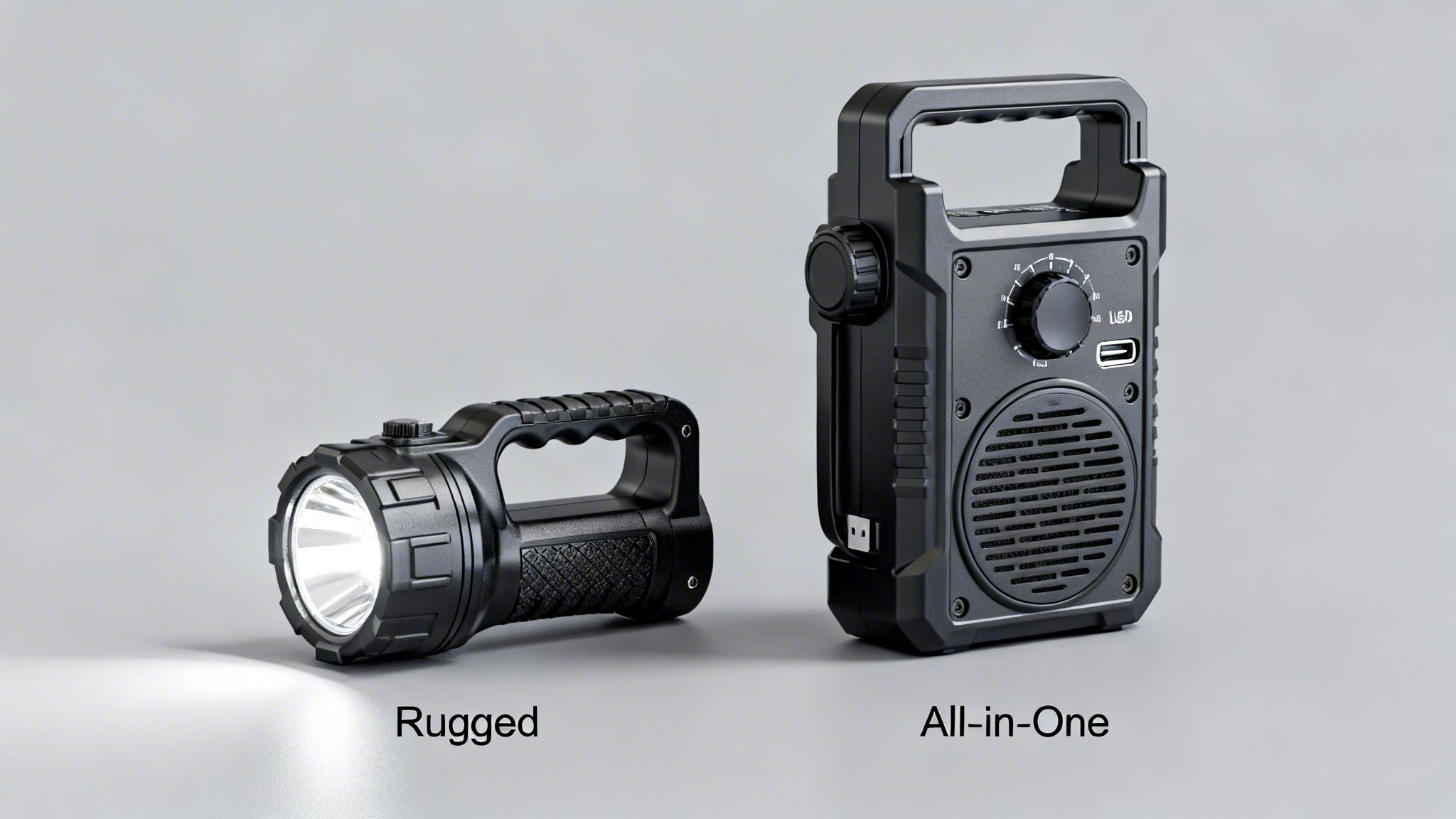
Moving from a spec sheet to how a tool actually performs in your hand is where the real evaluation begins. The best hand-crank flashlight for a home emergency kit might be way too bulky for a bug-out bag. Likewise, that minimalist light in your glove box won’t have the features you need for a week off-grid.
It’s all about matching the gear to the mission.
So, instead of a generic list, let’s put some top models head-to-head based on practical, real-world scenarios. We’ll dig into the nuances of crank efficiency, build quality, and overall utility to give you a clear picture of which one belongs in your specific emergency plan.
For Home Preparedness Kits
When you’re hunkered down at home during a power outage, size and weight are secondary concerns. What you really need is a reliable hub for light, information, and a bit of power to keep your phone alive. This is the perfect job for an all-in-one device.
Best For This Scenario: RunningSnail Emergency Hand Crank Radio
The RunningSnail Emergency Hand Crank Radio is a go-to for home kits, and for good reason. Think of it as a small command center built to get you through a blackout.
- Lighting: The main flashlight is bright enough for navigating a dark house, but the real star is the broad reading lamp under the solar panel. It’s perfect for lighting up a small room or a tabletop for a card game.
- Power: It packs a massive 4000 mAh internal battery that functions as a power bank. This is a huge advantage for home use—you can keep it charged from the wall and only start cranking when that massive battery finally runs dry.
- Information: Its strongest feature is the clear AM/FM and NOAA weather band radio. The digital tuner locks onto stations cleanly, delivering critical updates when the internet and cell service are down.
While it’s a bit beefy for a bug-out bag, its all-in-one design makes it one of the best choices for a stationary “shelter-in-place” kit. Its job is to be the family’s light and information lifeline during a power failure. You can find this model and similar ones on Amazon.
For A Rugged Bug-Out Bag
In a bug-out bag, every ounce matters. Gear has to be compact, lightweight, and tough enough to get knocked around on the move. Here, durability and efficiency are far more important than extra bells and whistles.
Best For This Scenario: Eton Scorpion II
The Eton Scorpion II is purpose-built for the trail. Its rugged, rubberized, and splash-proof (IPX4) shell is made to take a beating. It’s slim, compact, and even has a carabiner clip and bottle opener, which tells you everything you need to know about its outdoor focus.
The Scorpion II’s crank mechanism just feels solid and dependable, giving you confidence that your effort is turning into power. While its 800 mAh battery is much smaller than the RunningSnail’s, its dynamo is incredibly efficient. Every turn quickly translates into usable light.
This thing is a master of the essentials. You get a bright LED flashlight and a digital AM/FM/NOAA radio, but it ditches extras like a reading lamp to stay lean. It’s the perfect tool when you need reliable light and intel without being weighed down. This product is often available on Amazon.
For The Vehicle Emergency Kit
A vehicle kit needs a flashlight that’s compact, can handle the extreme temperatures of a car interior, and gives you just enough function for a roadside emergency. It needs to be simple, tough, and ready to work at a moment’s notice.
Best For This Scenario: FosPower Emergency Solar Hand Crank Radio
The FosPower Emergency Solar Hand Crank Radio hits that sweet spot between a feature-packed home unit and a minimalist trail light. It’s small enough to disappear into a glove box or under a seat but still packs a serious punch.
- Versatility: You get a 2000 mAh power bank, flashlight, reading lamp, and NOAA radio—covering all the bases if you’re stranded on the side of the road.
- Durability: It has an IPX3 water-resistance rating, so it’ll hold up if you have to use it in the rain while changing a tire.
- Power Redundancy: On top of the crank and solar panel, it can run on AAA batteries. This is a fantastic third power option for a vehicle kit, where stashing a pack of spare batteries is easy.
This flexibility makes it an ideal choice for a car. It offers more capability than a bare-bones model but is still compact enough to stay out of the way. That ability to pop in disposable batteries is a huge plus when you might not have the time or safety to stand outside cranking. Amazon is a common place to find this and similar emergency radios.
Hand-crank flashlights really prove their worth when battery dependency becomes a liability. During the 2021 Texas winter storm, 4.5 million homes lost power for days. FEMA data later showed that crank-powered devices cut reliance on disposable batteries by 60%, which extended usability and reduced waste.
These flashlights typically generate 200-500 lumens after just 2 minutes of cranking. Modern dynamo tech converts that motion into electricity with up to 70% efficiency, easily outperforming solar in dark or cloudy conditions. You can dig deeper into the flashlight market by checking out these market growth reports.
Integrating a Hand Crank Flashlight Into Your Emergency Plan
Having a great hand-crank flashlight is a solid start, but a tool is only as good as the plan you build around it. Make sure it’s paired with a fully stocked emergency preparedness kit so you’re covered on all fronts, not just lighting.
The number one rule is immediate access. When a crisis hits, you won’t have the luxury of digging through messy drawers or forgotten boxes in the garage. Your flashlight has to be exactly where you expect it, ready to go at a moment’s notice.
Strategic Storage Locations
Where you stash your hand-crank flashlights can make all the difference. The goal is to have light ready in the key areas you’ll likely be during an emergency. Don’t just chuck one in a central spot — distribute them based on what might happen. For a full breakdown of what else you should have in place before the lights go out, see our guide on preparing for a power outage.
Think about these three primary spots:
- The Home Emergency Kit: This is ground zero for your preparedness supplies. Your main hand-crank flashlight belongs here, right next to your first-aid kit, a LifeStraw water filter, and your emergency food rations. Keep this kit somewhere easy to grab, like a hall closet or pantry.
- Every Vehicle’s Emergency Bag: A breakdown or accident can leave you stranded in the dark anywhere, anytime. A compact, tough hand-crank flashlight in each vehicle’s glove box or trunk kit means you’ll always have light for changing a tire or signaling for help.
- The Bug-Out Bag (BOB): If you ever have to evacuate, your bug-out bag is your lifeline. A lightweight and rugged hand-crank flashlight isn’t just nice to have; it’s non-negotiable. Make sure it’s packed securely so the crank mechanism doesn’t get busted while you’re on the move.
Creating a Family Usage Plan
A tool is useless if nobody knows how to work it. Your hand-crank flashlight, especially with all its features, requires a quick but critical family training session. This makes sure everyone who might depend on it can use it effectively when the pressure is on.
Your plan should cover the fundamentals for every capable family member, including older kids. Show them how to properly extend and turn the crank without yanking on it. Walk them through cycling the light modes, tuning the radio to an AM/FM or NOAA weather station, and using the USB port to get a little juice into a phone.
A simple “five-minute drill” every few months builds muscle memory and confidence. This practice gets rid of the fumbling and confusion during a real emergency, ensuring anyone in the family can make light and get information when it truly matters.
The Critical Role of Redundancy
In the world of preparedness, we have a simple rule: “two is one, and one is none.” Relying on a single piece of gear creates a single point of failure. If your only hand-crank flashlight gets lost, broken, or is out of reach, your entire plan for light and communication goes dark.
Owning multiple units isn’t overkill—it’s smart strategy. It lets you equip your home, car, and bug-out bag at the same time. It also means different family members can have their own light source if you need to split up to tackle tasks during a blackout. By building redundancy into your system, you create a far more resilient and fault-tolerant emergency plan. To see how this fits into a bigger picture, check out our emergency preparedness plan template.
Maintenance And Long-Term Storage Practices
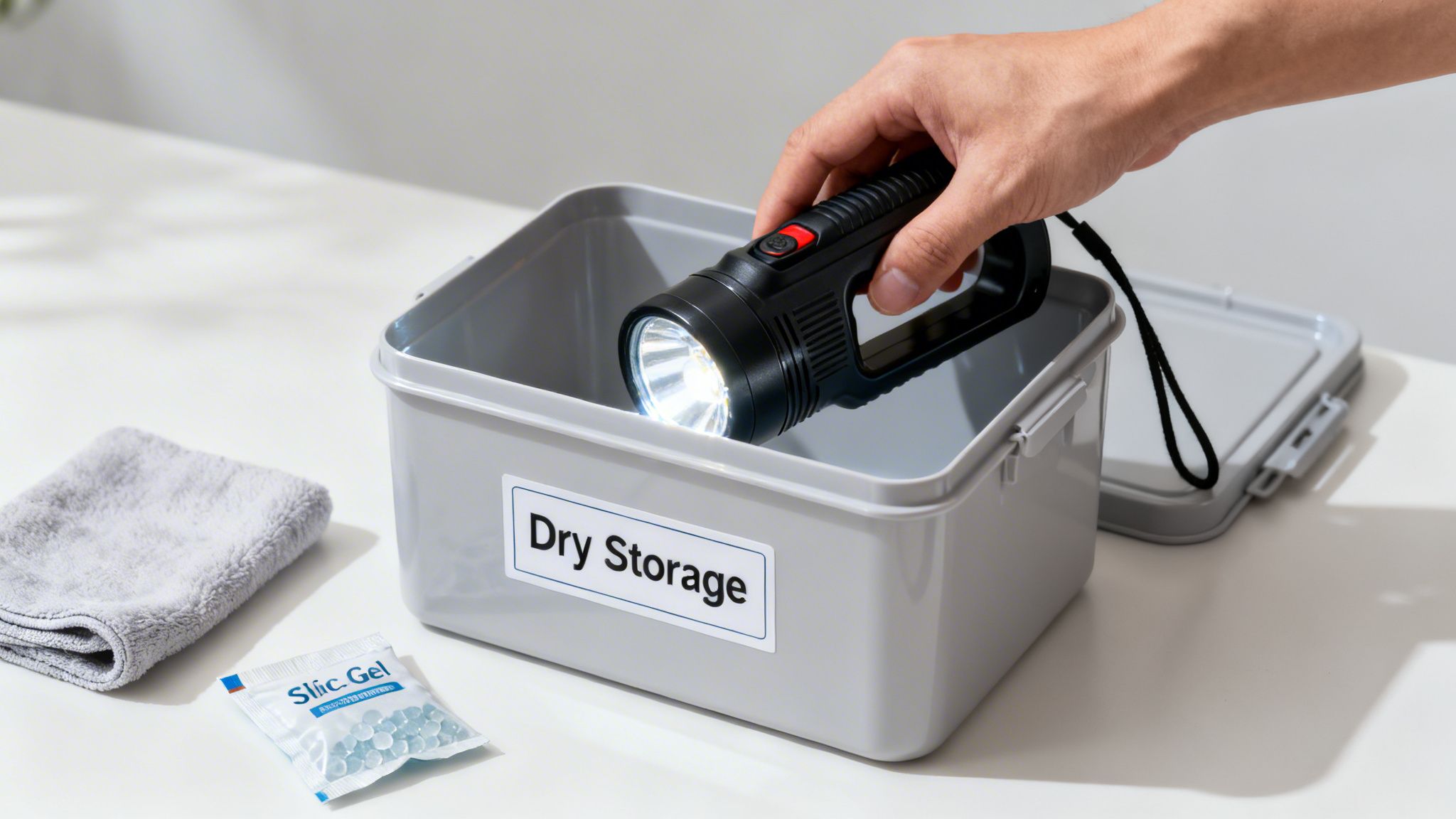
A survival tool is only as good as its condition when you need it most. Proper care and smart storage are what separate a reliable piece of gear from a useless gadget. Getting this right means your hand-crank flashlight will be a lifeline you can count on, not a paperweight.
Investing in a good hand-crank model is a smart decision. Data from the Federal Emergency Management Agency (FEMA) showed that households with crank-powered devices had 45% fewer incidents of fumbling in the dark or using risky alternatives like candles during outages. These flashlights can generate up to 100 lumens with just 1-2 minutes of cranking. You can learn more about the growing flashlight market and its impact on preparedness.
Periodic Maintenance Cranking
The internal battery is the heart of your flashlight, and like any muscle, it needs a little exercise to stay healthy. If you let it sit for years on end, it will degrade and eventually lose its ability to hold a charge at all.
To keep it in fighting shape, give it a “maintenance crank” every 3-6 months. Just a solid minute of cranking is all it takes to wake the battery up and send a conditioning charge through the system. This simple action also keeps the dynamo’s internal gears lubricated and moving freely.
This one habit is the single most important thing you can do to extend the life of your flashlight. It prevents battery sulfation and ensures the crank mechanism doesn’t seize up, keeping your gear ready to go at a moment’s notice.
Ideal Storage Conditions
Where you store your gear matters. A lot. The best spot for your hand-crank flashlight is a cool, dry place that’s shielded from direct sunlight and wild temperature swings. Extreme heat, like the inside of a car on a summer day, can permanently cook the internal battery.
Follow these simple storage rules:
- Avoid Extreme Temps: Never leave your flashlight in a sweltering attic, a hot shed, or on the dashboard of your vehicle.
- Control Humidity: Keep the device in a low-humidity spot to protect the electronics from moisture damage. Tossing it in a container with a desiccant pack is a great pro move.
- Keep it Accessible: Store it where you can grab it in a hurry—not buried deep in a cluttered closet.
A Simple Testing Protocol
Every time you do your regular kit check, give your flashlight a quick run-through to confirm it’s in peak condition. For a deeper dive, check out our complete guide on emergency kit maintenance.
Run through this quick checklist:
- Crank and Test: Give it a good 30 seconds of cranking, then cycle through all the light functions—the main beam, any secondary lamps, and the SOS flasher.
- Radio Check: If it has a radio, turn it on. Tune into an AM, FM, and NOAA weather station to make sure the reception is clear.
- Port Verification: If it has a USB port, plug your phone in for a few seconds to confirm it’s pushing out a charge.
This five-minute checkup gives you the confidence that every single feature will work exactly as intended when you need it most.
Hand Crank Flashlight FAQs
When you’re considering a hand crank flashlight, a few key questions always come up. Getting straight answers on performance, durability, and what to expect in a real pinch is what separates owning a gadget from trusting your gear. Let’s tackle the most common ones so you can make a solid choice.
How Much Light Do I Get From One Minute Of Cranking?
This is the big one—how much work for how much light? While it varies by model, a good quality hand crank flashlight will give you 20 to 60 minutes of usable, low-beam light from just one or two minutes of steady cranking. The best performers pair high-efficiency dynamos with modern, low-draw LEDs to maximize that crank-to-light ratio.
But let’s be realistic about “usable light.” We’re not talking about a searchlight beam here. It’s usually enough light to get around a dark room, check a map, or handle a simple task without tripping over things. I can’t stress this enough: test your specific model when you get it. Manufacturer claims are one thing, but knowing exactly what your light can do is crucial for managing your energy in an actual emergency.
Can It Really Charge A Smartphone?
Yes, but you have to manage your expectations. Think of this feature as a last-ditch lifeline, not a portable power station. The USB port is designed to give you just enough juice for an emergency call or a few critical texts—it’s not going to fully recharge a dead smartphone. The output is usually low (around 1A), and you’ll have to crank continuously and vigorously to see any meaningful charge.
Honestly, for any serious charging, a dedicated power bank like an Anker PowerCore is the right tool for the job. Those are built to store thousands of mAh and can charge your phone multiple times. The flashlight’s job is to give you that final sliver of power when every other option is gone.
Are These Flashlights Durable Enough For A Bug-Out Bag?
Durability is where a true survival tool separates itself from a cheap toy. The flimsy plastic models you see in discount bins might crack under the slightest pressure, but the best hand crank flashlights are built for rough handling. For a bug-out bag, durability isn’t just a feature; it’s a requirement.
Stick with models from trusted brands known for rugged gear, like Eton or FosPower. They typically use tough, rubberized casings that can handle being dropped and provide a solid grip, even when wet.
One of the most important specs to look for is the water-resistance rating. An IPX4 rating is a good baseline, meaning the flashlight is protected against splashing water from any direction—perfect for a rainstorm. For bug-out bag use, choose something known for impact resistance and pack it smartly to keep the crank mechanism from getting crushed by your other gear.
What’s The Lifespan Of The Internal Battery?
The rechargeable battery inside a quality hand crank flashlight is designed to last for years with a little bit of care. Most use Nickel-Metal Hydride (NiMH) or Lithium-ion cells rated for 500 to 1,000 charge cycles. Since you’ll only be using it occasionally in an emergency kit, the battery itself could easily last a decade or more.
The secret to maximizing that lifespan is to give it a few maintenance cranks every couple of months, just like we talked about earlier. This keeps the battery from sitting completely dead for long periods, which can kill it for good. But even if the internal battery eventually degrades, the hand crank itself is your ultimate backup. You can always generate power on demand, ensuring you’re never left completely in the dark. For more tips on building out your kit, you can learn more about how to prepare for a blackout in our guide.