
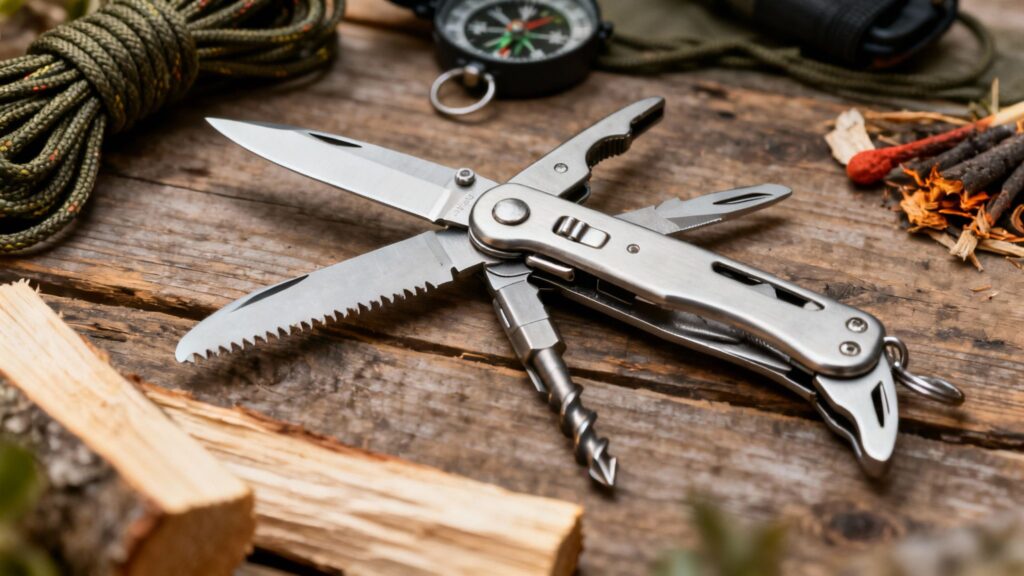
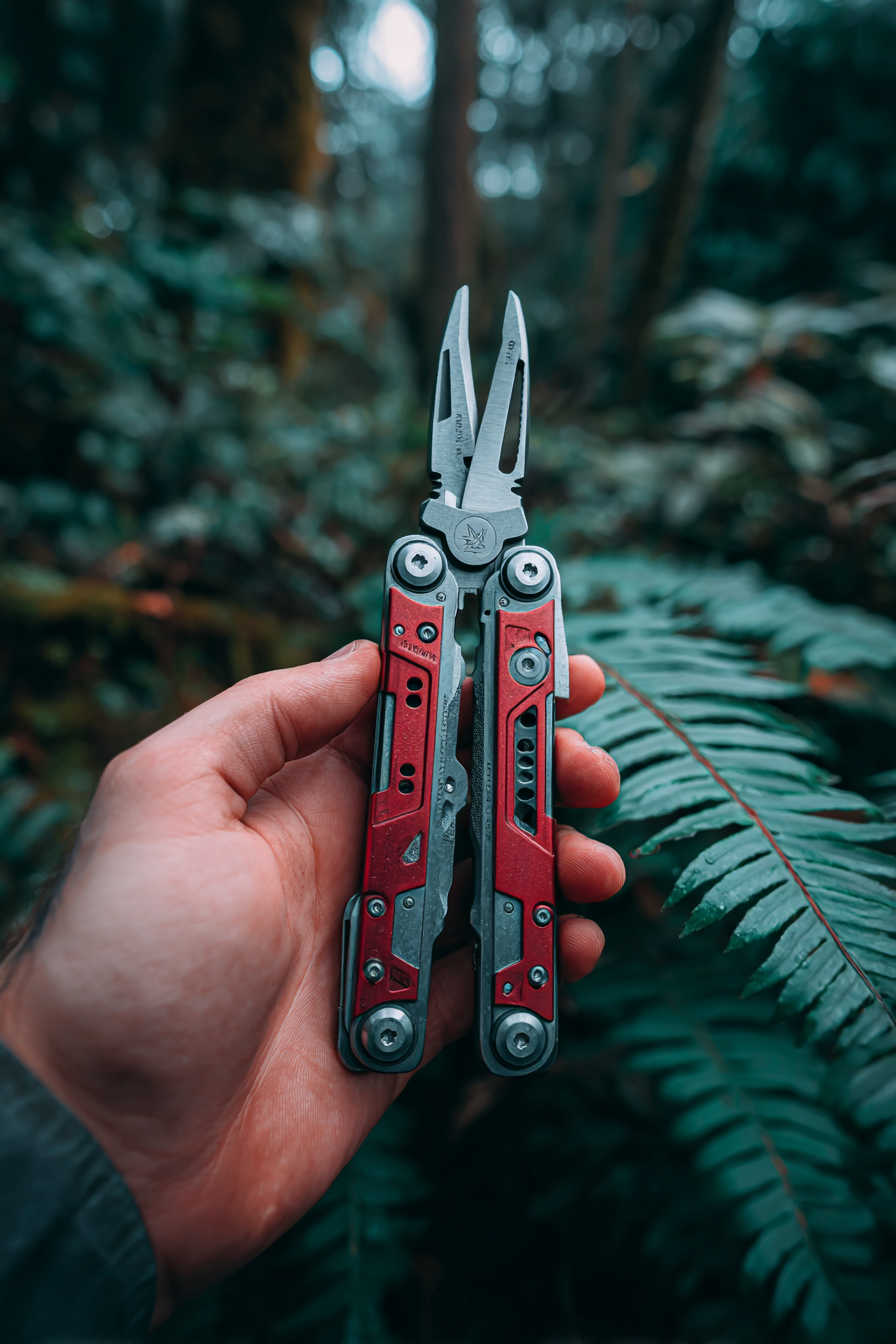
The best survival multi-tools are the ones that blend battlefield-tested toughness with the versatility of a workshop, all in a package you can slip into your pocket. Think rugged pliers, a seriously sharp locking blade, and the key implements you’d need for makeshift repairs. It’s about having a compact toolbox on you when everything goes sideways.
Why a Multi-Tool Is Your Lifeline in an Emergency
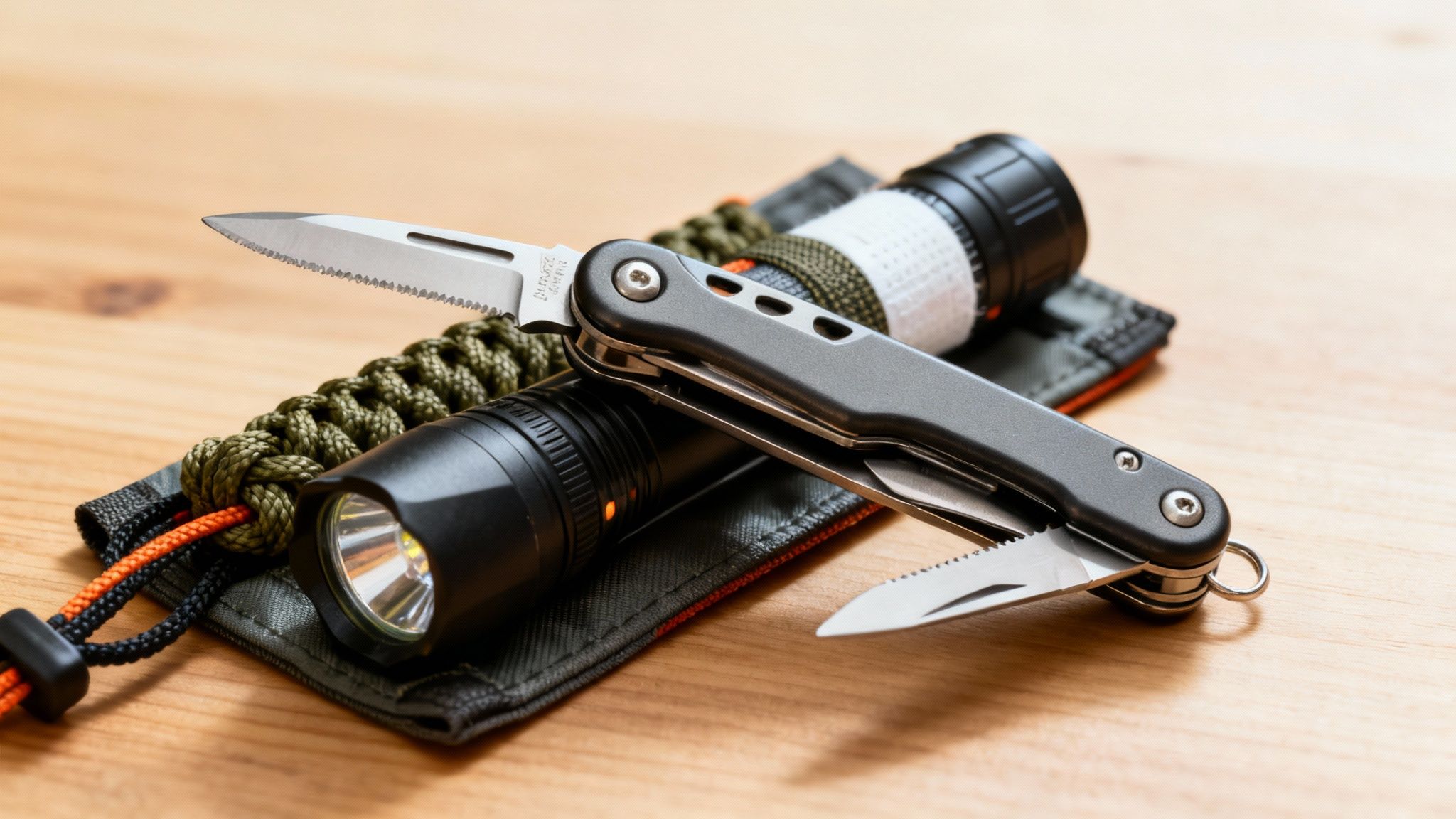
In a real-world survival scenario—whether it’s a sudden disaster or finding yourself stranded off-grid—the right gear is what separates a manageable problem from a full-blown crisis. A multi-tool isn’t just another cool gadget; it’s a lifeline. Choosing the right multi-tool for emergencies requires understanding your specific preparedness needs. It’s an entire toolbox engineered to fit in your palm, built for those moments when every second counts and every ounce you carry matters.
This idea of extreme efficiency is the bedrock of preparedness. A high-quality multi-tool perfectly captures the core principles of survival:
- Versatility: It can handle dozens of different jobs, from fixing critical gear and building a shelter to preparing food.
- Efficiency: It saves an incredible amount of space and weight, which is absolutely vital for any bug-out bag or vehicle kit.
- Self-Reliance: It gives you the power to fix things and solve problems on your own, right when help is nowhere to be found.
The Growing Role of Multi-Tools in Preparedness
The numbers don’t lie. More and more people are getting serious about personal readiness. The global multi-tool market was pegged at around USD 1.9 billion in 2023 and is on track to hit USD 3.2 billion by 2030. What’s driving that? The fastest-growing use case is outdoor and recreational activities, which tells you just how many people are counting on these tools to be prepared for the unexpected.
This guide isn’t just another list of products. We want to help you think like a survivor, giving you the knowledge to analyze your own situation and pick the tool that’s right for you. Making a smart, informed choice is a massive step toward building a truly effective disaster supply kit. A well-chosen multi-tool, like the classic Leatherman Signal, can become the absolute cornerstone of your entire preparedness system.
A multi-tool isn’t just about how many functions it has; it’s about having the right functions that are tough enough to work without fail when you’re pushing them to the limit.
Once you understand the “why” behind each feature, you can pick a tool with confidence—one that you know will perform when it matters most, whether it’s for your daily carry or tucked away in a dedicated survival bag.
Decoding the Anatomy of a Survival Multi-Tool
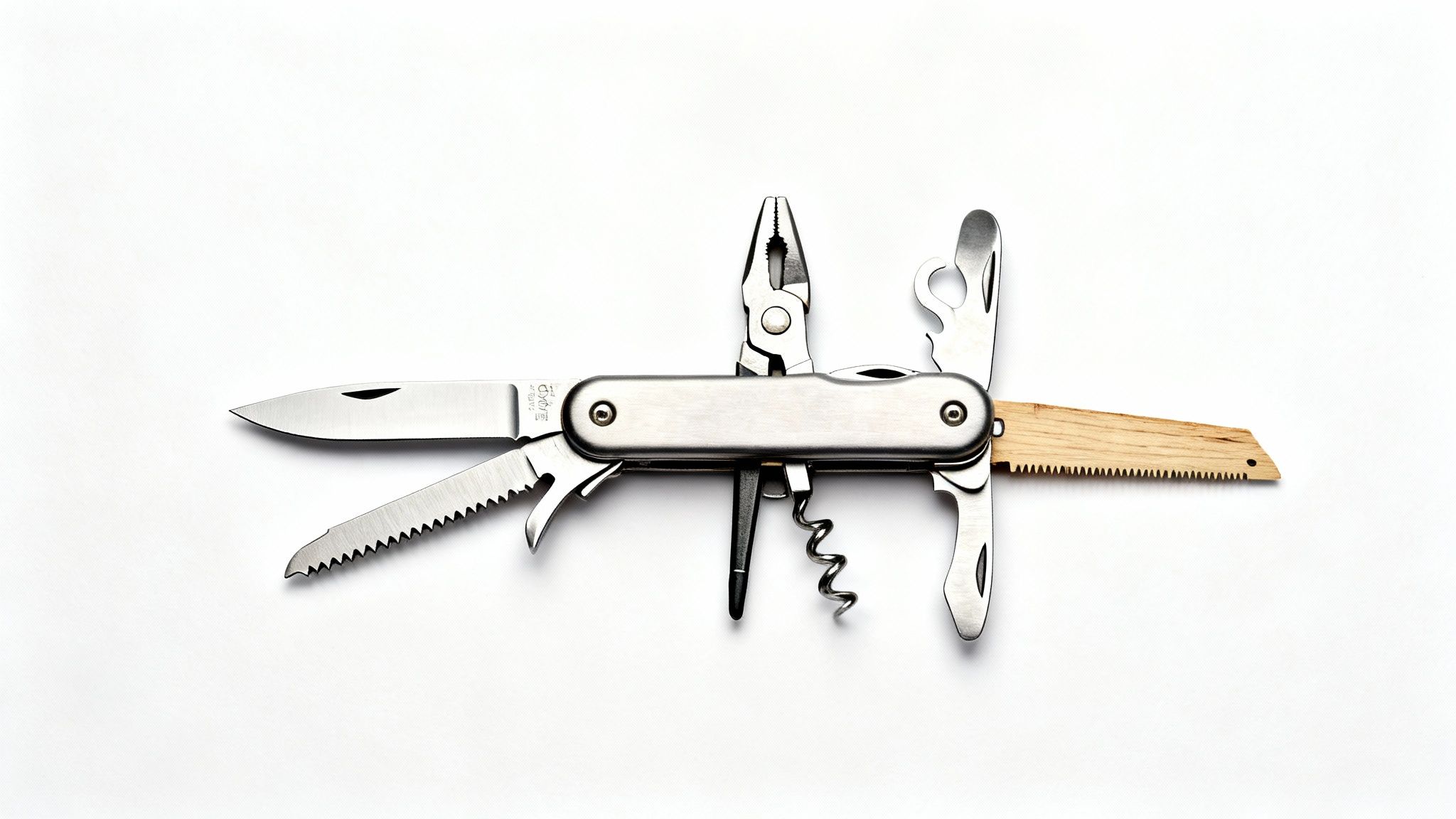
At first glance, one multi-tool looks a lot like the next. They all seem to have a similar pile of gadgets crammed into the handles. But the best multi-tools for survival aren’t judged by how many gizmos they have—they’re defined by the life-saving purpose behind each component.
Think of it less as a toolbox in your pocket and more as a single, cohesive system built for resilience. Understanding what makes that system tick is the key to picking a tool that won’t let you down when it counts. The foundation of any great survival multi-tool is remarkably consistent, and for good reason: it’s what actually works in the field.
The Non-Negotiable Core Functions
Some tools are so critical they form the backbone of any serious survival multi-tool. The pliers, for instance, are the heart of the entire design. They need to be tough enough to bend wire for a snare, crank down on a loose bolt, or even act as a clamp in a pinch. Flimsy pliers are a deal-breaker.
The blade is just as vital. It’s not just a cutter; it’s one of your primary survival tools. The type of blade edge you choose really matters:
- Plain Edge Blade: Your go-to for clean, controlled cuts. This is what you’ll use for making feather sticks for tinder, carving notches for a shelter, or prepping food.
- Serrated Edge Blade: This edge rips through tough, fibrous stuff. Think rope, webbing, or thick vines. It cuts with a sawing motion where a plain edge would just slip.
Many of the top-tier multi-tools, like those from Leatherman, cleverly include a combo blade to give you the best of both worlds. This kind of versatility means you’re ready for more cutting jobs without needing a second knife.
Essential Tools for Self-Reliance
Beyond the blade and pliers, a few other functions are absolutely indispensable in a crisis. A good wood saw, for example, is a game-changer for processing small limbs for fire or shelter. It lets you create fuel efficiently, a task that can wear you out fast with just a knife. Our guide on how to make fire without matches shows just how critical a good saw can be.
A sturdy can opener is another unsung hero. If your food supply comes down to canned goods from an abandoned pantry or your own emergency stash, being unable to open them makes them worthless.
The true value of a survival multi tool isn’t in its ability to do everything, but in its reliability to perform the most critical tasks flawlessly when you have no other options.
Finally, a locking mechanism for all the tools is a non-negotiable safety feature. When you’re putting your weight behind a blade or saw, the last thing you want is for it to fold back on your fingers. This single detail is what separates a genuine survival tool from a simple pocket gadget.
What Separates a True Survival Tool from a Gadget
Let’s be honest, not all multi-tools are created equal. Plenty of them can pop a bottle cap or tighten a loose screw on your sunglasses, but only a handful are truly built to take the abuse of a real-world survival situation.
The difference is like comparing a professional framing hammer to the cheap one you use to hang a picture. They both swing, but only one is designed for high-stakes, demanding work. The same goes for your multi-tool. A genuine survival tool is defined by its steel, its safety locks, and its overall construction. These aren’t just bullet points on a box—they’re what guarantees the tool works when failure is absolutely not an option.
Built with Superior Materials
The heart of any good tool is the metal it’s forged from. For a survival multi-tool, high-carbon stainless steel is the undisputed champion. This isn’t just a fancy name; it’s a specific blend that gives you the best of both worlds. It’s hard enough to hold a razor-sharp edge through tough use, but it also has enough chromium to fight off rust and corrosion when you’re stuck in the damp and mud.
Think about it: a blade that goes dull after cutting some cordage or pliers that rust shut after a rainstorm are worse than useless—they’re a liability. The best brands know this, which is why they use specific steel alloys engineered for toughness. That’s what ensures your tool stays an asset, not a frustrating piece of junk.
The real test of a survival tool isn’t just what it can do, but how long it can continue to do it under the worst possible conditions. Durability isn’t a feature; it’s the entire point.
Reliable and Safe Locking Mechanisms
In the middle of a high-stress task, the last thing you want is for your tool to fold up on you. This is why a robust locking mechanism is a non-negotiable safety feature. When you’re putting serious muscle behind a saw or a blade, a solid lock prevents it from snapping shut on your fingers and causing a debilitating injury.
This is a huge difference-maker. Cheaper tools often use weak “slip-joint” mechanisms that can easily fail under pressure. In stark contrast, top-tier multi-tools from respected makers like SOG or Gerber feature strong, positive locking systems. Each tool clicks firmly into place and stays there until you decide to release it.
Uncompromising Build Quality
Beyond the steel and the locks, overall build quality is something you can feel the moment you pick a tool up. It’s in the details, like the pivot tension—tools should glide open smoothly, without being wobbly or impossibly stiff. Another sign of a well-thought-out design is one-handed access to the main blade or pliers. This is critical, as it frees up your other hand to hold something steady while you work.
These elements are what elevate a multi-tool from a simple collection of parts to a complete survival system. You can see exactly how these tools fit into a broader preparedness plan in our guide to the must have items for survival. A well-built multi-tool doesn’t just have functions; it delivers them with precision and reliability, making it a true extension of your own capability when you need it most.
Matching the Right Multi Tool to Your Survival Plan
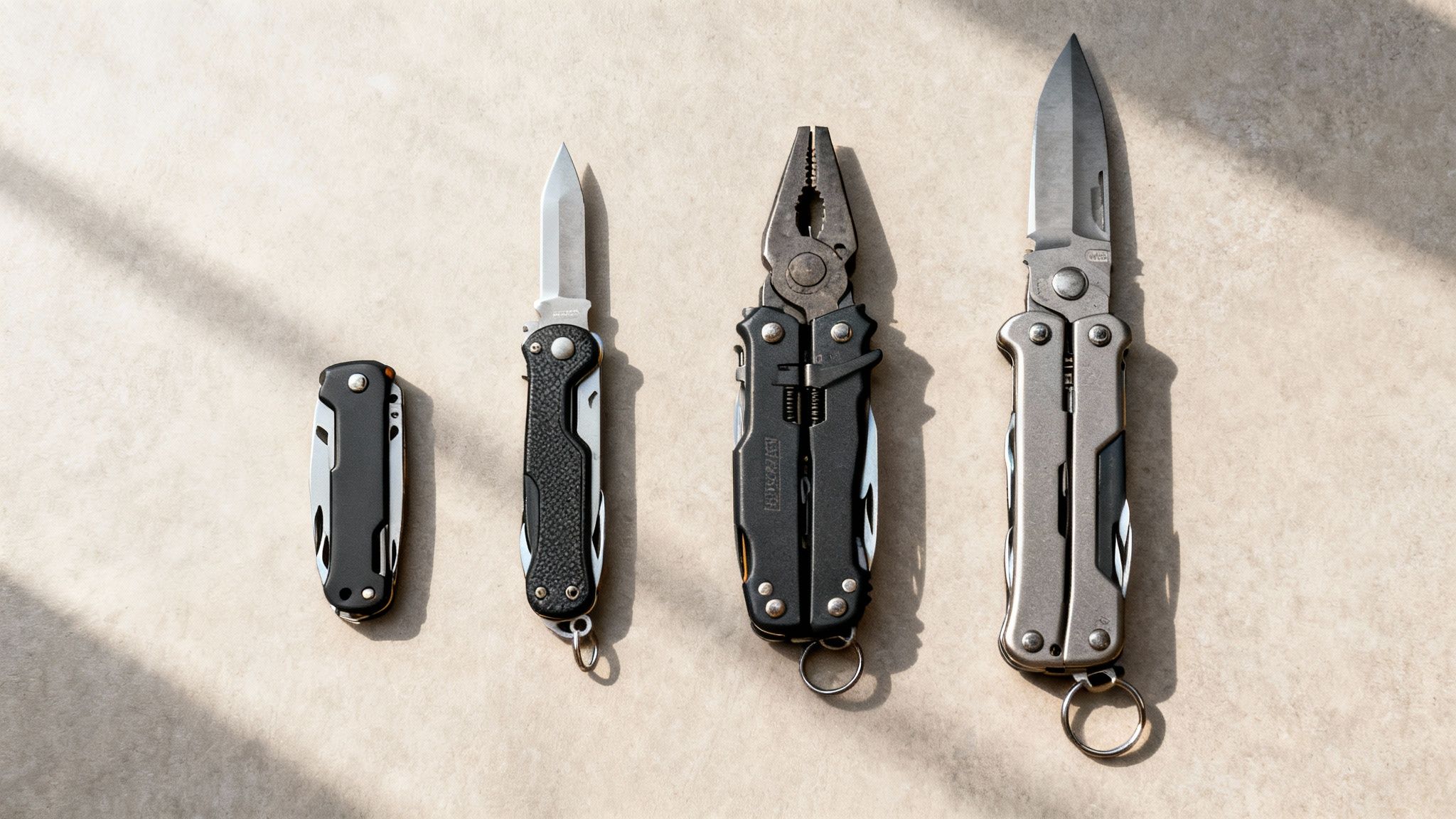
There’s no magic, one-size-fits-all multi-tool for survival. The best one is the one that actually fits your plan. A tool loaded with every feature imaginable is just dead weight if it’s too heavy for your kit or missing the one function you end up needing most.
Your choice should be a direct reflection of your strategy. Are you prepping for a fast bug-out, a roadside breakdown, or a long-term grid-down event? Each situation completely changes the game, redefining which features are mission-critical and which are just along for the ride.
Let’s walk through a few common preparedness scenarios to help you match the tool to the task.
The Bug-Out Bag Tool
When you have to move, and move fast, every single ounce matters. The multi-tool in your bug-out bag has to hit that perfect sweet spot between real-world capability and minimalist weight. You need a workhorse, not an anchor.
The trick is to focus on the absolute core functions—strong pliers, a dependable locking blade, a wood saw, and a can opener—without getting bogged down by specialty tools you’ll never use.If you’re new to emergency preparedness, start by understanding what’s a bug out bag and why it’s essential. For more on what to pack when weight is a premium, check out our complete guide to bug out bag items.
The Vehicle Kit Powerhouse
Your vehicle kit gives you a massive advantage: you can prioritize raw capability over portability. Weight is far less of a concern, which means you can go for a bigger, beefier multi-tool packed with features. This is where a heavy-duty model with a full bit driver set, larger blades, and more aggressive saws really shines.
Think of it as your mobile toolbox. It’s there to handle the bigger jobs—from field repairs to emergency extrication—that a smaller pocket tool would crumble under. The global survival tools market, estimated at USD 1.4 billion in 2023, is booming for a reason; people need robust gear like this for both wilderness and urban crises. You can dig into more of this data on alliedmarketresearch.com.
A vehicle-based emergency preparedness kit should include this type of heavy-duty multi-tool alongside other essential supplies.
Everyday Carry (EDC) Readiness
An EDC multi-tool is all about having a baseline of problem-solving ability on you at all times. It won’t replace a full-sized tool, but it guarantees you’re never caught completely empty-handed. Here, the name of the game is compactness, discretion, and quick access.
The goal of an EDC tool is simple: to solve the small problems of today while being ready for the big problems of tomorrow. It’s about having a baseline of preparedness with you at all times.
These tools are often small enough to disappear onto a keychain, like the classic Leatherman Squirt S4, and are perfect for minor, day-to-day tasks. They give you the essentials—small pliers, screwdrivers, a blade—in a package so small you’ll forget it’s there. That constant readiness is the true foundation of a prepared mindset.
Trying to figure out which features matter most for your specific plan? This table breaks it down.
Multi Tool Features for Different Survival Scenarios
| Scenario | Primary Goal | Essential Tools | Secondary Tools |
|---|---|---|---|
| Bug-Out Bag | Mobility and core capability | Strong Pliers, Locking Blade, Wood Saw, Can Opener | Scissors, Awl, File |
| Vehicle Kit | Heavy-duty repairs and versatility | Full Bit Driver Set, Large Pliers, Aggressive Saw Blade | Wire Cutters, Pry Tool, Seatbelt Cutter |
| Everyday Carry (EDC) | Immediate, basic problem-solving | Small Pliers, Screwdrivers, Small Blade, Bottle Opener | File, Tweezers, Scissors |
| Wilderness Survival | Shelter, fire, and food prep | Large Saw Blade, Ferro Rod Striker, Awl, Main Blade | Pliers, Can Opener, Gut Hook |
As you can see, the “right” toolset changes dramatically based on what you’re preparing for. Choose wisely.
How to Maintain Your Multi-Tool for Lifelong Reliability
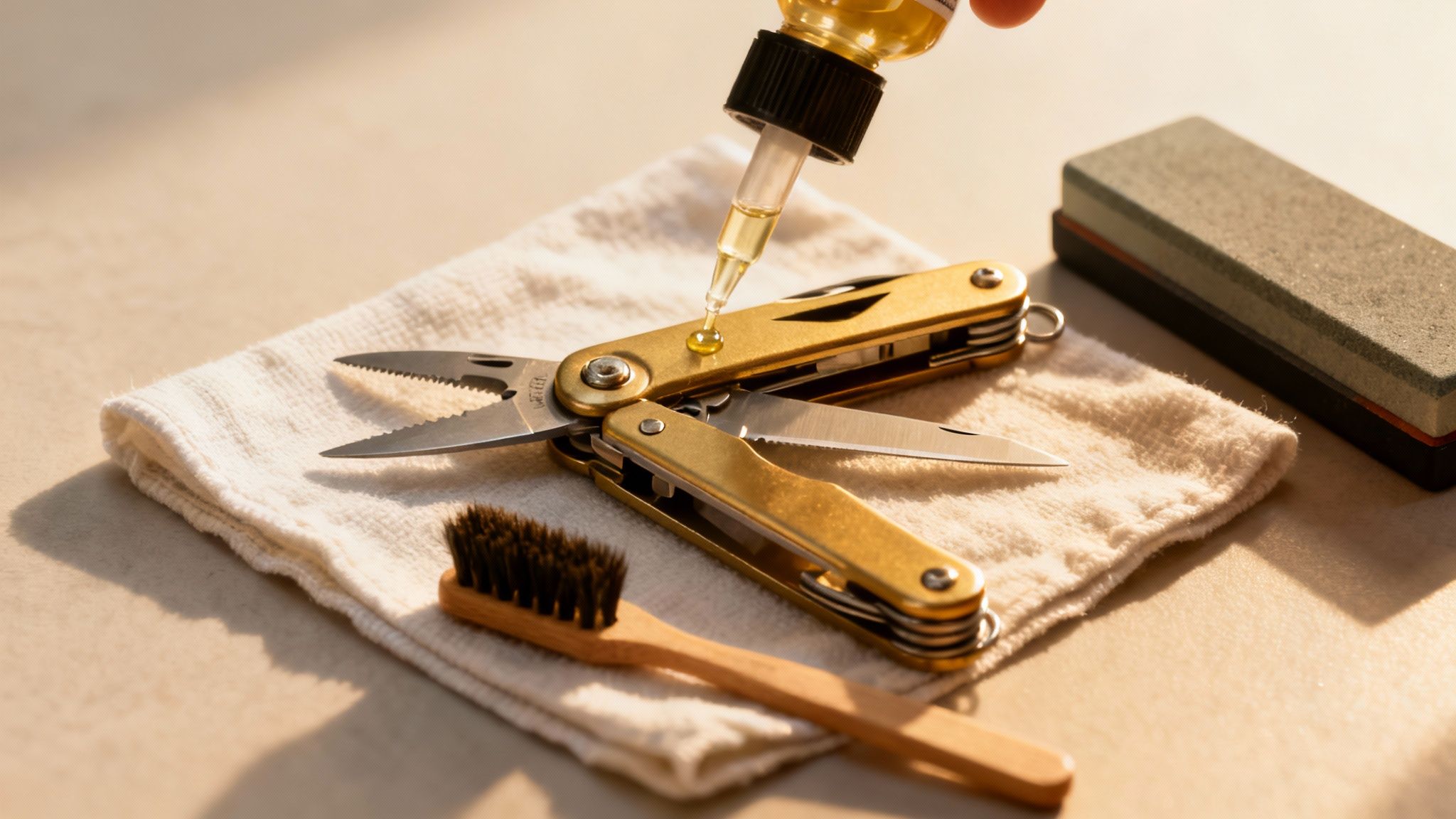
A survival multi-tool isn’t just a purchase; it’s an investment in your own safety. But like any good investment, it needs attention. Neglect is the fastest way to turn a reliable tool into a liability. Rust, dull blades, and stiff, gritty joints can cause a catastrophic failure right when you can’t afford one.
Thankfully, proper maintenance is straightforward and ensures your tool is always ready to answer the call. This isn’t about keeping it pretty—it’s about preserving its core function as a piece of gear you can bet your life on.
Routine Cleaning and Inspection
After any serious use, especially in wet, muddy, or dusty conditions, your multi-tool needs a good cleaning. Grit and moisture are the enemies of smooth operation. They’ll work their way into the pivots and locking mechanisms, causing corrosion and seizing up the tools.
Grab an old toothbrush or a small, stiff brush and scrub out all the visible gunk from the joints and tool channels. A can of compressed air is also fantastic for blasting out stubborn particles from those hard-to-reach spots. If it’s really grimy, a little soap and warm water work wonders, but you absolutely must dry it completely afterward.
A well-maintained multi-tool is more than just a piece of gear; it’s a promise to yourself that you’ll be ready. Regular inspection and care are fundamental to all preparedness, turning equipment into a reliable extension of your skills.
While you’re cleaning, give it a quick once-over. Look for any hints of rust, paying close attention to the pivot points. Open and close every single tool. Do they move smoothly? Do the locks click into place with authority, or is there some wiggle and play? This simple habit lets you catch small problems before they become mission-critical failures.
Lubrication and Sharpening
With your tool clean and bone-dry, it’s time to lubricate. A light, penetrating oil is what you want here. Put just a single drop on each pivot point where the tools fold into the handle.
Open and close each tool several times to work the oil in and distribute it evenly. This simple step keeps everything moving freely and creates a barrier against rust.
Remember, a dull blade is a dangerous blade. It requires more force, making it far more likely to slip and cause an injury. Keeping the knife sharp is non-negotiable. A small, portable diamond-coated sharpener is perfect for field use and will restore a keen edge in minutes. For best results, try to maintain the same angle the factory put on the blade.
Proper care is a cornerstone of readiness. To see how this fits into a larger strategy, check out our guide on emergency kit maintenance for a broader look at keeping all your gear in top condition. Treat your multi-tool right, and it will perform flawlessly when it truly matters.
Integrating Your Multi-Tool into a Complete Survival System
A multi-tool is a powerful piece of gear, but its true value shines when you stop seeing it as a single item and start thinking of it as part of a larger survival system. It’s not meant to be the only tool you carry. Instead, it’s a force multiplier, making everything else in your pack more capable and resilient. Grasping this synergy is the key to building a smart, efficient kit with no weak links.
Think about your dedicated fixed-blade knife. That’s your workhorse for the heavy-duty stuff—batoning wood, making feather sticks, maybe even processing game. The last thing you want to do is use that precision edge to cut wire or pry open a can. That’s a surefire way to dull or chip the blade, compromising its most critical job. This is exactly where your multi-tool comes into play.
The Ultimate Support Tool
Your multi-tool is the ultimate backup singer for your primary gear. It handles all the jobs that are just plain wrong for a knife, preserving your main blade for what it does best: cutting.
- Pliers: These are your go-to for bending, twisting, and gripping. Use them to pull a hot cook pot like a Stanley Adventure Camp Cook Set off a fire, fix a bent tent stake, or repair a fishing reel.
- Wire Cutters: Need to snip wire for a snare or cut through a fence in an emergency? The wire cutters on your multi-tool will save your knife blade from certain damage.
- Screwdrivers: So much of our essential gear is held together by screws. The bit drivers are perfect for tightening a loose handle on a camp axe or adjusting the tension on a backpack strap.
A multi-tool isn’t a replacement for a dedicated knife; it’s the partner that allows your knife to stay sharp and ready for critical cutting tasks. It fills the gaps, making your entire system more resilient.
Repairing and Maintaining Your Lifeline Gear
Out in the wild, a broken piece of gear can be a disaster. A sputtering camp stove, a snapped tent pole, or a busted water filter can quickly turn a tough situation into a dangerous one. Your multi-tool is your first and best line of defense for making those crucial on-the-fly repairs.
Imagine your camp stove dies. The pliers and screwdrivers on a model like the Leatherman Signal are perfect for field-stripping and servicing it. Or maybe a tent pole splinters—you could use the file to smooth the jagged edge before splinting it with tape. It’s this ability to maintain and fix your other essential items that makes the multi-tool one of the best multi-tools for survival. It keeps your whole system up and running when you need it most.
Common Questions About Survival Multi-Tools
Stepping into the world of multi-tools can feel a bit overwhelming. You’re trying to find one piece of gear to solve a hundred different problems, and it’s easy to get bogged down in the details. Let’s clear up some of the most common questions people ask so you can choose your tool with confidence.
Can I Legally Carry a Multi-Tool Every Day?
This is a big one, and the answer is: it depends entirely on where you live. There’s no single federal law covering this. Instead, you’ve got a patchwork of state and even city ordinances that dictate what’s legal.
They look at things like blade length, whether the blade locks open, and if carrying it in your pocket counts as a “concealed weapon.” Before you make any multi-tool a part of your daily kit, you absolutely must research your local and state laws. A quick search for “[Your State] knife laws” is a good place to start. Don’t risk a fine or worse over a simple mistake.
Should I Get a Multi-Tool or a Good Survival Knife?
Honestly? The best answer is both. They’re two different tools for two very different jobs, and they work together perfectly.
A solid, fixed-blade knife is your workhorse for heavy-duty cutting. Think batoning wood to make kindling, carving feather sticks, or skinning game. A multi-tool, on the other hand, is your pocket-sized toolbox for everything else—fixing gear with pliers, tightening a loose screw on a rifle scope, or cutting wire for a snare. Trying to do a knife’s job with a multi-tool is frustrating, and using your knife as a screwdriver is a great way to ruin a perfectly good blade.
A dedicated knife is your primary cutting instrument; a multi-tool is your mobile repair shop. Having both means you have the right tool for virtually any problem you might face.
Is a More Expensive Multi-Tool Actually Worth the Money?
For the most part, yes. While a decent mid-range tool from a brand you trust will get the job done for most people, that higher price tag usually gets you better materials, smarter design, and tighter quality control. It’s an investment in reliability when you might need it most.
Here’s what you’re paying for:
- Superior Steel: The blade and tools will hold an edge much longer and fight off rust and corrosion. You’ll spend less time sharpening and more time working.
- Robust Construction: A premium tool just feels different. The joints are tighter, there’s no wiggle or play in the tools, and the locking mechanisms snap into place with authority.
- Better Warranty: Companies like Leatherman or Gerber stand behind their top-of-the-line products, often with 25-year or lifetime warranties. They build them to last.
If you’re just looking for something to toss in a car kit for minor emergencies, a budget-friendly option is fine. But if you’re building a bug-out bag or a serious survival kit, investing in a top-tier model gives you peace of mind that it won’t fail when things get ugly.