
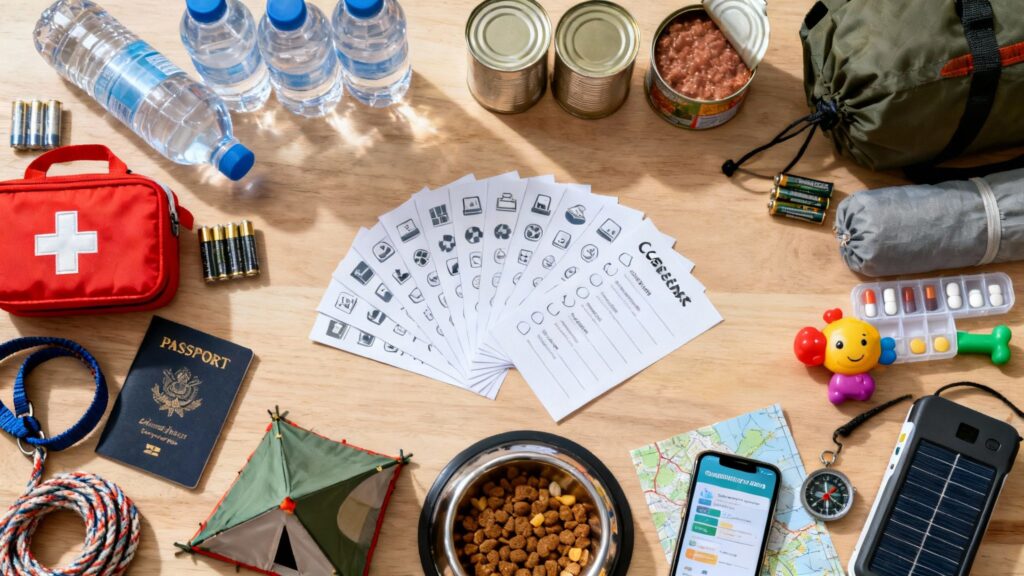
In an unpredictable world, true readiness extends far beyond a simple box of bandages and batteries stashed in a closet. A truly comprehensive emergency preparedness checklist is not about dwelling on fear; it is about empowerment, fostering self-reliance, and methodically ensuring your family can not only survive but thrive when conventional systems are disrupted. Whether facing a sudden multi-day power outage, a severe weather event, or a more prolonged natural disaster, having a structured, layered plan and the right supplies is the definitive key to navigating uncertainty with confidence and control. This is about transforming anxiety into action.
This guide moves past the generic advice often found online. We will break down the 10 critical categories you must address to build a resilient household, transitioning from immediate, short-term survival needs to long-term sustainability. You will find specific, actionable steps for everything from water purification and long-term food storage to backup power, communication strategies, and securing vital documents. We will also mention well-known tools and systems that can make a tangible difference in your preparations, helping you build a robust plan that protects what matters most. For those who are serious about mastering self-reliance skills that complement physical supplies, resources like the AATF Survival Guide offer in-depth tutorials on crucial topics like advanced first aid, long-term food preservation techniques, and developing off-grid water solutions. This checklist is your roadmap to building that higher level of preparedness.
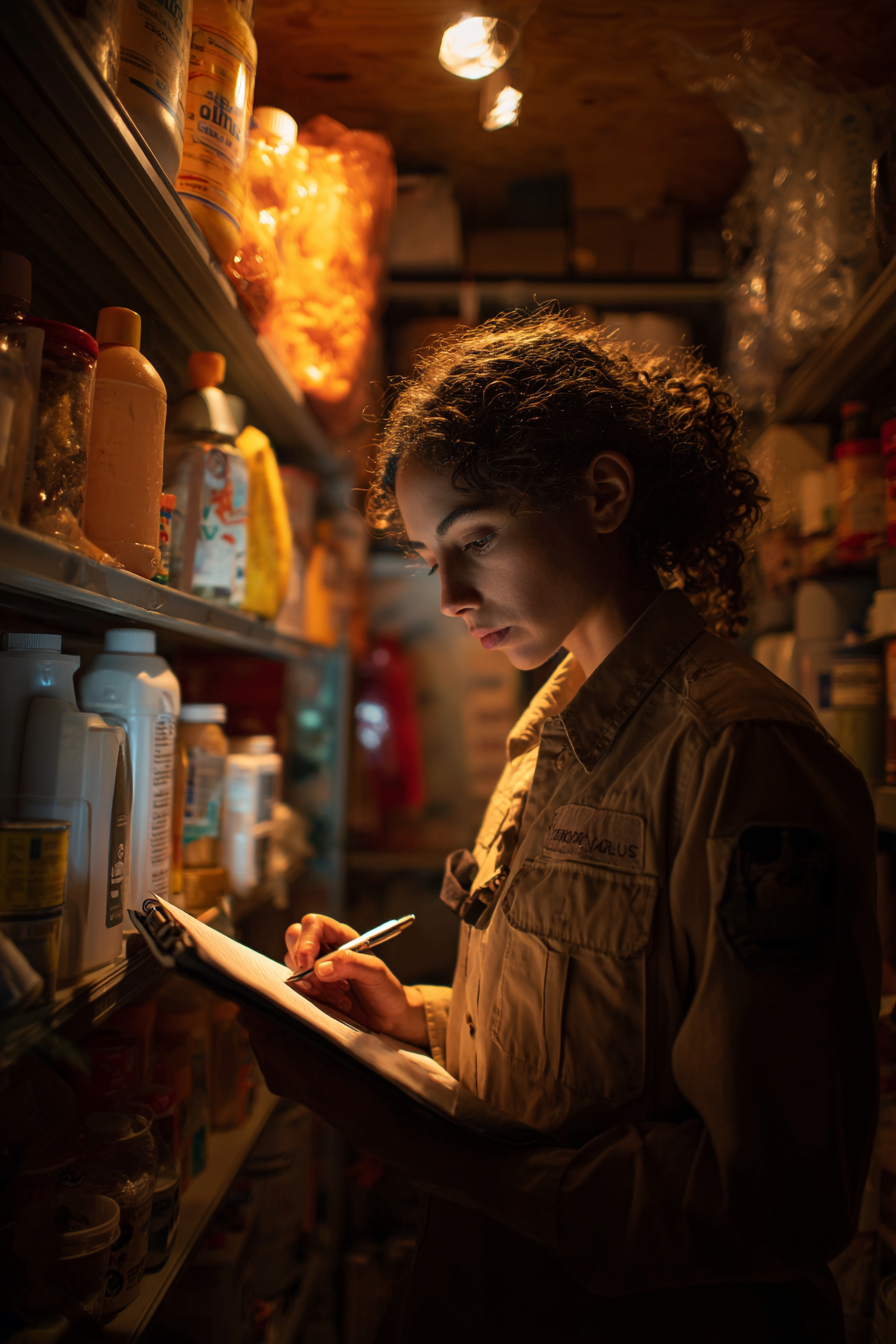
1. Water Storage and Purification Systems
Water is the most critical component of any emergency preparedness checklist. The human body can only survive for about three days without it, making a reliable water source a non-negotiable priority. A robust water strategy involves a two-pronged approach: storing clean, potable water for immediate needs and having reliable purification methods for long-term sustainability. This combination ensures you can handle everything from a short-term utility outage to a prolonged disaster scenario where municipal water is contaminated or unavailable.
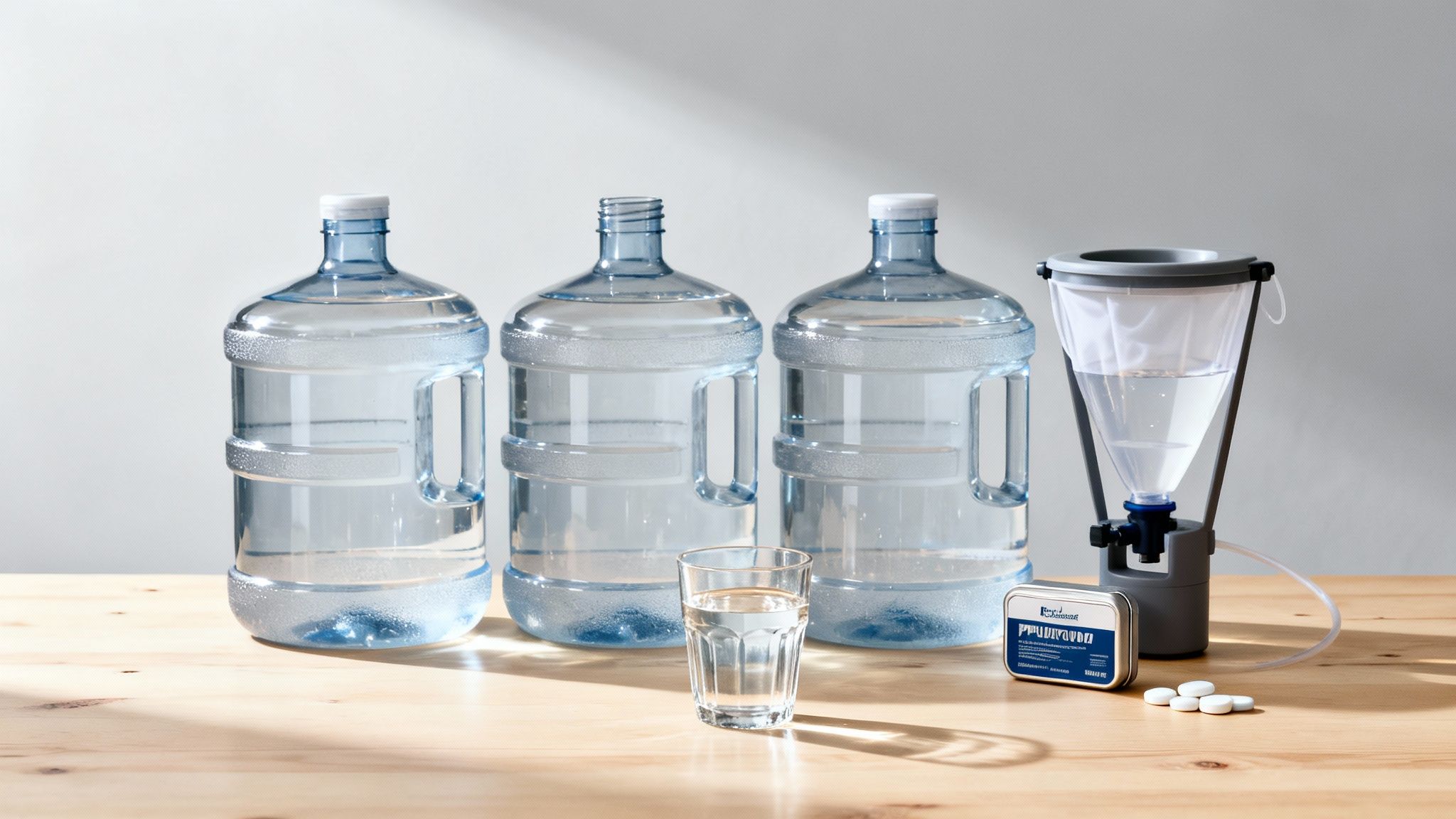
The foundational rule is to store a minimum of one gallon of water per person, per day. For a family of four, this means storing at least 56 gallons to last two weeks. However, this baseline is for drinking and minimal sanitation; a more realistic figure is two gallons per person to account for hygiene and cooking needs.
Why It’s Critical
During events like the 2021 Texas winter storm, families with stored water were able to stay hydrated and safe when frozen pipes cut off the municipal supply. Similarly, during the Flint water crisis, residents depended entirely on bottled and filtered water for years. Stored water provides an immediate buffer, while purification systems turn questionable sources like rainwater, rivers, or streams into safe drinking water. A high-capacity gravity filter, such as a Berkey system, can purify thousands of gallons from nearly any source, making it a cornerstone for home-based preparedness. For mobility, portable filters like the LifeStraw or Sawyer Squeeze are indispensable additions to any go-bag.
Actionable Tips for Implementation
- Storage Rotation: Use food-grade containers (clearly labeled “Drinking Water”) and rotate your supply every 6 to 12 months to ensure freshness. Set a recurring calendar reminder.
- Create Redundancy: Do not rely on a single purification method. Your kit should include multiple options, such as purification tablets, a portable filter, and the means to boil water (e.g., a camp stove or kettle). Having diverse options is crucial. For an in-depth guide on different techniques, you can explore various methods for how to purify water.
- Test Your Gear: Unbox and test your filters and other purification equipment before an emergency. Understanding how they work and confirming they are functional is a vital step that is often overlooked.
While storing a minimum of one gallon per person per day is essential, having a reliable method to purify water from questionable sources is equally critical. For a deeper dive into the best water purification tools and how to use them effectively, check out our guide on Top 10 Must-Have Items in Your Disaster Supply Kit
2. Emergency Food Supply and Pantry Staples
A resilient food supply is the second pillar of any effective emergency preparedness checklist, right after water. Building a strategic pantry involves stocking nutrient-dense, shelf-stable foods that sustain energy and morale during disruptions. The goal is to combine long-term staples like grains, legumes, and canned proteins with familiar comfort foods your family enjoys, preventing food fatigue when stress levels are already high. A well-planned supply ensures you can weather short-term events with at least two weeks of meals and scale up to 3-6 months for more serious scenarios.

Why It’s Critical
The 2020 lockdowns demonstrated the fragility of supply chains, where families with well-stocked pantries avoided chaotic shopping and empty shelves. Similarly, when supply disruptions in 2021-2023 caused prices for canned goods and flour to soar by over 40%, those who had prepared beforehand were insulated from the financial impact. Food security provides peace of mind and self-reliance, ensuring you can feed your family without depending on external systems that may fail. This concept is championed by long-standing preparedness models like The LDS Church’s family food storage program and survival experts such as James Wesley Rawles.
Actionable Tips for Implementation
- Implement FIFO Rotation: Use the “First-In, First-Out” method by placing new items at the back of your pantry and moving older items to the front. This ensures you use food before it expires and keeps your supply fresh.
- Stock What You Eat: Your emergency food should consist of meals your family will actually consume. Test recipes with your pantry staples before a disaster to ensure they are palatable and meet your dietary needs. Include essential flavor enhancers like oils, salt, sugar, and spices.
- Invest in Long-Term Storage: For foundational staples like rice, beans, and wheat, use Mylar bags with oxygen absorbers to achieve a shelf life of 20 years or more. For more comprehensive details on these techniques, you can find a guide on how to store food long-term.
- Prioritize Morale: Do not underestimate the psychological benefit of comfort foods. Including items like chocolate, coffee, tea, or powdered drink mixes can significantly boost morale during a prolonged and stressful event.
A strategic food supply goes beyond just canned goods—it’s about choosing nutrient-dense, shelf-stable options that your family will actually eat. To help you make informed decisions, we’ve compiled a list of the best survival food kits for 2026, including long-term storage solutions and meal plans that maintain energy and morale.
3. First Aid and Medical Supply Kit
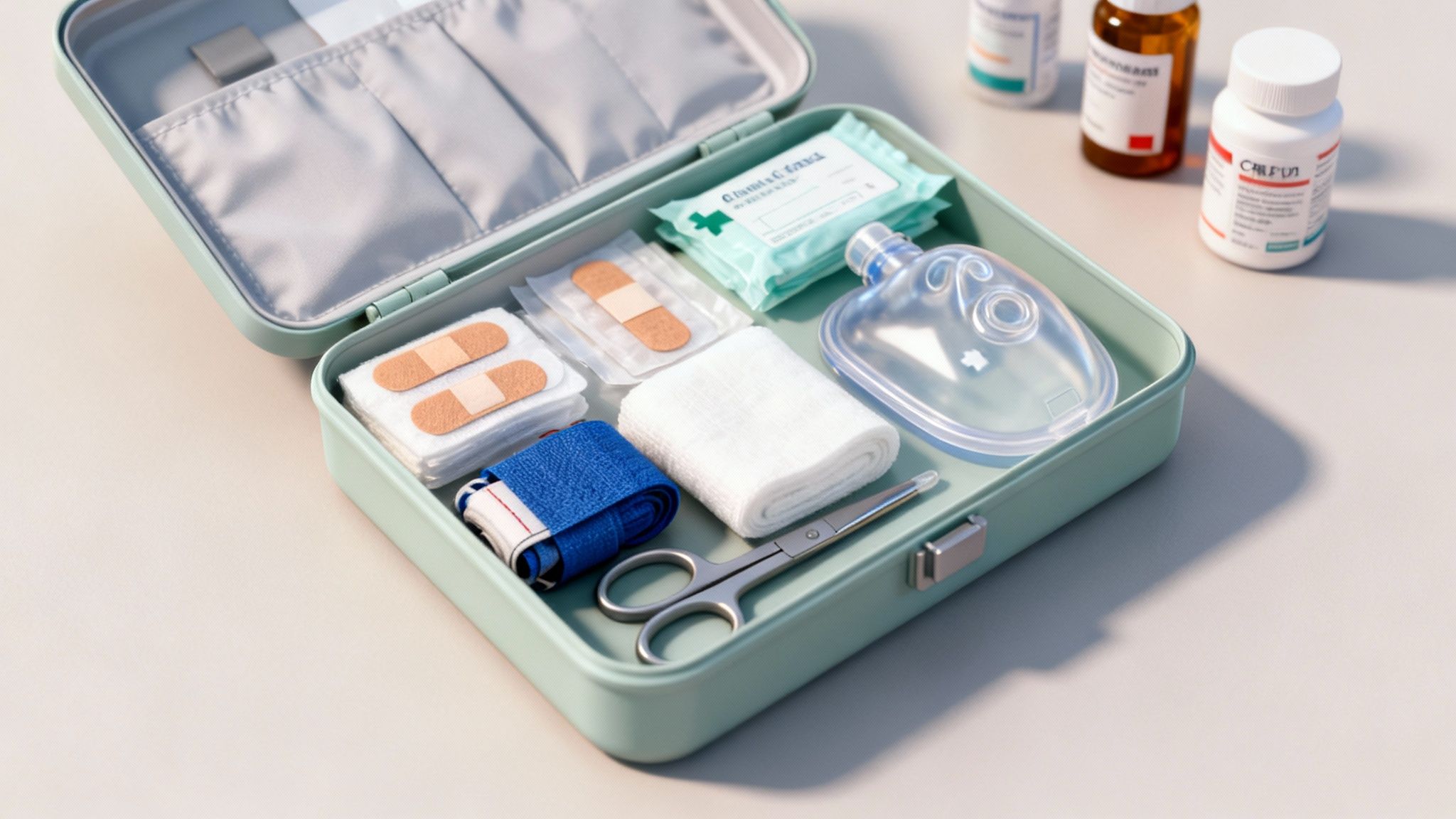
A well-stocked medical kit is an indispensable part of any emergency preparedness checklist, serving as your personal urgent care when professional healthcare is delayed or completely unavailable. Beyond basic bandages and antiseptic wipes, a truly effective kit addresses a range of scenarios from minor injuries to severe trauma and manages chronic illnesses. It bridges the critical gap between when an incident occurs and when professional medical help can arrive, a period that can stretch from hours to days in a widespread disaster.
Having a comprehensive medical supply kit allows you to manage everything from common illnesses to life-threatening injuries until you can reach a doctor. This includes having a 30-to-90-day supply of essential prescription medications, wound closure supplies, pain management options, and specialized equipment for severe emergencies.
Why It’s Critical
During Hurricane Maria in Puerto Rico, exhausted antibiotic supplies led to preventable infections becoming life-threatening. Families with their own prescribed reserves were able to treat infections safely. Similarly, during the 2021 Texas winter storm, many residents treated frostbite, hypothermia, and minor injuries at home, alleviating the burden on overwhelmed emergency services. In a major crisis, you are your own first responder. A robust kit should contain not only basic first-aid items but also trauma gear like a North American Rescue CAT tourniquet, Israeli bandages, and chest seals to handle severe bleeding.
Actionable Tips for Implementation
- Build Beyond the Basics: Expand your kit beyond a standard store-bought one. Include items like trauma shears, a SAM splint, burn gel, and electrolyte packets. Add over-the-counter medications for pain, inflammation, allergies, and digestive issues.
- Manage Prescription Medications: Work with your doctor to obtain a 30-to-90-day supply of all necessary medications. Properly storing these is crucial for maintaining their effectiveness. For guidance, review these best practices on prescription medication storage.
- Get Trained and Rotate Supplies: A kit is only as good as your ability to use it. Take a first aid or advanced course like those offered by the American Red Cross or NOLS. Set a biannual calendar reminder to check expiration dates and rotate out old supplies.
Beyond bandages and antiseptic wipes, a true emergency medical kit should include trauma gear and a 30–90 day supply of essential medications. To help you build a well-rounded kit, we recommend reviewing our detailed breakdown of essential items for your emergency preparedness kit, including how to tailor it to your family’s needs.
4. Power Generation and Backup Power Systems
Electrical power is the backbone of modern life, enabling refrigeration, heating, communication, and the operation of critical medical equipment. A grid failure plunges a household into a difficult and dangerous situation. A tiered power strategy that combines portable generators, battery systems, and renewable options like solar panels creates a resilient and layered defense against outages, ensuring your essential equipment remains functional when the grid goes dark.
This multi-faceted approach prevents critical system failure during common events like severe storms and infrastructure failures, as well as broader societal disruptions. It provides immediate power for essential devices, a fuel-based solution for heavy loads, and a long-term, renewable source for sustained resilience.
Why It’s Critical
The 2021 Texas winter storm demonstrated this need vividly; families with generators could run space heaters and refrigerators while millions suffered in the freezing cold. Similarly, after Hurricane Sandy in 2012, homeowners with solar and battery backup systems, such as a Tesla Powerwall, had power for critical needs while their neighbors waited weeks for grid restoration. In modern preparedness, a portable power station from brands like Jackery or EcoFlow paired with solar panels has become a foundational tool for maintaining communication and running small appliances. A robust power plan is a cornerstone of any serious emergency preparedness checklist.
Actionable Tips for Implementation
- Prioritize and Tier Your System: Start with a portable power station (1,000-3,000W) for silent, indoor-safe power for essentials like phones, lights, and medical devices. Add a portable generator (5,000-7,500W) from a trusted brand like Honda or Yamaha for heavy loads like refrigerators or well pumps.
- Embrace Solar Recharging: Pair your power station with a portable solar panel array (200-400W) to create a self-sustaining power source. This allows you to recharge your batteries indefinitely during a prolonged outage.
- Practice Safe Operation: Never run a gasoline generator indoors, including in a garage or basement, due to the risk of fatal carbon monoxide poisoning. If installing a permanent system, use a licensed electrician to install a whole-house transfer switch.
- Maintain Your Fuel: If using a gasoline generator, use a quality fuel stabilizer in your stored fuel and rotate your gasoline supply every 6 to 12 months to prevent it from degrading. For a deeper dive into the available options, you can explore various portable power sources.
5. Communication and Information Systems
When primary infrastructure fails, so do modern communication networks. Cell service, internet, and landlines are often the first casualties, leaving people isolated and uninformed. A resilient communication plan is a critical part of any emergency preparedness checklist, ensuring you can receive vital information, coordinate with family, and stay connected to your community. This involves having reliable, power-independent devices for both receiving broadcasts and facilitating local, two-way contact.
The goal is to create layers of communication redundancy. This means you have ways to get information when the power is out, communicate with family members if you are separated, and access critical data like maps and contacts without relying on a digital network.
Why It’s Critical
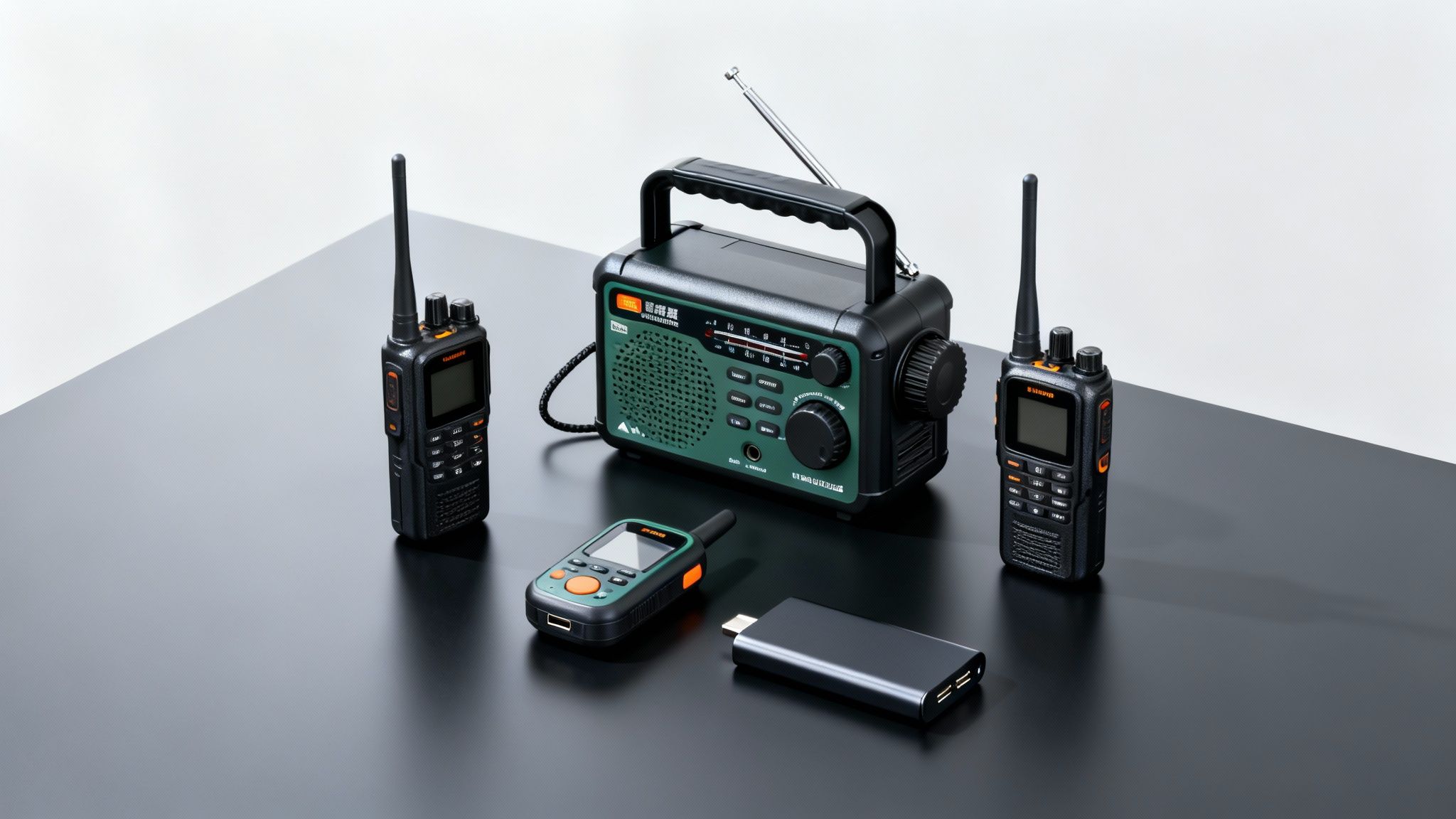
In widespread disasters, information is as crucial as food or water. During Hurricane Maria in 2017, residents with battery-powered radios were the only ones who could access news and official instructions when the island’s power grid was down for months. Similarly, in the 2023 Maui wildfires, where official cell alerts failed, those with access to radio broadcasts received critical evacuation warnings. For local coordination, two-way radios, like those from Baofeng or Midland, proved invaluable during the 2021 Texas winter storm, allowing neighbors to perform welfare checks and share resources. These events underscore the need for off-grid communication tools.
Actionable Tips for Implementation
- Secure a NOAA Weather Radio: Your primary information tool should be a battery-powered or hand-crank emergency radio capable of receiving NOAA Weather Radio alerts. This provides direct, official broadcasts on severe weather and civil emergencies. For a deeper dive into what to look for, you can learn more about key emergency radio features.
- Establish Local Two-Way Communication: Equip your family with a set of two-way radios (walkie-talkies). Pre-program them to the same channel and have a designated backup channel. They are essential for coordinating when family members are in different locations within a few-mile radius.
- Maintain Backup Power for Devices: Keep multiple fully-charged power banks and a solar charger specifically for your cell phone and other small electronics. While networks may be down, the phone itself can still be used for its offline maps, downloaded documents, and as a flashlight.
- Create a Physical Information Kit: Do not rely solely on digital storage. Print hard copies of important contact lists, local and regional maps, and emergency procedures. Laminate them or store them in waterproof bags to protect them from damage.
6. Important Documents and Financial Preparedness
Protecting critical documents and ensuring financial resilience are foundational pillars of an effective emergency preparedness checklist. In the chaos following a disaster, the ability to prove your identity, demonstrate ownership of property, and access funds can dramatically accelerate your recovery. A comprehensive strategy involves both physical and digital safeguarding of essential paperwork, coupled with a plan for maintaining liquidity when traditional banking systems fail. This ensures you can navigate administrative hurdles and secure necessary resources, no matter the circumstances.
This preparation is not just about having cash on hand; it’s about creating a redundant system for your entire financial and legal identity. This includes birth certificates, social security cards, passports, property deeds, insurance policies, and wills. Without these, rebuilding your life becomes a bureaucratic nightmare, compounding the stress of the initial crisis.
Why It’s Critical
After Hurricane Katrina in 2005, displaced residents who had copies of their insurance policies, property deeds, and photo documentation of their homes were able to file claims and access aid far more quickly than those who lost everything in the floodwaters. Similarly, during the devastating California wildfires, families with digital backups of important documents stored off-site could initiate their recovery process immediately, even if the original papers were destroyed. Financial preparedness is equally vital; during the 2008 financial crisis, individuals with accessible cash reserves and diversified assets were better insulated from market volatility and bank closures.
Actionable Tips for Implementation
- Create a Document Go-Binder: Assemble physical copies of your most critical documents in a waterproof, portable binder or pouch. Store the originals in a fireproof safe, like one from SentrySafe, or a secure off-site location such as a bank safe deposit box.
- Digitize and Encrypt: Scan all important documents and save them on an encrypted USB flash drive (such as an IronKey drive) that you keep in your go-bag. Consider a secure cloud storage service as a tertiary backup, but never rely on it as your only digital copy.
- Build a Cash Reserve: Keep a minimum of two to four weeks’ worth of essential living expenses in cash at home. This fund, ideally between $500 and $2,000, should be in small denominations ($1, $5, $10, $20 bills) to ensure you can make purchases if electronic systems are down and vendors cannot make change.
- Document Your Assets: Take detailed photographs and videos of your home, vehicles, and valuable possessions for insurance purposes. Narrate the videos, noting makes, models, and serial numbers. Store these files with your other digital document backups.
7. Home Security and Self-Defense Systems
During a prolonged emergency or period of social unrest, personal security becomes paramount for protecting your family and vital resources. A comprehensive security strategy is not about a single tool but a layered approach that makes your home a less appealing target. It combines physical deterrents, early warning systems, and personal defense tools tailored to your skill level and local regulations. This multi-faceted system is designed to deter opportunistic threats, alert you to potential intrusions, and give you the means to protect your household.
A layered defense creates concentric rings of security around your home. The outer layer includes motion-activated lighting and visible signage, while the middle layer consists of reinforced doors, windows, and alarm systems. The innermost layer involves your family’s training, communication plan, and personal self-defense tools. This approach ensures that even if one layer is breached, others are in place to slow down or stop an intruder.
Why It’s Critical
History has shown that during widespread disruptions, emergency services are overwhelmed, and individuals must be more self-reliant. During the widespread civil unrest in 2020, properties with visible security measures like cameras and reinforced entry points were often bypassed by looters. Similarly, in the aftermath of Hurricane Katrina, households that had established security protocols and communication with neighbors were better able to protect their supplies and property from opportunistic crime. A proactive security plan shifts your family from a vulnerable position to a prepared and resilient one.
Actionable Tips for Implementation
- Harden the Perimeter: Start with the basics. Install robust deadbolt locks, reinforce door frames with heavy-duty strike plates, and apply security film to ground-floor windows to make forced entry more difficult.
- Implement Local Monitoring: Install security cameras that offer local storage (e.g., via an SD card or network-attached storage). Cloud-dependent systems may fail during internet or power outages, rendering them useless when you need them most.
- Practice Low-Profile Preparedness: Avoid advertising your level of preparedness. An overtly fortified home can attract unwanted attention. The goal is to appear prepared enough to be a hard target, but not so prepared that you seem like a valuable one.
- Train and Plan: Develop a family security plan that outlines actions to take during a potential intrusion. Securely store any personal defense tools, ensuring they are separated from ammunition and accessible only to trained adults. Regular practice and drills are crucial.
8. Sanitation and Hygiene Systems
When municipal water and sewage systems fail, proper sanitation and hygiene quickly become critical for preventing disease and maintaining health. An effective sanitation plan addresses human waste, personal cleanliness, and general hygiene, all of which are essential for avoiding outbreaks of illnesses like cholera or dysentery in a disaster scenario. A comprehensive approach includes alternative toilet solutions, ample hand-washing supplies, and a clear protocol for waste disposal to maintain a safe and dignified living environment.
This system is not just about comfort; it is a core component of public health in a crisis. Having these supplies prevents the contamination of water sources and living areas, which is a major risk when infrastructure collapses. Proper hygiene practices significantly reduce the spread of germs and viruses, protecting your family and community from secondary health emergencies.
Why It’s Critical
The aftermath of Hurricane Maria in Puerto Rico demonstrated the severe consequences of sanitation system failures, where communities faced prolonged outbreaks of infectious diseases. In contrast, during various NYC water main breaks, buildings with backup sanitation plans avoided major disruptions and health risks. These events underscore a vital lesson: you cannot depend on public utilities in a widespread emergency. An off-grid solution, whether a simple bucket system or a more advanced portable camping toilet, becomes a lifeline, ensuring you can manage waste safely and hygienically without outside help.
Actionable Tips for Implementation
- Assemble a Toilet System: The most common DIY option is a bucket toilet, using a 5-gallon bucket, a snap-on toilet seat, and heavy-duty liners. Commercially available options like the Luggable Loo are simple and effective. For waste management, keep a carbon material like sawdust, peat moss, or kitty litter to cover waste, reduce odor, and absorb moisture.
- Stock Hygiene Supplies: Store ample toilet paper, hand sanitizer, soap, and disinfectant wipes. Remember to include personal items such as feminine hygiene products, wet wipes, and adult diapers if needed for your household.
- Establish a Waste Protocol: Designate a specific, isolated area for waste disposal. Have a plan for either long-term containment in sealed containers, burial (at least 200 feet from water sources), or another safe disposal method compliant with local emergency guidelines.
9. Tool Kit, Repair Supplies, and Training
When infrastructure fails, the ability to perform basic repairs becomes a critical survival skill. A well-stocked tool kit and the knowledge to use it can prevent a minor inconvenience from escalating into a catastrophic failure. This preparedness item is not just about having tools; it’s about combining physical supplies with practical skills to maintain self-sufficiency when professional help is unavailable. This dual approach empowers you to manage everything from a leaky pipe to a broken generator, ensuring your home remains a safe and functional sanctuary.
A complete strategy includes a robust set of hand and power tools, spare parts for critical systems, and dedicated training to use them effectively. Having a pipe wrench and knowing how to shut off your water main can mean the difference between a simple repair and a flooded basement. This proactive combination of tools and training is a cornerstone of any serious emergency preparedness checklist.
Why It’s Critical
During the 2021 Texas winter storm, homeowners with basic plumbing tools and knowledge were able to thaw frozen pipes and prevent them from bursting, saving their homes from extensive water damage. Similarly, after hurricanes, those with repair supplies and spare parts for generators or water pumps could maintain essential systems independently while waiting for services to be restored. Having the right tool is one thing, but knowing how to use it safely and effectively is what truly builds resilience. This knowledge transforms a collection of hardware into a powerful resource for problem-solving.
Actionable Tips for Implementation
- Build a Tiered Tool Kit: Start with a solid foundation of hand tools like hammers, screwdrivers, pliers, and an adjustable wrench. Then, add specialized tools for your home’s specific systems, such as a pipe wrench for plumbing or wire strippers for electrical work.
- Stock Critical Spares: Identify the most likely points of failure in your essential equipment. Keep spare parts on hand for items like your well pump, generator, or water filters. Store them with the corresponding tool and the equipment’s instruction manual.
- Invest in Skills Training: Do not wait for a crisis to learn. Enroll in first aid/CPR courses, take a basic home repair workshop, or watch reputable YouTube tutorials on plumbing and electrical basics. Practice these skills regularly to build confidence and competence.
- Conduct Family Drills: Your family is your team. Regularly practice procedures like your fire escape plan, how to shut off the main water and gas lines, and where to meet in an emergency. Document these plans and keep them with your emergency supplies.
10. Shelter Heating, Cooling, and Seasonal Protection
Extreme temperatures, whether hot or cold, are a direct threat to life during a power outage or disaster. Maintaining a safe core body temperature is a top survival priority, making a plan for off-grid heating and cooling essential. A resilient shelter strategy combines weatherproofing your home to retain temperature, securing alternative heating and cooling sources, and stocking appropriate seasonal gear. This layered approach ensures you can create a livable environment when your primary HVAC systems are offline.
The goal is to maintain a safe temperature zone inside your home, preventing hypothermia in winter and heatstroke in summer. This is not about comfort; it is about survival. A well-prepared home can manage extreme weather by minimizing heat loss or gain and utilizing non-electric solutions to regulate the indoor climate.
Why It’s Critical
During the 2021 Texas winter storm, households with fireplaces, wood stoves, or safely-used indoor propane heaters like Mr. Heater Buddy units were able to fend off life-threatening indoor cold. Conversely, the intense California heatwaves from 2020 to 2023 demonstrated the danger of prolonged high temperatures, where homes with passive cooling designs and emergency power for fans fared much better. The ability to control your shelter’s temperature is a critical element of any comprehensive emergency preparedness checklist, as environmental exposure can become deadly faster than starvation or dehydration.
Actionable Tips for Implementation
- Weatherproof Your Home First: Before buying gear, focus on insulation, weatherstripping, and sealing air leaks around windows and doors. This is your first and most effective line of defense against temperature extremes.
- Establish a ‘Warm Room’: Designate one small, interior room as your primary shelter. It’s far more efficient to heat or cool a single room with alternative methods than an entire house. Use blankets or tarps to close it off.
- Layer Your Heating Solutions: Do not rely on a single source. Combine a primary non-electric source like a wood stove with secondary options like indoor-safe propane or kerosene heaters. Always have multiple carbon monoxide detectors with battery backups when using any fuel-burning appliance indoors.
- Stock for the Seasons: Store cold-weather gear like sub-zero sleeping bags, wool blankets, and thermal underwear. For heat, have reflective blankets or tarps to block sun-facing windows, along with battery-powered fans and spray bottles for evaporative cooling.
10-Point Emergency Preparedness Comparison
The following table compares key emergency preparedness factors across different approaches. Use this comparison to identify which strategy best fits your needs.
| Item | Implementation complexity | Resource requirements | Expected outcomes | Ideal use cases | Key advantages |
|---|---|---|---|---|---|
| Water Storage and Purification Systems | Moderate — container setup + learn purification methods | Storage space, food‑grade containers, filters, tablets, fuel for boiling | Short‑term potable supply (2+ weeks) and long‑term safe water access | Contamination events, storms, grid/pipeline failures | Independence from municipal water; multiple redundant methods |
| Emergency Food Supply and Pantry Staples | Moderate — planning, rotation, recipe testing | Pantry space, budget for bulk purchases, packaging/rotation supplies | 2–4 weeks (expandable to months) of calorie‑dense meals and morale foods | Lockdowns, supply‑chain disruptions, medium‑term emergencies | Nutritional resilience, cost savings, familiar foods reduce fatigue |
| First Aid and Medical Supply Kit | Moderate–High — sourcing meds + training required | Storage, OTC and prescription meds, wound supplies, training, temp control | Immediate injury/illness care and continuity of prescriptions | Delayed healthcare access, remote areas, mass‑casualty surges | Reduces ER dependence; treats injuries; maintains ongoing care |
| Power Generation and Backup Power Systems | High — installation, wiring, fuel management | Significant upfront cost, generators/batteries/solar, fuel/storage, maintenance | Power for refrigeration, medical devices, heat/cooling during outages | Extended blackouts, medical needs, off‑grid living | Keeps critical loads running; renewable options reduce fuel needs |
| Communication and Information Systems | Low–Moderate — device setup and frequency programming | Radios, battery/solar chargers, satellite devices (optional), printed maps | Situational awareness, local coordination, access to alerts | Cell/internet outages, evacuations, remote operations | Maintains contact and alerts with low‑tech redundancy |
| Important Documents and Financial Preparedness | Low–Moderate — organize + secure backups | Waterproof/fireproof safe, encrypted digital backups, emergency cash | Faster recovery, identity verification, liquidity in cash outages | Disaster recovery, insurance claims, economic disruption | Protects assets and legal documents; provides transaction capability |
| Home Security and Self-Defense Systems | Moderate–High — installation, training, legal compliance | Locks, reinforced doors, cameras/alarms, training, secure storage | Deterrence, early warning, protection of family and supplies | Civil unrest, looting, prolonged infrastructure failure | Layered security reduces risk; documents incidents for claims |
| Sanitation and Hygiene Systems | Low–Moderate — setup and consistent maintenance | Portable toilets/buckets, disposal chemicals, hygiene supplies, space | Prevents disease, preserves dignity, reduces contamination risk | Sewage failure, long outages, evacuation shelters | Low‑cost, portable solutions that prevent health crises |
| Tool Kit, Repair Supplies, and Training | Moderate–High — tools + skills acquisition | Hand/specialty tools, spare parts, reference guides, training courses | Ability to repair systems, prevent cascading failures, self‑sufficiency | Plumbing/electrical failures, supply‑chain delays, remote living | Long‑term value; enables creative repairs and reduces downtime |
| Shelter Heating, Cooling, and Seasonal Protection | Moderate–High — weatherization + safe alternative systems | Insulation, heaters/coolers, fuel storage, ventilation, safety devices | Maintain livable temperatures; prevent hypothermia/heat illness | Extreme weather, HVAC failure, off‑grid scenarios | Protects health, reduces energy use, provides fuel‑independent options |
Your Next Steps: From Checklist to Action Plan
You’ve just navigated a comprehensive emergency preparedness checklist, covering everything from immediate 72-hour kits to long-term sustainability. This guide is far more than a simple list; it’s a blueprint for resilience, a roadmap designed to transform abstract anxieties into concrete, actionable steps. We’ve deconstructed the overwhelming concept of “being prepared” into manageable categories: water, food, first aid, power, communication, and more. The goal was never to present an impossible, all-or-nothing standard but to provide a structured framework you can adapt to your unique situation, budget, and skill level.
The most critical takeaway is that preparedness is not a one-time purchase or a finished project. It is a dynamic, ongoing process. Think of it less like a sprint to the finish line and more like a lifestyle of conscious readiness. The difference between a box of supplies in the garage and true security lies in the integration of these concepts into your daily thinking and habits.
Moving from Passive Reading to Active Preparation
The journey from reading this checklist to being genuinely prepared begins with a single, deliberate action. The sheer volume of information can feel paralyzing, so the key is to break it down. Don’t try to build your entire emergency system in one weekend. Instead, focus on incremental progress.
- Pick One Category, Today: Choose just one area from the article to focus on this week. Is it water? Your first step could be as simple as buying a multi-pack of bottled water or ordering a Sawyer Squeeze filter. If you chose food, add a few extra cans of soup, beans, and rice to your next grocery order. A small win builds momentum.
- Schedule a “Preparedness Hour”: Dedicate one hour per week or every two weeks to this endeavor. Use that time to tackle a specific task: inventory your pantry, assemble a basic first aid kit, download offline maps of your area, or practice starting a fire with a ferro rod.
- Involve Your Household: Preparedness is a team sport. Hold a short family meeting to discuss your communication plan. Assign simple responsibilities, like having a child be in charge of checking the batteries in the flashlights or a partner responsible for maintaining the vehicle’s emergency kit. This shared ownership creates a more robust and resilient household.
The Synergy of Skills and Supplies
A common pitfall is focusing exclusively on acquiring gear while neglecting the skills required to use it effectively. A state-of-the-art generator is useless if you don’t know how to safely operate and maintain it. A well-stocked trauma kit offers false confidence without the training to properly apply a tourniquet or pack a wound.
Key Insight: Your knowledge is the one piece of equipment that has no weight, cannot be stolen, and will never run out of batteries. Investing in skills is the ultimate force multiplier for every physical item you own.
Make a commitment to learn one new skill each month. Watch instructional videos on tying essential knots, take a local CPR and first aid course, or read a foundational text like the AATF Survival Guide to deepen your practical knowledge. Practice using your gear before you need it. Set up your tent in the backyard, cook a meal on your camp stove, and test your Baofeng UV-5R radio to understand its range and functions.
Building a Resilient Future
By methodically working through this emergency preparedness checklist, you are doing more than just stockpiling supplies. You are actively building a safety net for yourself and your loved ones. You are investing in peace of mind, transforming fear of the unknown into confidence in your ability to handle adversity. Every can of food you add to your pantry, every skill you learn, and every drill you practice is a brick in the foundation of your personal security.
The world is unpredictable, but your response doesn’t have to be one of panic. Let this guide be your starting point. Print it, customize it, and let it evolve with you. The most important step on your preparedness journey is always the next one you take. Start today.