
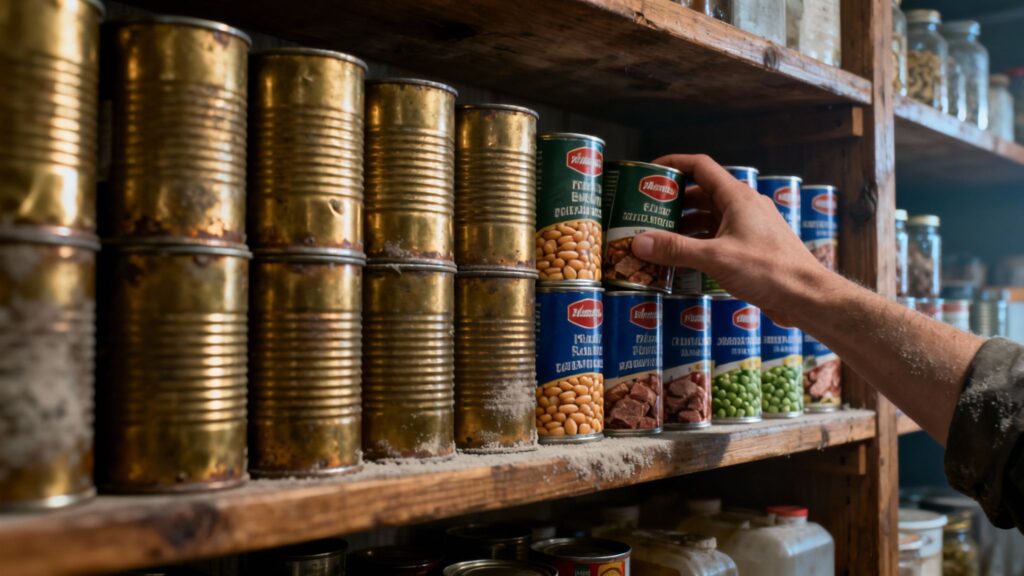
If you’re stocking a pantry for the long haul, you need to know what’s actually going to last. The single most important factor is the difference between low-acid and high-acid foods. Items like canned meats, beans, and certain vegetables are low-acid, and they are the undisputed champions of longevity, capable of staying safe to eat for decades. High-acid foods, like tomatoes and fruits, have a shorter lifespan. The acid eventually starts a slow-motion battle with the can itself, which can affect the taste and texture over many years.
But here’s the key takeaway: that ‘best by’ date printed on the can is all about peak quality, not a safety cliff. Most canned goods are perfectly safe to eat long after that date has come and gone.

Uncovering the Secrets of Canned Food Longevity
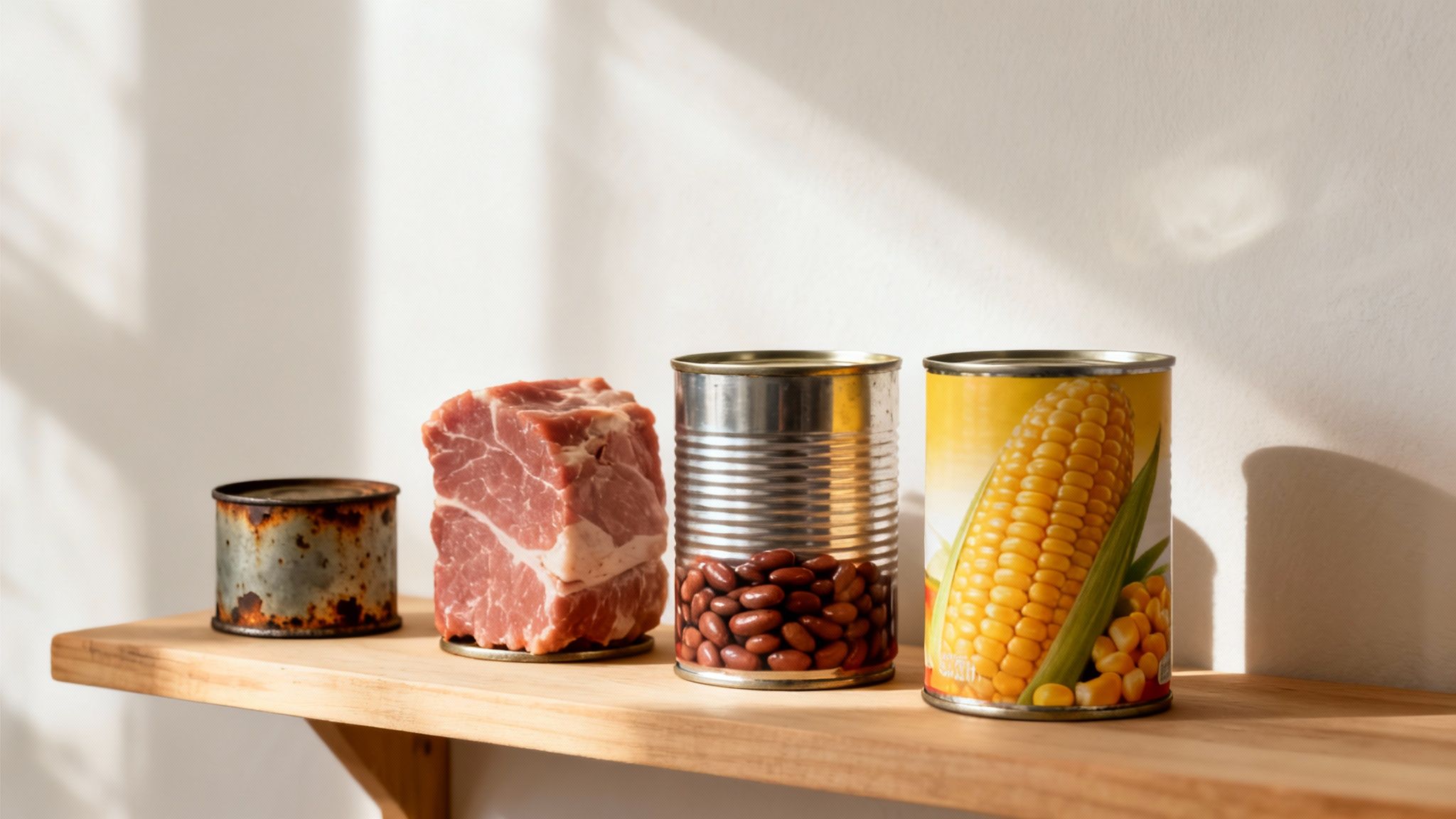
When you’re building a serious food stockpile, understanding why some foods last longer than others is a game-changer. It all comes down to the canning process itself. Low-acid foods—we’re talking meats, poultry, fish, beans, corn, and peas—are processed under intense heat and pressure. This creates a completely sterile, oxygen-free environment inside the can where the bacteria that cause spoilage simply can’t survive. It’s a tiny, perfect time capsule for food.
This isn’t just a textbook theory; it’s been proven in some pretty incredible ways. Picture this: a steamboat sinks in the Missouri River back in 1865. Over a century later, in 1968, researchers pull thousands of canned goods from the wreck. After 101 years underwater, they tested the corn, beets, and peas. The verdict? Still microbiologically safe to eat. This amazing discovery is all the proof you need that under the right conditions, properly canned food is in it for the long haul.
The Gold Standard for Your Pantry
That real-world evidence is why seasoned preppers lean so heavily on simple, low-acid staples. When you’re stocking up, think simple. Foods with minimal ingredients and no complex sauces tend to hold up the best over time. It’s why you’ll see brands like Keystone Meats get so much respect in the community—they pack high-quality meat with just a little salt, and that’s it. No fuss, just reliable, long-lasting protein.
The core principle for a resilient pantry is simple: prioritize calorie-dense, low-acid foods that require no special preparation. These items form the reliable foundation of any long-term food supply, ensuring you have sustenance when you need it most.
By focusing on these time-tested staples, you’re not just stocking shelves; you’re building a truly durable and reliable food supply. While these items are the bedrock, a well-rounded stockpile includes variety. To broaden your options, you can explore our guide on other foods that last 25 years and diversify your pantry even further.
Canned Food Longevity Quick Guide
To make it even clearer, here’s a quick-reference table that breaks down what you can realistically expect from different types of canned goods when stored properly.
| Food Category | Typical ‘Best By’ Date | Realistic Safe Shelf Life (Ideal Storage) |
|---|---|---|
| Low-Acid Foods | ||
| Meats (beef, chicken, tuna) | 2–5 years | 10–50+ years |
| Beans & Lentils | 2–5 years | 10–30+ years |
| Low-Acid Vegetables (corn, peas, carrots) | 2–5 years | 8–20+ years |
| High-Acid Foods | ||
| Tomatoes & Tomato Sauce | 12–18 months | 3–5 years |
| Fruits (peaches, pears, pineapple) | 12–18 months | 3–5 years |
| Pickled Vegetables & Sauerkraut | 18–24 months | 4–6 years |
| Other Canned Goods | ||
| Canned Soups & Stews | 2–5 years | 5–10 years |
| Canned Milk (evaporated, condensed) | 12 months | 2–4 years |
As you can see, the difference is stark. While you can certainly stock high-acid foods, your low-acid items are the true long-term survivors you can count on for decades to come.
The Science of a Perfectly Preserved Meal
Ever wonder how a simple can of beans can stay perfectly edible for longer than most modern appliances even last? It’s not magic. It’s a brilliant, time-tested scientific process that turns a thin metal can into a miniature fortress, defending its contents from the enemies of food preservation.
This fortress is built using two critical steps: intense heat and a powerful vacuum seal.
First, the food is heated to a specific temperature high enough to kill off any harmful microorganisms—we’re talking bacteria, yeasts, and molds. This sterilization process is the first, and most important, line of defense.
Right after that, the can is sealed in an oxygen-free environment. Removing oxygen slams the brakes on the chemical reactions that cause food to degrade and spoil. It’s like putting the food into a state of suspended animation.
The Role of Acidity in Longevity
But not all canned foods are created equal, and the biggest difference comes down to their pH level, or acidity. This single factor determines how a food has to be processed and, ultimately, how long it will last on your shelf.
- Low-Acid Foods (pH above 4.6): This is your survival powerhouse category—meats, poultry, beans, corn, and peas. Because a low-acid environment is less hostile to certain stubborn bacteria, these foods require high-heat pressure canning. This intense process nukes every last trace of potential spoilage, which is exactly why they are the longest-lasting canned goods you can buy.
- High-Acid Foods (pH at or below 4.6): Think tomatoes, fruits, and pickles. Their natural acidity already does a lot of the heavy lifting by inhibiting bacterial growth. Because of this, they can be safely preserved using a much simpler boiling water bath method.
This scientific distinction is the absolute bedrock of building a reliable, off-grid food strategy. Because they are so thoroughly sterilized and sealed, low-acid canned goods require zero electricity or refrigeration to remain safe for decades. They are a self-contained, ready-to-eat solution for any emergency.
The hermetic seal and sterile environment inside a can are what make it a pillar of food security. Unlike other preservation methods, commercial canning provides a robust barrier against contamination that can last for generations with proper storage.
Understanding this science also helps clarify why you might choose one preservation method over another. To see how canning stacks up against other popular long-term storage methods, check out our detailed comparison of canned vs. freeze-dried food to decide what’s best for your pantry.
Ultimately, the sheer simplicity and battle-tested reliability of canning make it a cornerstone of preparedness.
Your Essential Canned Goods Shopping List
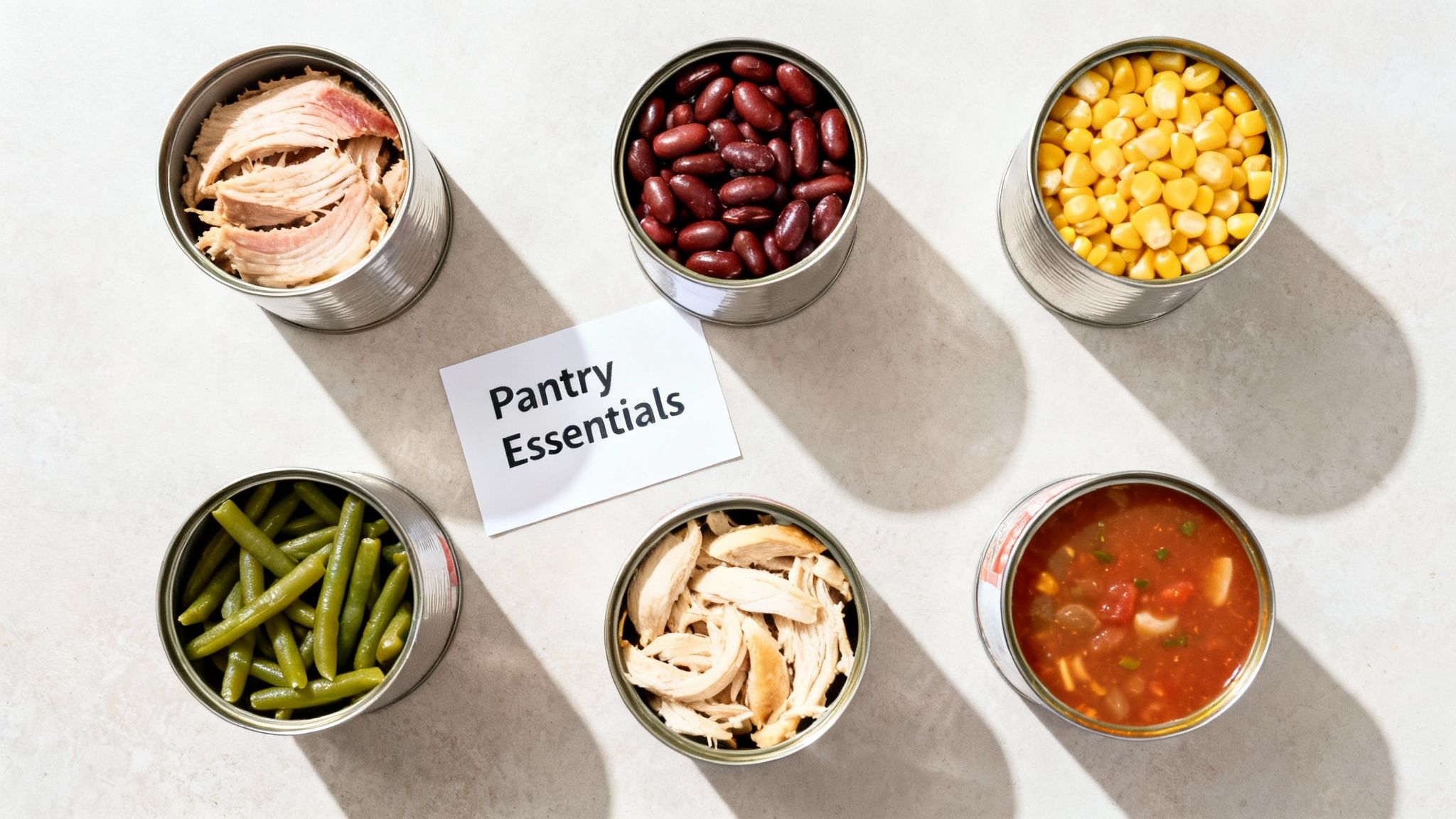
Putting together a resilient food supply isn’t about grabbing random cans off the shelf. It’s about building a strategic system—a collection of foods chosen for their nutrition, versatility, and sheer staying power. This list is your blueprint.
The real goal here is prioritizing things that are dense in calories and incredibly practical. When things go sideways, you need food that provides real energy and can be eaten with little or no prep.
Proteins: The Foundation of Your Pantry
Protein is the absolute cornerstone of a survival diet. It’s what keeps your energy up and maintains muscle. Canned meats, being low-acid foods, are powerhouses that can last for decades if stored properly.
- Canned Beef and Chicken: These are the workhorses of a prepper’s pantry. They can be tossed into soups, eaten cold right out of the can, or mixed with other staples to create a surprisingly hearty meal.
- Canned Tuna and Salmon: Whether packed in oil or water, these offer vital omega-3 fatty acids along with a solid protein punch. They’re perfect for no-cook meals—just mix with a little mayo you’ve stored or even some relish.
Keep an eye out for bulk packs of canned meats and veggies; they’re often a more efficient way to stock up.
Vegetables and Fruits: For Nutrients and Morale
A diet of just meat and beans would be bleak and nutritionally bankrupt. Fruits and vegetables add the vitamins, minerals, and fiber your body needs, plus a much-needed boost to morale.
- Canned Corn and Green Beans: These are familiar, reliable, and last a long time. They’re simple comfort food you can eat straight from the can or heat up as a quick side.
- Canned Carrots: Naturally sweet and loaded with Vitamin A, canned carrots bring both nutrients and a bit of flavor to what could otherwise be a bland meal.
- Canned Fruits: Peaches, pears, and fruit cocktail are a huge win for morale. Look for ones packed in juice or water instead of heavy syrup to get a quick hit of energy without the sugar crash.
A fantastic no-cook meal is as simple as this: drain a can of chicken, a can of corn, and a can of beans. Mix them all together. You get protein, carbs, and fiber without needing a single spark of fire.
Legumes and Soups: The Fillers and Meal Makers
Beans and hearty soups are what turn a few simple ingredients into a genuinely satisfying meal. They add bulk, calories, and flavor, stretching your core supplies further than you’d think.
- Canned Beans: Black, pinto, kidney, and garbanzo beans are all fantastic sources of fiber and protein. They’re incredibly filling and remain one of the most cost-effective preps you can buy.
- Hearty Soups and Stews: Go for the chunky soups that already have meat and vegetables in them. They are literally a complete meal in a can. All you need to do is heat and eat, which is a huge advantage in a stressful situation.
Building a pantry with this kind of variety ensures you won’t be stuck eating the same thing day after day. For an even deeper dive into building a truly resilient pantry, check out our comprehensive list of non-perishable food items to expand your shopping list. Consider this your starting point for achieving genuine food security.
Storing Canned Goods to Maximize Their Lifespan
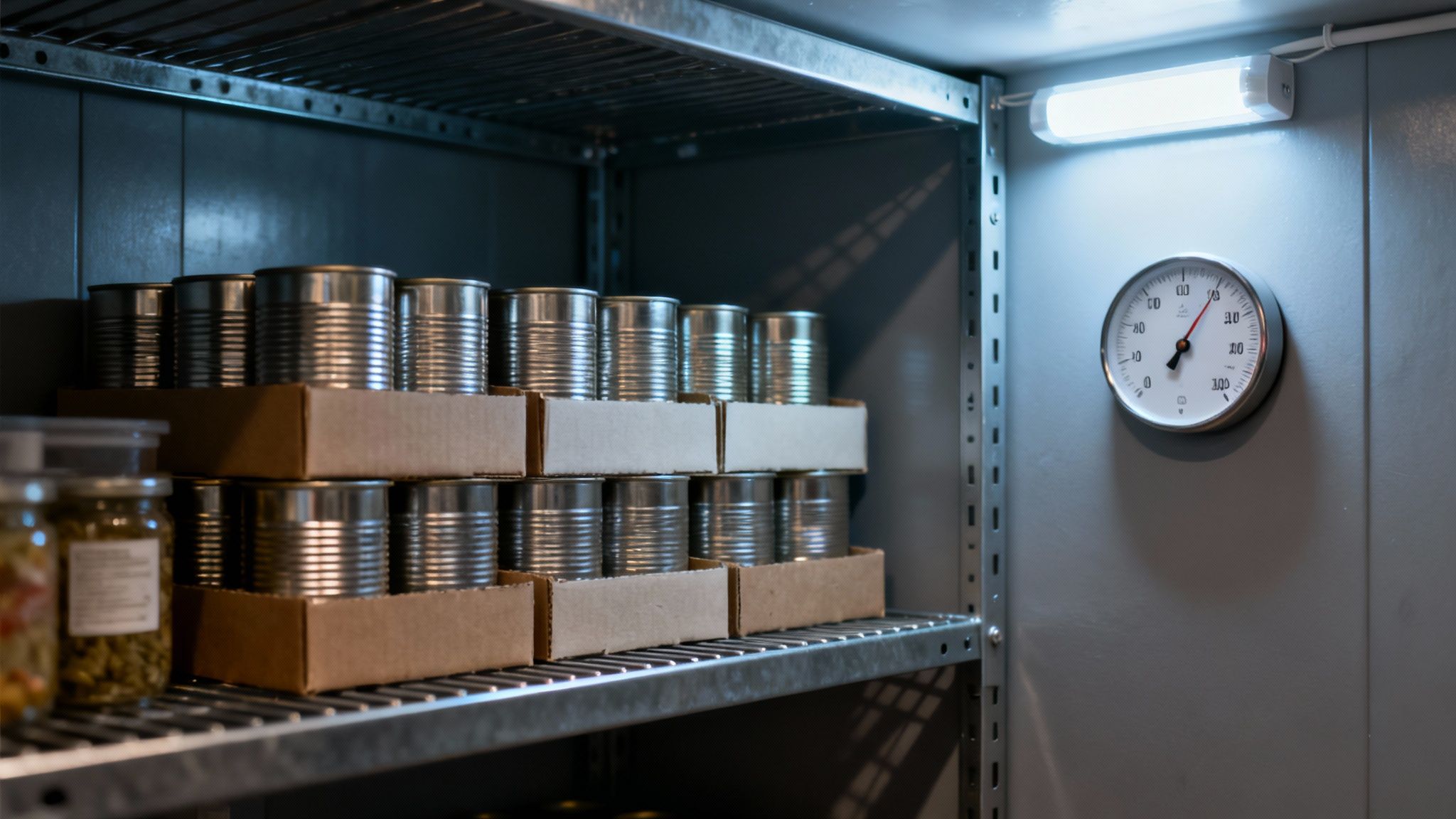
Simply buying the longest-lasting canned food you can find is only half the battle. The real secret? Where you store it is just as critical as what you buy. A can of beef that could easily last for decades can be ruined in just a few years by a poor storage environment. Think of your pantry not just as a shelf, but as a vault protecting your family’s food security.
To build that vault, you need to defend your stockpile against four primary enemies. Protecting your investment from these threats is the key to unlocking the true, decades-long potential of every can you own.
Defeating the Four Enemies of Food Storage
Your mission is to create an environment that neutralizes these four destructive forces. Each one wages its own quiet war against the integrity of your cans and the quality of the food inside.
- Heat: This is your most dangerous enemy. High temperatures, especially anything above 75°F (24°C), massively accelerate the chemical reactions happening inside the can. This process rapidly degrades the food’s nutritional value, color, and texture. A hot garage or a stuffy attic is the absolute worst place to keep your food supply.
- Light: Direct sunlight is a silent killer. Its UV rays don’t just fade the labels; over time, they break down vital nutrients. This is especially true for any food you’ve stored in glass jars.
- Moisture: Humidity is the best friend of rust, and rust is the mortal enemy of a steel can. Once rust eats through the metal—even with a microscopic hole—it compromises the hermetic seal and lets bacteria march right in. A damp basement can wipe out your entire investment.
- Damage: Dented, dropped, or crushed cans are a huge gamble. While a small dent on the side of a can is usually fine, any damage to the top or bottom seams can break that all-important airtight seal, rendering the food unsafe to eat.
The ideal storage location is timeless and simple: cool, dark, and dry. A stable temperature is your greatest ally in preserving food quality for the long haul.
Implementing a Bulletproof Rotation System
Even with perfect storage conditions, you need a smart system to manage your inventory. The gold standard for any prepper is the First-In, First-Out (FIFO) method. It’s a simple principle that ensures you’re always using your oldest cans first, preventing any single item from getting lost in the back of the shelf for too long.
You can implement FIFO with nothing more than a marker and some smart organization, always placing new cans at the back. For a more automated approach, many preppers turn to dedicated can-rotation systems. A product like the Can-O-Rator is designed for exactly this, automatically dispensing the oldest can from the bottom as you load new ones at the top. It makes rotation completely effortless.
For more in-depth strategies, our complete guide on how to store food long term offers additional techniques to protect your investment.
How to Safely Inspect Every Can

Your food stockpile is a direct investment in your family’s future, but that investment becomes worthless—or worse, dangerous—if the food isn’t safe. Knowing how to properly inspect every can is a non-negotiable survival skill, especially when you’re dealing with cans that are long past their printed ‘best by’ date.
Thankfully, your best tools are the ones you always have with you: your eyes, hands, and nose. These are your first line of defense against the red flags that signal potential danger. Before you even think about reaching for a can opener like the classic P-51, a thorough inspection can immediately tell you if a can is a no-go, preventing a potentially fatal mistake.
The Visual Inspection Checklist
Start with a systematic check of the can’s exterior. Think of yourself as a food safety detective looking for specific clues. Pay close attention to the seams and rims, as these are the weakest points and most likely places for a seal to fail.
Here are the critical signs to look for:
- Bulging Lids: If the top or bottom of the can is swollen or rounded outward, get rid of it. No exceptions. This is the classic sign of gas buildup from bacterial growth, which could include the deadly Clostridium botulinum.
- Deep or Sharp Dents: A minor, shallow dent on the body of the can is usually fine. However, any dent located on the seams—the top, bottom, or side seams—is a major red flag. A dent here can easily create microscopic breaks in the seal, letting contaminants in.
- Significant Rust: Light surface rust that wipes away easily is often just cosmetic. But if you see deep, flaking, or pitted rust that looks like it’s eating away at the can’s integrity, that’s a clear danger sign.
- Leaks or Seepage: Look for any sign of moisture, sticky residue, or dried food around the seams. This means the seal has failed. The food inside is contaminated and must be thrown out.
When you’re staring at a questionable can, it’s easy to second-guess yourself, especially when food is scarce. But this is one area where you can’t afford to take chances.
The golden rule of food storage is simple and absolute: When in doubt, throw it out. No single meal is worth the catastrophic risk of botulism poisoning.
The Sensory Check Upon Opening
Okay, so a can has passed the visual inspection. Your job isn’t done yet. The next phase of your investigation begins the moment you puncture the lid.
As you open the can, listen. A soft hiss of air rushing into the can is perfectly normal—it means the vacuum seal was intact. What you don’t want to hear is a forceful spray or an aggressive hiss of air rushing out. That signals internal pressure from spoilage.
Once it’s open, give the contents a quick look. Are there any unusual colors, cloudy liquids that should be clear, or visible mold on the surface? Finally, give it a cautious sniff. Any foul, rotten, sour, or just plain “off” smell is your final warning. Good canned food should smell exactly like what it is.
To help you make a quick decision, here’s a simple go/no-go checklist.
Canned Food Safety Checklist: Go or No-Go
| Inspection Point | Safe Sign (Go) | Danger Sign (No-Go) |
|---|---|---|
| Lid/End | Flat or slightly concave (curved inward). | Bulging or swollen ends (top or bottom). |
| Dents | Minor, shallow dents on the can’s body. | Deep, sharp dents, or any dent on a seam. |
| Rust | Light surface rust that easily wipes off. | Deep, pitted, or flaking rust. |
| Seal | Clean and dry seams. | Any sign of leakage, stickiness, or dried food. |
| Sound | A faint hiss of air entering the can upon opening. | A loud hiss, spurt, or spray of liquid on opening. |
| Appearance | Normal color and texture for the food. | Mold, strange colors, or cloudy/foamy liquid. |
| Smell | Smells normal and fresh for the product. | Any foul, sour, rancid, or “off” odor. |
This quick table can serve as your final check before deciding whether a can is safe to eat.
Mastering this inspection process is every bit as important as choosing the right items for your stockpile in the first place. Protecting your supplies is an ongoing job. To learn more, be sure to avoid these common food storage mistakes that could put your entire pantry at risk.
Frequently Asked Questions About Canned Food
Even the most seasoned preppers have questions when it comes to managing their food stores. Let’s tackle some of the most common concerns about canned food longevity, clearing up any confusion and reinforcing the basics of a safe, reliable pantry.
Does Freezing Canned Food Ruin It?
Freezing won’t spoil the food inside a can, but it can absolutely wreck the can itself. When the water in the food freezes, it expands, putting a massive amount of pressure on the can’s seams. This can break the hermetic seal, even if you can’t see the damage.
Once the can thaws, that tiny, invisible opening is a welcome mat for bacteria.
If you find a can has frozen solid by accident, don’t just stick it back on the shelf. The safest move is to let it thaw slowly in the fridge. Once it’s thawed, give it a thorough, skeptical inspection. Look for any new dents, bulges, or leaks around the seams. If it looks absolutely perfect, the food is probably safe, but you should eat it right away. Freezing messes with the texture, so it won’t be at its best.
What’s the Real Difference Between “Best By,” “Use By,” and “Sell By” Dates?
Here’s the thing you need to remember: these dates are almost always about quality, not safety. Think of them as the manufacturer’s suggestion for when the food will taste its best. They are not hard-and-fast expiration dates.
- Best By: This is what you’ll see most often. It’s the date the manufacturer guarantees peak flavor and texture.
- Use By: This is the last date the manufacturer recommends for that peak quality. Again, it’s not a safety cutoff.
- Sell By: This date is for the store, helping them rotate their stock. It has nothing to do with you, the consumer.
For properly stored canned goods, especially the low-acid ones we’ve been talking about, these dates are largely meaningless for safety. The food can be perfectly safe to eat for years, even decades, past what’s printed on the label. Over time, you’ll see a slow decline in some nutrients (like Vitamin C) and the texture might soften, but the calories and core macronutrients that you need to survive will still be there.
Are Dented Cans Safe to Eat?
This is one of the most important judgment calls you’ll make with your food stores. Whether a dented can is safe comes down to two things: where the dent is and how bad it is.
A small, shallow dent on the side of the can—the smooth body—is usually fine. But you must immediately throw out any can with a sharp, deep dent, or any dent on the top, bottom, or side seams. Those seams are the can’s weak points. A dent there can easily compromise the seal, creating a microscopic pathway for deadly bacteria like Clostridium botulinum.
The prepper’s rule is simple and non-negotiable: When in doubt, throw it out. No single meal is worth the life-threatening risk of botulism poisoning.
How Much Nutritional Value Is Lost Over Time?
While canned food is a modern marvel of preservation, it isn’t completely frozen in time. Some nutrients are more delicate than others. You’ll see a gradual loss of water-soluble vitamins, especially Vitamin C and B vitamins, over the years. After two or three years, the decline can be noticeable.
But the good news is that the macronutrients—the protein, carbohydrates, and fats—remain incredibly stable for the entire life of the can. Minerals like iron and calcium are rock-solid, too. In a survival scenario, this means the most vital part of the food, the raw caloric energy your body needs, will be 100% intact.
This is where a good rotation system becomes so important. By practicing the First-In, First-Out method, you ensure you’re always eating your oldest stock first, getting to it while it still holds onto more of its vitamin content.