
Long before refrigerators became a fixture in every kitchen, knowing how to preserve meat was a non-negotiable survival skill. The old ways were all about stopping spoilage in its tracks by removing moisture, controlling temperature, or cutting off the oxygen supply. These time-tested methods like salting, smoking, drying, and pressure canning are just as effective today for anyone serious about emergency preparedness or living off-grid.
Why These Ancient Skills Still Matter
In a world running on a fragile electrical grid, the ability to preserve food is far more than a rustic hobby—it’s a cornerstone of self-reliance. When you know how to preserve meat without a freezer, you take control of your food supply. It doesn’t matter if you’re facing a week-long power outage, processing a large hunt, or just stocking your pantry with shelf-stable protein.
This guide is all about revisiting those essential techniques, breaking them down into practical, safe steps anyone can follow.
The goal of every single one of these methods is to make life impossible for the microorganisms that cause meat to spoil. Bacteria, yeast, and mold need a friendly environment to multiply, and our job is to wreck that environment. For instance, salting and drying literally pull the water out of the meat’s cells through osmosis, leaving it too dry for bacteria to survive. Smoking does double duty by drying the meat and coating it with natural antimicrobial compounds.
Core Principles of Meat Preservation
If you can grasp the “why” behind each technique, the “how” becomes much easier to master. These aren’t complicated scientific principles; they’re logical, repeatable steps.
- Moisture Removal: Bacteria can’t multiply without water. Methods like curing and making jerky are all about dehydration.
- Temperature Control: We may be avoiding refrigeration, but high heat is our friend. Hot smoking and pressure canning use heat to obliterate pathogens.
- Oxygen Deprivation: Sealing meat in fat (like in confit) or a properly canned jar creates an anaerobic environment where spoilage organisms simply can’t breathe.
- Chemical Barriers: This sounds intense, but it’s really just about using things like salt, smoke, and the natural acids from fermentation to create a hostile environment that stops bacteria in their tracks.
Before we dive into the specific methods, let’s get a bird’s-eye view of how they stack up. This table gives you a quick look at the core principle, expected shelf life, and what you’ll need to get started for each technique.
Comparing Meat Preservation Methods
| Method | Core Principle | Estimated Shelf Life (Cool, Dry Conditions) | Key Equipment and Supplies |
|---|---|---|---|
| Salting/Curing | Moisture removal via osmosis | 6-12+ months | Curing salts (nitrites/nitrates), non-iodized salt, non-reactive container |
| Drying/Jerky | Air-drying or low-heat dehydration | 1-2 months (longer if vacuum sealed) | Dehydrator or oven, sharp knife, marinades/spices |
| Smoking | Dehydration plus antimicrobial compounds from smoke | Weeks to months, depending on the method | Smoker (hot or cold), quality hardwood, curing salts for cold smoking |
| Confit | Cooking and storing in fat to block oxygen | Up to 6 months | Rendered fat (duck, lard), oven-safe pot, sterile jars |
| Pressure Canning | High-heat sterilization inside a sealed jar | 1-5 years | Pressure canner, glass canning jars, lids, and rings |
Each of these methods has its place, and the best one for you will depend on your situation, the type of meat you have, and the resources available.
Mastering these techniques isn’t just about learning a new skill; it’s about reclaiming a piece of ancestral knowledge that has kept people fed for centuries.
These skills are a critical part of any serious approach to long-term food storage, enabling you to build a resilient food supply that doesn’t depend on a functioning power grid. Whether you’re preparing for a short-term crisis or a long-term change in lifestyle, knowing how to handle meat preservation is an invaluable tool in your arsenal.
Mastering Salt Curing for Flavor and Preservation
Salt is the original preservation powerhouse. Long before we had refrigerators, this simple mineral was shaping civilizations with its incredible ability to keep meat from spoiling. The science behind it is a process called osmosis—salt draws moisture out of muscle cells, creating an environment so dry that bacteria simply can’t survive.
This isn’t just some historical footnote. People have been salting meat since around 3000 BC in Mesopotamia. By 200 BC, it was standard practice across the Roman Empire. Today, those same ancient principles are at the heart of massive global markets, like Italy’s prosciutto industry, where over 10 million hams are cured each year. You can learn more about the fascinating backstory from this history of preserving meats.
When you get down to it, there are two main ways to use salt’s power: dry curing and wet curing (or brining). Knowing how and when to use each one will give you a versatile toolkit for just about any cut of meat.
Dry Curing and Brining Explained
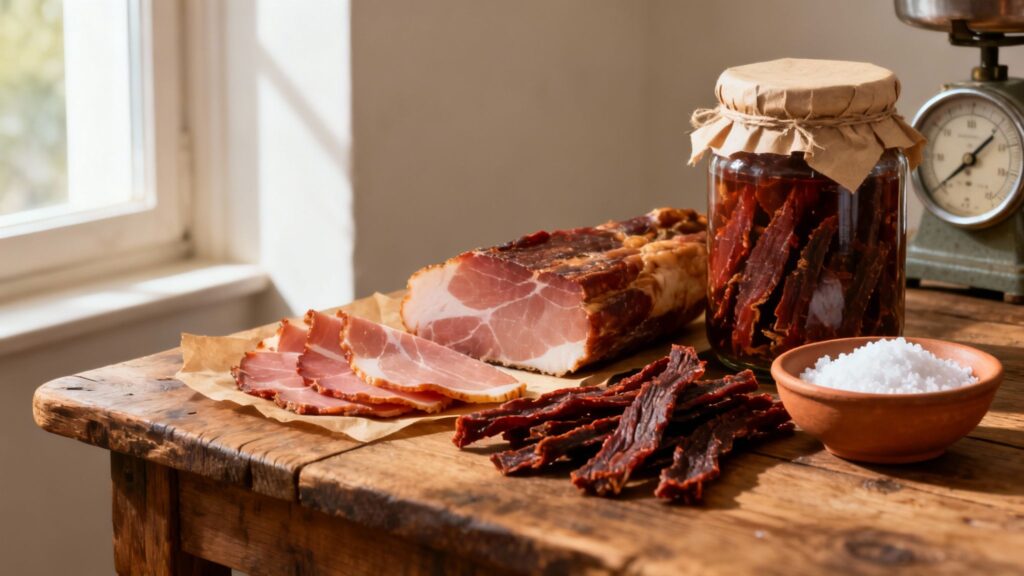
Dry curing is as straightforward as it gets. You’re literally packing a cut of meat in salt, maybe with some other seasonings, and letting it do its work over days or even weeks. This approach is perfect for dense, fatty cuts like a pork belly destined to become bacon or a whole ham.
Wet curing, or brining, is the opposite—you submerge the meat in a saltwater solution. The meat soaks up both the salt and water, seasoning it from the inside out while keeping it nice and moist. It’s the ideal method for leaner cuts that tend to dry out, like a chicken or pork loin.
No matter which method you choose, using the right salt is non-negotiable. You need pure sodium chloride, without any of the additives found in common table salt.
For consistent and safe results, always reach for non-iodized salt. Something like Morton Canning & Pickling Salt is perfect because it dissolves clean and has no anti-caking agents that can make your brine cloudy or leave a weird metallic taste. Stay far away from iodized table salt; the iodine will mess with the flavor and can even discolor your meat.
The Critical Role of Curing Salts
Now, if you’re curing meat for a long time or making something that won’t be cooked to a high temperature (like salami), regular salt alone isn’t enough to guarantee safety. This is where curing salts, often called “pink salt,” are absolutely essential. And no, this isn’t the fancy Himalayan stuff—it’s dyed pink specifically to make sure no one mistakes it for table salt.
These salts contain a very precise amount of sodium nitrite, which is your number one defense against the deadly bacterium Clostridium botulinum, the nasty bug that causes botulism. One of the most common products you’ll see is Prague Powder #1, which is used for shorter cures that will be cooked later, like bacon or corned beef. You can find this product and other curing supplies on Amazon.
For long-term, dry-aged projects like prosciutto or salami that will hang for months, you’ll need Prague Powder #2. It contains sodium nitrate in addition to nitrite. The nitrate acts like a time-release protector, slowly converting to nitrite over the long haul to keep the meat safe.
Key Safety Reminders
- Measure Precisely: Don’t eyeball this. Use an accurate digital scale. Being off by just a few grams can be the difference between a delicious, safe product and a trip to the hospital.
- Follow a Trusted Recipe: This isn’t the time for improvisation. Stick to established recipes that give you exact percentages of salt and cure based on the weight of your meat.
- Keep It Cool: The initial curing phase, before the salt has fully penetrated, must happen in a cold environment. You need to keep the meat under 40°F, so a refrigerator or a properly cold root cellar is a must.
Curing Pork Belly: A Real-World Example
Let’s put this into practice and walk through curing a five-pound pork belly to make bacon. We’ll use a method called equilibrium (EQ) curing, which calculates the cure based on the exact weight of the meat. It’s the best way to get a perfect, consistent result every single time.
First, you need the weight of your pork belly. Let’s say it’s 5 lbs (2268g). A standard, trusted recipe would call for:
- 2.5% non-iodized salt (56.7g)
- 1% sugar (22.7g) to help balance the saltiness
- 0.25% Prague Powder #1 (5.7g) for botulism prevention
Combine these ingredients and rub the mixture evenly over every inch of the pork belly. Get it into all the nooks and crannies. Then, seal it up in a zip-top bag or, even better, a vacuum-sealed bag. A reliable system like the FoodSaver Vacuum Sealer Machine is a great tool for this.
Let it cure in the fridge for 7-10 days. You’ll notice liquid pooling in the bag as the salt works its magic. Once the belly feels firm to the touch all the way through, it’s cured. Give it a quick rinse under cold water, pat it dry, and let it air-dry in the fridge for another day. Now it’s ready for the final step: smoking.
Drying And Smoking: The Old-World Ways to Preserve Meat
Drying meat is one of the oldest tricks in the book for a reason—it works. This is the simple science behind jerky and biltong: lightweight, protein-dense foods that can last for months without a hint of refrigeration. Throwing some smoke into the mix doesn’t just add that incredible campfire flavor; it brings another layer of antimicrobial muscle to the party.
The whole point is to remove enough moisture from the meat to make it a terrible place for bacteria to live. We’re talking about a practice that goes back as far as 12,000 BC, when our ancestors used the sun and wind to their advantage. Fast forward to 19th-century America, and the smokehouse was a non-negotiable part of any homestead, allowing families to preserve an entire animal long before the first fridge was ever plugged in.
Getting The Meat Ready For Drying
The fate of your jerky is sealed long before it ever sees a dehydrator or smoker. It all starts with the cut of meat and how you handle it. Fat is your number one enemy here. It doesn’t dry properly and eventually turns rancid, which will ruin your entire batch.
You want lean cuts, plain and simple. For beef, go for eye of round, top round, or flank steak. If you’re working with venison, any big muscle from the hindquarters is perfect. Before you even think about slicing, get in there and trim off every visible speck of fat and sinew.
Here’s a pro tip: pop the meat in the freezer for about an hour before slicing. This firms it up beautifully, making it much easier to cut into thin, even strips around 1/4-inch thick. The direction you slice in makes a big difference, too.
- With the grain: This gives you that classic, chewy jerky you really have to work at.
- Against the grain: Slicing this way breaks up the muscle fibers, resulting in a more tender, brittle piece of jerky.
Once it’s sliced, don’t skip the marinade. Letting the strips soak for 8 to 24 hours infuses them with flavor. More importantly, if your marinade includes salt and an acid like vinegar, it’s already starting the preservation process by pulling out moisture and fighting off bacteria.
Cold Smoke vs. Hot Smoke: Know The Difference
It’s absolutely critical to understand that not all smoking is created equal. One method preserves, the other one just cooks.
Cold Smoking: This is the real deal for preservation. The idea is to slowly dehydrate the meat in a cool, smoky environment. You have to keep the temperature low—ideally below 90°F (32°C).
Hot Smoking: This is just barbecue, really. Temperatures are much higher, usually over 200°F (93°C), which fully cooks the meat. It’s delicious, but it won’t be shelf-stable on its own.
Cold smoking works its magic by coating the meat with natural antimicrobial compounds from the wood smoke. These phenols act as a shield against mold and bacteria. It also helps form what’s called a “pellicle”—a dry, tacky skin on the outside of the meat that smoke sticks to, creating a protective barrier. You can build a basic cold smoker with a firebox connected by a long pipe to a chamber, like an old Weber Smokey Mountain Cooker. That pipe is key, as it gives the smoke time to cool down before it hits the meat.
The Perfect Dryness Test
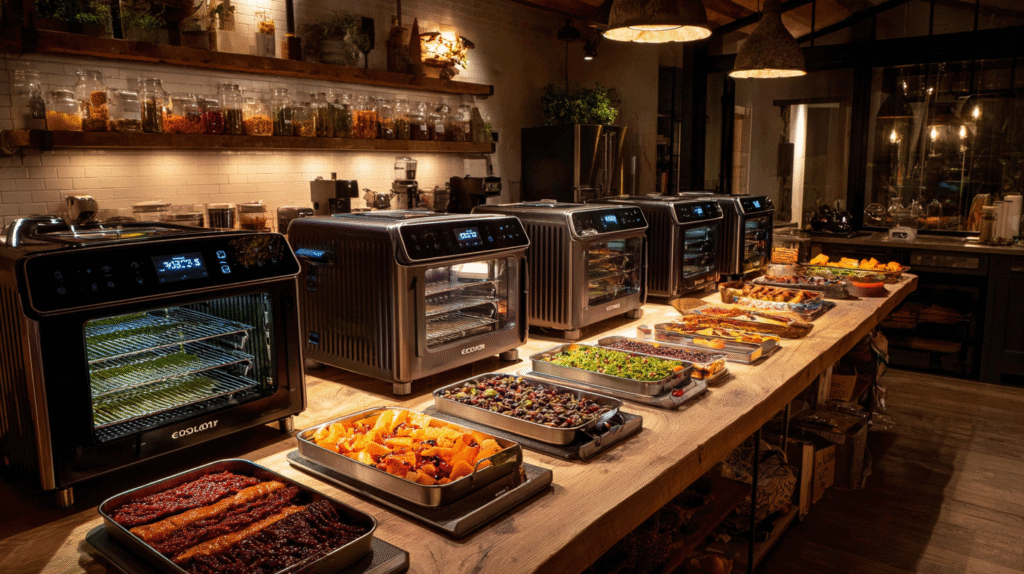
Whether you’re using a fancy food dehydrator, your oven on its lowest setting, or a homemade smoker, the end goal is the same. You need to hit that sweet spot of dryness that tells you the meat is properly preserved. For beginners, a good dehydrator is the easiest way to get consistent, safe results with its steady, low heat and constant airflow. If you’re in the market for one, check out our guide on finding the best food dehydrator for your needs.
So how do you know when it’s done? It’s all about the texture. Your jerky should be leathery and tough. When you bend a piece, it should crack but not snap clean in two.
If it breaks easily, it’s over-dried and will be brittle. If it just bends without any cracking, there’s still too much moisture left, and it needs more time.
This simple bend test is your best indicator of shelf stability. Once your jerky passes the test, let it cool completely to room temperature before packing it into an airtight container or vacuum-sealed bag. Stored in a cool, dark place, your homemade jerky or biltong will be good for months—a perfect source of protein for any emergency.
Exploring Fermentation and Confit Preservation
Once you’ve got the basics of salting and drying down, you can venture into some truly amazing preservation techniques. Fermentation and confit are where survival meets culinary art. These methods are more involved, sure, but the payoff is incredible flavor and serious shelf stability.
Fermentation is the old-world magic behind salami and cured sausages. It sounds complicated, but the principle is simple: you create an environment where good bacteria outcompete the bad ones, making the meat safe to eat and delicious.
This isn’t a new idea. The Romans were fermenting meats in sweet wine, and European monks perfected sausage recipes that could last for months. These ancient skills built a foundation for what is now a $50 billion global market. You can dive deeper into the history and science of fermented meats on academic.oup.com.
Fermenting Meats Safely
Let’s be clear: this isn’t a process you can wing. Safe fermentation is all about control. You need a precise balance of curing salts (Prague Powder #2 is a common one), a starter culture of beneficial bacteria, and the right temperature and humidity.
The starter culture is your ace in the hole. When you mix it into your ground meat, it goes to work, eating sugars and producing lactic acid. This acid drops the meat’s pH, creating an environment where nasty pathogens like E. coli and Salmonella simply can’t survive.
You’ll also need a dedicated space to hang and age your sausages, often called a curing chamber. It’s nothing fancy, just a place where you can keep the temperature steady at around 50-60°F with 70-80% humidity. This lets the sausages dry out slowly over weeks or months, concentrating the flavor without spoiling.
The Classic Technique of Confit
Confit is an elegant French method that uses fat to both cook and preserve meat. The name itself comes from the French word confire, which means “to preserve.” The process is beautiful in its simplicity: meat—most famously duck or pork—is cooked slowly while submerged in its own rendered fat.
After cooking, you pack the meat into a sterile jar and cover it completely with the clean, rendered fat. As it cools, the fat hardens and forms a perfect airtight seal. This barrier keeps out oxygen and microbes, preserving the meat for months in a cool, dark place like a root cellar.
The beauty of confit is its dual function. It’s a preservation method that simultaneously produces some of the most tender, flavorful meat imaginable. The low-and-slow cooking breaks down tough connective tissues, while the fat seal locks in all the moisture and flavor.
Making a Basic Duck Confit
Ready to try it? Duck confit is the perfect gateway into this technique. Here’s a stripped-down guide to get you started.
- Cure the Meat First: Rub duck legs generously with coarse salt, cracked pepper, and herbs like thyme and bay leaves. Let them sit in a cool spot for about 24 hours. This draws out moisture and seasons the meat deep down.
- Rinse and Dry Thoroughly: This step is critical. Rinse every bit of salt off the duck legs, then pat them completely dry. Any water left behind is an enemy to long-term preservation.
- Cook Low and Slow: Place the duck legs in a heavy pot and cover them with rendered duck fat or even lard. Cook at a very low temperature—around 200°F—for a few hours, until the meat is fork-tender.
- Pack and Seal: Gently move the cooked duck legs into a sterilized jar. Strain the fat through cheesecloth to get it crystal clear, then pour it over the duck. Make sure the meat is submerged by at least an inch of fat.
Once it cools, this jar can be stored in a cellar or a cool pantry for up to six months. And don’t throw that fat away! Rendered fat is liquid gold in the kitchen, and you can learn more about the best oils for survival in our detailed guide.
Pressure Canning for Ultimate Shelf Stability
If you’re looking for ready-to-eat meat that can sit on a shelf for years, nothing beats pressure canning. This isn’t just another technique; it’s the gold standard for preserving low-acid foods like meat, and it’s worlds apart from the water bath canning you might use for pickles or jams. In fact, using a water bath for meat is downright dangerous.
The science is simple. Meat is a low-acid food, which is the perfect environment for Clostridium botulinum spores to thrive. These nasty spores laugh at boiling water temperatures (212°F). The only way to kill them dead in a home kitchen is with a pressure canner, which traps steam to reach temperatures between 240°F and 250°F. This intense heat is what makes your canned meat safe to eat years down the road.
Choosing Between Raw Pack and Hot Pack
Before you start filling jars, you’ve got a choice to make: raw pack or hot pack. Your decision really comes down to the type of meat you’re working with and the texture you’re aiming for in the final product.
- Raw Pack Method: Just like it sounds, you pack chunks or ground meat raw into clean jars. Then you’ll top it off with boiling broth or water, leaving the proper headspace. It’s faster on the front end, but the meat tends to shrink more during processing.
- Hot Pack Method: With this method, you lightly cook the meat first—think browning ground beef or searing stew cubes. This pre-cooking pushes air out of the meat tissue, which means less shrinkage in the jar and often a better final color and texture.
I almost always go with the hot pack method for fattier meats like pork or ground beef. Browning the meat first lets you drain off all that extra grease. Too much fat in the jar can get between the rim and the lid, preventing a solid seal—and a failed seal means spoiled food.
The Essential Steps for Safe Canning
Let me be clear: following a tested recipe isn’t a suggestion, it’s a non-negotiable rule for safety. Always start with clean jars and brand-new lids. You’ll also need a reliable piece of gear like the Presto 23-Quart Pressure Canner and Cooker, which is a workhorse for anyone serious about canning. You can usually find this and similar models on Amazon.
First, get your meat ready and pack it into hot jars, making sure to leave a solid one-inch of headspace. That empty space is critical for creating the vacuum seal that preserves the food. Use a bubble remover tool (or just a thin spatula) to poke around the inside of the jar and release any trapped air.
Next, take a clean cloth dipped in white vinegar and wipe the rim of each jar. This little step cuts through any greasy residue that could ruin your seal. Center a new lid on top, then screw on the band until it’s just fingertip-tight. If you crank it down too hard, the lid can buckle under pressure.
Never, ever deviate from USDA-approved recipes and processing times. When you’re dealing with something as serious as botulism, there is absolutely no room for guesswork. This is the cornerstone of knowing how to preserve meat without refrigeration safely.
Set your jars on the rack inside the canner, which should already have a few inches of simmering water. Lock the lid, crank up the heat, and let a strong, steady stream of steam vent for a full 10 minutes. This step is crucial because it pushes all the air out, allowing the canner to reach the right temperature. Only then do you put the weighted gauge on.
Processing Times and Checking the Seal
Once the canner is vented, bring it up to the correct pressure for your altitude. Your processing timer doesn’t start until that gauge hits and stays at the target pressure. For quart jars of cubed meat, you’re typically looking at 90 minutes at 10 psi (pounds per square inch) in a weighted-gauge canner at sea level.
When the timer goes off, kill the heat and walk away. Let the canner depressurize on its own, no matter how tempted you are to rush it. Opening it too soon is incredibly dangerous and will cause liquid to siphon out of your jars, ruining the seals.
After the pressure drops to zero, wait another few minutes before carefully removing the lid, tilting it away from your face to avoid a steam burn. Let the jars sit in the hot water for another 10 minutes before moving them to a towel on the counter. Leave them completely undisturbed for 12-24 hours. Before long, you’ll hear that beautiful “ping” of the lids sealing shut. The next day, check every seal. The lid should be sucked down in the middle and make no noise when you press on it.
Properly canned meat is an incredible asset for any prepper’s pantry. For an added layer of protection against moisture and pests, some folks go a step further. To learn more, check out our guide on how to vacuum seal food storage for maximum shelf life.
Your Essential Toolkit and Safety Checklist
Successfully preserving meat without refrigeration all comes down to two things: having the right gear and following the safety rules without compromise. Think of this as your pre-flight check. Cutting corners here isn’t just a bad idea—it’s downright dangerous when your goal is safe, shelf-stable food.
Your toolkit doesn’t have to be expensive, but it absolutely must be precise. Guesswork is the enemy of safe preservation.
An accurate digital kitchen scale, for instance, is non-negotiable for measuring out salt and curing agents. Being off by just a few grams can be the difference between perfectly cured bacon and a spoiled, unsafe mess. A reliable option like the Ozeri ZK14-S Pronto Digital Multifunction Kitchen Scale is a great investment for any serious home preserver.
You’ll also need non-reactive containers for any brining and curing you do. Stainless steel, glass, or food-grade plastic tubs are what you’re looking for. Steer clear of aluminum, cast iron, and copper, as they can react with the salt and acids, giving your meat a nasty metallic flavor and ruining the cure.
Understanding the Food Danger Zone
If there’s one safety concept to burn into your memory, it’s the “food danger zone.” This is the temperature range between 40°F and 140°F (4°C and 60°C), where bacteria don’t just grow—they multiply like crazy. Our entire mission is to either blast meat through this zone as fast as possible or create an environment where bacteria simply can’t survive.
It all begins with a sterile workspace. Meticulously clean your counters, knives, and cutting boards before you even think about starting. And always, always begin with the freshest meat you can get your hands on. You can’t preserve something that’s already on the verge of spoiling.
The golden rule of food preservation is simple but absolute: you can’t make bad food good. You can only keep good food from going bad. Always begin with the highest quality ingredients you can find.
The Unseen Threat: Clostridium Botulinum
Now for the most serious topic: botulism. This is a severe illness caused by a toxin from the bacterium Clostridium botulinum. These nasty little microbes thrive in low-oxygen, low-acid, moist environments—which is the exact set of conditions you find inside a sealed jar or a dense sausage.
This is precisely why certain tools and ingredients aren’t just recommendations; they are mission-critical.
- Curing Salts (Nitrites/Nitrates): When you’re making cured products like salami or bacon, these salts are your front-line defense. They directly stop C. botulinum spores from growing.
- Pressure Canners: For canning meat at home, a pressure canner is the only tool for the job. It’s the only method that can reach temperatures high enough (240°F or hotter) to destroy botulism spores. A regular water bath canner won’t even come close and using one is dangerously insufficient.
- Quality Jars and Lids: Using reliable jars like Ball Mason Jars with new, single-use lids is crucial. These are widely available, including on Amazon. This is how you get a strong, dependable vacuum seal, which is your final line of defense against contamination.
Understanding these threats and using the right tools to fight back is the bedrock of safe food preservation. To see what can go wrong when corners are cut, check out our guide on common food storage mistakes to avoid. This knowledge will give you the confidence to preserve your food the right way.
Common Questions About Meat Preservation
When you first get into preserving your own meat, a handful of questions always seem to pop up. It’s natural. Getting solid answers to these common queries is the best way to feel confident that you’re making food that’s not just delicious, but completely safe. Let’s tackle some of the big ones.
How Long Can Preserved Meat Really Last?
This is probably the number one question, and the answer is: it depends entirely on your method and how you store the finished product. There’s a huge difference between jerky and pressure-canned beef.
- Pressure-canned meat: This is your long-haul champion. Done right and stored in a cool, dark spot, it’s good for 2 to 5 years.
- Dry-cured meats: Think old-school country ham or prosciutto. In a stable, cool environment with decent airflow, these can easily last for over a year.
- Jerky and dried meats: If you get it truly dry and store it in an airtight container, jerky is safe for 1 to 2 months. Using a quality dehydrator like an Excalibur Food Dehydrator and then vacuum sealing it can push that timeline out much further.
Are Curing Salts with Nitrates Actually Safe?
Yes, when used correctly, they are not only safe but absolutely essential for certain methods. Curing salts, like Prague Powder #1, are your non-negotiable defense against the bacterium that causes botulism. This is especially critical for meats cured over long periods or smoked at low temperatures where that nasty bug could otherwise thrive.
The key is precision. The amount you need is tiny and must be calculated based on the weight of your meat. Always follow a trusted recipe and use a digital scale. Never, ever eyeball it with curing salts.
Your senses are your first line of defense, but you should never taste meat to check its safety. A simple rule applies to all preserved foods: when in doubt, throw it out.
What Are the Warning Signs of Spoiled Preserved Meat?
Trust your gut—and your nose, eyes, and hands. Bad signs are usually pretty obvious if you know what to look for.
Here are the major red flags:
- Any kind of off-smell is a dead giveaway—sour, rancid, or just plain foul.
- Visible mold is a no-go. The only exception is the specific white, powdery mold cultivated on certain types of aged salami. Anything green, black, or fuzzy means it’s trash.
- A slimy texture or any weird discoloration is a clear sign that something’s gone wrong.
With canned goods, the warnings are even more stark. A bulging lid, a broken seal that doesn’t “pop,” or any liquid that spurts out when you open the jar are all signs of dangerous contamination. Don’t even think about it—discard it immediately.