

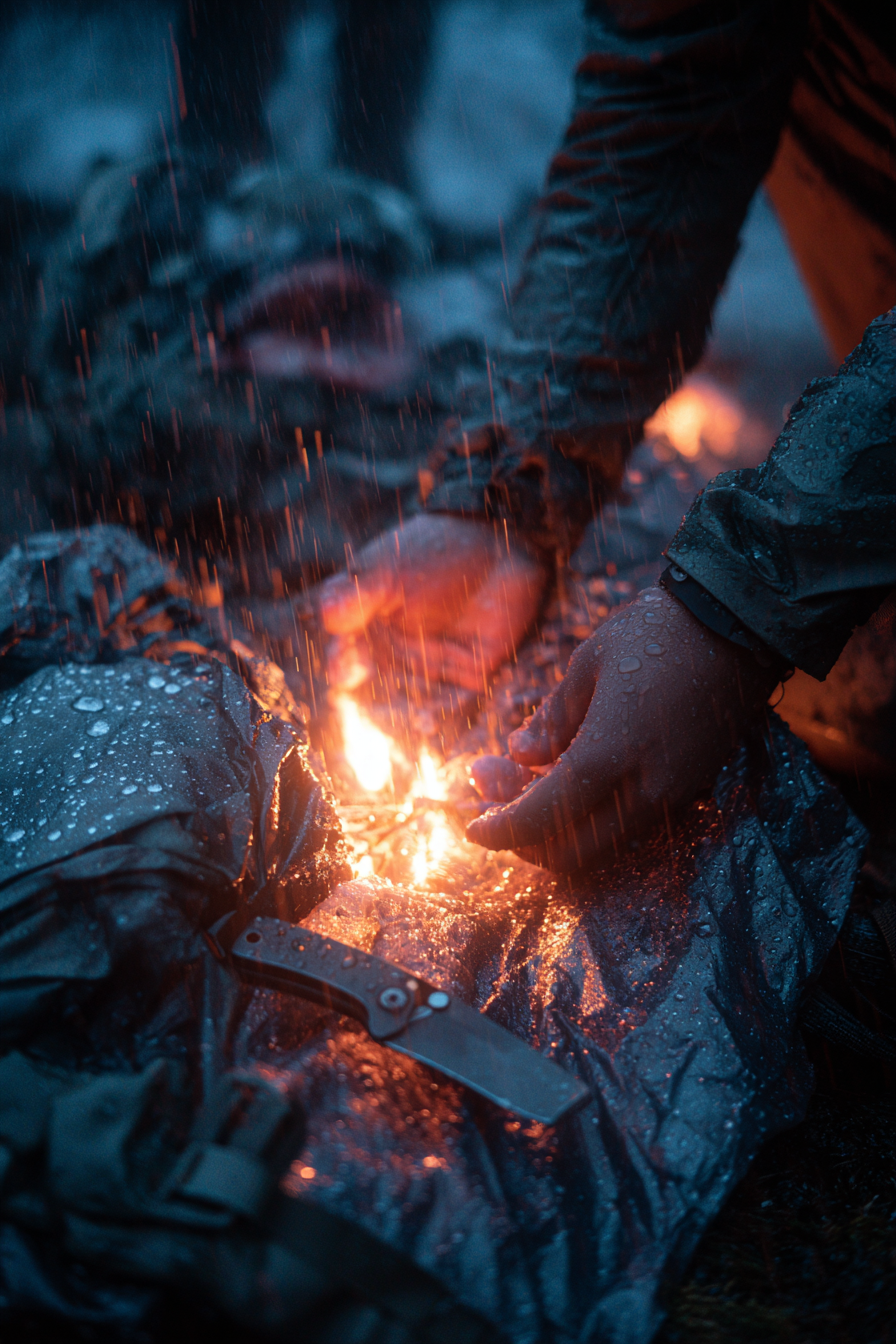
When the skies open up and the rain pours down, fire becomes more than just comfort—it becomes survival. Whether you’re deep in the wilderness or facing a storm during an emergency, knowing how to start and maintain a fire in wet conditions can mean the difference between hypothermia and safety.
Building a fire in the rain requires more than luck—it demands skill, preparation, and an understanding of how to use nature to your advantage. In this guide, we’ll break down proven methods, practical gear, and expert techniques to keep your fire burning even when everything around you is soaked.
Why Fire Matters in Wet Weather Survival
Fire is essential not just for warmth but also for cooking, sterilizing water, drying clothes, and maintaining morale. Rain makes all of these tasks harder—but with proper planning, you can still achieve reliable ignition.
Key benefits of fire during rain include:
- Heat prevents hypothermia and keeps your body functional.
- Fire allows cooking and safe food consumption.
- Boiling water ensures hydration in emergencies.
- Flames provide light, visibility, and rescue signaling.
You can explore more about staying safe and self-sufficient in unpredictable weather in Emergency Shelter Options: From Tents to DIY Solutions.
Step 1: Find or Create a Dry Base
The biggest challenge in wet conditions is preventing your fire from soaking out before it starts. The first step is creating a dry foundation that insulates your flame from moisture.
Tips for Building a Dry Base:
- Collect dry sticks from the undersides of trees or dead standing wood.
- Lay down a base of bark or flat stones to elevate your fire.
- Use birch bark or fatwood as your ignition layer—they catch even in damp weather.
A Gerber Folding Saw helps cut inner dry wood from fallen logs when the outer layers are soaked.
Step 2: Gather Reliable Fire Starters
In a rainstorm, traditional matches or damp lighters often fail. That’s why redundancy is crucial. Every survivalist should carry multiple ignition sources designed to withstand wet conditions.
Best Waterproof Fire Starters:
- Ferrocerium Rods: The Light My Fire Swedish FireSteel throws 3,000°C sparks that ignite even damp tinder.
- Stormproof Matches: The UCO Stormproof Match Kit includes a waterproof case and striker that work in heavy rain.
- Tinder Tabs: S.O.L. Tinder Quik Fire Tabs light instantly and burn long enough to dry surrounding tinder.
Carrying multiple ignition methods is a principle shared in 10 DIY Emergency Kit Ideas You Can Make at Home, where redundancy ensures readiness for all conditions.
Step 3: Select and Prepare the Right Tinder
In rain, finding dry tinder can seem impossible—but knowing where to look makes all the difference.
Reliable Tinder Sources:
- Inner bark from birch, cedar, and juniper trees catches quickly even when damp.
- Cotton balls mixed with petroleum jelly burn long and bright.
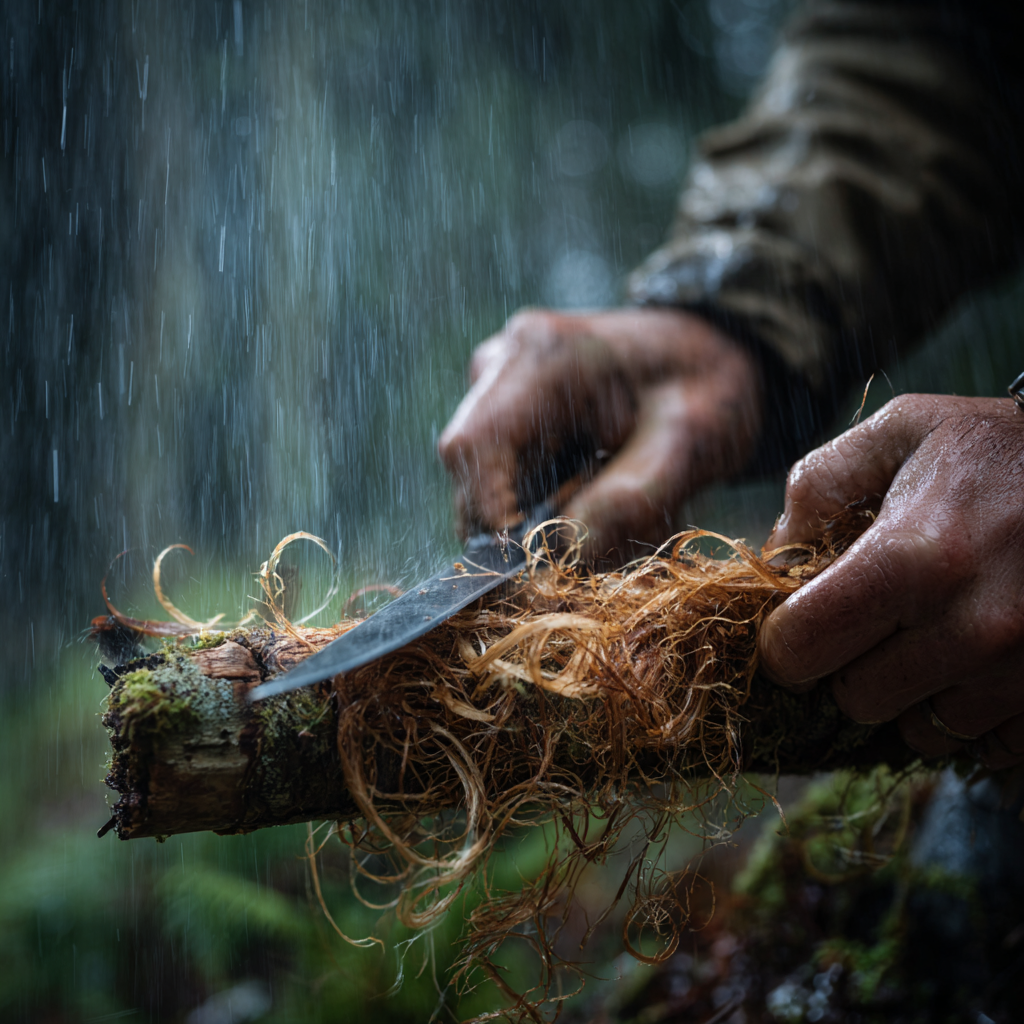
- Feather sticks shaved from inner dry wood work when other options fail.
Use a Morakniv Companion Fixed Blade to carve feather sticks and prep materials efficiently. Dry tinder can save your life when everything else is soaked.
Step 4: Build a Wind-Resistant Fire Structure
Rain is rarely your only enemy—wind and cold often accompany it. Building a structure that protects your flame ensures long-lasting combustion.
Best Fire Structures for Rainy Conditions:
- Teepee Fire: Allows strong upward airflow for quick ignition.
- Lean-To Fire: Uses a log or rock as a shield from wind and rain.
- Log Cabin Fire: Stacks wood for sustained, even burning.
If the rain persists, build under a natural canopy or tarp. The Aqua Quest Defender Tarp provides waterproof protection and doubles as emergency shelter.
Step 5: Keep It Burning
Once your flame catches, your next goal is to keep it alive. Feed your fire gradually with dry material, moving from small twigs to thicker logs.
Fire Maintenance Tips:
- Add wood slowly to avoid smothering.
- Keep a stash of dry fuel under your tarp.
- Use bark slabs to deflect raindrops from the core flame.
- Feed logs inward to control burn rate.
A Stanley Adventure Cook Set lets you boil water or cook meals over your maintained flame. For long-term supply tips, see 30 Essential Items You Should Be Stockpiling for Survival.
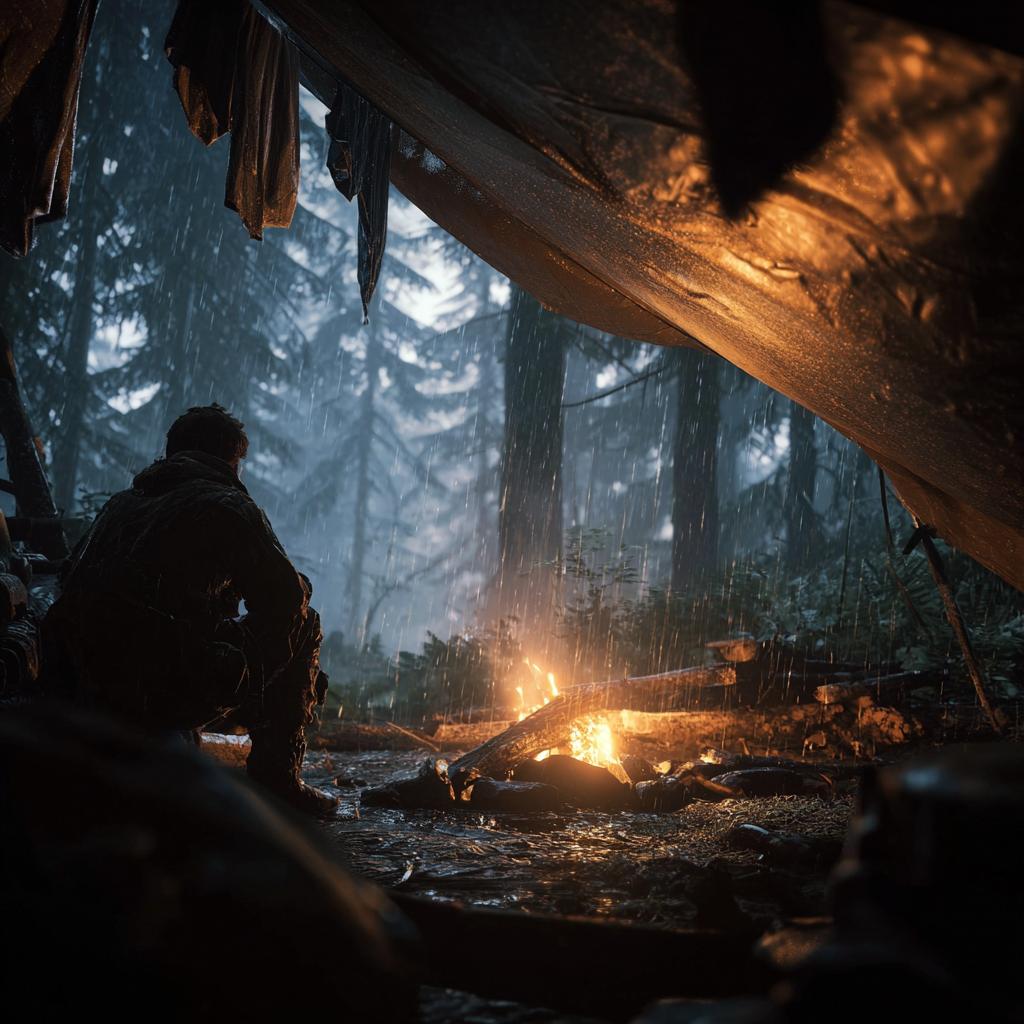
Step 6: Drying Clothes and Equipment Safely
In survival situations, wet clothing accelerates heat loss. A sustained fire helps dry garments and gear, but improper drying can cause damage or burns.
Safe Drying Techniques:
- Hang clothes on branches 2–3 feet above the flame.
- Rotate items frequently to prevent scorching.
- Avoid hanging synthetics too close to direct heat.
This method works well with lighting and heat guidance from Emergency Lighting: From Flashlights to Solar Lanterns – Your Complete Guide.
Step 7: Practice Before You Need It
The ability to build a fire in the rain isn’t learned from theory—it’s built through repetition. Practice in various weather conditions and environments to understand your tools and materials.
Final Thoughts: Fire Is the Core of Survival
Rain doesn’t mean defeat—it means opportunity. With the right skills and mindset, you can turn any storm into your testing ground. Fire under rain teaches patience, adaptability, and control—the cornerstones of survival.
Keep your gear dry, your tools ready, and your knowledge sharp. Fire is not just heat—it’s hope, visibility, and life itself in the wilderness.