
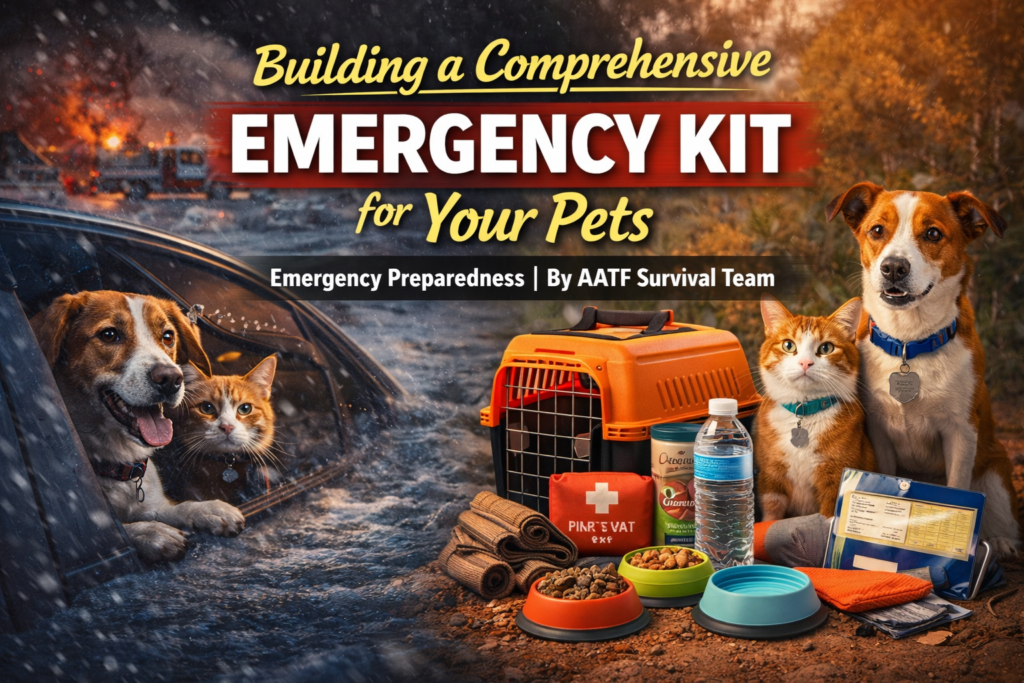
When disaster strikes, our pets rely entirely on us for their safety and comfort. Hurricanes, wildfires, floods, and even sudden evacuations can leave families scrambling, and without preparation, animals are often the most vulnerable. A well-prepared pet emergency kit ensures that your pet’s needs are met during stressful situations and can be the difference between safety and risk.
Thinking ahead for your animals is part of thinking ahead for your household. For a broader overview of preparedness supplies that should be in place alongside your pet’s gear, begin with our cornerstone guide on essential items for your emergency preparedness kit.
Why You Need a Pet Emergency Kit
Your pets are part of your family, and just like every family member, they deserve protection in times of crisis. During emergencies, animals often suffer from stress, loud noises, strange environments, and disrupted routines. Having familiar food, toys, and bedding can calm them, while critical supplies like medicine and leashes ensure their safety.
Real-world events highlight the importance of planning. After Hurricane Katrina, thousands of pets were left behind or separated from owners who lacked the resources to evacuate with them. Many shelters and emergency facilities now allow pets, but only if owners bring documentation and basic supplies. A pet emergency kit ensures you’re never caught unprepared.
Essential Items for Your Pet Emergency Kit
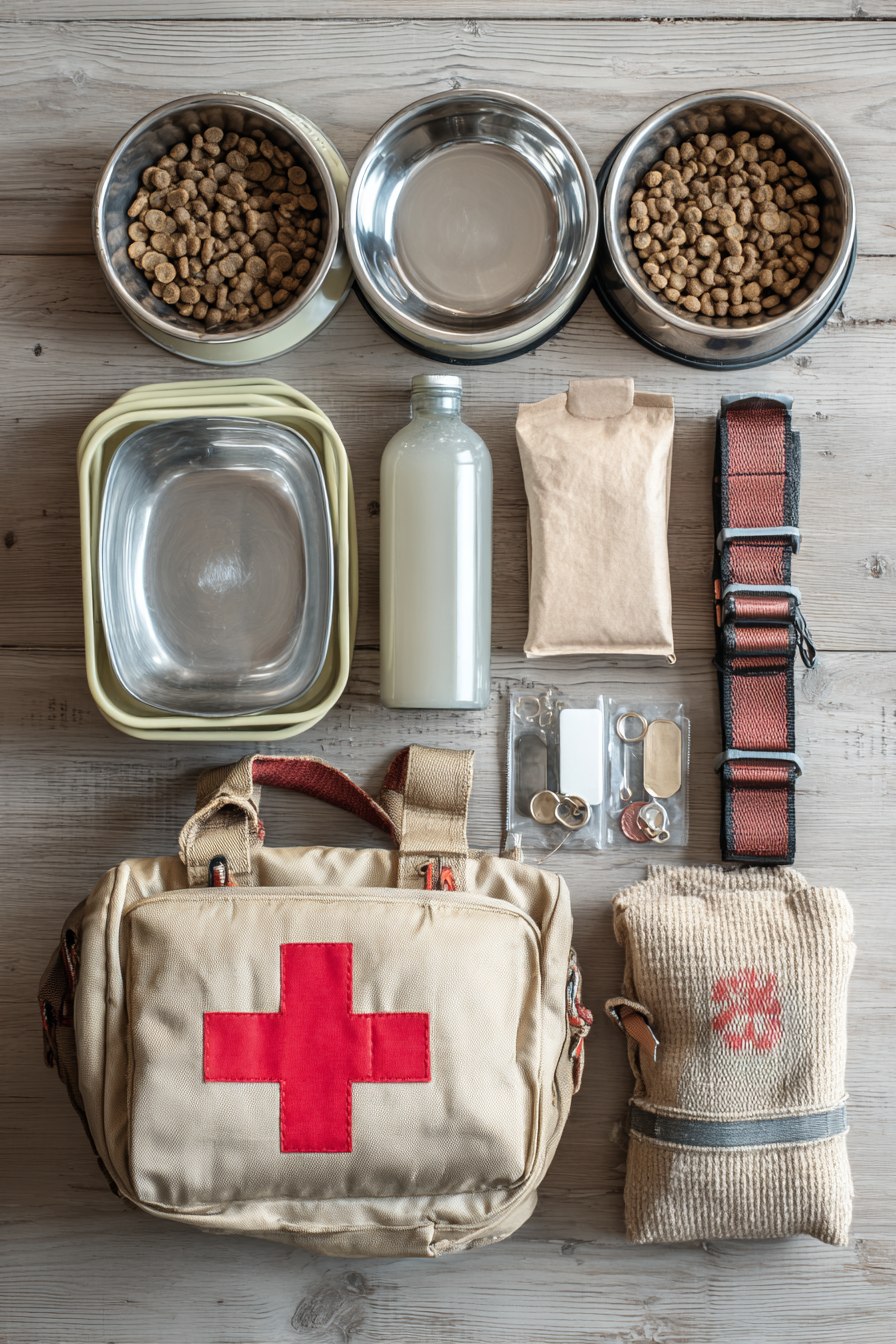
A comprehensive kit should meet all of your pet’s basic needs for food, water, shelter, and health. Here’s what to include:
Food and Water
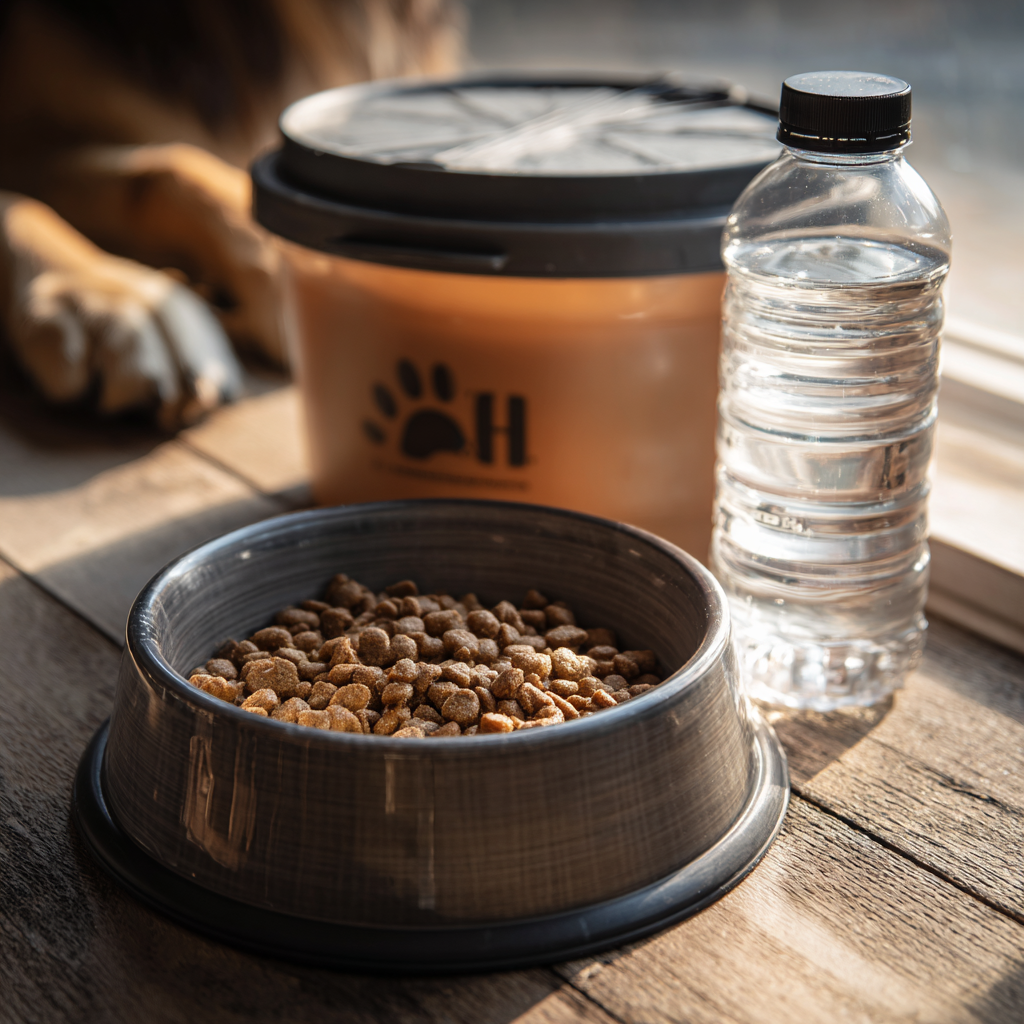
Pack at least three days’ worth of your pet’s usual food and a supply of clean water. For large animals or rural households, consider storing up to a week’s worth. Use resealable, airtight containers to keep food fresh, and rotate supplies just as you would with your emergency food supply.
Bowls
Collapsible bowls are perfect for emergencies. Lightweight and easy to clean, they save space in your kit and can be used anywhere.
First Aid Kit
A pet-specific first aid kit is essential. Include bandages, antiseptic wipes, tweezers, styptic powder to stop bleeding, and any prescribed medications. Under veterinary guidance, common over-the-counter options like Benadryl may also be included. Many of these items overlap with your household first aid kit supplies, but pet-specific gear ensures their safety.
Leash and Carrier
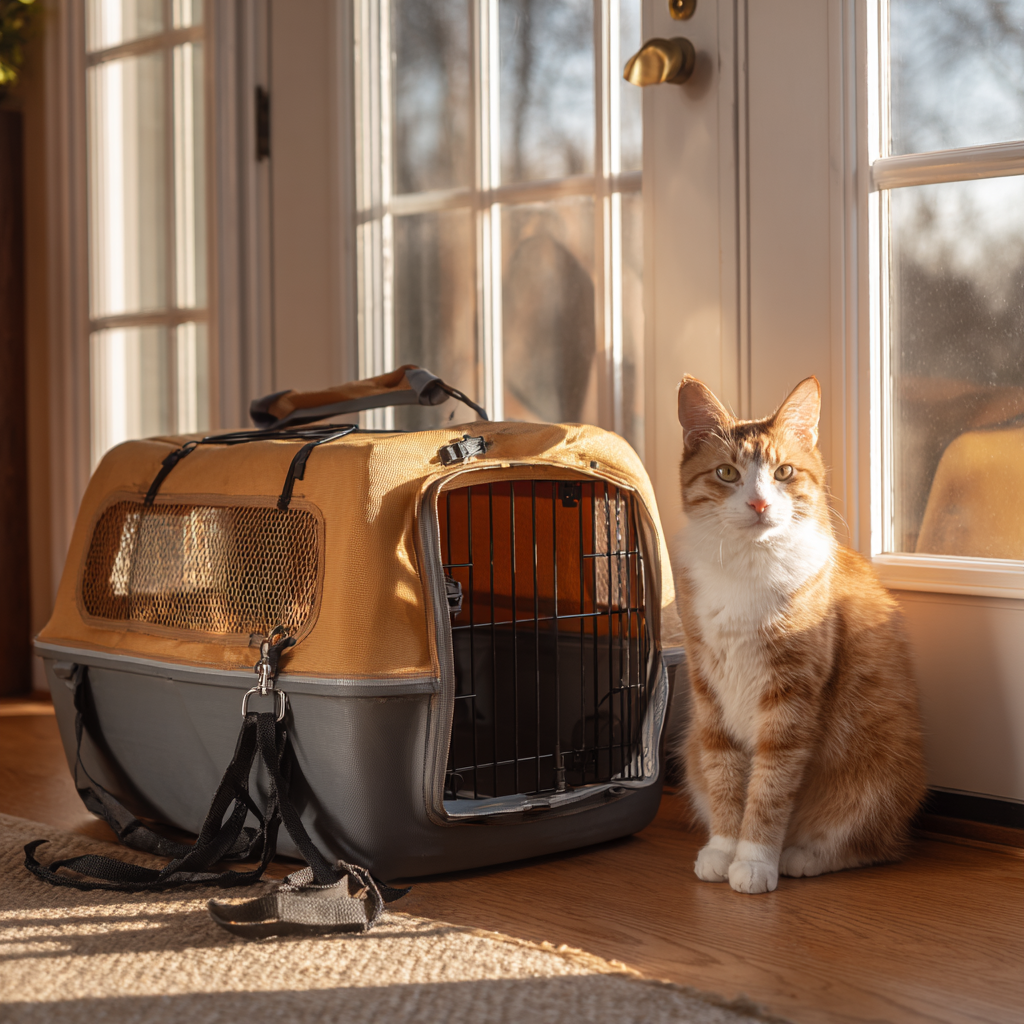
In chaotic situations, animals can panic and run. A sturdy leash and secure carrier keep them safe during transport. For cats and small dogs, carriers provide both mobility and a sense of security.
Pet Documents
Keep copies of vaccination records, medical history, microchip details, and ownership documents in a waterproof pouch. These are often required at shelters or vet clinics during evacuations. For safe and efficient record-keeping, it’s helpful to integrate this step with your organizing emergency documents strategy.
Extra Collar and ID Tags
Pets can easily slip out of collars or lose tags during emergencies. Keeping spares ensures quick identification if they get separated.
Blankets or Towels
These provide warmth, comfort, and can double as improvised stretchers or restraints if your pet is injured.
Comfort Items
A favorite toy, treat, or bedding item can reduce anxiety in stressful situations. Familiar smells and textures reassure pets and help keep them calm.
Recommended Products
While you can assemble a kit from scratch, some products make the process easier and more reliable:
- PetSafe Elite Pet First Aid Kit – Designed specifically for pets, this kit includes supplies tailored to animal injuries.
- Lixit Collapsible Dog Bowl – Lightweight, foldable, and perfect for travel or evacuation.
- Hill’s Science Diet Pet Food – Nutritious and available in long-lasting dry formulas that store well.
- KONG Dog Travel Bowl – A sturdy, portable water solution for trips or emergencies.
These items, combined with your own additions, form the foundation of a reliable kit.
Storing Your Pet Emergency Kit
The way you store your kit determines how accessible it will be in an emergency. Choose a durable, waterproof container such as a plastic bin or a medium-sized backpack. The backpack option allows for grab-and-go evacuation, while a bin works well for sheltering in place.
Keep your pet kit near your family’s main emergency kit. This way, nothing is forgotten if you need to move quickly. Households with multiple pets may want to create separate bags for each animal.
Regular Maintenance of Your Kit
Preparedness isn’t complete without upkeep. Check your kit every six months to ensure everything is in good condition:
- Replace expired food, water, and medications.
- Update pet records and ID tags if addresses or vaccinations change.
- Adjust for seasonal needs, such as adding paw balm for winter or cooling mats for summer.
This routine is no different from how you maintain your emergency kit supplies, where freshness and accuracy keep your equipment effective.
Additional Considerations
Multi-Pet Households
If you own multiple pets, calculate food, water, and medication for each. Divide items into labeled bags for quick organization.
Exotic Pets
Reptiles may require heat packs, while birds need secure cages and specialized food. Rabbits, hamsters, and other small animals benefit from travel-friendly cages. Preparing for these unique needs ensures every pet is safe.
Evacuation Shelters
Many shelters only accept animals if you provide vaccination records and supplies. Having your kit ready ensures your pets won’t be turned away in a crisis.
Training and Familiarity
Just as humans practice fire drills, pets benefit from evacuation practice. Teach dogs to enter carriers calmly and reward them for cooperation. Cats can be acclimated to carriers by leaving them open at home with treats inside. Familiarity makes emergency evacuation smoother and less stressful.
Conclusion
A comprehensive pet emergency kit is more than a precaution—it’s a commitment to your pet’s well-being during uncertain times. With food, water, medical supplies, documents, and comfort items on hand, you ensure your animals are safe, calm, and cared for when disaster strikes.
Preparedness doesn’t stop with human needs. By building and maintaining a kit for your pets, you extend your family’s resilience to include every member—four-legged or otherwise. For additional guidance on building out your home and family kits, see our cornerstone guide on the top 10 must-have items in your disaster supply kit.